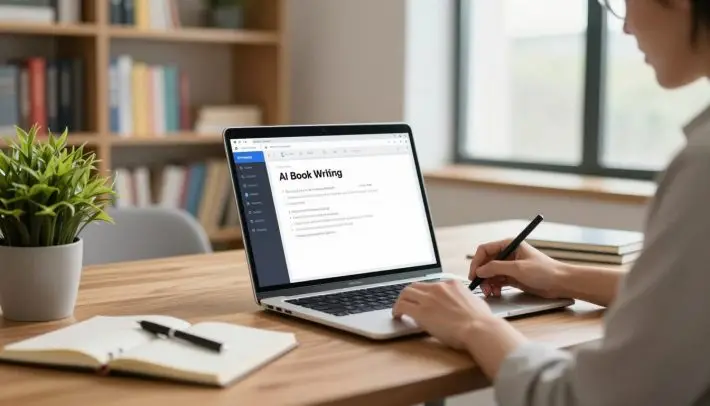
Best Free Book Writing App for Authors in 2024
I still remember when my laptop crashed in 2009. It was right in the middle of a 60,000-word manuscript. No backup, no cloud storage. Just a blank screen and a bad feeling.
That disaster made me look for better writing tools. Tools that wouldn’t let me lose my work again.
Today, I’ve tested writing software for over 17 years. The good news? You can write your next book for free. The right free app can do things expensive programs couldn’t do five years ago.
Artificial intelligence writing software has changed everything. Tools like Google Docs, Wavemaker, ChatGPT, Grammarly, and Canva offer professional tools for free. Features like auto-saving and real-time collaboration are now standard, not extra.
I use free tools for everything. From writing chapters to designing book covers in Canva. AI tools help with ideas and Grammarly catches mistakes at midnight.
In this guide, I share free apps that are part of my writing toolkit. These are tools I use every day, not just once. Let’s find the perfect writing setup for you.
Key Takeaways
- A free book writing app can match or beat paid alternatives for drafting, editing, and publishing your manuscript.
- Google Docs offers auto-save, cloud storage, and real-time collaboration that protect your work from disaster.
- AI tools for writing like ChatGPT and RightBlogger help with brainstorming and marketing without replacing your creative voice.
- Wavemaker stands out as a dedicated novel-writing platform with built-in plotting and chapter organization features.
- Artificial intelligence writing software pairs best with editing tools like Grammarly for a polished final draft.
- Productivity apps such as Clockify and Nozbe keep your writing goals on track and your deadlines within reach.
- Combining multiple free tools creates a powerful, integrated writing system tailored to your unique workflow.
Why Every Author Needs a Free Book Writing App Today
After years of freelancing and writing fiction, I’ve learned a lot. Free writing software has changed the game for authors everywhere. The hard part isn’t finding tools. It’s finding ones that really help without taking too much time.
The Evolution of Digital Writing Tools
Writing apps have changed a lot since the old days. Now, AI tools offer smart features that used to cost a lot. They can suggest plots, fix grammar, and format manuscripts for you.
This change is exciting for indie writers on a budget. It shows how far we’ve come.
Cost-Effective Solutions for Independent Authors
Free apps often have everything you need without extra costs. Sites like Reedsy Studio let you plan, write, edit, and format your book for free. They even auto-format it to look professional.
These platforms also have writing assistants. They help you meet your writing goals and keep track of changes.
Essential Features Modern Writers Can’t Live Without
From my experience, some features are must-haves for writers:
- Auto-save functionality that prevents lost chapters from crashes
- Cloud storage so you always access the latest version
- Cross-device writing from desktops, Chromebooks, or phones
- Easy document sharing with editors using view-only or edit access
| Feature | Free Writing Apps | Paid Writing Software |
|---|---|---|
| Auto-Save | Included | Included |
| Cloud Storage | Basic (sufficient for most) | Expanded storage |
| Cross-Device Access | Browser-based | Desktop + mobile apps |
| AI Writing Assistance | Limited but useful | Advanced suggestions |
| Professional Formatting | Available on select platforms | Standard |
Machine learning writing platforms keep getting smarter. Free tiers are getting more generous. Now is the perfect time to start writing your book without spending a dime.
Google Docs: The Collaboration Powerhouse
I’ve tried many writing tools, but Google Docs is my favorite. It’s free and works well with AI tools. It makes writing and sharing easy.
Auto-Save and Cloud Storage Benefits
Google Docs saves your work automatically. It’s saved in Google Drive, so it’s safe even if your computer crashes.
“The best writing tool is the one that gets out of your way and lets you create.”
You get 15 GB of free cloud storage. This is enough for lots of documents and notes.
Real-Time Collaboration Features
Google Docs is great for getting feedback. You can share documents and let others edit or just view. Everyone’s comments are in one place.
- Track changes and revision history at a glance
- Tag collaborators with @mentions in comments
- Restore any previous version of your document
It works well with AI tools. You can use grammar checkers and writing assistants right in your browser.
Cross-Device Accessibility
I can write on my desktop and pick up on my phone. Google Docs works on PCs, Chromebooks, tablets, and smartphones. It’s the same everywhere.
| Feature | Desktop | Mobile App |
|---|---|---|
| Offline Editing | Yes (Chrome extension) | Yes (built-in) |
| Real-Time Collaboration | Full support | Full support |
| Voice Typing | Yes | Yes |
| Add-on Support | Extensive library | Limited |
Google Docs is a solid choice for writing. It’s free and works well with AI tools. It’s a great base for your writing setup.
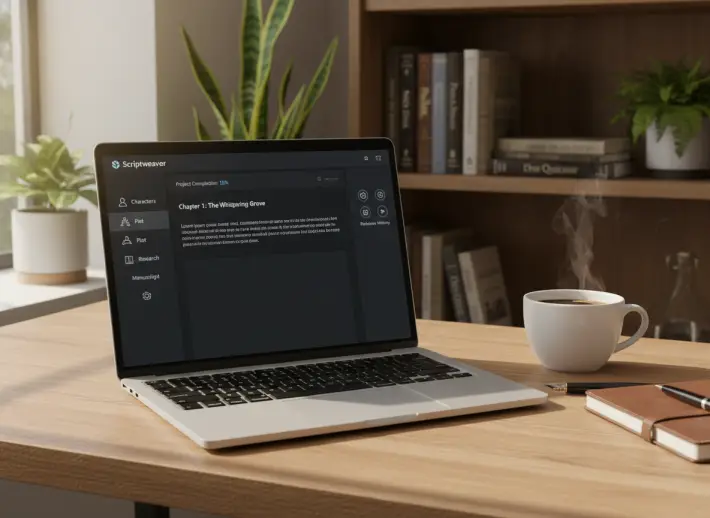
Storyloft: AI-Powered Writing Platform Built for Authors
Most AI tools help marketers and bloggers. Storyloft is different. It was made specifically for book authors. It brings smart AI right into your writing.
Manuscript-Aware AI Technology
Storyloft’s AI is special. It reads your draft and gives smart suggestions. It knows about your characters and story structure.
This means you get ideas that fit your book. You won’t get random ideas that mess up your story.
The tools in Storyloft can help with:
- Scene development and rewrites
- Brainstorming new plot directions
- Outlining chapters and story arcs
- Editing and formatting assistance
Author Voice Preservation Features
Writers worry AI will make their work sound generic. Storyloft’s Author Voice Preservation technology fixes this. It learns your writing style and keeps AI suggestions true to you.
Comprehensive Writing Suite and Goal Tracking
Storyloft does more than AI. It has manuscript management, notes, and goal tracking. The Author Plan subscription gives you access to these tools with AI usage limits.
| Feature | Storyloft | Generic AI-Powered Text Generators |
|---|---|---|
| Manuscript Context Awareness | Yes — reads full draft | No — prompt-based only |
| Voice Preservation | Built-in technology | Not available |
| Goal Tracking | Integrated | Not included |
| Target Audience | Book authors | General content creators |
Next, I’ll explore Reedsy Studio. It’s great for moving from writing to professional publishing.
Reedsy Studio: Professional Publishing Made Simple
Looking for a free app to help you go from first draft to published book? Reedsy Studio is a great choice. It’s made by authors for authors. It helps hundreds of thousands of writers make professional books without spending money on basic features.
Reedsy Studio is like smart writing software for the whole book-making process. You sign up at editor.reedsy.com. Then, you get tools for planning, writing, editing, and formatting. It auto-typesets your manuscript to industry-standard layouts, making it look like a major publishing house’s book.
“Your words belong to you.” — Reedsy guarantees full author copyright and pledges never to use your content for AI training.
The free plan saves your drafts for six months. Upgrading to Reedsy Craft gives you unlimited version history. You can set word count goals right away to keep your writing on track.
| Feature | Free Plan | Studio Essential (Paid) |
|---|---|---|
| Writing & Formatting | Full access | Full access |
| Word Count Goals | Manuscript-level goals | Daily, weekly, and sprint goals |
| Version History | 6 months | Unlimited |
| Offline Access | Not available | Planned future feature |
| Professional Typesetting | Included | Included |
Reedsy runs in your browser now. Offline access is coming as a paid feature later. But, the main writing and formatting tools will always be free.
Reedsy Studio is perfect for authors who want a polished book without using design software. It’s great for those who want to publish without a lot of effort. It works well with AI tools and marketing platforms too.
Wavemaker: The Novelist’s Digital Workshop
If you write novels and need a free Scrivener alternative, Wavemaker is worth checking out. It’s great for Chromebook users who can’t run Scrivener. This app has serious storytelling features in a clean, browser-based platform. It doesn’t use artificial intelligence, but its tools are as good as many paid options.
Distraction-Free Writing Environment
Wavemaker starts with a full-screen, white-on-black interface that’s easy on the eyes. There are no pop-ups, no social feeds, and no clutter. It’s just you and your words. If you’ve used Google Docs but want something less distracting, try this free tool for writers.
Chapter Organization and Story Structure Tools
I can easily divide my manuscript into chapters and subchapters. Moving sections around to change my story takes seconds. This makes it easy to rearrange plot points while I’m writing.
- Create unlimited chapters and subchapters
- Drag and drop sections to reorganize your story
- Store character notes alongside your manuscript
- Build mindmaps to visualize story connections
Advanced Plotting and Timeline Features
Wavemaker also helps with plotting, timeline creation, and a Challenge mode for writing sprints. These tools help me stay focused during NaNoWriMo or any deadline. The app is free, and donations are welcome.
| Feature | Wavemaker | Scrivener |
|---|---|---|
| Price | Free | $49 |
| Chromebook Support | Yes | No |
| Mindmaps | Built-in | Not included |
| Timeline Tool | Built-in | Not included |
| Writing Sprint Mode | Challenge Mode | Session Target |
| Distraction-Free Mode | Full-screen default | Composition mode |
Even as ai tools for writing become more common, Wavemaker shows that a good app doesn’t need to cost money to be valuable for novelists.
WordPress: Beyond Blogging for Book Authors
Many think WordPress is just for blogging. But it’s grown a lot since starting. It’s now a big deal for authors wanting a full online presence.
WordPress is free to use. You just need to pay for hosting and a domain. I love how you can change themes without losing your writing.
As an author, WordPress is great for:
- A professional author website with book listings and a bio
- A blog to engage readers and grow an audience
- An online store to sell signed copies or merchandise
- A landing page for new book launches
- A reader community hub with forums and newsletters
Free plugins add lots of features to WordPress. AI tools now work with WordPress too. They help write blog posts and marketing copy right in your dashboard.
The WordPress community keeps it updated. Your site stays secure, fast, and modern without your effort.
While tools like Wavemaker help with writing, WordPress is key for sharing your work. With AI tools, you get a marketing machine that works all the time for your books.
AI Writing Assistants That Transform Your Process
I’ve found that using a free book writing app with smart AI tools boosts my work. Machine learning writing platforms help authors a lot. They assist with everything from brainstorming to writing marketing emails. Let me show you two of my favorites and explain why they’re so good.
ChatGPT for Creative Brainstorming
ChatGPT is my top choice when I’m stuck. It’s like having a writing partner always ready to help. It assists with:
- Coming up with unexpected plot twists
- Creating character backstories
- Building outlines for me
- Merging research lists
Even if I don’t use its ideas, they spark new thoughts. This helps me move my story forward. It’s like having a brainstorming session whenever I need it.
RightBlogger for Author Marketing Content
Writing the book is just half the job. The other half is promoting it. RightBlogger has over 80 AI tools for content creators. Its Blog Outline Generator gives better results than generic prompts.
| Feature | ChatGPT | RightBlogger |
|---|---|---|
| Best Use | Creative brainstorming | Marketing content creation |
| SEO Keyword Research | Limited | Built-in tools |
| Tone Adjustment | Manual prompting | One-click style options |
| Content Ideas | Open-ended generation | Blog posts, newsletters, articles |
Fiction writers can use RightBlogger to make promotional articles and email newsletters. These can actually help sell books.
How AI Tools Support Without Replacing Creativity
Machine learning writing platforms are assistants, not authors. I use them like research interns. They gather material, and I shape it with my own voice. This way, the creativity stays mine.
These tools handle the boring parts so I can focus on telling stories. When paired with apps like Clockify and Nozbe, they make a great free toolkit.
Grammarly: Your Free Digital Editor
Every writer needs a second pair of eyes. I rely on Grammarly as my go-to for catching mistakes. It’s more than a word processor, and the free version is powerful.
Advanced Grammar and Style Checking
Grammarly finds errors that spell checkers miss. It spots mistyped words that are still valid words like “form” instead of “from.” It also finds subject-verb agreement issues and small grammatical slips.
The tool flags wordiness in your sentences. It helps you write cleaner. But, don’t accept every suggestion. Use your judgment. Not all tools understand creative intent.
Here’s what you get across the plans:
| Feature | Free Plan | Pro Plan |
|---|---|---|
| Spelling and Grammar Checks | Yes | Yes |
| Comma Correction | Yes | Yes |
| Wordiness Alerts | Yes | Yes |
| Tone Adjustment | No | Yes |
| Plagiarism Detection | No | Yes |
| Personalized Suggestions | No | Yes |
Consistency in Regional Language Preferences
If you write for international audiences, this feature is essential. Grammarly lets you choose your English dialect — American or British. It keeps your spelling consistent throughout your manuscript.
As writing technology evolves, Grammarly works well with AI tools and platforms. It’s a key part of your writing toolkit, along with productivity apps and marketing tools.
Essential Productivity Tools for Writing Success
Writing a book is more than just using a free app. You need systems to keep you going every day. I use a few key productivity tools that work well with writing apps. They help me stay on track and reach my goals.
Clockify for Time Management
I started using Clockify in 2022. It changed how I write. This free app makes me use my time wisely. When the timer starts, I focus.
I track my time for client work, newsletters, and book drafts. Clockify shows me where my time goes each month. It helps me see if I’m charging enough or wasting time.
Nozbe for Task Organization
Nozbe is like my brain’s extra storage. It uses the Getting Things Done method. Every morning, I plan out my day.
I use it for regular tasks and ideas. It works well with writing apps. I also use a Full Focus Planner for daily planning.
Setting and Achieving Writing Goals
These tools help me set and reach goals. Here’s how I plan my week:
| Goal Type | Tool Used | Weekly Target | Tracking Method |
|---|---|---|---|
| Daily Word Count | Clockify | 7,000 words | Timed writing sprints |
| Chapter Drafting | Nozbe | 1–2 chapters | Task completion |
| Editing Sessions | Clockify | 5 hours | Time logged per session |
| Marketing Tasks | Nozbe | 3 tasks | Priority list review |
With the right tools, writing a book is more doable. Your manuscript can become a real book.
Canva: Visual Storytelling and Book Marketing
Writing a book is just the start. I need eye-catching visuals to grab readers’ attention. That’s where Canva comes in. This free app lets me design professional book covers and more without any design experience.
Canva has thousands of templates I can customize in minutes. I can drag, drop, resize, and tweak until my cover looks amazing. It supports everything from newsletter headers to podcast covers.
“Design is thinking made visual.” — Saul Bass
Here’s what I can create with Canva’s free plan:
- Book covers using customizable templates
- Social media promotional graphics
- Author website banners and blog post images
- Workbooks, greeting cards, and newsletters
- Branded materials that keep a consistent look across all platforms
The paid version, Canva Pro, saves me hours each month with high-quality stock photos. But the free tier is enough for most indie authors just starting out.
| Feature | Canva Free | Canva Pro |
|---|---|---|
| Templates | 250,000+ | 610,000+ |
| Stock Photos | 1 million+ | 100 million+ |
| Brand Kit | Limited | Full Access |
| Background Remover | No | Yes |
| Custom Resize | No | Yes |
Many authors use Canva with ai tools for writing. It helps me build a cohesive author brand. Professional-looking graphics make my book promotions look great everywhere.
Choosing the Right Free Book Writing App for Your Genre
Not every writing app fits every genre. The tools I use for a fantasy novel are different from what a poet or academic writer needs. Your genre shapes your workflow, so picking the right free app matters more than you might think.
Fiction Writers’ Specific Needs
As a fiction writer, I need tools that handle long-form storytelling with ease. Plotting, chapter management, and character tracking are non-negotiable. Wavemaker shines here with its story structure tools.
Artificial intelligence writing software like ChatGPT helps me brainstorm plot twists and develop character arcs when I hit a wall. ProWritingAid’s critique reports are a game-changer — they evaluate character believability, plot strength, and story coherence. The free Premium tier limits you to one daily critique, but that’s enough for steady progress.
Non-Fiction and Academic Writing Requirements
Non-fiction demands precise research organization and clean formatting. Google Docs gives me real-time collaboration with editors and co-authors. AI content creation tools help me outline chapters and generate supporting marketing copy.
Freelance non-fiction writers who accept payment through PayPal will appreciate Reedsy’s professional ecosystem. Many independent authors and small publishers already operate here.
Poetry and Creative Writing Considerations
Poetry requires a minimalist, distraction-free space where every line break counts. Reedsy has proven itself in this space — poets have used it to publish collections like Penned with Purpose, now available on Amazon. The platform typesets books into KDP-accepted print and ebook formats, ready for direct upload.
| Genre | Top Free App | Key Feature | Best AI Support |
|---|---|---|---|
| Fiction | Wavemaker | Plotting and timelines | ChatGPT for brainstorming |
| Non-Fiction | Google Docs | Real-time collaboration | RightBlogger for marketing |
| Poetry | Reedsy Studio | KDP-ready formatting | Grammarly for style checks |
Matching your genre to the right combination of free apps and artificial intelligence writing software sets you up for a smoother, more productive writing experience. Up next, I’ll show you how to combine these tools into one seamless workflow.
Maximizing Your Writing Workflow With Free Tools
No single app can do everything a writer needs. I’ve learned this the hard way after years of trying to find that one perfect tool. The real secret is building a system where multiple free tools work together. By pairing automated writing assistants with dedicated formatting platforms, I’ve created a workflow that rivals expensive software suites.
Creating an Integrated Writing System
My approach breaks the writing process into clear stages. Each stage gets its own tool, matched to what it does best. Here’s how I structure my workflow:
- Drafting — Google Docs or Wavemaker for distraction-free writing
- Grammar cleanup — ProWritingAid for spelling, sentence structure, and readability scoring
- Story critique — ProWritingAid’s critique reports to tighten pacing and flag weak spots
- Formatting and publishing — Reedsy Studio for automatic typesetting in KDP-recognized formats
- Marketing visuals — Canva for book covers and promotional graphics
This layered system gave me professional results on my last self-published book without spending a dime on premium subscriptions.
Combining Multiple Apps for Best Results
The trick is knowing when to use each tool. I run my manuscript through machine learning writing platforms for grammar and style checks before I ever touch formatting. ProWritingAid catches issues that basic spell-checkers miss — like overused sentence patterns and passive voice habits.
Once the text is clean, I import it into Reedsy Studio. The automatic typesetting handles print and ebook layouts in minutes. That combination of free tools delivered a polished, distribution-ready file that looked like a professional editor and designer touched it.
The best writing system isn’t the most expensive one — it’s the one that removes friction between your ideas and the finished page.
By mixing automated writing assistants for editing with machine learning writing platforms for brainstorming, you build a workflow that’s both powerful and cost-free. As you move toward choosing the right app for your genre, keep this integration mindset front and center.
Conclusion
After 17+ years of writing, I’ve seen a big change. Free tools have changed how authors work. Google Docs, Storyloft, and Reedsy Studio help at every stage.
AI tools like ChatGPT and RightBlogger help with ideas and marketing. Grammarly makes your writing smooth. Tools like Clockify, Nozbe, and Canva help with time, tasks, and design.
What amazes me is how free tools compare to paid ones. You keep your rights and control. These tools learn your style and genre.
It’s not about choosing one app. It’s about a workflow where each tool has its role. Start with tools that fit your writing style. Use AI for marketing. Your next book can be professional without spending money.
FAQ
What is the best free book writing app for authors just starting out?
I suggest starting with Google Docs. It’s simple, auto-saves, and works on all devices. It’s great for writing without needing to install anything.
For novel writers, Wavemaker is a top choice. It helps organize chapters and has a distraction-free mode. It’s all free.
Reedsy Studio is perfect for publishing. It makes your manuscript look professional, saving you time and money.
Can free writing software really compete with paid alternatives like Scrivener?
Yes, free software can be just as good as paid options. Wavemaker is a great Scrivener alternative, perfect for Chromebook users. It has tools for organizing chapters and characters.
Using Grammarly for editing and Reedsy Studio for formatting, you can create a workflow that rivals paid tools. You don’t need to pay for these tools.
How does Storyloft’s AI differ from generic artificial intelligence writing software?
Storyloft’s AI is special because it understands your manuscript. It gives suggestions that fit your story. This is great for fiction writers.
Its technology keeps your writing sounding like you. It doesn’t sound robotic. This is a big advantage for writers.
Is Google Docs secure enough for storing my entire manuscript?
Google Docs is very reliable for storing your work. It saves your document automatically. This means you won’t lose your work.
Google Drive keeps your document up to date. You can control who can see your work. It’s a safe choice for writers.
What AI tools for writing do you recommend for fiction authors?
For fiction writers, I suggest using ChatGPT and Storyloft. ChatGPT is great for ideas and developing characters. Storyloft helps keep your story consistent.
RightBlogger is also useful for marketing your work. It has tools for writing promotional content. This helps you reach more readers.
Can I really publish a professional book using only free tools?
Yes, you can publish a professional book with free tools. Reedsy Studio formats your book for print and ebook. It’s easy to use.
Grammarly checks your grammar, and ProWritingAid critiques your work. Canva helps with book covers. You can make your book look great without spending money.
How can automated writing assistants help without replacing my creative voice?
Automated writing tools are like creative partners. ChatGPT sparks new ideas. Storyloft keeps your writing style consistent.
Grammarly helps with grammar and wordiness. But you decide what to use. These tools support your creativity, not replace it.
What productivity tools should writers use alongside their writing software?
Using Clockify for time tracking has helped me earn more. It keeps me focused. Nozbe helps me stay organized.
PayPal is key for getting paid. These tools help you work more efficiently. They support your writing workflow.
Is WordPress still relevant for authors in 2024?
WordPress has been reliable for me since 2007. It’s free and flexible. You can build a website for your books or author platform.
It has many free plugins and is easy to update. It’s a smart choice for building your online presence.
How do I choose the right free book writing app for my specific genre?
Choose tools based on your genre. Fiction writers should use Wavemaker or Storyloft. ChatGPT is great for brainstorming.
Non-fiction writers might prefer Google Docs for editing. RightBlogger is good for SEO content. Poetry writers can use Reedsy Studio for typesetting.
Find the right combination of tools for your needs. This will make your writing process more efficient.