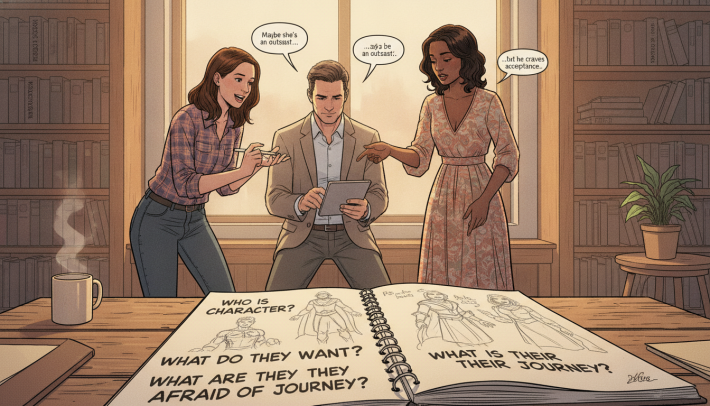
How to Write a Book: A Friendly Guide for Beginners

I sat at my kitchen table three years ago, staring at a blank screen. I had a story inside me but didn’t know where to start. Stephen King said the scariest moment is before you start. He was right. That night, I closed my laptop and walked away.
A few weeks later, I read “On Writing” by King. One line changed everything for me: writing isn’t about talent. It’s about having a plan. That simple shift helped me finish my first manuscript. Learning to write starts with a clear plan, not just talent.
If you’re a first-time author feeling overwhelmed, know this. The writing process isn’t scary. It’s just about breaking it down into small steps. Finding your “why,” picking a great idea, building characters, and outlining can make your dream a reality.
Flat characters, messy plots, and a blank page? I’ve been there too. This guide will take you through every step, from the first idea to the last word. Let’s start this journey together.
Key Takeaways
- The writing process works best when you follow a step-by-step roadmap instead of relying on inspiration alone.
- First-time authors should start by identifying their personal reason — their “why” — for writing a book.
- Choosing the right genre, point of view, and tense early on saves time and frustration later.
- Strong characters, a solid plot structure, and a detailed outline form the backbone of any great book.
- Building a consistent daily writing routine is the single biggest factor in finishing your manuscript.
- Knowing how to write a book is less about talent and more about commitment to the process.
Understanding the Purpose of Your Book
Before I start writing, I ask myself: why am I writing this book? This question shapes my every decision. It guides my schedule, tone, and how I handle tough days. Knowing my purpose is key, one of the best tips for writers.
Why I Want to Write My Book
My motivation is what keeps me going when the excitement wears off. Maybe I want to share a message that matters to me. Or maybe I dream of becoming an author. Whatever it is, I write it down and keep it in sight.
When doubts creep in, “This is terrible, and I should quit,” my purpose reminds me to keep going. Writers who skip this step often give up.
Identifying My Target Audience
Knowing who I’m writing for is crucial. It affects my words, pace, and book length. I ask myself:
- What age group am I writing for?
- What problems or desires does my reader have?
- What books does my ideal reader enjoy?
Setting Clear Objectives for My Writing
Strong writing starts with clear goals. I set specific objectives to stay focused.
| Objective Type | Example | Why It Matters |
|---|---|---|
| Creative | Write a 60,000-word novel | Gives me a measurable finish line |
| Audience-Focused | Help new parents feel less alone | Keeps my reader at the center |
| Career | Publish on Amazon by December | Creates a deadline and accountability |
| Personal | Build a daily writing habit | Strengthens long-term writing motivation |
With my purpose, audience, and objectives in place, I’m ready to brainstorm. These tips lay a solid foundation for what’s next.
Brainstorming Book Ideas
Not every spark of inspiration can carry a full-length manuscript. A great novel is 80,000 words or more. It needs depth, conflict, and stakes to keep going from start to finish. Before I start writing, I spend time brainstorming. I use special techniques to find ideas worth exploring.
Techniques to Generate Ideas
My favorite method is the “what if” question. This simple prompt has launched many beloved novels. For example, “What if a wizard school existed alongside our ordinary world?” became Harry Potter. “What if a woman disappeared and framed her husband for murder?” became Gone Girl by Gillian Flynn.
Here are a few techniques I rely on during my writing process:
- Ask “what if” questions about everyday situations and push them to extremes.
- Combine two unrelated genres or themes to create something fresh.
- Mine personal experiences for emotional truths that resonate with readers.
- Read news headlines and reimagine them as fiction.
Selecting a Topic I’m Passionate About
From all my book ideas, I pick the one that excites and scares me. This tells me the idea is worth pursuing. I test it by asking three questions:
| Test Question | What It Reveals | Example (The Stand by Stephen King) |
|---|---|---|
| Does my main character have a clear goal? | Narrative direction | Survivors seek to rebuild civilization |
| Are there significant obstacles? | Built-in conflict and tension | A deadly plague and a rising evil force |
| What happens if they fail? | Meaningful stakes for the reader | Humanity faces total extinction |
If an idea passes all three tests and won’t leave my mind, I know it’s ready. That persistence is the strongest signal I have. With the right concept, I’m ready to research and build a solid foundation for my story.
Researching My Book’s Topic
Great research is key to a believable book. It matters whether I’m creating a fictional world or writing about history. My readers will notice if I get the details wrong.
After brainstorming, solid research keeps my story real and authentic. I aim to learn enough to write with confidence. And I keep learning as I draft.
Gathering Reliable Sources
I only use credible sources for my research. I rely on academic databases like JSTOR, respected books, and expert interviews. For historical fiction, I study the laws, social norms, and investigative techniques of the time.
- Library databases and archived newspapers
- Published nonfiction books on my topic
- Expert interviews and documentary films
- University and government websites (.edu and .gov)
Taking Effective Notes
Good research is useless if I can’t find my notes. I use tools like Notion or Scrivener to organize my findings. Each note includes the source, a summary, and why it’s important to my story. This saves me hours when I’m drafting.
Organizing My Research
Before I start writing, I sort my notes into categories. I follow a simple system:
| Category | What I Include | Tool I Use |
|---|---|---|
| Setting Details | Locations, geography, climate | Google Earth, travel guides |
| Historical Context | Laws, customs, major events | JSTOR, library archives |
| Character-Related Facts | Occupations, dialect, daily life | Scrivener, Notion |
| Plot-Specific Research | Procedures, technology, science | Expert interviews, documentaries |
With my research organized, I can create a clear outline. This brings structure to all the material I’ve gathered.
Creating an Outline
Learning to write a book is easier with a roadmap. An outline is like a GPS, guiding you from start to finish. Before I start writing, I map out my story. This way, I know where I’m going.

Why an Outline is Important
An outline keeps you from getting lost in your story. It helps spot plot holes early and keeps your story moving. Think of it as the skeleton for your book’s body. Without it, your writing might go nowhere.
“Put interesting characters in difficult situations and write to find out what happens.” — Stephen King
Different Types of Outlines
Writers often choose from three main planning methods:
| Approach | Description | Best For |
|---|---|---|
| Plotter | Maps every chapter and scene in advance | Writers who love structure and detail |
| Pantser | Writes by instinct with no set plan | Writers who thrive on surprise and discovery |
| Plantser | Creates a loose roadmap with room for flexibility | Writers who want guidance but crave creative freedom |
The Snowflake Method is a popular technique. It starts with a single sentence, then grows into a paragraph and more.
My Step-by-Step Outline Process
Here’s how I create my outline:
- Start with a one-sentence summary of your book’s idea.
- Define the beginning, middle, and end of your story.
- Find three to five major turning points.
- Break each section into chapter-level beats.
- Stay flexible for new ideas that come up while writing.
For a first novel, keep things simple. You don’t need a long document. A clear outline and good writing techniques will help you move forward. Next, you’ll focus on creating characters your readers will love.
Developing Memorable Characters
Great novels have characters that feel real. Readers won’t stay for a boring cast. I’ve learned that making characters real is key. Let me show you how to make characters jump off the page.
Traits of Compelling Characters
One top tip is: readers love fascinating characters more than likable ones. Think of Lisbeth Salander from Stieg Larsson’s books. She’s tough, violent, and damaged, yet millions love her. She’s a genius hacker, a survivor, and a loner who fights for justice.
What makes a character compelling?
- An external goal they want badly
- An internal emotional need they may not recognize
- Flaws and weaknesses that create real obstacles
- A belief system that drives their choices
Don’t forget about the antagonist. The best villains believe they’re right. Give them human weaknesses and reasons for their actions.
How to Create Backstories
Every character has invisible baggage. I create detailed profiles with physical traits, fears, desires, and past experiences. These backstories shape how characters react in tough situations. Not all details are shown, but I need to know them all.
Understanding Character Arcs
Strong character development means your protagonist changes through the story. By the end, they should be different from the start. This change connects to the story outline and plot we’ll create next.
| Arc Type | Starting Point | Ending Point | Example |
|---|---|---|---|
| Positive | Flawed belief | Growth and truth | Elizabeth Bennet in Pride and Prejudice |
| Negative | Hope or innocence | Corruption or downfall | Walter White in Breaking Bad |
| Flat | Strong conviction | Unchanged but inspiring | Atticus Finch in To Kill a Mockingbird |
“When writing a novel, a writer should create living people; people, not characters.” — Ernest Hemingway
Crafting an Engaging Plot
A great story needs a great plot. After building my characters, I focus on plot development. This is what drives my book forward. The right story structure keeps readers hooked and makes the story unforgettable.
Elements of a Strong Plot
Every strong plot follows a clear pattern. I start by introducing my protagonist in their ordinary world. An inciting incident in the first chapter disrupts everything. This moment makes my character take action and gives readers a reason to care.
My story structure breaks down into three key parts:
| Section | Percentage of Book | Purpose |
|---|---|---|
| Beginning | 25% | Introduce the ordinary world, inciting incident, protagonist’s wants and obstacles |
| Middle | 50% | Develop complications, raise stakes, force difficult choices |
| End | 25% | Climactic confrontation, character change, emotionally satisfying resolution |
Techniques for Building Tension
Tension keeps readers hooked. I escalate complications in each chapter, raising the stakes. By the final quarter, everything depends on the outcome. I aim for a crisis moment where all seems lost, just before my protagonist makes a final effort. This creates a satisfying payoff.
Plot Mapping Strategies
I use these strategies to map my plot development before drafting:
- Identify the inciting incident and place it early
- List every major complication in order of intensity
- Pinpoint the crisis — the darkest moment
- Delete any chapter that doesn’t advance the story
“Structure is the key to narrative. These are the crucial questions any story must answer: Who wants what, what prevents them from getting it, and what do they do about it?” — Robert McKee
With a solid plot in place, I’m ready to find my unique voice and style. This makes my writing truly my own.
Finding My Unique Voice and Style
Every book has its own special touch. This comes from how I arrange words and the feelings I share. My writing style and voice help readers feel my story.
Exploring Different Writing Styles
Not every story fits every writing style. Some need short, sharp sentences. Others do better with long, flowing ones. I try writing the same scene in different ways.
This shows me which style feels right for the story.
Looking at authors I admire helps a lot. I notice their sentence length, word choice, and how fast they move. Some, like Cormac McCarthy, use simple words. Others, like Toni Morrison, use poetic language.
It’s about finding what feels natural to me.
| Writing Style | Characteristics | Well-Known Example |
|---|---|---|
| Minimalist | Short sentences, simple words, restrained emotion | Ernest Hemingway |
| Lyrical | Poetic rhythm, vivid imagery, emotional depth | Toni Morrison |
| Conversational | Casual tone, direct address, relatable language | Stephen King |
| Formal | Complex structure, precise vocabulary, measured pace | Donna Tartt |
Developing My Authorial Voice
My author voice comes from writing a lot. The more I write, the more I see my own patterns. I notice the phrases I like and the tone I use.
Here’s how I get better at my voice:
- Write every day, even if it’s just a little
- Read lots of different books to learn new ways to write
- Try rewriting a favorite part in my own words
- Record myself telling a story and then write it down
Being true is more important than being perfect. My voice should match my genre but still be me. Readers like stories that feel real, not copied.
Writing the First Draft
You’ve made your outline, shaped your characters, and found your voice. Now, it’s time to start writing. Your first draft doesn’t need to be perfect. It just needs to exist. Here’s how I handle this stage without losing my mind.

Overcoming Writer’s Block
The blank screen can be scary. My advice? Turn off your inner critic. Don’t delete sentences right away. This keeps you stuck.
Try writing without stopping for five to ten minutes. Don’t worry about typos or grammar. Just let the words flow.
If screens bother you, write by hand. Many experts suggest using prompts to get started. Begin with a simple sentence, like “Every night, when he came through the door, he thought maybe she’d be there.”. This can open up a whole chapter.
“You can always edit a bad page. You can’t edit a blank page.” — Jodi Picoult
Setting a Daily Writing Goal
Writing every day is more important than long sessions. Find a goal that fits your life. The right amount varies for everyone.
| Schedule Type | Suggested Word Goal | Weekly Total |
|---|---|---|
| Early morning sessions (5–6 AM) | 500 words/day | 3,500 words |
| Lunch break writing | 300 words/day | 1,500 words |
| Weekend-only blocks (3 hours) | 1,500 words/session | 3,000 words |
| Train commute writing | 400 words/day | 2,000 words |
The Importance of Just Getting Started
Great books come from revisions. Few show their first drafts. The key is to keep moving forward.
Allow yourself to write badly at first. You’ll refine it later. Use tools, set timers, and just write.
Revising and Editing
Your first draft is done — congratulations! Now comes the real magic. The editing process turns a rough manuscript into a polished book. It’s like sculpting, where I chip away to reveal the true shape.
The Difference Between Revising and Editing
Many beginners mix up revising and editing. But they’re not the same. Revising deals with big issues like plot holes and character arcs. Editing focuses on sentence level, improving clarity and word choice.
| Revising | Editing |
|---|---|
| Restructuring chapters or scenes | Fixing grammar and punctuation |
| Strengthening character development | Cutting unnecessary words |
| Improving story pacing | Sharpening sentence clarity |
| Filling plot gaps | Ensuring consistent tone |
Strategies for Effective Self-Editing
My top self-editing tip? Read your work aloud. If I stumble, so will my readers. I remove extra words. A 100,000-word book with 20,000 unnecessary words is boring.
“A pair of swallows flew, chirrupping, around the old apple tree” always beats “a bird flew around the tree.”
Be precise. After writing 20,000–30,000 words, I print pages and circle moments that show a character’s inner life. This keeps my editing focused.
Seeking Feedback from Others
Fresh eyes catch what I miss. I ask beta readers or writing group members for honest feedback. Their input makes every layer of editing better before I format and publish.
Formatting and Publishing My Book
I’ve written my first draft, revised it, and gathered feedback. Now it’s time to share my book with the world. This step can feel overwhelming, but a few solid tips make it smoother. Let me guide you through the key decisions and formatting basics I learned.
Understanding Different Publishing Options
The publishing world offers many paths. Big houses like HarperCollins and Penguin Random House accept submissions through agents. Smaller presses may take direct queries. Platforms like Amazon KDP let you publish on your own terms.
Each route has its own trade-offs. You’ll find differences in creative control, timeline, and earnings.
Traditional vs. Self-Publishing
Traditional publishing offers an advance, professional editing, and wide distribution. But, it can take months or years to get a deal. A self-publishing guide showed me that going independent means keeping up to 70% in royalties.
You control every detail, from cover art to pricing. But, marketing falls on your shoulders.
Basic Formatting Tips for Manuscripts
Clean manuscript formatting shows professionalism to agents, publishers, and readers. Here’s what I follow:
- Font: Times New Roman or Garamond, 12 pt
- Spacing: Double-spaced throughout
- Margins: At least 1 inch on all sides
- Each chapter starts on a new page using section breaks
- Title page includes book title, my name, word count, and contact info
For self-publishing on Amazon KDP, trim size and margin rules change based on page count. You can find the full manuscript formatting specifications in their official guide. A quick tip: research genre-specific word counts by checking five or six recent novels in your niche.
Romance books tend to run 50,000–80,000 words, while epic fantasy often exceeds 100,000.
Getting my formatting right the first time saved me from costly surprises during the upload process.
With formatting locked in, I’m ready to focus on designing a cover that grabs attention—something I’ll dive into next.
Designing a Book Cover
Your manuscript is ready, and now it’s time to give it a face. A good book cover design is key. It’s the first thing people see and can make them want to read your book.
The Importance of a Professional Cover
Readers do judge books by their covers. A 2023 survey showed 79% of readers choose based on the cover. A professional cover means the book is worth reading.
On Amazon, your cover is small. If it looks bad, people won’t click. That’s why getting a good designer is smart.
Elements of a Good Book Cover Design
A great cover has several important parts. Here’s what they are:
| Element | Purpose | Tip |
|---|---|---|
| Typography | Conveys genre and tone | Must be readable at thumbnail size |
| Imagery | Grabs attention instantly | Use high-resolution, genre-appropriate visuals |
| Color Palette | Sets the mood | Study bestsellers in your genre for trends |
| Author Name | Builds brand recognition | Place it prominently for marketing purposes |
| Back Cover Copy | Hooks the reader | Keep it short and compelling |
Look at the top 20 books in your genre on Amazon first. Notice the layout, fonts, and colors. This helps your designer and boosts your marketing when the book is out.
Marketing My Book Effectively
Writing a great book is just the start. Getting it to readers needs smart marketing. A good plan is key to success.
Creating a Marketing Plan
I have a three-phase plan: pre-launch, launch week, and ongoing. Before my book comes out, I send out early copies for reviews. During launch week, I’m active everywhere. After, I keep promoting.
- Set a timeline starting 3–6 months before publication
- Send advance copies to readers and reviewers
- Plan launch week events and giveaways
- Build an email list for direct communication with fans
- Network with authors in my genre for cross-promotion
Utilizing Social Media for Promotion
Social media is great when you post where your readers are. I share my writing, behind-the-scenes, and book themes. Instagram, TikTok, and Facebook groups are perfect for reaching readers.
Being consistent is more important than being perfect. I post regularly and authentically, not just to sell.
Building an Author Platform
An author platform is my online home. I started with a website for my blog, book info, and newsletter. A 2023 survey shows authors with email lists sell more books.
“Your email list is the one audience you truly own — algorithms can’t take it away.”
With my cover and book formatted, I’m ready for a strong launch. That’s what I’ll focus on next.
Preparing for Book Launch
You’ve written, edited, and formatted your manuscript. Now it’s time for the exciting part — your book launch. This is the moment everything comes together. A well-planned launch can set the tone for your book’s entire life. Let me share some of my favorite author tips to help you get ready.
Setting a Launch Date
Pick a date that gives you at least six to eight weeks of lead time. You’ll need this buffer to send out advance reader copies, line up podcast interviews, and schedule blog tours. I like to avoid major holidays or big industry release dates so my book doesn’t get lost in the noise.
Before locking in your date, prepare these essential materials:
- A polished author bio and professional headshot
- A compelling book description for retail listings
- Press materials for media outreach
- A list of bloggers and podcasters in your genre
Planning Launch Events
A great book launch event builds buzz and creates a memorable experience. You can go virtual, in-person, or both. I recommend coordinating with local bookstores for signings and readings. Virtual events on Instagram Live or Zoom work well for reaching a wider audience.
Build a launch team of early supporters who can post honest reviews on Amazon and Goodreads during launch week. Word-of-mouth from real readers is one of the most powerful author tips I can offer.
Engaging with Readers
Reader engagement doesn’t stop on launch day — it starts there. Run social media contests, share behind-the-scenes content, and respond personally to messages and reviews. These small touches build loyal fans who will follow your work for years.
“A reader lives a thousand lives before he dies. The man who never reads lives only one.” — George R.R. Martin
Strong reader engagement turns casual buyers into passionate advocates. Once your book launch wraps up, channel that energy into staying motivated as you continue your writing journey.
Staying Motivated Throughout the Process
Writing a book is like running a marathon, not a sprint. Some days, words come easily. Other days, I stare at a blank screen. The secret to staying motivated is to build habits that keep me going, even when it’s hard.
I’ve learned to set goals that are realistic. And I give myself grace when things slow down. This helps me keep moving forward.
Celebrating Small Wins
Not every writing session is a success. When I’m stuck, I try something different. I might edit on paper, plan scenes, or read inspiring books.
These tasks help my project move forward. I set goals like finishing a third of my draft by spring. Or a full draft by year’s end. I adjust these goals if needed.
Writing in shorter blocks of one to two hours works better for me. I never throw away cut material. I save it in a separate file. It’s a treasure trove from my earlier drafts.
Joining Writing Communities for Support
Joining a writing community was a great move. Groups like NaNoWriMo, library workshops, or online forums on Reddit’s r/writing offer support. Sharing my progress keeps me motivated.
These communities remind me that all writers face the same challenges. I’m not alone in this journey. That makes all the difference.
FAQ
How do I figure out why I want to write a book in the first place?
Start by asking yourself what drives you. Maybe it’s to share a message, bring characters to life, start a career, or achieve a goal. Write down your “why” and keep it where you write. When doubts creep in, remember your purpose and keep going.
How do I know if my idea is strong enough to sustain an entire novel?
Not every idea can fill a whole book. Test your idea with “what if” questions that hint at conflict. Think of famous books like Harry Potter or Gone Girl. See if your idea has a main character with goals, obstacles, and consequences.
What writing techniques work best for brainstorming book ideas?
Try free writing for five to ten minutes without stopping. Use prompts to spark new ideas. Collect “what if” questions from everyday life. Keep a list of all your ideas and revisit them often.
How much research should I do before I start writing my book?
Research is key, but don’t let it stop you from writing. Get the basics right for real locations or historical periods. For fictional worlds, focus on what impacts your story. Organize your research well.
Should I be a plotter or a pantser when creating my outline?
Writers vary, and there’s no one right way. Stephen King writes to find out what happens, while the snowflake method starts with a simple summary. Many writers are in between, creating a roadmap but leaving room for surprises.
How do I create characters that readers actually care about?
Make characters fascinating, not just likable. Create detailed profiles with physical descriptions, backgrounds, and motivations. Look at Lisbeth Salander in The Girl with the Dragon Tattoo for inspiration. Your protagonist should have clear goals and face obstacles.
What are the essential elements of a strong plot structure?
A good plot has three parts. The beginning introduces the world and the protagonist’s goal. The middle raises stakes and forces choices. The end has a climactic confrontation and resolves the story.
How do I find my unique voice and writing style?
Find your voice through practice, not imitation. Try writing the same scene in different styles. Study authors you admire for their techniques. Your voice should fit your genre but still be unique.
How do I overcome writer’s block and actually finish my first draft?
Remember, first drafts are not perfect. Keep writing without looking back too much. Great novels are rewritten, so don’t worry about your first draft. Set realistic goals and find a regular writing time.
What’s the difference between revising and editing my manuscript?
Revising is about big changes, while editing focuses on sentence-level tweaks. Always aim for clarity and precision. Read your work aloud to find stumbling points.
Should I choose traditional publishing or self-publishing?
Both paths have benefits. Traditional publishing offers support and distribution, while self-publishing gives you control and higher royalties. Proper formatting is key, regardless of your choice.
How important is my book cover design, really?
Professional covers are crucial for sales and perception. They should communicate genre and quality. Study bestselling covers for trends and expectations.
When should I start marketing my book?
Start marketing early by building your author platform. Use social media and create a website. Develop a marketing plan that includes pre-launch buzz and ongoing promotion.
How do I plan a successful book launch?
Choose a launch date with enough time for marketing. Plan events like readings and signings. Build a launch team for early reviews and promotion.
How do I stay motivated when the writing process feels impossible?
Remember, not every writing session is good. Plan, edit, or read inspiring books when stuck. Set achievable goals and join writing communities for support.