8 Types of Antagonists Every Writer Should Know
Conflict starts with more than a villain. In literary analysis, an antagonist is the force that blocks the protagonist's goal, and that force may be a person, a group, nature, technology, fate, or the protagonist's own traits. Modern writing guides describe antagonists across these broader categories, while literary reference sources group recurring conflicts around person, self, society, nature, technology, the supernatural, and fate.
That distinction changes how you build a story. A villain creates one kind of pressure. A surveillance state, a rival with a legitimate claim, or an addiction creates another. Your choice affects tone, stakes, pacing, reader sympathy, theme, and the kind of ending the plot can support. It also determines what you need to track while drafting, from ideology and backstory to weather conditions, clues, emotional reversals, or recurring inner patterns.
The eight types of antagonists below classify opposition by its source: motivation, relationship, ideology, environment, strategy, or inner conflict. For each type, ask three practical questions: What opposes the protagonist? How does it apply pressure? What must remain consistent across the manuscript? That same approach can strengthen everything from a novel outline to AI-powered LinkedIn storytelling, where a clear opposing force gives an idea sharper narrative shape.
Table of Contents
- 1. The Villain with Understandable Motivations
- 2. The Obstacle or Environmental Antagonist
- 3. The Rival or Competing Protagonist
- 4. The Tragic or Fallen Hero Antagonist
- 5. The Ideological Antagonist
- 6. The Cunning or Manipulative Antagonist
- 7. The Embodied Flaw or Inner Antagonist
- 8. The Relatable or Sympathetic Antagonist
- Comparison of 8 Antagonist Types
- Choose the Opposition Your Story Needs
1. The Villain with Understandable Motivations
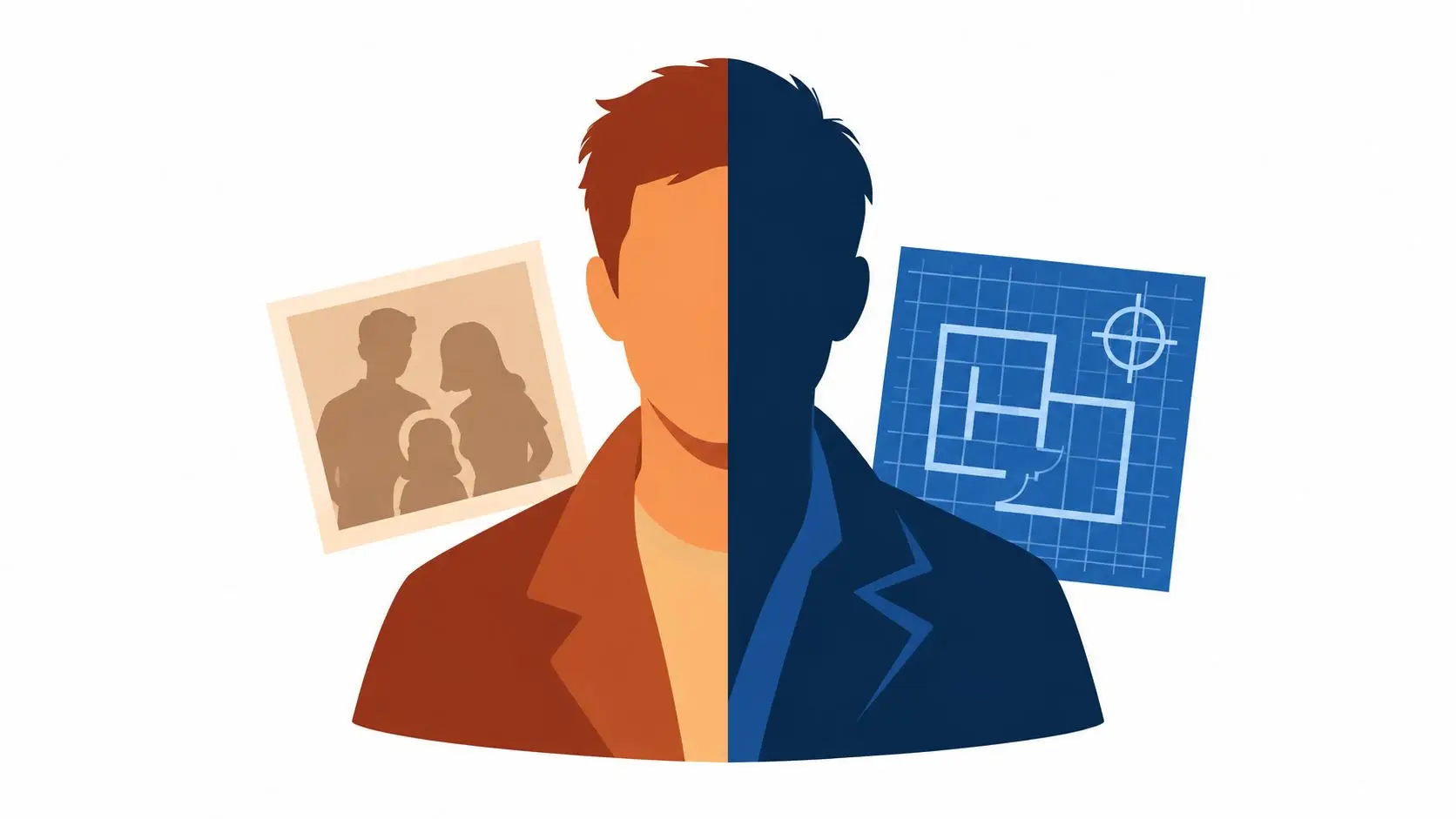
A villain becomes more compelling when readers can follow the reasoning behind their choices, even when they reject the choices themselves. This antagonist pursues a goal that may sound recognizable, such as safety, justice, survival, order, or freedom, but uses methods that violate the protagonist's moral limits.
Killmonger in Black Panther wants to respond to the oppression of marginalized people, yet his plan depends on violent domination. Thanos in Avengers: Infinity War believes mass destruction will solve a resource problem. Cersei Lannister in Game of Thrones protects her family and consolidates power through cruelty. Magneto in X-Men turns persecution and trauma into a doctrine of mutant supremacy.
The important distinction is between motivation and justification. You can make a character's motivation understandable without asking readers to approve of the result. That tension gives the protagonist a stronger opponent because defeating the antagonist may also mean confronting a problem the protagonist has ignored.
Practical rule: Give the villain a coherent argument, then make the story test the human cost of acting on it.
Build the motivation into every scene
Start with a character profile that records the antagonist's goal, fear, values, formative experiences, boundaries, and preferred methods. Storyloft's Character Creator can hold these details in one place, while a dedicated binder in the Planning workspace can organize the antagonist's ideology and life events. That record helps prevent a long manuscript from turning a carefully motivated opponent into a convenient plot device.
Dialogue should reveal worldview rather than merely explain backstory. Use Eddy's tone analysis to check whether the antagonist's language reflects their beliefs, level of control, and relationship to the protagonist. Side-by-side editing can also help you track parallel scenes, especially when the same event means justice to one character and threat to another.
For practical guidance on goals, justification, consequences, and audience response, consult Storyloft's guide to what makes a good villain. The final test is simple: if the antagonist vanished, would the central moral question disappear with them? If so, you've built more than a generic villain.
2. The Obstacle or Environmental Antagonist
Some stories have no single enemy to defeat. The opposition may be a storm, an ocean, a disease, a surveillance system, a social order, a machine, or a set of circumstances that keeps closing in on the protagonist. Writing references recognize nature, society, technology, and other impersonal forces as established antagonist forms.
In The Old Man and the Sea, the sea and the physical struggle of survival create pressure without behaving like a scheming villain. In 1984, surveillance and institutional control shape the conflict. All Is Lost uses isolation and the ocean to test endurance, while The Stand turns disease into a force that reshapes individual and social stakes.
This type works best when the environment actively changes what the protagonist can do. A storm should affect travel, communication, supplies, shelter, and judgment. A corrupt society should affect employment, relationships, language, law, and the protagonist's perception of risk. Description alone isn't enough. The force must alter decisions.
Track pressure instead of dialogue
Use the Planning workspace to record environmental conditions, weather cycles, institutional rules, and changes in the surrounding world. A research binder can hold material about the real-world systems or phenomena behind the antagonist. The Notes panel can then track how each condition affects the protagonist physically and psychologically.
Eddy's tone analysis is useful for maintaining a consistent atmosphere, but don't let atmosphere replace escalation. The reader should understand what has become harder, what resource has disappeared, or what rule has tightened.
A visual reference can establish the scale of impersonal danger before the protagonist fully understands it.
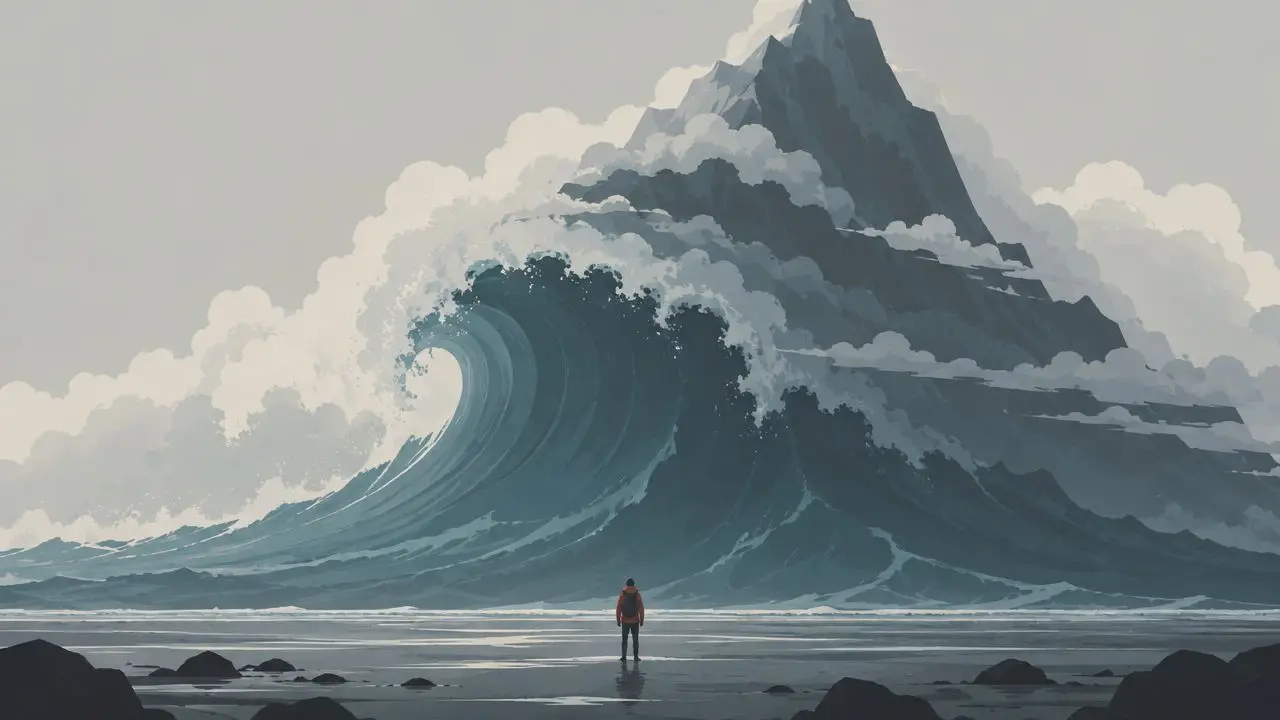
The same principle applies to video-driven fiction planning. A scene showing environmental threat can help you judge whether the written version creates enough sensory and practical pressure.
The ending also changes. The protagonist may not destroy the antagonist. They may survive it, adapt to it, expose it, escape it, or accept an irreversible loss. That lack of a final duel can make the story more realistic and more unsettling.
3. The Rival or Competing Protagonist
A rival becomes an antagonist when their goal directly prevents the protagonist from achieving a mutually exclusive outcome. They don't need to be cruel, corrupt, or malicious. They only need to stand in the way.
This structure is common in sports stories, workplace narratives, political dramas, and coming-of-age fiction. Two candidates want the same position. Two athletes need the same victory. Two colleagues defend incompatible plans. Both can be intelligent, decent, and emotionally credible.
The strength of a rival lies in symmetrical legitimacy. Readers should understand why each character wants to win. If the protagonist's goal is to lead a team and the rival believes another candidate is better qualified, the conflict has substance. If the rival exists only to make the protagonist look good, the story loses tension.
Give both sides a real strategy
Create profiles for the protagonist and rival with equal attention to goals, values, skills, blind spots, relationships, and costs. Storyloft's Character Creator can support that comparison, while side-by-side editing lets you write parallel scenes without flattening either perspective.
The rival's voice must also stand apart. One character may speak through evidence and measured analysis, while the other relies on instinct, metaphor, or blunt emotional language. Eddy's voice-aware rewrites can help preserve those distinctions during revision.
Use a comparison binder in the Planning workspace to track where the characters agree, where they diverge, and how each choice changes the competition. A rival should not merely react to the protagonist. They should make independent moves that force the protagonist to revise a plan.
“A rival is strongest when readers could defend either character's position.”
The final confrontation may end in victory, compromise, mutual recognition, or a choice that changes the terms of competition. For a refresher on the protagonist's narrative role, see Storyloft's explanation of what a protagonist is. The key question is whether the rivalry exposes character, not just rank.
4. The Tragic or Fallen Hero Antagonist
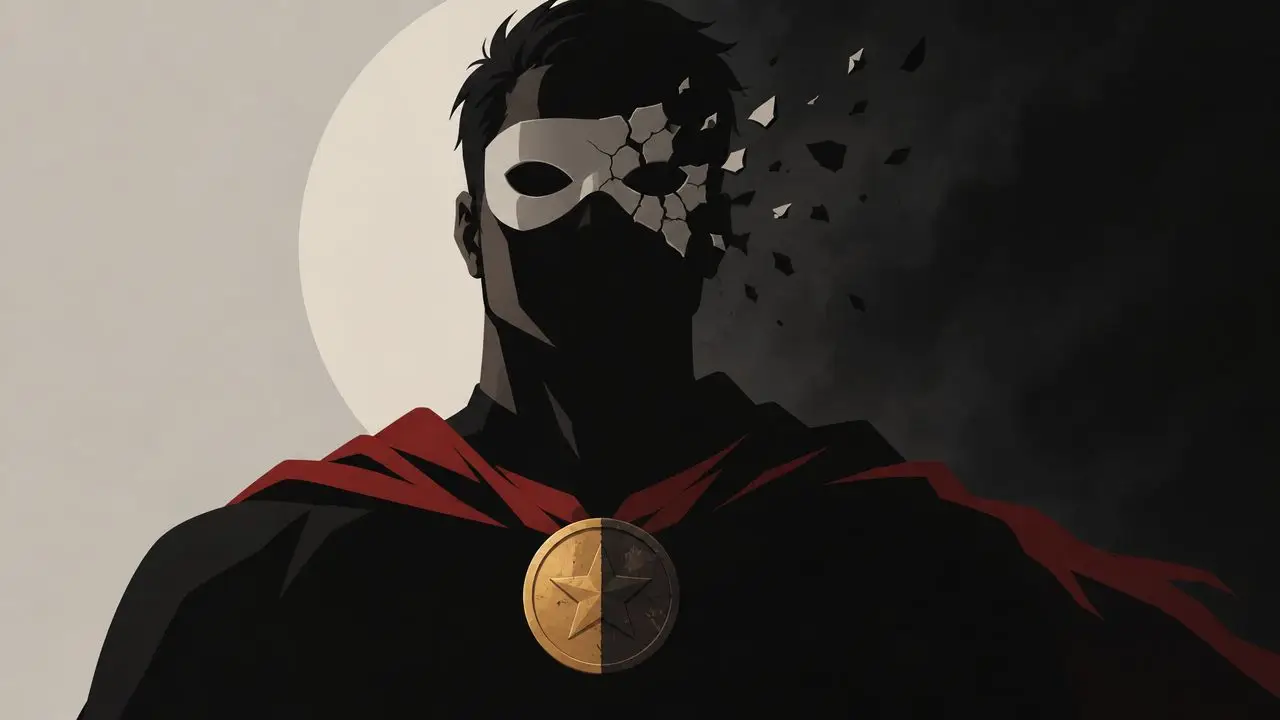
A fallen hero carries the emotional weight of a broken relationship. They were once admirable, loyal, principled, or close to the protagonist, and their transformation creates opposition where trust once existed.
Anakin Skywalker's fall from Jedi to Sith turns a political and spiritual conflict into a personal tragedy. Harvey Dent in The Dark Knight shows how an idealist can become corrupted. Walter White in Breaking Bad gradually changes from a desperate provider into a person whose choices make him an antagonist. In each case, the audience understands not only what the character has become, but also what has been lost.
This type needs a visible chain of turning points. A sudden change may surprise readers, but it rarely produces grief unless the earlier identity remains specific. Show the values the character once defended, the compromises they first considered acceptable, and the moment when a temporary exception becomes a governing rule.
Map the fall as a parallel arc
Use Storyloft's Timeline or Notes feature to record the antagonist's fall alongside the protagonist's emotional response. A “before and after” binder can document values, relationships, language, and decisions at each stage of corruption.
Voice is especially important. The fallen character may begin with open, generous language and later become guarded, absolutist, or procedural. Eddy's tone analysis can help you identify those shifts without making the change feel theatrical. The protagonist's perspective should change too. They may move from denial to anger, from rescue attempts to resistance, or from loyalty to mourning.
Avoid treating redemption as mandatory. A fallen hero can return, refuse return, sacrifice themselves, or remain committed to the damage they caused. What matters is that the story makes the transformation causally believable and gives the protagonist a meaningful response to it.
The strongest version often makes the protagonist fear a shared capacity for compromise. The antagonist then functions as a possible future, not merely a former friend.
5. The Ideological Antagonist
An ideological antagonist opposes the protagonist through a belief system. The conflict may involve political authority, religion, justice, freedom, identity, progress, tradition, or the proper use of power. The antagonist can be personally disciplined and morally sincere while still defending ideas the protagonist cannot accept.
O'Brien in 1984 represents totalitarian control against individual thought. The theocracy in The Handmaid's Tale places institutional authority above personal autonomy. Killmonger in Black Panther turns historical injustice into a case for global intervention through force. Khan in Star Trek Into Darkness combines vengeance with a belief in superior genetic power.
Ideological conflict becomes weak when the antagonist's position is reduced to a slogan. Give the opposing belief a history, practical benefits, emotional appeal, and internal contradictions. Then do the same for the protagonist's worldview. Readers should see why ordinary people might support either side.
Make the ideas drive action
Create an Ideology Binder in Storyloft's Planning workspace. Record the antagonist's core claims, historical influences, assumptions, desired social order, and fears. Then use Eddy's brainstorming tools to develop counterarguments and challenges. This prevents the antagonist from delivering speeches that exist only to announce the author's position.
The Notes panel can track how the ideology appears across scenes. A belief should influence laws, rituals, relationships, resource allocation, and personal choices. It should not surface only during debates.
Research matters when the fictional ideology draws from real philosophical, political, or religious frameworks. Store sources in a binder and distinguish researched foundations from invented details. For examples of how literary conflict can emerge from competing values and structures, explore Storyloft's resource on conflict in literature.
The ending might defeat a leader without defeating the ideology. That possibility creates a wider scale of conflict and can support sequels, ambiguous conclusions, or a final choice in which the protagonist must prove their values through action.
6. The Cunning or Manipulative Antagonist
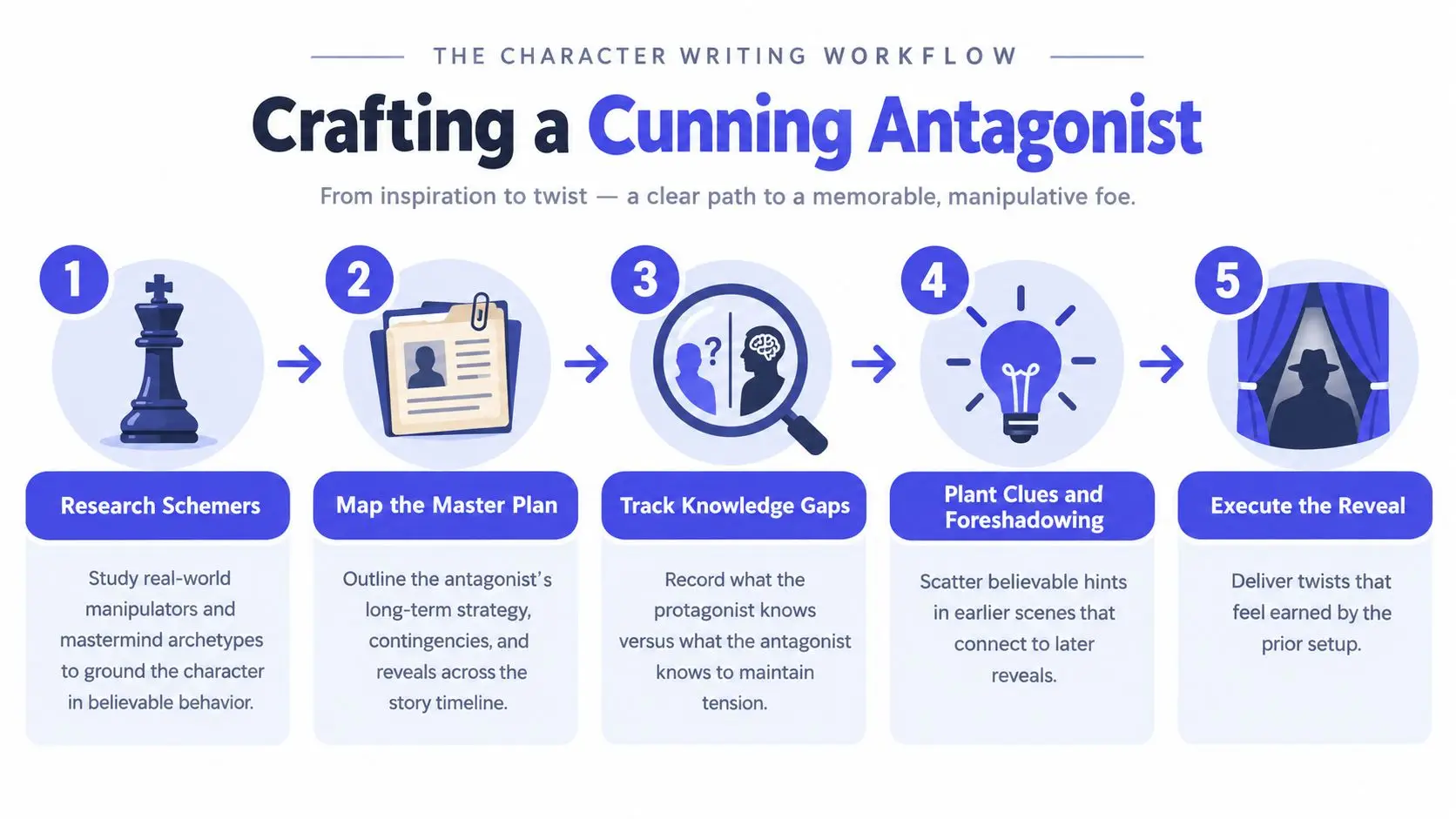
Some antagonists win by controlling information. They study people, anticipate reactions, exploit institutions, plant false evidence, and arrange situations in which the protagonist appears to make their own mistakes.
Hannibal Lecter uses psychological insight to influence others in The Silence of the Lambs. Moriarty represents strategic criminal intelligence in the Sherlock Holmes stories. Amy Dunne in Gone Girl builds a calculated deception around perception and revenge. Frank Underwood in House of Cards uses political relationships, secrets, and timing as weapons.
This type depends on information asymmetry. The antagonist knows something the protagonist doesn't, or understands the consequences of a plan before anyone else does. But the writer still has to play fair. A reveal feels satisfying when earlier scenes contain details that become meaningful in retrospect.
Build the plan before drafting
Create a strategy binder in Storyloft's Planning workspace with the antagonist's objective, sequence of moves, contingencies, resources, vulnerabilities, and reveal points. Then create a separate record of what each major character knows at each stage.
That distinction prevents accidental omniscience. It also helps you decide when to reveal the plan and when to show only its consequences. Eddy can flag places where the antagonist's intelligence should appear through behavior or dialogue. The Notes panel can organize clues, while side-by-side editing lets you check whether the manuscript plants enough evidence for later reversals.
The reader should be surprised by the conclusion, not confused about the logic that produced it.
Keep the antagonist's intelligence bounded by personality. A manipulator may overlook a detail because of arrogance, attachment, impatience, or a need to control the narrative. Those limitations make the final defeat credible.
7. The Embodied Flaw or Inner Antagonist
The inner antagonist is the part of the protagonist that blocks progress. It may appear as fear, addiction, shame, obsession, prejudice, grief, self-sabotage, or a destructive belief. Sometimes the conflict is literalized through an object, creature, setting, or repeated image.
In The Yellow Wallpaper, the wallpaper and the narrator's deteriorating mental state become inseparable from the story's psychological conflict. The whale in Moby-Dick can be read alongside Ahab's obsession and fixation. Addiction drives the central struggle in Requiem for a Dream. Literary character studies often place loneliness or self-sabotage at the center of opposition.
This type requires care. A mental illness should not be treated as a shorthand for evil, and an addiction shouldn't function as a moral label. Define the specific behavior or belief that blocks the protagonist, then show how it affects choices, relationships, and consequences.
Turn psychology into observable conflict
Start with a detailed character profile covering the protagonist's history, needs, fears, defenses, and contradictions. In Storyloft's Planning workspace, a Psychology Binder can track how the flaw appears in different situations. The Notes panel can connect recurring metaphors and symbols to particular emotional states.
Eddy's tone analysis can help you examine the internal voice. Does the protagonist rationalize, avoid, catastrophize, repeat certain images, or become increasingly rigid? These linguistic patterns can show conflict without forcing the character to explain it directly.
A strong inner antagonist also interacts with external pressure. A character struggling with shame may misread a rival. A character driven by obsession may turn an environmental threat into a personal crusade. This combination gives the inner conflict plot consequences rather than leaving it as private reflection.
For a practical foundation in character weaknesses and development, use Storyloft's guide to creating a flawed character. The resolution may involve healing, acceptance, restraint, accountability, or surrender. It doesn't need to look like a conventional victory.
8. The Relatable or Sympathetic Antagonist
A sympathetic antagonist makes the conflict painful because readers care about both sides. This character may oppose the protagonist because of shared vulnerability, limited choices, family loyalty, social pressure, or a competing moral responsibility.
In To Kill a Mockingbird, changing perspectives complicate the reader's understanding of Boo Radley and the people who fear him. The Song of Achilles gives emotional weight to competing perspectives around Achilles and Patroclus. In Beloved, a mother's terrible act is inseparable from trauma and an attempt to protect her children. The Light Between Oceans places competing moral goods inside an intimate family conflict.
This antagonist works when neither side is easily dismissed. The protagonist and antagonist may want different outcomes, but both should have reasons that survive scrutiny. Sympathy shouldn't erase harm. It should make the consequences harder to simplify.
Write parallel emotional arcs
Give the antagonist equal depth through backstory, values, relationships, vulnerabilities, and private fears. Storyloft's Character Creator can help develop that material, while side-by-side editing lets you test whether both perspectives receive authentic narrative attention.
Use Eddy's voice-aware features to distinguish the antagonist's speech and thought patterns from the protagonist's. A sympathetic character shouldn't sound like a villain delivering polished explanations. They may hesitate, miscommunicate, defend a painful choice, or speak from a limited understanding of events.
A Parallel Arcs Binder in the Planning workspace can track how both characters grow, suffer, and change. Note where they make similar sacrifices, where their values separate, and what each one believes the other has failed to understand.
The ending may bring reconciliation, permanent separation, mutual sacrifice, or a victory that still feels like loss. That emotional complexity is the point. The antagonist doesn't need to become good. They need to remain human enough that the protagonist's success carries a cost.
Comparison of 8 Antagonist Types
| Antagonist Type | Complexity (🔄) | Resource Requirements (⚡) | Expected Quality (⭐) | Ideal Use Cases (💡) | Key Advantages (📊) |
|---|---|---|---|---|---|
| The Villain with Understandable Motivations | High 🔄, complex motivation mapping | High ⚡, extensive backstory and consistency checks | ⭐⭐⭐, rich thematic depth and emotional resonance | Long-form novels, character-driven epics, sequels | Creates moral complexity and sustained reader investment |
| The Obstacle or Environmental Antagonist | Moderate 🔄, worldbuilding and pacing focus | Moderate ⚡, research and atmospheric detail | ⭐⭐, strong situational tension when executed well | Survival stories, dystopia, literary fiction | Emphasizes protagonist agency and existential stakes |
| The Rival or Competing Protagonist | Moderate 🔄, balanced dual development | Moderate ⚡, equal character development and POV work | ⭐⭐, dynamic, nuanced interpersonal conflict | Sports, workplace, coming-of-age, ensemble casts | Produces fair, relatable competition and possible alliances |
| The Tragic or Fallen Hero Antagonist | High 🔄, requires careful arc and turning points | High ⚡, timeline mapping and emotional beats | ⭐⭐⭐, powerful pathos and transformative drama | Sequels, long-form character arcs, prestige TV | Evokes sympathy while delivering dramatic moral stakes |
| The Ideological Antagonist | High 🔄, nuanced argumentation and balance | High ⚡, deep research and consistent ideology | ⭐⭐, thought-provoking thematic conflict | Political thrillers, speculative fiction, literary debate | Enables exploration of big ideas without simple villainy |
| The Cunning or Manipulative Antagonist | High 🔄, intricate plotting and clue placement | High ⚡, detailed timelines, contingency mapping | ⭐⭐⭐, sustained tension and satisfying reveals | Thrillers, heists, psychological dramas | Drives puzzle-like plots and unpredictable twists |
| The Embodied Flaw or Inner Antagonist | High 🔄, subtle psychological craftsmanship | Moderate ⚡, intense character study and symbolism | ⭐⭐, deep introspection and thematic resonance | Literary fiction, psychological studies, character pieces | Delivers internal transformation and symbolic depth |
| The Relatable or Sympathetic Antagonist | Moderate 🔄, balanced empathy for both sides | Moderate ⚡, equal emotional development required | ⭐⭐, high emotional complexity and reader debate | Family drama, intimate narratives, coming-of-age | Humanizes opposition and avoids black‑and‑white morality |
Choose the Opposition Your Story Needs
Start with the protagonist's goal, not with a list of villain traits. If the protagonist wants to survive a physical threat, an environmental antagonist may create direct and escalating pressure. If the protagonist wants to prove a principle, an ideological opponent can make every decision carry thematic weight. If the story centers on trust, grief, or identity, a fallen hero, rival, sympathetic antagonist, or inner flaw may produce stronger emotional consequences than a conventional villain.
Genre offers a useful filter. Thrillers often benefit from manipulation, hidden information, and strategic reversals. Political and speculative fiction can turn institutions and ideologies into the main source of pressure. Survival stories need environments that change the protagonist's available choices. Family dramas and coming-of-age stories often gain power from opponents who are understandable rather than monstrous. Literary fiction may combine an external force with an internal antagonist so that the setting and the character's psychology reinforce each other.
You can combine types, but identify the primary source of opposition. A rival may also embody an ideological disagreement. A fallen hero may be shaped by a corrupt institution. A sympathetic antagonist may use manipulation to protect someone they love. These layers add depth when each one has a clear function. They create confusion when the story keeps changing what the protagonist is trying to overcome.
Use a practical planning sequence:
- Define the pressure: Write the antagonist's goal, belief, condition, or flaw in a sentence that directly conflicts with the protagonist's goal.
- Map escalation: Record how the pressure affects choices, relationships, resources, safety, and self-image as the story develops.
- Test the genre fit: Decide whether the antagonist supports the expected pacing, atmosphere, scale, and emotional register of the story.
- Set limits: Give the antagonist weaknesses, blind spots, costs, or conditions that make the conflict difficult but solvable.
- Track continuity: Store motivations, clues, environmental rules, ideological claims, emotional turns, and symbolic patterns in Storyloft before drafting.
- Check the ending: Decide whether the opposition will be defeated, survived, exposed, transformed, accepted, or left unresolved.
Storyloft brings manuscript drafting, planning binders, notes, tone analysis, character development, and research organization into one cloud-based writing environment. That makes it useful for long projects in which an antagonist's motivation, voice, strategy, or symbolic role must remain consistent from the opening scene to the final consequence.
Storyloft helps you plan antagonist profiles, organize research, track parallel character arcs, and revise dialogue with Eddy's manuscript-aware tools. Create a dedicated antagonist binder for your current project, then visit Storyloft to develop the opposition before you draft the next scene.