Nonfiction Writings: My Guide to Real Stories
In 2018, I was at Barnes & Noble, reading “The Devil in the White City” by Erik Larson. A stranger saw my book and said, “Oh, that’s nonfiction? I only read novels.” This moment stuck with me for years. It made me see how many readers ignore true stories.
This encounter made me start “The Nonfiction Files,” a monthly series. It explores real stories in many genres, like memoirs and true crime. My aim is to give you a reading list and help you find your way into nonfiction.
Nonfiction writings often get overlooked. Literary awards and bookstagram focus more on fiction. But, the books that really changed me were based on real events. They made me see the world differently and treat people better.
This guide is my tribute to nonfiction. I’ll show you genres, styles, and techniques that make true stories compelling. Whether you love nonfiction or are just starting, there’s something here for you.
Key Takeaways
- Nonfiction writings span a wide range of genres, from memoirs and essays to investigative journalism and cultural criticism.
- Real stories have a unique power to shape perspectives and deepen empathy in ways fiction can’t always match.
- This guide goes beyond simple book recommendations — it explores how to read, analyze, and connect nonfiction texts.
- “The Nonfiction Files” is a monthly series designed to help readers find entry points into true narratives.
- Nonfiction receives far less attention than fiction in online book communities and literary institutions.
- Understanding different nonfiction styles helps you pick books that match your reading preferences and interests.
What Are Nonfiction Writings and Why They Matter to Me
Nonfiction is my favorite thing to read. It makes me think, feel, and see things differently. Memoirs, true crime, and histories are all so engaging. But, fiction gets more attention, leaving nonfiction in the shadows.
My Journey from Fiction to Fact-Based Stories
I used to love getting lost in novels. But then I read The Diary of a Young Girl by Anne Frank. It changed me. The real words were more powerful than any made-up story.
Books like Silent Spring by Rachel Carson and The Warmth of Other Suns by Isabel Wilkerson showed me truth can be more exciting than fiction. They pull you into real events with amazing skill.
The Power of True Stories in Shaping Perspectives
True stories have a special power. They make me feel more and think differently. Creative nonfiction mixes facts with feelings, making big topics feel close and important.
Why Nonfiction Deserves More Recognition
Nonfiction is full of different types. Knowing about them helps us understand what books are about. Here are some main types and examples:
| Category | Notable Work | What Makes It Stand Out |
|---|---|---|
| Memoir | The Diary of a Young Girl – Anne Frank | Intimate first-person account of life during the Holocaust |
| Science Writing | Silent Spring – Rachel Carson | Sparked the modern environmental movement |
| Narrative History | The Warmth of Other Suns – Isabel Wilkerson | Brings the Great Migration to life through real people |
These examples show true stories should be at the heart of our talks about books. As I explore more nonfiction, I hope you’ll see why it’s so captivating.
Understanding the Taxonomy of Nonfiction
Think of nonfiction writings like a biologist classifies living things. We use domain, kingdom, and phylum to sort books. This helps us see what a book does, not just what it’s about.
Classification shows hidden talks between texts. A memoir and a biography might share a subject but differ in style and intent. The beauty lies in how categories overlap, allowing for creativity.
I divide the taxonomy into four layers:
- Style — how the book is written
- Category — the overall approach or purpose
- Genre — the constraints and form it follows
- Sub-genre — the specific rules within that form
At the style level, I see four main types. Narrative nonfiction uses story structure. Academic writing focuses on research. Creative nonfiction mixes literary techniques with facts. Reported writing uses interviews and fieldwork.
The category level is just as clear. Here’s how I organize it:
| Category | Primary Goal | Common Example |
|---|---|---|
| Journalism | Inform the public through reporting | Long-form magazine features |
| Personal Narrative | Share lived experience | Memoirs and personal essays |
| History | Reconstruct and interpret the past | Popular history books |
| Instructional | Teach a skill or concept | Self-help and how-to guides |
Once you understand this framework, books on your shelf make more sense. You’ll see patterns in nonfiction writings. This taxonomy is key to exploring creative nonfiction styles.
Exploring Different Styles in Creative Nonfiction
True stories don’t all sound the same. Creative nonfiction has many styles, each with its own purpose. Some writers use poetic words. Others stick to facts and clear arguments.
I find it helpful to group these styles into a few categories. This way, I can spot them while reading.
Narrative Nonfiction That Reads Like Fiction
This style always hooks me. Narrative nonfiction has a story arc with pacing and tension. It’s based on real events.
Writers like Nathan Thrall and Roxana Asgarian make books that feel like novels. Literary nonfiction at its best makes learning feel like a story. You can find great examples of creative nonfiction books online.
Scholarly Texts for General Audiences
Academic writing doesn’t have to be dry. Scholars like Ruha Benjamin and Anthony Christian Ocampo write for everyone. Their books mix research with engaging writing.
Reported and Investigative Approaches
Some writers focus on giving clear information. Charles Duhigg’s The Power of Habit and Henry Grabar’s Paved Paradise are great examples. They use data and interviews to inform without being hard to read.
| Style | Key Features | Example Author | Example Book |
|---|---|---|---|
| Narrative Nonfiction | Story arcs, pacing, scenes | Nathan Thrall | A Day in the Life of Abed Salama |
| Academic Writing | Citations, peer review, research | Ruha Benjamin | Race After Technology |
| Reported Nonfiction | Data, interviews, clear arguments | Charles Duhigg | The Power of Habit |
The best nonfiction writing doesn’t just inform — it transforms the way you see the world around you.
Narrative Nonfiction and the Art of Storytelling
Great narrative nonfiction makes you forget you’re reading about real events. It pulls you in with vivid scenes and tension. It also has deeply human moments.
I love books that mix fact and fiction. They don’t bend the truth. Instead, they use storytelling techniques that keep you turning pages.
Building Compelling Story Arcs
A strong story arc is key in great narrative nonfiction. Erik Larson’s The Devil in the White City is a great example. Larson tells two stories at once. One is about an architect, the other about a serial killer.
These stories happen during the 1893 Chicago World’s Fair. Larson uses sensory details and pacing to build tension. He stays true to historical facts.
Jeannette Walls’ The Glass Castle also has a strong story arc. It follows her journey from a chaotic childhood to independence. Walls uses scene-setting, dialogue, and emotional stakes to make it feel like a novel.
Character Development in Real Stories
Character development in nonfiction is about showing a real person’s complexity. Walter Isaacson’s biography of Steve Jobs does this well. Isaacson shows Jobs as a flawed, brilliant, and sometimes cruel person.
This layered portrayal makes the book resonate. Here are key elements I look for in strong character development:
- Contradictions that reveal depth
- Dialogue drawn from interviews or records
- Physical and emotional details grounded in research
- Growth or change over the course of the narrative
| Book | Author | Storytelling Strength | Character Focus |
|---|---|---|---|
| The Devil in the White City | Erik Larson | Dual timelines and pacing | Daniel Burnham and H.H. Holmes |
| The Glass Castle | Jeannette Walls | Emotional story arc | The Walls family |
| Steve Jobs | Walter Isaacson | Layered character portrayal | Steve Jobs |
Mastering these elements is what makes narrative nonfiction memorable. It’s what separates flat reporting from stories that stay with you.
Memoir Writing as Personal Truth
Memoir writing is very personal. It focuses on key moments or themes, not your whole life. It’s about picking scenes that feel the most emotional.

I love how memoirs are honest. A good one doesn’t just tell stories. It unearths them. Kiese Laymon’s Heavy dives deep into body, family, and race. Mira Jacob’s Good Talk explores identity and belonging through comics.
“There is no greater agony than bearing an untold story inside you.” — Maya Angelou
Maya Angelou’s I Know Why the Caged Bird Sings is a classic. It shows how personal stories can share universal truths. Tara Westover’s Educated is fast-paced and thrilling, yet deeply real.
Memoir writing has many forms. Some are written in essays. You can read them in any order, and they still feel powerful.
- Memoir focuses on selected moments, not an entire life
- Emotional honesty matters more than perfect factual recall
- Autobiographical writing can take many shapes — graphic, essay-based, or traditional narrative
- The best memoirs connect personal experience to broader cultural conversations
Memoir stands out because it values emotional truth over a strict timeline. It’s a brave craft. And readers can always tell when it’s done right.
Essay Writing and the Power of Personal Perspective
Essay writing is very personal. It takes a small idea and makes it big. The best essays feel like talking to a friend, open and real.
Crafting Collections That Connect
Essay collections are my favorite books. Tressie McMillan Cottom’s Thick mixes personal stories with sharp views. John Green’s The Anthropocene Reviewed rates life’s moments. Nikesh Shukla’s The Good Immigrant shares 21 stories about identity.
| Essay Collection | Author/Editor | Core Theme |
|---|---|---|
| Notes of a Native Son | James Baldwin | Race and identity in America |
| Thick | Tressie McMillan Cottom | Beauty, class, and Black womanhood |
| The Year of Magical Thinking | Joan Didion | Grief and loss |
| The Good Immigrant | Nikesh Shukla (editor) | Immigration and belonging |
From Blog Posts to Published Essays
Many essays started online. James Baldwin wrote for Harper’s Magazine and Partisan Review before books. Blog posts and newsletters can also lead to published essays.
Finding Your Voice in Personal Essays
Voice is key in essays. Joan Didion’s The Year of Magical Thinking shows raw honesty can touch many. Essay writing is best when you’re true to yourself. That’s what readers remember.
The best personal essay doesn’t just tell your story — it helps the reader understand their own.
Here are tips for writing essays:
- Start with a specific moment, not a broad theme
- Let your natural speaking rhythm guide your sentences
- Read your draft out loud to catch anything that feels forced
- Revise for clarity before style
Literary Nonfiction Techniques I’ve Mastered
I’ve learned many writing techniques to make real stories come alive. Literary nonfiction uses tools from fiction, like vivid images and emotional depth. But it always stays true to facts. Let me show you the main methods I use.
Using Literary Devices in Factual Writing
Sensory details are my key. When I write, I don’t just tell what happened. I describe the sound of an espresso machine, the smell of coffee, and the buzz of a busy café. These are real details from my notes.
I use metaphors, pacing, and dialogue to make readers feel like they’re there. Just like in novels, real people should feel real on the page.
“We tell ourselves stories in order to live.” — Joan Didion, The White Album
Didion shows how to mix personal stories with facts without losing truth.
Balancing Creativity with Accuracy
Creative touches must never distort facts. Accuracy is key in my writing. I can use vivid descriptions, but I must stick to what really happened. That’s my rule.
| Technique | Creative Purpose | Factual Accuracy Check |
|---|---|---|
| Sensory Description | Immerses the reader in the scene | Based on direct observation or notes |
| Dialogue | Reveals character and tension | Verified through recordings or transcripts |
| Structural Play | Builds suspense and pacing | Timeline and events remain unchanged |
| Metaphor | Deepens emotional resonance | Clearly figurative, not misleading |
This balance makes literary nonfiction both rewarding and challenging to write.
Biographical Writing and Life Stories
Few forms of nonfiction captivate me like biographical writing. It’s satisfying to see an author bring someone’s life to life on paper. Unlike memoirs, biographies are written by someone else. This writer must tell the subject’s story with care and research.
Recent biographies show how varied this genre can be. Max Boot’s Reagan gives a broad political view. Robert Samuels and Toluse Olorunnipa’s His Name Is George Floyd tells a story that changed the nation. Walter Isaacson’s Steve Jobs is a great example of an authorized biography, based on over 40 interviews.
“A biography is considered complete if it merely accounts for six or seven selves, whereas a person may well have as many as a thousand.” — Virginia Woolf
Life stories can take many forms. Oral histories like Garrett M. Graff’s When the Sea Came Alive use direct quotes. Historical biographies, like Donald Robertson’s How to Think Like a Roman Emperor, place figures in their time.
| Biography Type | Example | Key Approach |
|---|---|---|
| Authorized | Steve Jobs by Walter Isaacson | Subject-approved interviews |
| Investigative | His Name Is George Floyd | Deep reporting and research |
| Historical | How to Think Like a Roman Emperor | Contextual and philosophical lens |
| Oral History | When the Sea Came Alive | Direct quotes from participants |
I love how biographical writing covers so much ground. Whether you’re into politics or personal stories, biographies offer a peek into real lives. They’re told with care and compassion by someone else’s hand.
Journalistic Writing in Long-Form Narratives
Some of the most gripping nonfiction I’ve read comes from reporters who spent years chasing a single story. Journalistic writing in long-form narratives goes beyond daily news. It digs deeper, asks harder questions, and presents findings with the pacing of a great novel.
Let me walk you through the key techniques and genres that make this style of nonfiction so powerful.
Investigative Techniques That Uncover Hidden Truths
Investigative journalism uses deep reporting, multiple sources, and relentless fact-checking. Patrick Radden Keefe’s Empire of Pain exposed the Sackler family’s role in the opioid crisis through years of research. John Carreyrou’s Bad Blood dismantled the Theranos fraud using whistleblower interviews and leaked documents.
These books succeed because the authors refused to accept surface-level answers. They built airtight cases through:
- Court records and public documents
- Confidential source cultivation
- Cross-referencing testimony from dozens of interviews
- Data analysis and financial forensics
Building Stories from Research and Interviews
Randy Shilts’ And the Band Played On remains a landmark in long-form journalism. He combined hundreds of interviews to chronicle the early AIDS epidemic. Luis Alberto Urrea’s The Devil’s Highway followed 26 men crossing a deadly stretch of Arizona desert. Urrea blended investigative journalism techniques with vivid storytelling to humanize a border crisis.
The best journalistic writing transforms raw data into narratives that readers feel in their bones.
A Distinct Genre Rooted in Real Cases
True crime has exploded in popularity over the past decade. It draws readers who crave real stakes and real consequences. What separates great true crime from sensationalism is the depth of reporting behind it.
| Book | Author | Focus | Key Technique |
|---|---|---|---|
| Empire of Pain | Patrick Radden Keefe | Corporate accountability | Archival research |
| Bad Blood | John Carreyrou | Tech fraud | Whistleblower interviews |
| The Devil’s Highway | Luis Alberto Urrea | Immigration | Immersive reporting |
Whether the subject is a cold case or a corporate scandal, true crime at its best serves as a form of accountability journalism. It connects naturally to the documentary prose and historical narratives I explore next.
Documentary Prose and Historical Narratives
Some books are so gripping, they make history come alive. They use documentary prose to put you right in the action. Writers do deep research and set scenes vividly, making history feel real.
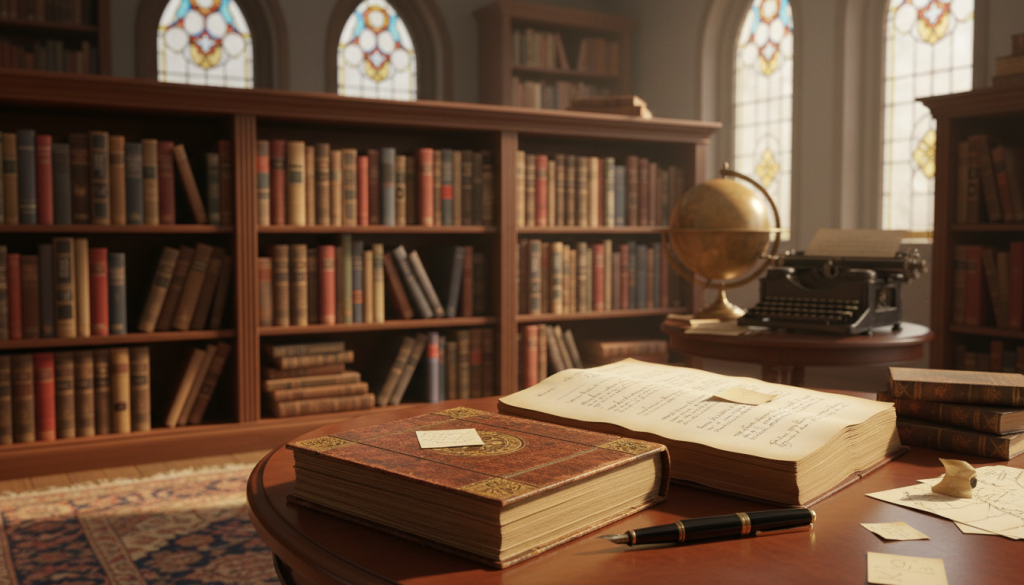
These stories are more than just facts. They dive into the human side of big events. For example, Hiroshima Nagasaki by Paul Ham tells the story of atomic bombs through survivor stories. Heather Ann Thompson’s Blood in the Water brings the 1971 Attica prison uprising to life with detailed accuracy. These books show that true stories can be as powerful as fiction.
Sebastian Haffner’s Defying Hitler is a great example. He wrote about Germany’s change in 1939, hid it, and it was found 60 years later. Published in 2000, it still feels urgent and real.
Here are some top books in this genre:
| Book | Author | Subject | Approach |
|---|---|---|---|
| The Rise and Fall of the Third Reich | William L. Shirer | Nazi Germany | Comprehensive documentation |
| Team of Rivals | Doris Kearns Goodwin | Lincoln’s cabinet | Political biography |
| Defying Hitler | Sebastian Haffner | Pre-war Germany | Eyewitness memoir |
| Blood in the Water | Heather Ann Thompson | Attica uprising | Investigative reconstruction |
These books share a deep commitment to truth and storytelling. Documentary prose turns history into a living experience. I see these stories as a mix of journalism and literature, offering lasting impact.
Fact-Based Storytelling Across Different Genres
Nonfiction is amazing because it tells real stories in many ways. You can learn about old times, space, or pop culture. The best writers make these topics come alive.
History Books That Captivate
Good history books are exciting to read. Jared Diamond’s Guns, Germs, and Steel shows why some societies did well. It’s like a mystery story.
This is the power of storytelling with facts. It turns old stories into thrilling tales that change how we see things.
Science Writing for Everyone
Science writing should be fun and easy to understand. Bill Bryson’s A Short History of Nearly Everything makes science funny and interesting. Stephen Hawking’s A Brief History of Time explains the universe in simple terms.
Neil deGrasse Tyson’s Astrophysics for People in a Hurry shows science can be clear without being hard.
“The good thing about science is that it’s true whether or not you believe in it.” — Neil deGrasse Tyson
Cultural Criticism and Social Commentary
Cultural criticism looks at where art meets society. It makes us think about things we usually don’t question. Jia Tolentino’s Trick Mirror digs into the internet and who we are.
Hilton Als’ White Girls mixes personal stories with big ideas. It talks about race, identity, and art in new ways.
| Genre | Standout Book | Author | Key Strength |
|---|---|---|---|
| History | Guns, Germs, and Steel | Jared Diamond | Evidence-driven narrative |
| Science Writing | A Short History of Nearly Everything | Bill Bryson | Accessible humor |
| Cultural Criticism | Trick Mirror | Jia Tolentino | Sharp social analysis |
Each genre shows that real stories can be as engaging as fiction.
My Process for Reading and Analyzing Nonfiction
I’ve created a system to understand every nonfiction book I read. It’s more than just finishing a book. I classify, compare, and reflect on what I’ve read. This method changes how I connect with nonfiction and helps me suggest the best books to others.
How I Categorize Books by Style and Genre
I sort books not just by subject. My analysis looks at how a book is written, not just what it’s about. For example, two ocean books can be very different. One might tell a dramatic story, while the other is a personal reflection.
Here’s how I classify books:
| Layer | What It Captures | Example |
|---|---|---|
| Style | The writing approach | Narrative, academic, creative, reported |
| Category | The broader tradition | Journalism, personal narrative, history |
| Genre | The specific format | Biography, memoir, investigative |
| Subject | The broad theme | Race, sports, philosophy |
| Topics | Specific issues within subjects | Redlining, concussions in the NFL |
| Tropes | Recurring themes and devices | The reluctant hero, the hidden history |
This system helps me see a book’s success based on its style. A reported investigation is judged differently than a personal essay collection.
Connecting Books Across Subject Matter
The magic happens when I link nonfiction writings across subjects. A civil rights book might share storytelling with a science book on climate change. My analysis finds these hidden connections. This makes every new book more interesting and valuable.
Building Your Nonfiction Reading List
Starting a nonfiction reading list can feel overwhelming. There are thousands of great titles out there. I’ve spent years curating my own collection. I want to share some book recommendations that changed the way I see the world.
Paul Kalanithi’s When Breath Becomes Air is a must-read. It’s a neurosurgeon’s account of facing a terminal cancer diagnosis. The prose is stunning, and the honesty is raw.
Robin Wall Kimmerer’s Braiding Sweetgrass blends botanical science with Indigenous wisdom. It feels both ancient and fresh. Rebecca Skloot’s The Immortal Life of Henrietta Lacks tackles medical ethics through one family’s story. It reads like a thriller.
My book recommendations span several categories. Here’s a quick breakdown to help you build your own reading list:
| Category | Title | Author | Why It Stands Out |
|---|---|---|---|
| Memoir | When Breath Becomes Air | Paul Kalanithi | Profound meditation on mortality |
| Science & Nature | Braiding Sweetgrass | Robin Wall Kimmerer | Bridges science and Indigenous knowledge |
| Self-Help | The Subtle Art of Not Giving a F*ck | Mark Manson | Counterintuitive approach to happiness |
| Business & Finance | The Big Short | Michael Lewis | Gripping Wall Street narrative |
| Psychology | Outliers | Malcolm Gladwell | Redefines what success really means |
| Health | This Is Your Brain on Food | Uma Naidoo | Links nutrition to mental well-being |
I suggest picking one title from each category. This approach exposes you to different styles of nonfiction writings. It keeps your reading list dynamic. Mix a memoir with a science book or pair investigative journalism with self-help. The variety will sharpen the way you analyze and connect ideas across subjects.
Common Tropes and Patterns in Nonfiction Writings
After years of reading nonfiction, I noticed patterns. Certain storytelling tricks and structural choices keep appearing. Recognizing these tropes makes me a sharper reader. It can do the same for you.
Recognizing Recurring Themes
Nonfiction often uses the same frameworks. The transformative journey is a big one. Think of Cheryl Strayed’s Wild, where physical travel mirrors inner growth. Memoir writing thrives on this structure because personal change keeps readers hooked.
Other common tropes I see include:
- The newsroom or behind-the-scenes drama
- Humanizing a criminal or misunderstood figure
- The underdog expert who challenges a broken system
- A single event that reshapes an entire community
Understanding Genre Conventions
Each nonfiction category has its own rules. Genre conventions shape what readers expect. In biographical writing, the focus is on one person’s full life told in sequence — like The Autobiography of Malcolm X. Memoir writing, on the other hand, zooms into a specific slice of experience rather than covering everything.
| Feature | Autobiography / Biography | Memoir |
|---|---|---|
| Scope | Entire life | Specific period or theme |
| Structure | Chronological | Thematic or episodic |
| Tone | Factual, comprehensive | Reflective, emotional |
| Example | The Autobiography of Malcolm X | Wild by Cheryl Strayed |
When Authors Mix Multiple Approaches
The most interesting nonfiction blends styles. Some authors mix investigative journalism with memoir writing elements. I always examine intent and execution when a book crosses genre conventions like this.
Consider how Helter Skelter by Vincent Bugliosi works as investigative journalism, while Jeff Guinn’s Manson covers the same subject through biographical writing. Same story, different lenses — and that distinction matters when you’re building your reading habits.
Conclusion
I think nonfiction writings are just as exciting as fiction. Knowing how to find the right style and subject makes choosing a book easier. The best nonfiction is like a feast for your brain. It entertains and teaches you something new.
From classic tales to deep dives, creative nonfiction shows that real stories can be as captivating as fiction. Writers who use great storytelling and detailed reporting make reality seem even more exciting. This mix of fact and skill is what makes nonfiction so unique.
I hope this guide makes you see literary nonfiction in a new light. Whether it’s a memoir, investigative journalism, or a cultural essay, you’ll find it rewarding. Truthfully told, it can change how you see the world. That’s why I always come back to it.
FAQ
What exactly are nonfiction writings, and how do they differ from fiction?
Nonfiction writings are based on real events and people. They are different from fiction, which is made up. Nonfiction includes memoirs, biographies, and investigative journalism.
Books like Anne Frank’s diary and Rachel Carson’s *Silent Spring* show how true stories can be engaging. They use creative storytelling and thorough reporting.
What is the taxonomy of nonfiction, and why does it matter for readers?
The taxonomy of nonfiction is like a classification system. It helps us understand what a book does and what it’s about. It includes Style, Category, Genre, and Sub-genre.
Categories can overlap, making nonfiction exciting. This system helps us find books that match our interests.
What is narrative nonfiction, and why do people say it “reads like fiction”?
Narrative nonfiction focuses on plot, pacing, and character development. It’s like a novel but true. Books like Erik Larson’s *The Devil in the White City* are great examples.
They use sensory details and build tension. But every word is based on real events.
What’s the difference between a memoir and an autobiography?
An autobiography tells a person’s life story from start to finish. Memoirs focus on key moments or experiences. They are more about emotional honesty than just facts.
Books like Tara Westover’s *Educated* and Maya Angelou’s *I Know Why the Caged Bird Sings* are examples. Memoirs can also be collections of essays.
How does creative nonfiction differ from standard reported nonfiction?
Creative nonfiction uses literary techniques to explore form and time. It’s like a novel but true. Books like Imani Perry’s *South to America* are examples.
Reported nonfiction, on the other hand, focuses on delivering facts and arguments. It’s straightforward. Both types are important for different reasons.
What is essay writing in nonfiction, and where do essay collections come from?
Essay writing in nonfiction uses personal experiences to make broader points. Essays often start as blog posts or magazine articles. They are then collected into books.
Books like James Baldwin’s *Notes of a Native Son* and John Green’s *The Anthropocene Reviewed* are great examples. They show how personal stories can reveal universal truths.
How does biographical writing work, and what types of biographies exist?
Biographical writing tells a person’s life story. It’s written by someone else. There are many types, like authorized biographies and investigative biographies.
Books like Walter Isaacson’s *Steve Jobs* and Robert Samuels and Toluse Olorunnipa’s *His Name Is George Floyd* are examples. They offer different perspectives on famous figures.
What role does journalistic writing play in long-form nonfiction books?
Journalistic writing in books focuses on deep reporting and interviews. It reveals hidden truths. Books like Patrick Radden Keefe’s *Empire of Pain* and John Carreyrou’s *Bad Blood* are examples.
They expose powerful institutions. This type of writing is like documentary prose, holding power accountable.
What is documentary prose, and how does it handle historical narratives?
Documentary prose chronicles historical moments with detail and sourcing. It brings events to life. Books like Paul Ham’s *Hiroshima Nagasaki* and Heather Ann Thompson’s *Blood in the Water* are examples.
They provide a deep look at history. Books like William L. Shirer’s *The Rise and Fall of the Third Reich* offer comprehensive historical documentation.
Can nonfiction writings cover science and cultural criticism effectively?
Yes, nonfiction can cover science and cultural criticism well. Books like Bill Bryson’s *A Short History of Nearly Everything* and Jared Diamond’s *Guns, Germs, and Steel* are examples. They make complex topics accessible.
Books like Jia Tolentino’s *Trick Mirror* and Hilton Als’ *White Girls* analyze art and society. They show how true stories can be captivating.
How should I build a nonfiction reading list if I’m just getting started?
Start with the nonfiction taxonomy to find books that match your interests. Essential reads include books like Paul Kalanithi’s *When Breath Becomes Air*. For something more accessible, try Malcolm Gladwell’s *Outliers*.
For business, Michael Lewis’s *The Big Short* is a great choice. The taxonomy helps you find books by style, not just subject.
What are common tropes and patterns I should recognize in nonfiction writings?
Common tropes include newsroom dramas and transformative journeys. Genre conventions vary, like *Helter Skelter* as an investigative work versus *Manson* as a biography. Books often mix approaches.
Understanding these patterns helps judge a book’s success. It’s about what the author aimed to do, not what we expected.
Why does nonfiction get less attention than fiction in literary spaces?
Fiction often gets more attention online and in literary spaces. But nonfiction is powerful and engaging. It combines entertainment with education.
Books like *The Nonfiction Files* explore true stories deeply. They offer a fresh perspective on nonfiction.