The Hero’s Journey Explained for Authors
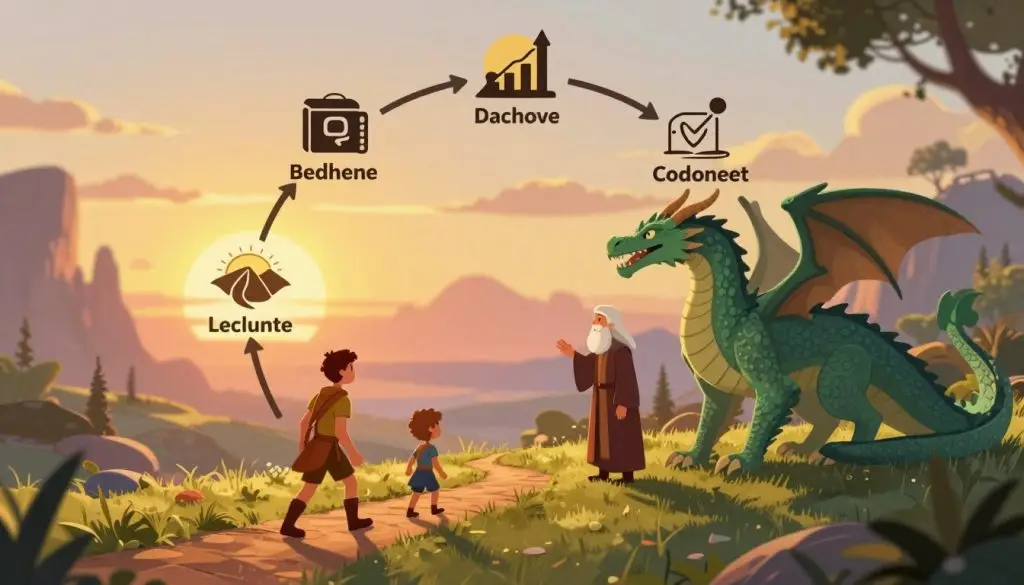
Every author faces the daunting challenge of turning a blank page into a captivating story. The hero’s journey offers a structured way to transform that chaos into a compelling narrative. This storytelling framework, often referred to as the monomyth, guides characters through a quest filled with challenges and personal growth.
From ancient myths to modern tales, this template resonates deeply with readers. It provides a roadmap that helps writers navigate their plots and develop rich characters. Understanding this structure can breathe life into your stories, allowing you to craft a narrative that feels both fresh and familiar.
With Storyloft’s Free Book Outline Generator, authors can collaborate with Eddy, an AI writing companion, to refine their ideas. This guided experience simplifies the writing process, making it easier to explore the stages of your character’s adventure. Let’s dive into the essence of this storytelling framework and discover how it can enhance your writing journey.
Key Takeaways
- The hero’s journey provides a structured template for crafting engaging stories.
- This narrative framework is applicable across various genres and mediums.
- Understanding the stages of the journey can enhance character development.
- Storyloft’s AI companion helps streamline the writing process.
- Every great story follows a recognizable pattern, making it relatable to readers.
1. Why Crafting a Hero’s Journey Outline Can Transform Your Writing
Transforming a collection of thoughts into a structured narrative can be a writer’s greatest challenge. Many of us have experienced the dreaded blank page blues. It’s that moment when the cursor blinks, and ideas swirl in our minds but refuse to take shape.
Using a structured approach, like a hero journey template, can be a game changer. I used to think outlines were for those lacking imagination. But I quickly learned that having a clear structure freed my mind. It allowed me to focus on the fun parts, like dialogue and character quirks.
When I started employing a structured outline, my writing sessions transformed. Instead of staring into the void, I made tangible progress on my plot. A well-crafted outline acts like a trail of breadcrumbs through the dark forest of imagination. It gives you a clear way forward without dictating every single step.
Breaking my story into acts and stages helped me see the big picture. I could spot gaps in my plot before writing thousands of words in the wrong direction. The beauty of a guided outline is that it asks the right questions at the right time. It nudges me to consider my hero’s motivation and the stakes of their adventure.
Rather than feeling constrained by structure, I felt liberated. Knowing the bones of my story were solid allowed me to take creative risks. Every writer I know who has tried a hero journey template agrees: it turns the daunting task of writing a book into a series of manageable, exciting steps.
The key is to find a balance between planning and spontaneity. A flexible outline provides just enough scaffolding to build something beautiful without collapsing into chaos. Once I embraced the outline as a creative tool, my stories became richer, my characters more complex, and my life as a writer infinitely more enjoyable.
| Benefits of a Hero Journey Template | Impact on Writing |
|---|---|
| Clarity | Helps organize thoughts and ideas effectively. |
| Structure | Provides a framework to build your narrative. |
| Creativity | Encourages exploration of character development. |
| Progress | Transforms writing sessions into productive experiences. |
| Flexibility | Allows for spontaneous changes without losing direction. |
2. Understanding the Writer’s Quest: What You Really Want from a Hero’s Journey Outline
Every writer embarks on a unique quest to shape their ideas into a cohesive narrative. The first step in this adventure is to identify your storytelling goals. Ask yourself, “Whose book is this?” If I were handing out an Academy Award, who would win Best Leading Actor? This introspection helps clarify what your character truly desires.
Maybe your character wants to fall in love, recover from trauma, or escape a terrible situation. What obstacles stand in their way? That’s your plot. Using a three-act structure is a straightforward way to define your story. At its core, every story has a beginning, middle, and end. This structure encompasses a set-up, the journey, and a conclusion.
Identifying Your Storytelling Goals and Pacing
Before diving into the 12 steps of the hero’s journey, I always consider what I want from my outline. Am I seeking a rigid blueprint or a flexible guide that allows for unexpected surprises? Understanding my storytelling goals early on—whether it’s a tight thriller or a sprawling epic—helps me adapt the template to fit my vision.
Pacing is crucial in storytelling. A good outline reveals where the plot might be dragging or racing ahead too quickly. This foresight allows me to make adjustments before I’m deep into revisions. The quest isn’t just for my hero; it’s also for me as a writer, balancing the structure of the monomyth with the unpredictable nature of my creativity.
Balancing Plot Structure with Creative Freedom
I used to fear that following a template would make my story feel formulaic. However, I realized that my unique interpretation of each stage makes my story distinct. Every character has their own rhythm, and a well-crafted outline accommodates the ebb and flow of tension, allowing my hero to breathe between life-threatening challenges.
The point of this journey isn’t to constrain my adventure but to provide a shape that resonates with readers. The best outlines include space for creative notes and character development. This way, I’m not just plotting events but also tracking my hero’s emotional arc.
Balancing plot structure with creative freedom is like dancing with a partner. The outline leads, but I get to decide when to spin off into an unexpected direction. When I sit down to map out my adventure, I’m really asking what kind of story I want to tell and what transformation I want my hero—and my readers—to experience.
3. The Origins and Enduring Magic of the Hero’s Journey
The art of storytelling has roots that run deep into our collective past. This journey, often referred to as the hero’s journey, is a timeless structure that has shaped narratives across cultures. From ancient myths to modern films, the essence of this template remains relevant.
Joseph Campbell, a pioneer in mythology, explored this concept in his groundbreaking book, The Hero with a Thousand Faces. He identified a pattern, a monomyth, that exists in countless stories. Campbell’s work illuminated how these narratives resonate with our shared human experience.
Joseph Campbell’s Monomyth and Its Evolution
I’ll never forget the first time I read Joseph Campbell’s work and realized that my favorite stories—from ancient myths to modern blockbusters—were all secretly following the same hero journey pattern. Campbell’s monomyth wasn’t something he invented; he discovered it by studying stories from every corner of the world, proving that the hero’s journey is baked into our collective human psyche.
When I learned that Campbell identified 17 stages in his original framework, I felt a little overwhelmed. However, I soon discovered Christopher Vogler’s streamlined 12-step adaptation, which made everything click into place. Vogler, a Hollywood development executive, took Campbell’s academic work and turned it into a practical template that modern writers could actually use without needing a PhD in mythology.
Christopher Vogler’s Popular 12-Step Adaptation for Modern Writers
The beauty of the hero’s journey structure is that it’s not a rigid formula but a reflection of how humans have always told stories, from campfires to cinema screens. I find it fascinating that the same stages appear in stories separated by centuries and continents, suggesting there’s something universal about the way we understand transformation and growth.
Joseph Campbell’s work gave us the vocabulary to talk about the hero’s journey, but it’s Vogler’s adaptation that gave us the tools to actually write one. Understanding the origins of this template helped me appreciate that I’m not just following a trend; I’m tapping into a storytelling tradition as old as humanity itself.
The 12 steps aren’t arbitrary; each one serves a specific psychological function, guiding both the hero and the reader through a satisfying arc of change. When I use the hero’s journey outline today, I feel connected to every storyteller who came before me, from Homer to George Lucas, all of us working with the same timeless structure.
| Hero’s Journey Elements | Joseph Campbell’s Stages | Christopher Vogler’s Steps |
|---|---|---|
| Call to Adventure | 1. The Call | 1. The Ordinary World |
| Refusal of the Call | 2. Refusal | 2. The Call to Adventure |
| Meeting the Mentor | 3. Mentor | 3. Meeting with the Mentor |
| Crossing the Threshold | 4. Crossing | 4. Crossing the First Threshold |
| Tests, Allies, and Enemies | 5. Tests | 5. Tests, Allies, and Enemies |
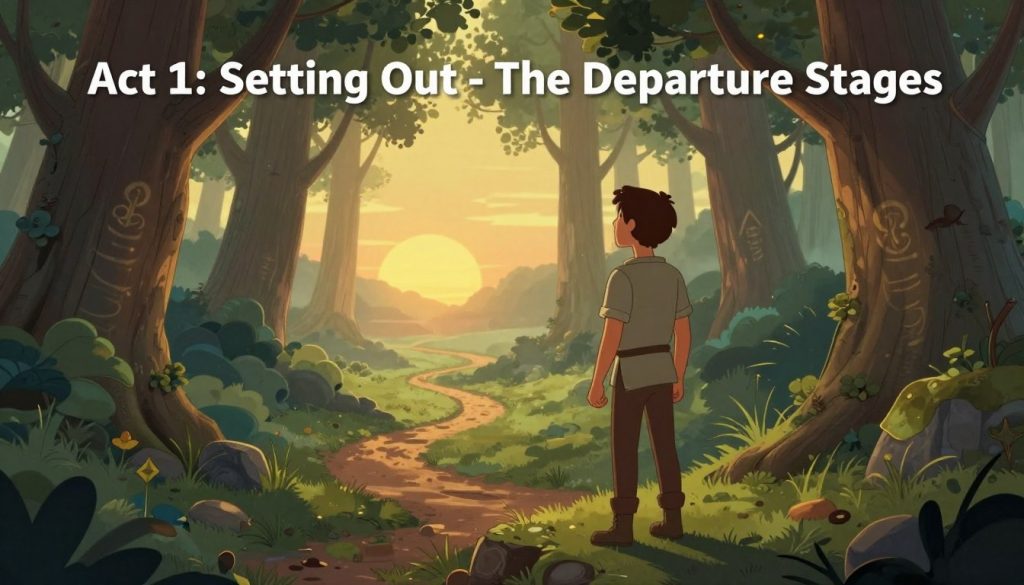
4. Act 1: Setting Out – The Departure Stages
Crafting a compelling narrative often begins with a deep dive into the protagonist’s everyday existence. This initial stage, known as the ordinary world, is where we meet our hero and understand their life before the chaos of adventure begins. By painting a vivid picture of this world, I ensure readers can relate to the hero, making their transformation later all the more impactful.
The Ordinary World: Introducing your Hero’s everyday life
In the ordinary world, my goal is to showcase the hero’s daily routine. This backdrop serves as a canvas, highlighting their normalcy before the inciting incident disrupts everything. I always strive to illustrate what makes their life unique, allowing readers to connect with the character on a personal level.
The Call to Adventure: Spark the inciting incident
The call to adventure is where the magic happens. It’s that thrilling moment when the hero’s comfortable life is turned upside down. This stage ignites the story, presenting a challenge that the hero can no longer ignore. I find this part exhilarating to write, as it sets the tone for everything that follows.
Refusal of the Call: Humanizing hesitation and fear
Yet, not all heroes leap into action. The refusal of the call is a crucial moment that adds depth to my character. Here, I can showcase their fears and doubts, making them relatable. It’s a chance to humanize my hero, revealing their vulnerabilities before they muster the courage to embrace the adventure ahead.
Meeting with the Mentor: Equip your Hero for the journey
Next comes the mentor, who plays a vital role in preparing the hero for the challenges ahead. This figure doesn’t always have to be a wise old sage; sometimes, it’s a quirky barista or even a stubborn family member. The mentor provides the tools and wisdom necessary for the hero to embark on their quest.
Crossing the First Threshold: Commitment to the unknown
Finally, we reach the crossing of the first threshold. This pivotal moment marks the hero’s commitment to the unknown. It’s when the adventure truly begins, and I love crafting this scene to feel monumental. It’s as if the hero is stepping off a cliff, hoping for the parachute to open. This stage is essential for propelling the story forward.
In my experience, Act 1 should take up about a quarter of the story. This allows ample time to establish the ordinary world without dragging things out. Each step in the departure stage builds on the last, creating a chain reaction that pushes my hero from their mundane life into a realm filled with adventure and danger.
5. Act 2: Trials and Transformation – Descent and Initiation
As the plot thickens, our characters face trials that not only challenge them but also redefine their paths. This act, known as “Descent and Initiation,” is where the real action begins. It’s a messy middle where the stakes are high, and my hero learns the hard way that the special world has its own set of rules.
Tests, Allies, and Enemies
This stage is where my story truly comes alive. I love populating this section with a colorful cast of characters—some who’ll betray my hero, some who’ll become lifelong allies, and a few who’ll do both before the journey is over. The tests they face reveal their strengths and weaknesses, forcing them to adapt and grow in ways they never expected.
Approach to the Inmost Cave
The approach to the inmost cave is all about building dread. I want my readers to feel the weight of what’s coming, like the slow climb up a roller coaster before the drop. This moment is crucial as it prepares the hero for the ultimate challenge that lies ahead.
The Ordeal
When I write the ordeal, I go for the jugular. This is where my hero faces their deepest fear or their most dangerous enemy, and it should feel like everything is on the line. I’ve learned that the death and rebirth moment doesn’t have to be literal; sometimes it’s the death of innocence or the death of the person my hero used to be.
The Reward
The reward is the light at the end of a very dark tunnel. It’s something my hero has earned through blood, sweat, and tears—not just a participation trophy. By the time my hero reaches this stage, they’ve been through the wringer, and the insight they’ve gained feels hard-won and transformative, setting the stage for the final act.
Act 2 takes up about half of my total word count, which means I have plenty of room to develop my characters and ratchet up the tension before the climax. The enemies I create in this stage aren’t just obstacles; they’re mirrors that reflect my hero’s own flaws and fears back at them, making the eventual confrontation deeply personal.
6. Act 3: The Return – Bringing It All Home
The conclusion of a story is where the hero’s journey reaches its peak, revealing the essence of their transformation. In this final act, we explore the three pivotal stages: the road back, the resurrection, and the return with the elixir. Each step is crucial in bringing closure to the narrative and ensuring that the hero’s evolution resonates with readers.
The Road Back
This stage is where I throw one last obstacle at my hero, a final chase or confrontation that reminds everyone the journey isn’t over until the credits roll. It’s an exhilarating moment that heightens the stakes and pushes the hero to act decisively. The urgency of this moment can often lead to unexpected twists, keeping readers on the edge of their seats.
The Resurrection
I’ve always loved writing the resurrection scene because it’s the ultimate test; my hero has to prove they’ve actually changed, not just survived. This climactic showdown with the antagonist is more than just a battle; it’s a chance for the hero to confront their deepest fears. Here, the stakes are higher than ever, and the tension reaches a boiling point, making this stage a highlight of the entire narrative.
Return with the Elixir
When my hero returns with the elixir, I make sure it’s not just a physical prize but a deeper transformation that changes how they see the world and their place in it. This return is bittersweet; my hero has gained so much, but they can never truly go back to the person they were at the start. The final steps of this journey reward my readers for sticking with me, delivering the emotional payoff they’ve been craving since page one.
Act 3 is the shortest section of my story, but it packs the biggest emotional punch, bringing all the threads together in a satisfying resolution. By the end of this act, my hero’s transformation should feel inevitable, like the only possible outcome of the journey they’ve undertaken. This completion not only wraps up the plot but also offers a new perspective for everyone involved.
7. Inner vs. Outer Journey: Navigating Emotional Growth and Plot Progression
In storytelling, a character’s growth is as vital as the plot itself. The hero journey is not just about what happens; it’s about how it transforms the characters involved. As my characters traverse their world, they must undergo both inner and outer transformations. This dual evolution is crucial for a compelling narrative.
The outer journey follows the external plot line, filled with challenges and tangible goals. It’s about what my character wants—a treasure, a throne, or perhaps a rescue mission. Meanwhile, the inner journey delves into emotional development. This is about what they truly need, often something harder to confront. For a story to resonate, both journeys must progress simultaneously, creating conflict and tension that keep readers engaged.
Why your Hero must evolve inside and outside simultaneously
I used to focus so much on plot that my characters felt like cardboard cutouts being dragged through the hero’s journey. Then I realized that the inner journey is what makes readers truly care. The outer journey is all about what my hero wants, while the inner journey reveals what they need. This balance is essential for crafting a story that resonates.
When my hero crosses the first threshold, they’re not just entering a new world; they’re also stepping into a new way of seeing themselves. This dual transformation is what keeps readers hooked. The mentor plays a pivotal role here, not just providing tools but also planting seeds of wisdom that bloom during the darkest moments of the journey.
Examples of effective inner-outer journey balance
I’ve found that the best stories weave the inner and outer journeys together so tightly that they become inseparable. Every plot point forces an emotional shift, and every emotional shift drives the plot forward. For instance, in the Harry Potter series, Harry’s inner journey—from lonely orphan to courageous friend—mirrors his outer journey through Hogwarts and beyond.
At every stage, I now ask myself: what is my hero learning about themselves, and how does that change their approach to the next challenge? The ordeal is where the inner and outer journeys collide most dramatically. My hero faces death in the world while also confronting the death of their old self. This intersection is vital for a rich narrative.
Balancing these journeys is like conducting an orchestra. When both the inner and outer paths play in harmony, the story soars, and readers feel every note. Tracking my hero’s emotional arc alongside the plot beats ensures that each external challenge corresponds to an internal revelation. This meticulous attention to detail enriches the narrative, making it a more rewarding experience for both me and my readers.
8. Avoiding Pitfalls: Flexibility Over Formula in Your Hero’s Journey Outline
Crafting a narrative isn’t just about following a template; it’s about embracing the unexpected. The hero’s journey offers a solid framework, but it shouldn’t feel like a straightjacket. As writers, we must remember that an outline is merely a guide, not a set of shackles.
When I first started using the hero journey template, I found myself adhering to it too rigidly. This approach drained the life from my story, turning vibrant characters into mere puppets. I’ve learned that the best way to use this structure is to hold it loosely, allowing it to guide me without dictating every single beat of my plot.
Here are some key insights I’ve gathered along the way:
- I give myself permission to take detours and explore side roads. Sometimes, my hero decides to go rogue, and that’s perfectly okay!
- There’s a big difference between being a cook who follows the recipe exactly and a chef who knows the rules well enough to break them with flair.
- When my story demands a scene that doesn’t fit neatly into one of the 12 stages, I write it anyway. The template serves the story, not the other way around.
- Some of my best plot twists came from bending the traditional steps, like delaying the mentor’s appearance or combining the refusal and the threshold into one messy moment.
- The hero journey framework should feel like a trusted friend offering suggestions, not a drill sergeant barking orders about where my characters need to be.
- Flexibility is the secret ingredient that keeps the hero’s journey fresh; every writer brings their own voice to the structure, making each story unique.
Remember, Joseph Campbell and Christopher Vogler described patterns they observed, not rules that must be followed at all costs. When I embrace the outline as a creative tool rather than a rigid formula, my writing feels more alive, my characters more surprising, and my journey as an author more joyful.
9. Tackling the “Saggy Middle”: Keeping Momentum Through the Hero’s Journey
The midsection of a narrative can be a tricky landscape, filled with potential pitfalls that threaten to stall the entire plot. I’ve stared down the saggy middle more times than I care to admit; it’s that dreaded stretch where my hero seems to be wandering in circles and my plot feels like it’s wading through molasses.
The key to fixing a stalled middle is to raise the stakes dramatically. I ask myself what my hero stands to lose if they fail, and then I make that loss feel immediate and terrifying. This urgency can breathe new life into the story, pulling readers back into the action.
I’ve learned to spot the warning signs early. Chapters that open with my hero waking up and close with them going to bed, or long passages of description that don’t advance the story, are red flags. These moments can drain the energy from my narrative.
The tests, allies, and enemies stage is my secret weapon against the saggy middle. Introducing new characters and challenges keeps the momentum rolling when the initial excitement of the journey starts to fade. I now think of my middle as a series of escalating obstacles rather than a timeline to be filled, ensuring each scene pulls my hero—and my readers—closer to the ordeal.
Conflict is the engine that drives the hero’s journey. When my story starts to drag, I throw a new complication at my hero just to watch them squirm. The midpoint moment is crucial; it’s where my hero shifts from reactive to proactive. If that shift doesn’t happen, the whole middle can collapse under its own weight.
I’ve found that cutting excess description and tightening dialogue can work wonders for a sagging plot. Trimming the fat allows the story to move at a brisker pace. One trick I use is to introduce a ticking clock or a new enemy in the middle. This forces my hero to stop dawdling and start making difficult choices.
The hero’s journey naturally builds toward the ordeal. So when my middle feels flabby, I remind myself that every scene should be a step toward that transformative moment of death and rebirth. Keeping this focus helps maintain the narrative’s energy and keeps readers engaged.
10. Genre and Character Variations: Tailoring the Hero’s Journey Template
The beauty of storytelling lies in its ability to adapt and resonate across different genres. Each narrative has its own flavor, yet many share a common thread that ties them together. The hero journey framework provides a versatile template that can be molded to fit various stories and character types.
Take, for instance, the iconic Star Wars saga. Luke Skywalker’s ordinary world begins on Tatooine, where he dreams of adventure. His call to adventure comes through R2-D2’s message, leading him to meet his mentor, Obi-Wan Kenobi. This structure is a perfect example of how the template can shape a compelling narrative.
Similarly, in Harry Potter and the Philosopher’s Stone, Harry’s ordinary world is with the Dursleys. His call arrives in the form of letters from Hogwarts, with Hagrid stepping in as his mentor. The ordeal he faces includes confronting Voldemort, showcasing how this structure works for a young wizard just as effectively as it does for a galaxy-hopping farm boy.
Even in dystopian tales like The Hunger Games, Katniss Everdeen’s ordinary world is District 12. Her call to action is triggered by Prim’s selection at the Reaping, and her mentor, Haymitch, is an unreliable guide. The ordeal unfolds in the arena, proving that the hero journey can adapt to fierce, complex female protagonists without losing its mythic power.
In Interstellar, Cooper’s ordinary world is a dying Earth. His call comes from a mysterious gravitational anomaly, leading to an ordeal that involves entering a black hole. This demonstrates that the template holds up even in the realm of science fiction.
Here are some insights I’ve gathered about tailoring the hero’s journey:
- I love seeing how different genres put their own spin on the hero’s journey; a romance novel’s “ordeal” might be a devastating breakup, while a thriller’s “elixir” could be a hard-won piece of evidence.
- Star Wars is my go-to example when I’m explaining the template to skeptical writer friends; Luke Skywalker hits every single stage so perfectly that it’s almost like George Lucas used the monomyth as a checklist.
- Harry Potter showed me that the hero’s journey works just as well for a young wizard as it does for a galaxy-hopping farm boy, proving the structure is versatile enough for any character type.
- I’ve found that the ordinary world doesn’t have to be literally ordinary; in dystopian fiction, it’s often a world of oppression that the hero must escape, not a comfortable home they leave behind.
- The mentor can take wildly different forms depending on the genre; in a noir detective story, it might be a jaded ex-cop, while in a fantasy epic, it could be a dragon with a philosophical streak.
- I’ve experimented with using the hero journey template for anti-heroes and reluctant protagonists, and I’ve discovered the stages are flexible enough to accommodate even the most morally gray characters.
- The beauty of this structure is that it’s a skeleton, not a skin; I can drape any genre, any world, and any character over it, and it still holds up.
- Books like The Hunger Games prove that the hero’s journey can be adapted for fierce, complex female protagonists without losing any of its mythic power.
- When I’m stuck on how to tailor the template to my story, I study examples from my genre, noting how other authors have bent the stages to fit their unique vision.
- The use hero journey framework isn’t about copying Star Wars or Harry Potter; it’s about understanding why those stories work and applying those lessons to my own original creation.
11. Using the Hero’s Journey as a Creative Tool, Not a Recipe
Every great story thrives on a balance between classic structure and fresh creativity. The hero’s journey serves as a valuable template, guiding writers through the intricate dance of storytelling. However, it’s essential to remember that this framework should enhance your narrative, not confine it.
When I think about using this structure, I remind myself that it’s not about filling out a checklist. Instead, I view it as a tool that helps me explore my characters and plot in a meaningful way. I need to ensure that my ideas extend beyond the outline’s demands, allowing for rich, rounded characters and engaging situations.
Storyloft’s AI writing companion, Eddy, helps me balance originality with classical structure. Eddy ensures my story feels fresh while still hitting the beats readers love. Here are some insights I’ve gathered on how to effectively use the hero’s journey:
- I treat the hero’s journey like a jazz musician treats a chord progression; the structure is there, but what I play within it is entirely my own creation.
- The template gives me a proven framework, but the characters I populate it with, the world I build, and the voice I write in are what make my story stand out from every other hero journey out there.
- I’ve learned that originality doesn’t come from rejecting structure; it comes from filling that structure with details so specific and personal that no one else could have written them.
- When I develop characters inside the hero’s journey framework, I focus on making them rounded and surprising, so even if readers recognize the beats, they’re still caught off guard by who my hero is.
- The use hero journey approach works best when I treat it as a creative tool rather than a recipe; I’m not just checking boxes, I’m exploring possibilities within each stage.
- I’ve found that the most memorable stories are the ones that follow the classical structure but subvert expectations at key moments, keeping readers on their toes.
- My plot might follow the 12 steps, but the way my hero responds to each challenge—with humor, with rage, with unexpected tenderness—is what makes the journey feel fresh.
- I remind myself that even Shakespeare used familiar structures; it’s not the framework that matters, it’s what you build inside it.
- The hero’s journey is like a sonnet; the form is fixed, but the content is infinite, and that’s where my creativity gets to shine.
- When I balance originality with classical structure, I end up with stories that feel both timeless and timely, satisfying readers’ expectations while still surprising them at every turn.
In conclusion, using the hero’s journey as a creative tool allows me to craft stories that resonate deeply with readers. By embracing both structure and originality, I can create narratives that are not only engaging but also memorable.
12. Mastering the Hero’s Journey Outline with Storyloft’s Free Book Outline Generator
Turning an idea into a structured narrative can feel like navigating a labyrinth for many writers. Luckily, Storyloft’s Free Book Outline Generator is here to help. Instead of staring at a blank page, you’ll collaborate with Eddy, Storyloft’s AI writing companion, through a guided experience designed for both fiction and non-fiction books.
Meet Eddy: Your AI writing companion on this quest
I’ll be honest: when I first heard about Storyloft’s Free Book Outline Generator, I was skeptical. But then I met Eddy, and suddenly my vague story idea had bones, muscles, and a beating heart. Eddy doesn’t just spit out generic chapter titles; this clever companion asks me a few simple questions and builds a complete hero’s journey outline tailored to my specific story and characters.
How Storyloft transforms your raw idea into a detailed, usable outline
The generated workspace is a thing of beauty: structured sections, detailed subpoints, chapter descriptions, and creative notes that actually make sense for my plot and my hero’s journey. I was blown away when Storyloft generated a concept book cover inspired by my idea; suddenly my project felt real, like something I could hold in my hands and show to other people.
Creative notes, chapter descriptions, and concept cover generation — making your book real early
The creative notes and reader direction features helped me see my story from the audience’s perspective, catching potential confusion before it ever reached a beta reader. Instead of staring at a blank page and wondering where to start, I found myself working through a guided experience that turned my raw idea into a usable outline in minutes.
The tool works for both fiction and non-fiction books, which means I can use the same hero journey template whether I’m writing a fantasy epic or a memoir about my own quest through life. What I love most is that Storyloft doesn’t lock me into a rigid structure; the outline is detailed enough to guide me but flexible enough to accommodate my creative detours.
The concept cover generation was the unexpected delight that made my book feel real early in the process, giving me a visual anchor for my story’s tone and themes. By the time I finished working with Eddy, I had a complete book foundation—not just a vague plan, but a working outline with chapters, descriptions, and notes that I could continue developing inside Storyloft’s workspace.
| Features of Storyloft’s Free Book Outline Generator | Benefits for Writers |
|---|---|
| Guided Experience | Helps transform vague ideas into structured narratives quickly. |
| Tailored Outlines | Creates personalized outlines based on specific stories and characters. |
| Concept Cover Generation | Provides a visual representation of the story early in the process. |
| Creative Notes | Offers insights from the audience’s perspective to enhance clarity. |
| Flexible Structure | Allows for creative detours while maintaining narrative direction. |

13. Making the Most of Your Hero’s Journey Outline: From Plan to Manuscript
Bringing your story from a mere concept to a full-fledged manuscript can feel like a thrilling expedition. Once I had my hero’s journey outline from Storyloft, the real magic began. I used the workspace to continue developing my chapters, adding scenes, and refining my character arcs without ever facing a blank page.
I’ve learned that the outline is a living document, not a stone tablet. As I write, my hero surprises me, and I update the plan to reflect the story that’s actually emerging. The iterative writing process became so much smoother with a solid template to fall back on. When I got stuck, I could look at the next step in the journey and know exactly where I was headed.
Continuing Development Inside Storyloft’s Workspace
I make a habit of reviewing my outline after every few chapters. This way, I can check that my plot is still on track and that my hero’s transformation is unfolding as I intended. Revision used to be my least favorite part of writing, but with a clear structure to guide me, I could focus on polishing prose and deepening character rather than fixing gaping plot holes.
Tips for Iterative Writing and Revision Guided by Your Outline
The tools inside Storyloft’s workspace let me track my hero’s journey at a glance. I can see which stages I’ve completed and which still need attention. I’ve found that the best way to use an outline during revision is to hold it loosely, letting the story breathe while still using the template as a compass.
My books have become stronger and more cohesive since I started using a hero journey outline as the foundation for my iterative writing process. The structure gives me confidence; even when I’m deep in the messy middle of a draft, I know there’s a clear path forward because I mapped it out before I started.
From plan to manuscript, the hero’s journey outline has been my most reliable writing companion. It turns the daunting task of finishing a book into a series of achievable, exciting steps.
| Tips for Using Your Outline | Benefits |
|---|---|
| Review regularly | Ensures plot stays on track and character development is consistent. |
| Update as you write | Reflects the evolving nature of your story and characters. |
| Use tools for tracking | Visualizes progress and highlights areas needing attention. |
| Embrace flexibility | Allows the story to breathe and develop organically. |
| Focus on character growth | Deepens the narrative and enhances reader engagement. |
14. Conclusion
As I reflect on my experiences as a writer, I realize that understanding the underlying structure of storytelling has profoundly influenced my craft. The hero journey provides a roadmap that can guide any writer in crafting compelling narratives. While not every story strictly follows this template, recognizing its steps can help you identify the essence of great storytelling.
Looking back, I see how the stages of this journey have shaped my characters and plots. The transformation my characters undergo mirrors my growth as a writer. With each book, I take more creative risks while adhering to the structure that supports my narrative.
If you’re at the start of your own writing quest, I hope this guide serves as a useful map. The hero’s journey is waiting for you, and with tools like Storyloft, you can easily turn your ideas into a structured outline. So go forth, brave writer, and let your story unfold; the world is eager to read what you create!
FAQ
What is the Hero’s Journey?
It’s a storytelling framework that outlines the typical adventure of a protagonist, featuring stages like the call to adventure, trials, and transformation.
How can I use this outline for my writing?
By following the stages, you can create a structured narrative that keeps readers engaged while allowing for creative freedom.
Is this structure only for fantasy stories?
Not at all! This framework can be adapted to any genre, helping you shape compelling tales across various themes.
What if I want to break the rules?
Feel free! Think of the outline as a flexible guide rather than strict rules. Innovation often comes from bending the norms.
Can I apply this to short stories too?
Absolutely! Even in shorter formats, the essence of the stages can help create impactful narratives.
How do I avoid a saggy middle?
Keep the stakes high and introduce new challenges to maintain momentum. Conflict is your best friend here!
Who are some famous examples of this structure in action?
Think of classics like *Star Wars* and *Harry Potter*; both embody the essence of this storytelling framework.
What if my character doesn’t change much?
Change can be subtle. Even small internal shifts can create a satisfying arc, so don’t underestimate character growth!
How can I ensure my outline is unique?
Infuse your personal voice and experiences into the structure. Your unique perspective is what will set your story apart.
Can I use tools to help with this process?
Definitely! Tools like Storyloft’s Free Book Outline Generator can streamline your outlining process and spark creativity.