How to Write a Good Non Fiction Book: My Guide
I was stuck at my desk, staring at a mess of papers. I had spent six months gathering research. I had recorded dozens of interviews. Yet, I couldn’t start writing.
Journalist Sonia Faleiro faced a similar challenge. She worked with 3,000 pages of documents and hundreds of interview hours. Her secret? She wrote her way into the story, letting it unfold page by page.
Writing a good non fiction book isn’t about one formula. Some writers plan everything before starting. Others, like British author Ed Parnell, just sit and type. The process varies for everyone.
I’ve tried both ways. What I learned is that you must start writing. Even when research seems too much and the page is blank, just write.
This guide is what I wish I had before starting my first book. We’ll cover every stage, from research to publication. Let’s begin.
Key Takeaways
- The nonfiction book writing process is personal — there’s no single “right” way to approach it.
- Writing compelling nonfiction often means discovering your story as you draft, not before.
- Feeling buried under research is normal; the fix is to start writing through it.
- Daily writing habits matter more than waiting for inspiration to strike.
- Knowing how to write a good non fiction book requires balancing research, structure, and storytelling.
- Revision is where most great nonfiction books truly take shape.
Understanding the Nonfiction Writing Journey
Writing nonfiction is a special journey. It’s different from fiction because the events are real and can’t be changed. But, you can shape how the story is told on the page. Nonfiction storytelling techniques are key to this.
Before starting a daily journaling habit, let’s explore three important parts of the writing journey.
Write to Discover Your Narrative
Journalist Sonia Faleiro has a great tip. She says writing helps find the story hidden in research. When you write, patterns and themes start to show up. You don’t need to know everything before you start — writing itself is the discovery.
The Daily Writing Practice
Author Justin Kern believes in daily journaling. Even a few sentences about everyday things can change your view. It keeps your creative skills sharp. Lucy van Smit also uses journal workbooks. The goal is to write every day.
Finding Your Truth Through Research
Writer Yin F. Lim suggests writing down moments, thoughts, and feelings as they happen. This raw material is very valuable later. It keeps memories honest and detailed, which is hard to do later.
| Daily Practice | Purpose | Time Needed |
|---|---|---|
| Freewriting | Discover hidden narrative threads | 15–20 minutes |
| Daily journaling | Build writing discipline and voice | 5–10 minutes |
| Moment recording | Capture raw emotions and details | Throughout the day |
| Research note-taking | Organize facts and sources | 20–30 minutes |
These tips helped me see writing as a daily habit, not just a one-time thing. Start small, stay consistent, and trust the process.
Building Your Foundation Through Daily Journaling
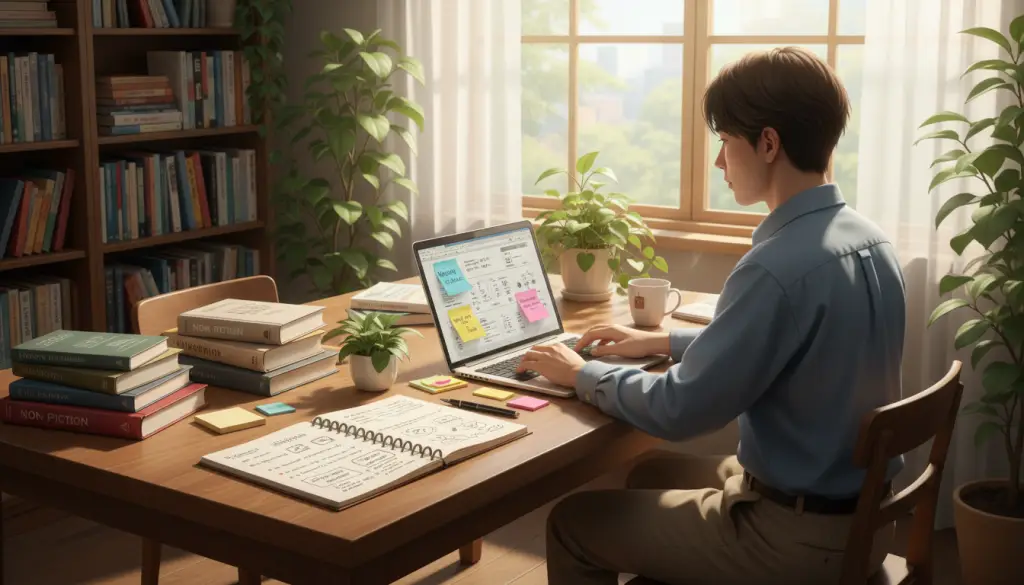
Before I start writing on my laptop, I journal first. This habit has changed my writing more than any course or book.
The secret is simple: write what is real to you. It can be long, silly, or personal. Just write without worrying about what others think. This daily habit helps you control your story.
“The habit of writing itself is a kind of ongoing discovery.” — Anne Lamott, Bird by Bird
When thinking about my book’s structure, I look back at my journal. It captures moments better than memory can. A note from years ago can bring back a room’s smell or a conversation’s tension.
Here’s what I aim for in my daily practice:
- Write for at least 15–20 minutes each morning
- Record sensory details — sounds, textures, emotions
- Note questions that spark curiosity or unease
- Capture snippets of dialogue or overheard conversations
- Reflect on research findings and personal reactions
These entries are raw material for my book. They’re like clay for scenes based on real life. A 2023 study in the Journal of Writing Research found that journaling boosts recall and confidence.
If you’re trying to figure out your book’s structure, start journaling. After filling a few journals, you’ll find patterns and themes. These will help you define your book’s purpose and angle.
Discovering Your Book’s Purpose and Angle
Every great nonfiction book starts with a clear purpose. Before you open any nonfiction book outline template, you need to know why your book must exist. What gap does it fill? What story is only yours to tell? This step separates forgettable books from ones that land on bestseller lists.
Identifying What Makes Your Book Unique
Publishers get thousands of pitches each year. Your angle must feel urgent and necessary. Ed Parnell’s Ghostland is a great example. He was researching M.R. James when he visited Great Livermere. A blog post about that trip caught an editor’s eye at HarperCollins.
When learning how to write a good non fiction book, think about what only you bring to the subject. Your background, your access, your obsession — these are your competitive edges.
Finding Your Driving Passion
I believe the best nonfiction books burn with conviction. Your topic should keep you up at night. It should make you want to grab strangers and say, “You need to know about this.” That energy transfers to the page and grips readers from the first sentence.
“Write the book you most wish you could find on the shelf.”
Use your nonfiction book outline template to map that passion into chapters. Passion without structure is just rambling.
Developing Your Manifesto
Your book proposal needs a manifesto — a bold statement about why this topic demands attention right now. It should answer one question: why should someone buy this book today?
A strong title helps carry that manifesto. Yuval Noah Harari’s Sapiens is a perfect example. One word captures the entire sweep of human history. Great titles communicate content in a way that feels fresh and irresistible.
- State your book’s core argument in one sentence
- Show how it differs from existing titles on the shelf
- Prove its commercial viability with audience data
- Make the reader feel they cannot wait to read it
Knowing how to write a good non fiction book means treating your purpose like a compass. Once it’s set, every research method and structural decision I make in later stages flows from that direction.
How to Write a Good Non Fiction Book
Writing great nonfiction starts with knowing exactly who you’re writing for. Don’t say your book is for “all smart readers.” That’s too vague. Instead, pinpoint your audience. Are they true crime fans? Space enthusiasts? Parents navigating a child’s diagnosis? The sharper your focus, the stronger your book.

The nonfiction book writing process demands that you answer one tough question: Why does the world need your book? Thousands of titles already exist on most topics. Your job is to find the gap — a fresh angle, untold story, or unique expertise that sets your work apart.
“A nonfiction book is not just about what you know. It’s about what only you can say.” — Lee Gutkind, founder of Creative Nonfiction magazine
Word count matters more than you think. It signals to publishers and readers what kind of experience they’re signing up for. Here’s a quick guide I use:
| Genre/Type | Recommended Word Count | Approximate Page Count |
|---|---|---|
| Memoir | 70,000–90,000 | 245–315 pages |
| Narrative Nonfiction | 80,000–100,000 | 280–350 pages |
| Epic/Sweeping History | 120,000+ | 420+ pages |
Length should match your subject’s weight. A comprehensive history of the American Civil War justifies 120,000 words. A book about a single event usually doesn’t. Be honest about what your story can sustain.
Publishers care about your platform, too. Hundreds of thousands of social media followers can open doors fast. But here’s what I’ve learned: a great idea paired with writing compelling nonfiction will beat a massive following with a weak concept. Invest your energy in the nonfiction book writing process itself, and the rest follows.
Mastering Research Methods for Compelling Storytelling
Great nonfiction depends on solid research. I’ve learned this the hard way. A key tip is: never settle for a single version of events. The real story often lies beneath layers of different stories, half-truths, and silence.
Journalist Sonia Faleiro’s work in rural India is a great example. She investigated the disappearance of young girls. Every person she spoke with had a different story. This shows how important strong research methods are for nonfiction writers.
Cross-Checking Information for Accuracy
I never trust someone right away. I talk to many people. Each conversation adds a new piece to the puzzle. This helps me build a true narrative, not just guesses.
Building Trust with Sources
Trust goes both ways. People open up when they feel safe. I keep going back to the same places. Persistence shows respect. In close communities, what you say about someone can change lives. Understanding this helps earn trust.
Uncovering Multiple Perspectives
One top tip is to report around people, not just at them. Here’s a quick look at the research methods I use:
| Research Method | Purpose | Best Used When |
|---|---|---|
| Direct Interviews | Gather firsthand accounts | Sources are willing to speak openly |
| Cross-Referencing | Verify facts across multiple people | Conflicting stories emerge |
| Repeated Visits | Build trust over time | Communities are guarded or cautious |
| Background Research | Provide historical and social context | The topic involves systemic issues |
| Silent Observation | Notice details people won’t say aloud | Words and actions don’t match |
With your purpose and angle set, these methods make your book credible. Next, I’ll show you how to pick the right narrative point of view.
Choosing Your Narrative Point of View
The point of view you pick can make or break your nonfiction book. It shapes how readers connect with your material. It filters every fact, scene, and insight you share. When learning how to structure a nonfiction book, this decision deserves serious thought before you write a single chapter.
Finding the Right Lens for Your Story
Kate Summerscale spent three full years researching The Haunting of Alma Fielding before she settled on her structure. She could have told the story from Alma’s perspective or taken a detached, academic approach. Instead, she grounded the narrative through the investigator Fodor’s viewpoint. That single choice gave her access to everything she needed while keeping readers rooted in the historical moment.
Ed Parnell made a different choice for his book on M.R. James. He picked a deeply personal lens — weaving in family history, childhood memories of ghost stories, and his own visits to key locations. These nonfiction storytelling techniques turned what could have been a dry literary study into a living, breathing experience.
Balancing Personal Experience with Objective Reporting
I find that the best nonfiction writers blend both personal experience and objective reporting. The trick is knowing when to step forward and when to step back. Here’s a quick guide I use:
| Point of View | Best For | Risk to Watch |
|---|---|---|
| First Person (Memoir Style) | Personal essays, self-help, travel writing | Can feel self-centered if overdone |
| Third Person (Character-Driven) | Biography, history, true crime | May feel distant without strong scenes |
| Hybrid (Personal + Reporting) | Investigative journalism, cultural criticism | Requires careful tonal shifts |
Mastering nonfiction storytelling techniques means choosing the viewpoint that serves your reader — not just the one that feels easiest. Once you lock in this decision, building your chapter-by-chapter structure becomes far more intuitive.
Reading as a Writer During Your Project
What you read while writing is key to what you write. Your reading habits are as important as typing hours. It’s all about what and when to read.
Writer Andrew Kenrick always reads nonfiction while working. He uses books for research, style, and even new ideas. Sometimes, answers to tough writing problems come from unexpected places.
Freya Dean does the opposite. She stops reading nonfiction when writing her memoir. Instead, she reads fiction, poetry, and art books. This keeps her creative without losing her voice. Reading critically, like Joan Didion and Gay Talese, sharpens your writing skills.
Here’s my reading plan during projects:
- Read books in your genre for research and tone
- Read fiction and poetry for rhythm and fresh language
- Read outside your subject to spark unexpected connections
- Dissect short passages from great writers to understand why they work
The right reading diet boosts your nonfiction writing. Try different approaches. Your writing will be better for it. Now, use your reading to build a strong book structure.
Creating Your Book’s Structure and Roadmap
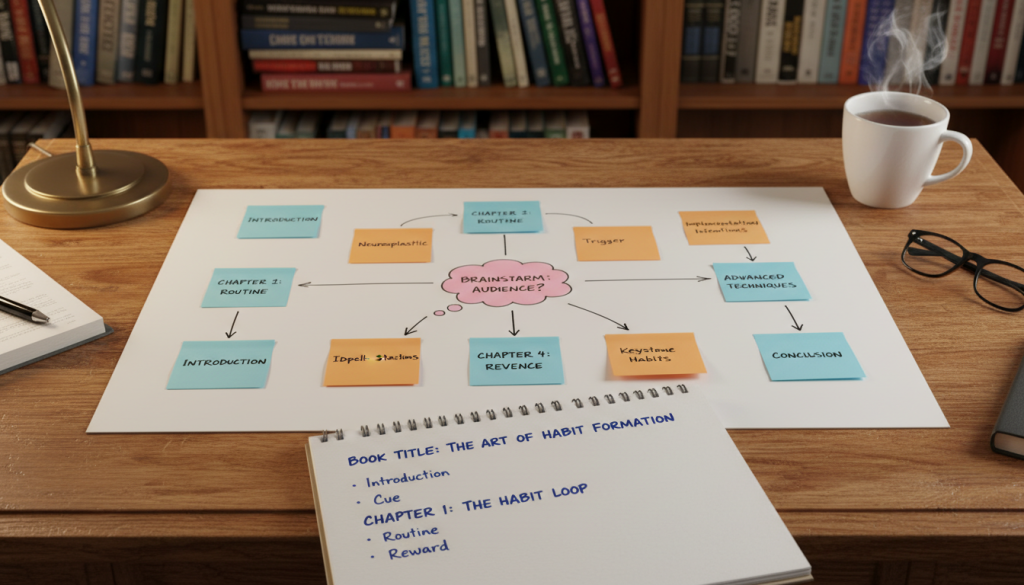
Every great nonfiction book starts with a solid blueprint. When figuring out how to write a good non fiction book, I always begin by mapping the entire journey from start to finish. Think of your structure as a GPS for your writing — it keeps you on track while still allowing detours worth taking.
Developing Chapter-by-Chapter Outlines
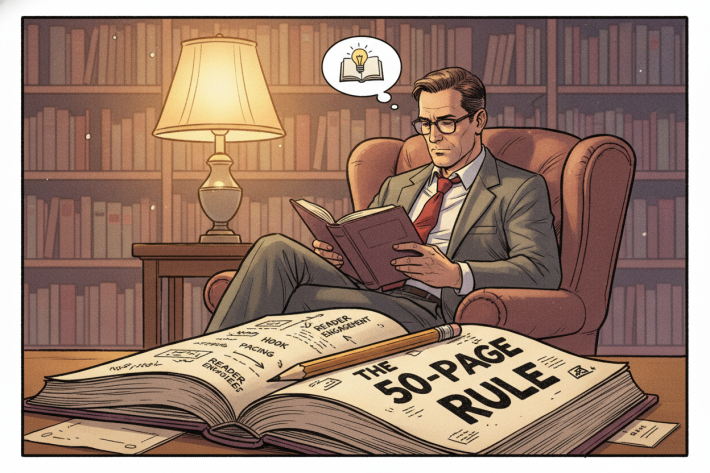
Writer Ed Parnell created a 50-page chapter-by-chapter document before pitching his book to a publisher. That level of detail gave him a clear roadmap. I recommend building your own nonfiction book outline template that covers each chapter’s purpose, key points, and sources you plan to use.
I studied physical copies of other nonfiction books, measuring chapter lengths and looking for patterns. Some had 40-page chapters; others were much shorter. The truth? There are no strict rules. Every book demands its own rhythm.
Following Tangents That Enrich Your Story
Not every detour is a waste of time. Writer Josef Steiff encourages following productive tangents — those unexpected associations or resonances that deepen your main story. When I write, I give myself permission to explore. Some of those explorations become the most compelling parts of the book.
Cutting What Doesn’t Serve the Narrative
Parnell’s first draft hit 140,000 words. His final version? Around 100,000. That’s a big lesson in learning how to write a good non fiction book: you must write the material before you can know what needs to go. Some chapters from my original nonfiction book outline template fell away entirely, replaced by new discoveries from films, books, and travel.
| Outline Stage | Purpose | Typical Action |
|---|---|---|
| Initial Blueprint | Set direction and scope | Write a chapter-by-chapter summary |
| First Draft Expansion | Explore tangents and new material | Follow productive associations freely |
| Revision and Cutting | Tighten the narrative | Remove 20–30% of draft content |
| Final Structure | Deliver a focused, readable book | Reorder and polish remaining chapters |
With a strong structure in place, you’re ready to borrow storytelling tricks from fiction writers — a skill that can transform your nonfiction from informative to truly unforgettable.
Borrowing Techniques from Fiction Writers
One of my favorite tips is to borrow from novelists. Not their words, but their craft. The best nonfiction reads like a novel because it uses fiction tools.
Andrew Kenrick, who works at Hinterland magazine, has a great point. He says the best nonfiction uses novelist tricks in real life. Think flashbacks, starting in media res, sharp dialogue, and vivid descriptions.
I add texture with colors, sounds, and smells. These details make scenes come alive.
These techniques make facts feel real to readers. Here are some fiction tools I use:
- Opening a chapter in the middle of a dramatic moment
- Using flashbacks to reveal backstory at the right time
- Writing dialogue that sounds natural, not stiff
- Describing real people with the depth of fictional characters
- Weaving sensory details into every scene
Kate Summerscale, author of The Suspicions of Mr Whicher, is a great example. She keeps the story in focus while big events happen off-stage. These events are only included if they add meaning to the story.
Connections between events often show up while writing, not before. I don’t force them. I let them emerge as I draft. This takes patience, but it makes the story feel real and layered.
Mastering these techniques makes nonfiction exciting. With a solid structure, these tools add energy to your writing. They help create a book proposal that grabs attention.
Crafting Your Nonfiction Book Proposal
When your manuscript is ready, you need a strong proposal to grab an agent’s or publisher’s attention. Think of the proposal as a sales pitch for your book. It’s where your writing meets the business side of publishing. A good proposal can open doors that talent alone can’t.
Writing a Compelling Query Letter
Your query letter is your first chance to make an impression. Keep it to two pages maximum. It should explain your book’s purpose, subject, target audience, and unique angle. Share your personal background and why you’re the right author.
If you have a lot of experience, like a physics professor with 70 papers, mention it. But don’t list every paper. Make every sentence count.
Developing Your Author Platform
Publishing a nonfiction book is more than just writing. Publishers want to see you can reach readers. Your platform might include:
- An active blog or website with steady traffic
- Social media accounts with engaged followers
- Journalism or broadcasting experience
- A mailing list with real subscribers
Use hard stats to describe your audience reach. Saying “my last article spent three weeks on the most-emailed list” is better than vague claims.
Creating Sample Chapters That Sell
Your sample chapters show you can deliver. For narrative nonfiction, include the first three chapters. For subject-led books, submit chapters that show your range.
Include a market overview with 5–10 comparable titles. List each book’s author, publisher, publication date, ISBN, formats, and prices.
Write a 2,000-word synopsis for narrative projects. Your introduction should be a manifesto — a bold statement of why your topic matters now. This is where publishing a nonfiction book starts to feel real, and your hard work pays off.
The Editorial Process and Workshopping
Writing your first draft is just the start. The real magic happens in editing and revising. I’ve found that making your work better needs distance, honest feedback, and being ready to cut what’s not working. Here’s how I do it.
Developing Your Critical Eye
Freya Dean says to take a break between projects. Use that time to read a lot and study. I love breaking down essays by Joan Didion or Gay Talese’s Frank Sinatra Has a Cold & Other Essays. This helps me see why the writing is great.
It also helps me learn how to weave facts into stories. This is key for nonfiction writers.
Getting Constructive Feedback
Always try to workshop your writing. Group discussions give you a fresh view that’s hard to get alone. This helps you see your writing more clearly.
- Join a local or online writers’ group focused on nonfiction
- Share specific chapters rather than full manuscripts
- Ask readers targeted questions about clarity and engagement
The Power of Shelving Your Manuscript
Many writers print out their work and put it away for weeks. When you come back, you’ll see mistakes more clearly. This is especially important for writing based on personal experiences.
| Editing Strategy | Time Required | Best For |
|---|---|---|
| Shelving the manuscript | 2–4 weeks | Gaining fresh perspective on structure and tone |
| Workshop feedback | 1–2 sessions per chapter | Identifying blind spots in argument or narrative |
| Reading published essays critically | Ongoing practice | Refining research methods for nonfiction writers and prose style |
Publishing Your Nonfiction Book Successfully
You’ve written, revised, and polished your manuscript. Now, it’s time to publish your nonfiction book. This is the exciting part.
Publishers are businesses looking to sell books. When you pitch your project, show why your topic matters. Be ready to answer key questions:
- Why would readers care about this topic right now?
- What profitable titles exist in your niche?
- How does your book differ from those options?
- What qualifications make you the right person to write it?
- What platform do you have to generate buzz and publicity?
Knowing how to write a good non fiction book is important. But, you also need to show it’s commercially viable. Check Amazon sales rankings for competing titles. These numbers change daily but give a sense of demand.
Books priced over $100 from academic presses usually have a limited market. This is not ideal for wide readership.
Once a publisher agrees, you’ll sign a contract. Here’s what a typical deal looks like:
| Advance Payment Stage | When You Receive It |
|---|---|
| First installment | Upon signing the contract |
| Second installment | Upon manuscript acceptance |
| Third installment | Hardback publication |
| Fourth installment | Paperback publication |
Your advance is not free money. It’s an advance against future royalties. You won’t earn more until your book’s sales beat the advance amount. This is called “earning out.”
Publishing a nonfiction book takes patience and strategy. Build a strong case, know your market, and treat every conversation with a publisher like a business pitch. Your hard work from the previous stage will pay off here. A tight, polished manuscript makes you a stronger candidate.
Conclusion
The journey of writing a nonfiction book starts fresh every time. Author Ed Parnell says each book is like learning all over again. We’ve explored the whole process, from journaling to getting published.
Writing great nonfiction means reading like a writer and staying true to your story. You should check your facts and cut what’s not needed. Use different reading styles to add depth to your writing.
Think of writing as a lifestyle, not just a project. Small habits like writing and reading add up over time. You can write a strong conclusion by restating your main message and leaving readers with a call to action.
So, start writing today. You can tell a story that only you can. The world is waiting for it.
FAQ
How do I start the nonfiction book writing process if I feel overwhelmed by my research material?
I get it, feeling overwhelmed is normal. Sonia Faleiro worked through 3,000 pages and hundreds of interviews. She found her story by writing it all out.
Ed Parnell says the key is to just start typing. Even when it feels hard, just write. Start with journaling, even just two sentences a day. This helps you build momentum and control over your story.
The story will come out as you write, not before. So, just start writing and see where it takes you.
How long should a nonfiction book be in terms of word count?
Memoirs usually have 70,000 to 90,000 words. That’s about 350 pages. If it’s over 120,000 words, it’s epic.
Ed Parnell’s first draft of Ghostland was 140,000 words. It was cut down to 100,000. This is normal in nonfiction writing.
How do I choose the right point of view for my nonfiction book?
Choosing the right point of view is crucial. Kate Summerscale used Fodor’s perspective in The Haunting of Alma Fielding. It gave her access to everything she needed.
Ed Parnell used a personal lens for his M.R. James book. He brought his family history and memories to the story. Try different perspectives until you find the right one.
What nonfiction storytelling techniques can I borrow from fiction?
Creative nonfiction can use novelist tools. Andrew Kenrick uses flashbacks and dialogue. Kate Summerscale keeps the narrative in the foreground.
Working out these connections as you write often makes the best nonfiction.
How do I structure a nonfiction book proposal that publishers will notice?
Your query letter should be short and to the point. Explain your book’s purpose and unique angle. Include your background.
You’ll need a market overview and comparable titles. Send sample chapters to show your writing skill. Your introduction should be a strong statement.
Use a detailed outline, like Ed Parnell’s 50-page roadmap.
How important is an author platform for publishing a nonfiction book?
Having a strong platform is important. Publishers want to see your social media presence and writing experience. Ed Parnell’s Ghostland started as a blog post.
Use real stats to show your audience size. Great writing can still get noticed without a huge following.
What are the best research methods for nonfiction writers to ensure accuracy?
Cross-checking information is key. Sonia Faleiro talked to many people to build her narrative. She learned not to trust people right away.
Trust must be earned from both sides. Keep verifying information and persisting. This is crucial for writing compelling nonfiction.
Should I read other nonfiction books while writing my own?
Whether to read other nonfiction is up to you. Andrew Kenrick reads nonfiction for research and inspiration. Freya Dean avoids it to keep her focus.
Try both approaches to see what works best for you.
How do I develop my critical editorial eye for self-editing my nonfiction manuscript?
Freya Dean recommends a break to read and think. Study great writers like Joan Didion. Take every chance to workshop your work.
Print a hard copy and take a break from it. This helps you see flaws more clearly. It’s especially important for personal stories.
How do I know if my nonfiction book idea has commercial potential?
Your book must stand out. It needs to feel urgent and necessary. Look at Yuval Noah Harari’s Sapiens for inspiration.
Check Amazon sales rankings, but remember they can change. Books priced over 0 may not sell well. Show how your book is different from others in your area.
How do I handle following tangents during the nonfiction book writing process without losing focus?
Josef Steiff says to follow tangents that deepen your story. Ed Parnell’s Ghostland shows this works. He had a 50-page outline but changed it as he wrote.
Writing the material is the best way to know what to cut. Trust the process and keep your main story in mind.