How to Start Writing: My Simple Guide for Beginners

Three years ago, I was stuck in a dim office on Wall Street. I stared at spreadsheets that looked like rain on a windshield. I was making good money but felt empty inside.
One night, I opened my laptop and typed a sentence about my childhood in India. That sentence led to a paragraph, then a page. And that page changed my life.
I quit banking and moved to Chile to teach English. I started writing almost every day. It was like driving through mountains at night, full of twists and turns.
Today, I’m the author of “Journeys Beyond and Within.” My book was reviewed by the Sikkim Express and The Telegraph Online. I’ve been blogging for eight years and writing on Quora and Medium.
I’m sharing my story because starting to write can be scary. The blank page can be intimidating. Your inner critic can be loud.
But your words do matter. This guide is here to help you on your writing journey. I’ll share the basics I wish I knew when I started.
Writing is hard, lonely, and sometimes painful. But it’s also incredibly liberating.
Key Takeaways
- You don’t need a writing degree or special talent to begin — just a willingness to show up and put words on a page.
- Learning how to start writing begins with finding a personal reason that drives you to the keyboard each day.
- Writing for beginners is about building consistent habits, not waiting for perfect inspiration.
- Creative writing basics include writing honestly, embracing messy first drafts, and revising with fresh eyes.
- The writing journey is challenging and lonely, but it becomes one of the most rewarding experiences of your life.
- Starting small — with memories, personal stories, or a simple blog — can lead to published books and recognized work.
Why I Decided to Start Writing Three Years Ago
Three years ago, I made a big change. I left a stable job for writing. Starting was scary, with no portfolio or plan. But I wanted to create something meaningful.
Leaving Investment Banking Behind
I worked in investment banking for years. It paid well but was hard. My soul was tired.
One day, I couldn’t stand it anymore. I quit and went to South America. There, I wrote my first book about my journey.
My Journey from Beginner to Published Author
Starting a draft is hard. Mine was bad at first. But I kept writing.
I wrote on buses and in cafes. By August 2025, my draft was published. Now, I write for clients and publish poems.
| Year | Milestone | Key Lesson |
|---|---|---|
| Year 1 | First rough draft completed | Consistency beats perfection |
| Year 2 | First paid client work | Writing is a real skill people value |
| Year 3 | Published memoir and poems | Patience pays off |
Teaching English in Chile While Learning to Write
My best tip? Try new things. I taught English in Chile. I learned Spanish and wrote every day.
The hard times made my writing better. It was uncomfortable, but it helped me grow.
The scariest moment is always just before you start.
Stephen King said this, and it’s true. Starting is scary. But you must keep writing.
Understanding Your Personal Motivation for Writing
Before you start writing, ask yourself: Why do I want to write? This is key to learning how to write. Your reason is what drives everything.
Your motivation affects your writing sessions. It shapes your schedule, goals, and how you face challenges. You might want to share a message, bring characters to life, or conquer a writing challenge.
I talked to a writer who kept stopping mid-story. She couldn’t understand why. She realized her true love was writing about healthy relationships. With this motivation, she finished her first draft in three months. Knowing why you write makes it easier.
Here are some common reasons writers write:
- Sharing personal stories to help others
- Building a career as an author
- Processing emotions through writing
- Entertaining readers with unique stories
- Leaving a legacy for family or community
My tip? Write your motivation on a sticky note. Place it where you write. On tough days, it will remind you why you’re writing. A strong “why” is crucial for finishing your writing. Next, I’ll share how to start when you’re stuck.
How to Start Writing When You Don’t Know Where to Begin
Starting to write can be really hard. You might sit in front of a blank page, waiting for words to come. But the truth is, you don’t need a perfect plan. Just find something real and personal to start with.
Write What Matters to You
One key thing I learned is to write about what you care about. Think of writers like Jhumpa Lahiri or Ruskin Bond. They wrote about things that mattered to them.
When I write about things I love, words flow easily. I might write a lot more than I need to. This is a sign I’m on the right track. Writing from the heart helps you overcome writer’s block fast.
Start with Your Childhood Memories
Rainer Maria Rilke once told a young writer to explore childhood memories. These memories are special because they’re raw and universal. Every reader has been a child once.
I think about my own memories, like waiting for the ice cream truck. These details make stories feel real. Try listing five childhood memories and start writing one.
Allow Your Creative Juices to Flow Naturally
Don’t worry too much about making your first draft perfect. Let your writing be free and alive. This is a key part of writing that many overlook.
- Set a timer for 15 minutes and write without stopping
- Ignore grammar, spelling, and structure
- Follow whatever thought appears — even if it seems strange
- Save editing for later drafts
Breaking through writer’s block isn’t about waiting for inspiration. It’s about giving yourself permission to write badly at first. Once you’re motivated, this step gets easier. Building daily habits helps keep you going.
Developing Essential Writing Habits for Beginners
Writing for beginners can feel overwhelming at first. You might sit down and stare at the screen, unable to write. Or, you might write too much, like words spilling out.
I’ve been there. After three years of writing almost every day, my creative life changed.
Writing Daily Versus Writing When Inspired
Should you write every day or wait for inspiration? My answer is simple: write daily. Inspiration is not reliable. It comes and goes without warning.
Writing daily helps you discover small secrets about your craft. These discoveries add up quickly. Soon, your sentences will be sharper, and your ideas will come faster.
Now, I feel a strong urge to write every day. Even on special days or when I’m traveling, my brain is full of words waiting to be written. Writing has become like breathing to me.
| Approach | Consistency | Skill Growth | Best For |
|---|---|---|---|
| Writing Daily | High | Steady and measurable | Serious beginners |
| Writing When Inspired | Low | Unpredictable | Casual hobbyists |
Creating Your Personal Writing Routine
Building a writing routine is simple. Start with these basics:
- Pick a specific time each day — morning, lunch break, or late night
- Set a small goal like 200 words or 15 minutes
- Choose one dedicated spot where you write
- Remove distractions — phone off, browser closed
Your routine will change over time. The most important thing is to start one. Once you find a rhythm, writing becomes easier. And that’s when writing becomes a part of your life.
Choosing Your First Writing Project
One of the best tips for beginners is to pick one idea and stick with it. When I started writing, I jumped between five projects. I worked on a novel, blog posts, and poems but made little progress.

First, decide what kind of writing you love most. Here are some options:
- Short stories or flash fiction
- A full-length novel (80,000+ words)
- Poetry or creative nonfiction
- Travel blogging or personal essays
- Copywriting for brands and businesses
After choosing a format, ask yourself “what if” questions. J.K. Rowling wondered, “What if a boy discovered he was a wizard?” These questions help see if your idea is strong enough for a full project.
I check every idea against three things before starting. This helped me a lot when I began writing:
| Criteria | What to Look For | Red Flag |
|---|---|---|
| Main Character Goal | A clear, specific desire driving the story | Vague or passive protagonist |
| Meaningful Obstacles | Real conflict that creates tension on every page | Problems solved too easily |
| Failure Consequences | High stakes if the character doesn’t succeed | Nothing significant is lost |
My favorite tip is to pick an idea that excites and scares you. This fear shows you really care about the story. It means you’re ready to spend a lot of time on it.
Now, it’s time to face the blank page and start writing your first draft.
Mastering the Art of the First Draft
Starting your first draft is both exciting and scary. I once stared at a blank page, wondering if my ideas were worth typing. But I learned that they are. The key is to get them down fast.
Push Through Without Editing
I write without stopping or checking spelling. I let my fingers move quickly to keep up with my thoughts. Editing too soon can slow you down and lose your flow. The goal is to get everything down first.
“Almost all good writing begins with terrible first efforts. You need to start somewhere.” — Anne Lamott, Bird by Bird
Let Your First Draft Be Messy
Anne Lamott calls these drafts “really shitty first drafts.” They should be free and full of ideas. Don’t worry about what others will see. A messy draft shows you’re willing to explore every idea.
Following Basic Writing Etiquette While Drafting
Even with a messy draft, you can still follow good writing habits. I avoid using words I’ll later cut. For example, I write famished instead of “very hungry.” These choices save time and help you write better from the start.
| Drafting Habit | What to Do | What to Avoid |
|---|---|---|
| Speed | Type fast, dump ideas freely | Stopping to rewrite sentences |
| Word Choice | Use precise words like “famished” | Weak modifiers like “very hungry” |
| Grammar | Keep basic structure intact | Obsessing over perfection |
| Mindset | Accept imperfection, keep going | Self-criticism mid-sentence |
After you’ve written your first draft, you’re ready for the next steps. Revision and editing are where the real magic happens.
Finding Your Writing Voice and Style
Your voice is what makes your writing yours. It’s like an invisible mark on every sentence. Learning to sound like yourself on paper is key.
A friend once said real writing comes from the heart. That advice stuck with me. When I stopped trying to sound “literary” and just wrote as me, my words flowed better.
Writing Honestly from the Heart
Think about what excites you. For me, it’s travel stories, debates on arranged marriage, and chasing personal goals. Writing for beginners means sharing what’s inside you.
Don’t aim for a perfect plot first. Let your writing grow and evolve. Be raw and honest. That’s what readers love.
Developing Your Unique Perspective
Your view is shaped by your life, beliefs, and interests. No one else has your exact mix. That’s your strength as a writer.
Here are ways to find your unique voice:
- Write about things you’d talk about with a close friend
- Read a lot, but don’t try to copy others
- Notice the rhythms and phrases that come naturally to you
- Be yourself — authenticity leads to more words
“There is no greater agony than bearing an untold story inside you.” — Maya Angelou
Mastering creative writing basics means trusting your own view. Writing gets easier when you stop imitating and start expressing. Your voice will lead you through every challenge.
Overcoming Common Beginner Writing Challenges
Writing is a long, lonely path. I sit alone at my desk for hours, staring at a screen. I wonder if anyone will care about what I write.
Will readers find my memoir believable? Will they connect with my characters? Or will they just get bored and walk away? These doubts hit every new writer like a wave.
One of the best beginner writing tips I ever received was this: stop editing while you write. Editing too early is the fastest route to a dead stop. It’s like driving mountain roads at night on curvy switchbacks with no streetlights.
When you judge every sentence as it appears, you kill your creative flow. Try turning off your monitor and just typing. You are at your least creative when you’re being critical of yourself.
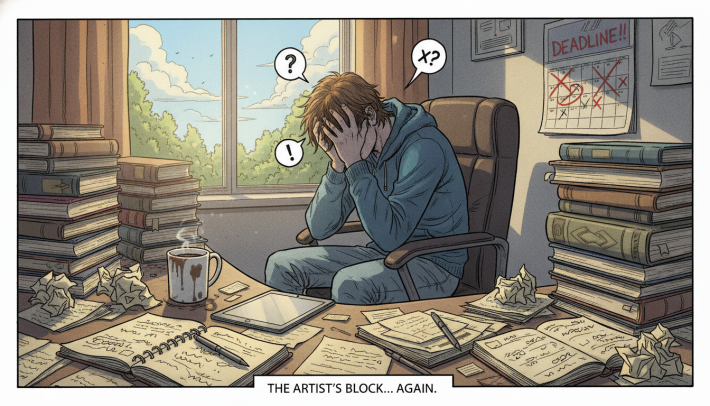
Overcoming writer’s block starts with understanding where it comes from. Most of the time, it’s rooted in fear. Fear of choosing the wrong words, fear of creating nonsense, fear of not being good enough. I’ve been there. Every writer has.
“You can always edit a bad page. You can’t edit a blank page.” — Jodi Picoult
Here’s what separates writers who finish books from those who abandon them. It’s not raw talent. It’s having a clear roadmap through the process. Consider these common challenges and practical fixes:
| Challenge | Why It Happens | Practical Fix |
|---|---|---|
| Lack of discipline | No set routine or accountability | Write at the same time each day, even for 15 minutes |
| Choosing the right story | Too many ideas, not enough commitment | Pick the idea that excites you most and outline it |
| Self-doubt mid-draft | Comparing your rough draft to published books | Remember every published book started as a messy first draft |
| Editing too early | Perfectionism and fear of bad writing | Finish the full draft before revising a single word |
| Finding meaningful words | Overthinking every sentence | Write fast, refine later — meaning emerges in revision |
Now that you know how to push past these hurdles, let’s look at the specific writing techniques that will make your prose stronger from the start.
Essential Writing Techniques for Strong Prose
Knowing how to write is one thing. But making your sentences vivid and memorable is another. I learned these tricks the hard way. Through lots of rewriting, feedback, and reading.
Using Proper Nouns Instead of Category Names
Generic words can make your writing dull. Use specific words instead. Say crimson-red Hyundai instead of “red car”.
Use butter-toasted glistening buns instead of “food”. Write a medley of pink, purple, and yellow bougainvillea instead of “a pretty plant”. Specific words make your writing more engaging and real.
Show Don’t Tell Your Story
This is a key rule in writing. Telling is like saying “She was sad and cried.” Showing is like “Her swollen eyes brimmed as the avocado toast slipped off the plate and hit the floor.”.
Use your senses to bring the scene to life. This makes your story more vivid and engaging.
“Stars crowded above the snow-capped volcanoes as folk dancers whirled in the moonlight of San Pedro.”
This sentence paints a picture better than saying “beautiful” ever could.
Choosing Powerful Verbs and Adjectives
Weak words like very and really weaken your writing. Here’s a quick guide to improve:
| Weak Phrase | Stronger Alternative |
|---|---|
| Very upset | Heartbroken |
| Really beautiful | Gorgeous |
| Too tasty | Delicious |
| Very tired | Exhausted |
| Really scared | Terrified |
Avoiding Passive Voice and Ghost Nouns
Phrases like “it is,” “there is,” and “there are” can weaken your writing. They make sentences feel empty. Replace them with active verbs.
For example, say “Birds sing outside” instead of “There are birds singing outside.” Active verbs keep your writing strong and engaging.
The Revision and Editing Process
Writing the first draft is just the start. The real magic happens in revision. Revision is not editing. It’s about re-seeing your work, adding new ideas, and even starting new chapters. Editing is for fixing small mistakes.

Letting Your Writing Sit Before Editing
Don’t rush to publish right away. Let your drafts rest for a day or two. This helps catch mistakes you might miss when you’re too close to your work.
When you come back, you’ll see problems more clearly. This break is key to improving your writing. It’s more important than getting likes on social media.
Reading Your Work Aloud
I read my work aloud before it’s final. This makes me listen to my writing, not just read it. It helps me catch awkward phrases and bad rhythms.
If you have a MacBook, use the speech feature to hear your writing. Highlight anything that sounds off and fix it later.
Deleting the Boring Parts
If a paragraph bores me, it goes. Your readers will feel the same way. Revision rounds make your work better and more engaging.
Trade drafts with a fellow writer or hire a copyeditor for a new view. This helps a lot.
Kill your darlings. If a sentence serves only your ego and not your reader, let it go.
Here are key strategies I use during each revision round:
- Create a reverse outline to check if every paragraph supports your thesis
- Use colored highlighters to visualize evidence and sub-points
- Cut your draft into paragraphs and physically rearrange them
- Ask a trusted reader to flag confusing spots
| Revision Round | Focus Area | Goal |
|---|---|---|
| First Pass | Structure and argument | Ensure every section supports your main idea |
| Second Pass | Paragraph flow and transitions | Smooth connections between ideas |
| Third Pass | Sentence-level clarity | Tighten language and cut boring parts |
| Final Pass | Grammar, spelling, punctuation | Polish for publication-ready quality |
Building Confidence as a New Writer
I published my first book and became a top writer on Quora and Medium. I’ve been blogging for eight years and I’m still learning. Confidence grows a little at a time when you write.
Here’s a great tip for new writers: replace “I’m not an expert” with “I have knowledge, training, and something worth sharing.” This change helped me a lot. Writing regularly showed me I could do it, and each piece proved I wasn’t just doubting myself.
“I learned to write by writing.” — Neil Gaiman
Self-doubt is common. Growth has ups and downs. The trick is to write despite your doubts, not because they’re gone. It’s okay to be imperfect. A messy draft is better than a blank page.
Here are ways I’ve built confidence:
- Re-read my proud work to remember my abilities
- Be around people who support my creativity
- Get ideas from podcasts, books, walks, and talks
- Remember that writing is tough, and that’s okay
| Negative Thought | Positive Replacement | Result Over Time |
|---|---|---|
| I’m not a real writer | I write, so I am a writer | Increased daily output |
| My work isn’t good enough | I can revise and improve it | Better editing skills |
| Other writers are more talented | My voice is unique and needed | Stronger personal style |
| Nobody will read this | I write first for myself | Freedom to take creative risks |
Ray Bradbury said, “You fail only if you stop writing.” Keeping a writing routine, even when it’s hard, is key. This journey can feel lonely, but with the right tips and kindness to yourself, you’ll find your way.
Creating a Sustainable Writing Practice
Writing a book is like a marathon, not a sprint. I learned early that sticking to writing habits is key. A good practice helps you keep going, even when it’s hard.
Setting Realistic Writing Goals
I aimed to finish my first book in a year. Why? A published book is like a giant business card. It helps you attract clients without needing to sell yourself. To find your topic, try this simple exercise:
| What Am I Passionate About? | What Am I Good At? |
|---|---|
| Psychology and human behavior | Marketing strategy |
| Personal growth | Business communication |
| Storytelling | Content creation |
Where your passions and skills meet is your sweet spot. My love for psychology and marketing led me to write a self-help book. Having a clear topic makes writing easier.
Dealing with Writer’s Block
Beating writer’s block means one thing: don’t edit too early. Editing too soon can stop your flow. Keep writing, even if it’s not perfect. Editing comes later.
Finding Time to Write in Your Daily Schedule
Don’t say “I don’t have time.” Replace one hour of social media with writing. That’s it. Just one hour. Think about what works for you:
- Writing daily in short, focused sessions
- Writing only when inspired, in longer creative bursts
- Mixing both approaches depending on the week
Good writing habits don’t need a perfect schedule. They need honesty about your time and a desire to change.
Developing Your Story Ideas
Not every idea is big enough for a full-length novel. Some ideas are better as short stories, blog posts, or poems. When starting to write, it’s important to know which ideas can carry 80,000 words or more.
A simple idea like “a vampire moves to a small town” needs depth, conflict, and stakes to work.
The best way to test an idea? Frame it as a “what if” question. Ask yourself what conflict drives your characters and what they stand to lose.
Identifying Novel-Worthy Concepts
A strong novel idea needs a protagonist with goals, needs, and flaws. Think of Katniss Everdeen in The Hunger Games. She wants to protect her sister and survive brutal games.
Your antagonist should have justified beliefs and human flaws, even if they’re not a traditional villain.
One of the creative writing basics I rely on is studying comp titles—three published novels similar to my idea. This helps me understand reader expectations and spot gaps my story can fill.
Choosing Between Multiple Story Ideas
When several ideas compete for your attention, use a simple evaluation method. Rate each idea on key factors that matter for getting started with writing a sustainable project:
| Evaluation Factor | Questions to Ask Yourself | Weight (1–5) |
|---|---|---|
| Engaging Conflict | Does the story have tension that lasts beyond the first chapter? | 5 |
| Personal Connection | Do I care deeply about this topic or theme? | 4 |
| Character Depth | Can I build complex characters with clear motivations and fears? | 5 |
| Market Potential | Are there comp titles that prove readers want this kind of story? | 3 |
| Excitement Level | Does this idea keep me up at night wanting to write it? | 4 |
Pick the idea that scores highest across all five factors. That’s the story worth your time and creative energy as you move into understanding your genre and audience.
Understanding Genre and Audience Expectations
Genre is more than just a label. It’s a promise to your readers. Romance novels promise a love story with a happy ending. Mystery books offer suspense and puzzles to solve.
Each genre has its own rules. These include word counts, pacing, and character development. Studying comparable titles in your genre helps you know what readers want.
This is key for beginners. It helps avoid the feeling that anything goes.
Here’s a quick look at popular genres and what they’re about:
| Genre | Core Focus | Typical Word Count |
|---|---|---|
| Literary Fiction | Exploring the human condition through characters | 70,000–100,000 |
| Romance | A love story with a happy ending | 50,000–90,000 |
| Mystery/Thriller | Suspense, crime, and puzzles | 70,000–90,000 |
| Science Fiction | Advanced tech and science | 90,000–120,000 |
| Fantasy | Magical and supernatural worlds | 90,000–120,000 |
| Horror | Fear and disturbing stories | 60,000–90,000 |
| Young Adult | Stories for teenagers | 50,000–80,000 |
Your genre choice affects everything. It influences your plot and character development. Think of it as choosing your game before you start playing.
Once you’ve picked your genre, it’s time to start writing. Learning these basics early makes your journey smoother.
Conclusion
Learning to write is incredibly freeing. It feels as natural as breathing once you start. The steps are simple: outline your ideas, write without editing, revise, proofread, and publish.
You can publish yourself through services like Lulu or Amazon’s Kindle Direct Publishing. This builds instant credibility.
These tips won’t make writing easy. It’s still hard, even on the best days. But having a process helps you keep going when it’s tough.
It makes writing feel less lonely. And once you learn to stir emotions in readers, you’ll get hooked.
If you’re wondering how to start writing, replace negative thoughts with positive ones. You have knowledge and expertise. A finished book proves it to the world.
So, commit to your writing journey now. Use these tips as your guide, trust the process, and keep going. The view from the other side is worth it.
FAQ
How do I start writing if I have no experience at all?
Start by writing about what you know and care about. Don’t worry about being perfect. Just let your thoughts flow.
When I began, I wrote about my travels and childhood memories. Write about what excites you. You need a pen, a surface, and courage to be honest.
Your first writings won’t be perfect. Mine weren’t. But that’s okay.
How do I overcome writer’s block as a beginner?
Overcoming writer’s block often means stopping editing while you create. When stuck, turn off your screen and just type.
Give yourself permission to write a bad first draft. Think about your childhood memories. Those moments can spark authentic writing.
If stuck, take a break. Walk, cook, or shower. Your brain keeps working on your problem.
Should I write every day or only when I feel inspired?
Decide what works for you. For me, writing daily changed everything. Missing a day makes me itchy to write.
Daily writing reveals secrets every day. But some writers only work when inspired. Find a consistent practice you can keep.
If daily writing is hard, try three or four days a week. Protect that time.
How do I find my motivation to keep writing when it gets hard?
Know your “why” before you start. Your motivation shapes your writing schedule and approach. Maybe you want to share a message or bring characters to life.
Write down your motivation and keep it visible. When doubt hits, that note will anchor you.
What should I write about as a beginner?
Write about what you care about. This is the simplest tip. When passionate, words flow easily.
Think about Jhumpa Lahiri or Ruskin Bond. They write from personal places. Start with childhood memories.
Let your writing be alive and expressive. Don’t aim for perfection.
How do I know if my idea is good enough for a novel?
Not every idea is novel-worthy. You need depth and complexity for a long story. Test ideas with “what if” questions.
Your idea should have conflict and personal connection. Choose something that excites and scares you. That means it’s worth the effort.
How important is editing, and when should I start?
Editing is crucial, but don’t do it too early. It can block your creativity. Just write without worrying about mistakes.
Let your draft rest for a day or two. Then read it aloud. Highlight anything that trips you up. Revision is where the magic happens.
Eventually, consider hiring a copyeditor or swapping editing duties with a fellow writer.
How do I build confidence as a new writer?
Confidence grows with practice and small wins. Even after publishing, I still learn. Show up regularly and focus on your strengths.
Replace doubts with positive affirmations. Set a goal to publish a book within a year. A published book boosts your confidence.
Confidence isn’t about eliminating doubt. It’s about writing through it.
What are some quick techniques to make my writing stronger immediately?
Here are a few tips to improve your writing quickly. Replace generic terms with specific ones. Show instead of tell.
Use strong verbs and eliminate weak words. These small changes can make a big difference.
How do I find time to write when my schedule is already packed?
Be honest about your time. Can you cut back on other activities to write? Social media and TV can take up a lot of time.
When I was teaching in Chile, I still found time to write. Prioritize your writing. Find overlap between what you’re passionate about and good at.
Writing about something you love makes finding time easier.