Character-Driven vs Plot-Driven Stories
As a writer, I know the struggle of facing a blank page. It can feel daunting, especially when trying to decide whether to focus on the characters or the plot. Both elements are crucial for creating engaging narratives. The best tales weave together compelling plots and memorable personalities, but achieving this balance requires understanding your own writing style.
There are two primary approaches to storytelling: one that emphasizes the unfolding events and another that highlights the development of individuals. Most authors naturally lean towards one of these styles. I’ve been there, believing that a character-driven approach meant sacrificing excitement for depth. But I’ve learned that a well-rounded narrative thrives on both aspects.
With tools like Storyloft’s Free Book Outline Generator, you can transform your ideas into structured plans in no time. This resource allows you to collaborate with Eddy, an AI companion, guiding you through the process. Whether you envision vibrant characters or intricate plots, this guide will help you navigate your creative journey.
Key Takeaways
- Understanding your focus—character or plot—can enhance your writing.
- Great narratives balance both elements for maximum impact.
- Storyloft’s tools can simplify the outlining process.
- Every writer has a unique style; embrace yours.
- Collaboration with AI can boost creativity and efficiency.
Understanding User Intent Behind “Character Driven Story”
Writers often find themselves at a crossroads when determining their narrative direction. The choice between focusing on compelling characters or a riveting plot can shape the entire writing experience. This decision often reflects our individual preferences and how we perceive storytelling.
Many authors, including myself, lean towards one aspect more than the other. I tend to start with characters, often leading to drafts that resemble deep therapy sessions rather than thrilling tales. But there’s no right or wrong way to approach this; both elements are essential.
Why Writers Gravitate Towards Character or Plot
When searching for “character driven story,” writers are often seeking validation for their creative instincts. They’re not just looking for definitions; they’re searching for permission to pursue the narratives that resonate deeply with them.
It’s fascinating how our brains influence our writing style. Some of us are plot-first thinkers, while others prioritize character development. This is a reflection of our unique wiring, and it’s perfectly okay to embrace it.
Common Questions and Misconceptions
One of the biggest misconceptions is that character-focused narratives are solely for literary works, while plot-centric ones are for commercial success. This notion is simply untrue. Both styles can coexist beautifully.
Here are some common questions I encounter:
- Can a thriller be character-driven? Yes, absolutely!
- Do I have to choose one style? Nope, and the best narratives often blend both.
- Will readers care about my protagonist if there’s too much action? They will, if you give them reasons to connect.
How Storyloft Facilitates Your Writing Journey
Storyloft simplifies this entire process. It provides a structured playground where Eddy, the AI writing companion, helps you navigate your focus. You won’t have to guess whether your narrative leans more towards character or plot.
As you answer a few simple questions, Storyloft builds a complete, usable outline—not just chapter titles. Your generated workspace includes:
- Structured outlines with sections and chapters
- Detailed subpoints and chapter descriptions
- Creative notes and reader direction
- Supporting context to help you transition from planning to writing
In no time, you can transform a vague idea into a fleshed-out outline, all while enjoying the process. The journey from concept to manuscript becomes much more enjoyable.
What Is a Character-Driven Story? Exploring the Core
Imagine diving deep into the psyche of your protagonist, unraveling their hopes and fears. This is the essence of a character-driven narrative. It’s not just about what happens; it’s about how these events shape the individuals involved.
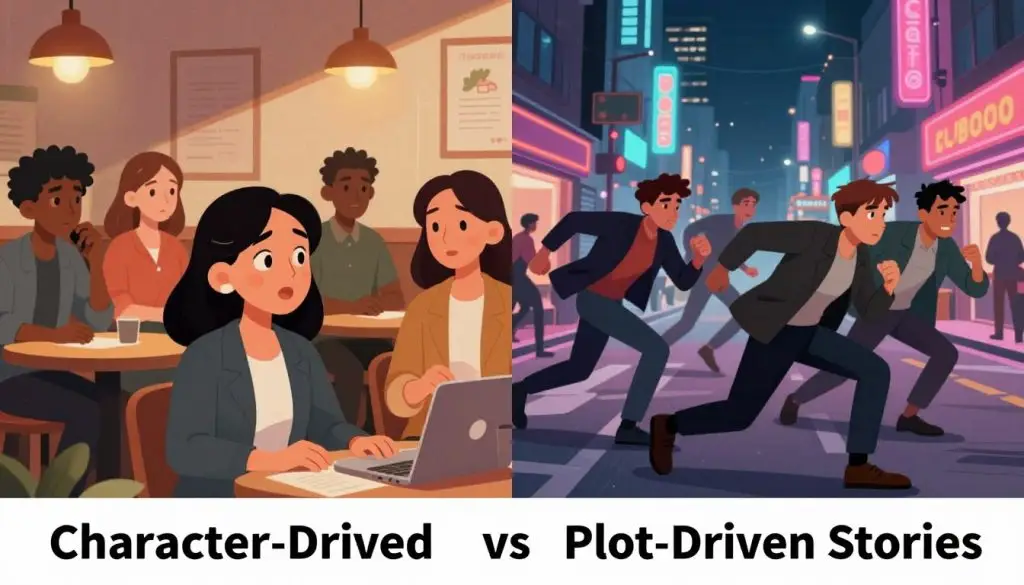
Character-driven narratives focus on the internal lives of the people within the tale. Unlike plot-driven stories, where the events dictate the course, here, the journey revolves around the characters’ growth and struggles. This approach allows for rich exploration of themes like transformation and relationships.
Defining Character-Driven Narratives
In a character-driven narrative, the plot often serves as a backdrop to the emotional journey of the protagonist. The events are less about action and more about revealing the complexities of the characters. Let me paint you a picture:
- A character-driven story is like sitting in a cozy café with your protagonist, listening to them spill their guts about every fear, desire, and regrettable haircut they’ve ever had.
- The defining feature here is that the plot serves the character, not the other way around.
- Emotional depth isn’t just a buzzword; it’s the lifeblood of this approach, resonating with readers on a personal level.
Emotional Depth, Internal Conflict, and Character Arcs
Emotional depth is crucial. Readers often find themselves ugly-crying into their paperbacks because they see reflections of their own struggles in the characters. Internal conflict drives the narrative, as protagonists wrestle with their flaws and past traumas.
Character arcs are the main event. For instance, think of Eleanor Oliphant learning to connect with others in “Eleanor Oliphant Is Completely Fine.” The external plot may be simple, but the internal transformation is seismic.
Examples of Memorable Character-Driven Stories
Amy Tan’s “The Joy Luck Club” remains a gold standard example. It weaves together multiple character studies into a cohesive, devastating whole. There are no explosions or car chases—just mothers, daughters, and the stories that bind them.
When you use Storyloft to plan a character-driven narrative, the tool’s creative assets—including that concept book cover—make your protagonist feel tangible before you’ve even written chapter one. This psychological trick can elevate your writing process significantly.
Dissecting Plot-Driven Stories: What Keeps Readers Turning Pages
Plot-driven narratives pull readers into a whirlwind of events that demand attention. These tales often unfold through a sequence of cause and effect, creating a compelling framework that captivates audiences. When the stakes are high and the action is fast-paced, readers can’t help but turn the pages, eager to see how the characters navigate their challenges.
One of my favorite ways to think of plot comes from E. M. Forster. He explains, “‘The king died and then the queen died,’ is a story. ‘The king died, and then the queen died of grief,’ is a plot.” This distinction highlights that a plot is more than just a series of events; it’s about how those events are interconnected.
Understanding Plot as Sequence of Cause and Effect
At its core, a plot is a sequence of events connected by cause and effect. Each action leads to a reaction, propelling the narrative forward. This intricate dance of events keeps readers engaged, as they anticipate the consequences of each twist and turn.
Exciting External Conflicts and Fast-Paced Action
Fast-paced action is a hallmark of plot-driven stories. They often feature external conflicts that challenge the characters in dramatic ways. Whether it’s a ticking clock, a looming disaster, or a villain with nefarious intentions, these elements create tension that compels readers to keep reading.
For example, Octavia E. Butler’s “Kindred” masterfully blends imaginative storytelling with profound themes. The narrative is a gripping time-travel tale that explores heavy subjects while maintaining a fast pace that keeps readers on the edge of their seats.
Classic Examples of Plot-Driven Narratives
Classic examples of plot-driven stories include epic quests and psychological thrillers. Consider “The Lord of the Rings,” which is filled with adventures and challenges that the characters must face. Or “Gone Girl,” a masterclass in suspense that keeps readers guessing until the very end.
| Title | Author | Type | Key Element |
|---|---|---|---|
| The Lord of the Rings | J.R.R. Tolkien | Epic Fantasy | Adventure and Quest |
| Gone Girl | Gillian Flynn | Psychological Thriller | Suspense and Manipulation |
| Kindred | Octavia E. Butler | Science Fiction | Time Travel and Historical Themes |
Using Storyloft’s outline generator can help you map out these intricate cause-and-effect chains. It ensures you don’t lose track of the events and how they connect, making the writing process smoother and more enjoyable.
Hallmarks and Differences Between Character-Driven and Plot-Driven Stories
Navigating the world of storytelling often feels like walking a tightrope between two compelling forces. The heart of a narrative can either pulse with internal emotions or surge with external events. Each approach offers a unique lens through which readers can experience the tale.
When internal emotions dominate, we witness breathtaking moments where a character’s quiet realization hits harder than any explosion. Imagine a protagonist staring at an old photograph, unraveling a lifetime of regret in just a few paragraphs. This is the beauty of character-led narratives.
Conversely, when external events take the wheel, readers are treated to a breathless page-turning experience. The car chase, the courtroom reveal, or the moment the hero discovers the villain is their long-lost sibling—these thrilling scenes keep readers on the edge of their seats.
Focus on Internal Emotions vs External Events
In character-focused narratives, the plot serves as a device to develop the protagonist’s journey. Here, the internal conflicts are the main attractions. In contrast, plot-driven stories utilize characters to navigate the unfolding events. The action takes precedence, and the stakes are high.
Character Motivation’s Role in Both Styles
Character motivation acts as the secret bridge between these two styles. Even in the most explosive plot-driven tale, if I don’t understand why your protagonist is running into a burning building, I won’t run with them emotionally. The motivations breathe life into both internal and external conflicts.
When One Style Dominates and Why It Matters
I’ve seen hybrids that work so seamlessly you can’t tell where one ends and the other begins. However, when one style dominates too heavily, the results can be tragic. You may end up with a beautifully rendered character study where nothing happens for 300 pages, or a non-stop action fest populated by cardboard cutouts.
To help spot these imbalances early, Storyloft’s intelligent planning notes can flag sections where your character-driven narrative might need more external tension. Alternatively, it can indicate where your plot-driven thriller could use a moment of quiet character reflection.
| Aspect | Character-Driven | Plot-Driven |
|---|---|---|
| Focus | Internal emotions | External events |
| Character Role | Protagonist’s journey | Viewpoint for action |
| Conflict | Internal struggles | External challenges |
| Reader Engagement | Emotional connection | Thrilling pace |
How to Write a Plot-Driven Story That Resonates
Crafting a compelling narrative is like juggling fire—exciting, but you need to keep your eye on every flaming ball. When writing a plot-driven tale, it’s crucial to ensure that your characters are the ones steering the action. Remember, the story shouldn’t simply move the characters like lifeless game pieces. Instead, it’s the characters who should push the narrative forward.
As you dive into the world of your plot, ask yourself: How do my characters respond to the challenges they face? Their choices should matter, influencing the trajectory of the plot. While events may happen to them, the heart of your narrative lies in their reactions and decisions.
Ensuring Characters Drive the Story Forward
One of the best secrets I can share is that the most effective plot-driven tales are often character-focused at their core. Think of it this way: your characters are not just running through a minefield of chaos; they are discovering themselves along the way. Their growth is intertwined with the action, making every moment resonate.
When writing, I remind myself that the cardinal sin of plot-driven narratives is treating characters like chess pieces. They must make choices that matter, revealing who they are under pressure. Each decision should reflect their motivations and backstory, ensuring the reader feels invested in their journey.
Building a Character Bible for Depth
Building a character bible may sound like homework, but trust me, it’s liberating. When you understand your protagonist’s fears, desires, and quirks, the story unfolds naturally. For instance, knowing that your detective has a childhood fear of water can add depth to a climactic scene on a stormy pier.
To ensure depth, I often ask myself three rapid-fire questions for every scene:
- What does this character want right now?
- Why do they want it?
- What from their backstory makes this want feel essential?
These questions help clarify motivations, allowing for a seamless integration of character choices into the plot. Remember, the character’s motivations don’t need to be spelled out in tedious exposition. Instead, as the author, you should know them intimately, so every decision feels inevitable rather than convenient.
Leveraging Character Motivation with Plot Beats
Motivations act as breadcrumbs throughout your outline. When your protagonist makes a shocking choice, readers should think, “Of course!” instead of “Wait, what?” This alignment creates a satisfying narrative flow.
Storyloft’s chapter descriptions and creative notes are excellent tools for embedding these motivational elements. They ensure that the action feels like it couldn’t have happened to anyone else. Your character’s specific flaws, strengths, and history make them uniquely equipped to navigate the challenges they face.
The ultimate goal is to create a plot-driven story where the action resonates deeply with the reader. The character’s journey through external chaos should feel personal and impactful, allowing readers to connect on a meaningful level.
| Aspect | Importance | Example |
|---|---|---|
| Character Motivation | Drives the plot forward | Detective’s fear of water influences choices |
| Character Bible | Enhances depth and authenticity | Details on backstory and quirks |
| Scene Questions | Clarifies character goals | What does the character want? |
By focusing on these elements, you can ensure that your plot-driven narrative resonates with readers, creating a thrilling and emotionally engaging experience.
Crafting a Compelling Character-Driven Story with Storyloft
As you delve into writing, remember that the choices made by your characters can transform a simple plot into a captivating journey. In a character-focused narrative, it’s essential that your characters are not just passive observers. They must engage with their environment, influencing the story’s direction through their actions and reactions.
One common pitfall is creating beautifully complex protagonists who spend too much time reflecting on their feelings while the plot stagnates. To avoid this, your characters need to act, react, and sometimes make spectacularly bad decisions. This dynamic is where the magic of storytelling truly lies.
Making Characters Active and Reactive
Active characters don’t merely respond to the world; they poke it with a stick, demand answers, and occasionally set fire to the status quo just to see what happens. This kind of engagement keeps readers invested. They want to see how characters navigate their choices and the consequences that follow.
Embracing Flaws and Imperfections
Embracing imperfections in your characters is crucial. It’s not just about giving your protagonist a charming quirk; it’s about allowing them to be genuinely flawed and sometimes unlikable. Readers connect with messy characters because they reflect real-life complexities. We’ve all made choices we regret or hurt those we love for reasons we can’t fully articulate.
Using Worst-Case Scenarios to Build Tension
One of my favorite exercises for character-driven narratives is the “worst-case scenario.” Identify your protagonist’s deepest fear and manifest it in the most devastating way possible. This challenge can lead to either a powerful collapse or a triumphant rise, both of which can be compelling if written with honesty.
External threats don’t have to be grand explosions or nefarious villains. They can be as simple as a letter arriving at the wrong moment or a secret that refuses to stay buried. These elements create tension that enriches the character’s internal journey.
With Storyloft’s guided experience, you can map these tension points into your outline. This ensures your narrative maintains enough external pressure to prevent it from becoming a beautiful but static meditation.
| Element | Importance | Example |
|---|---|---|
| Active Characters | Drive the plot through choices | Protagonist challenges authority |
| Flaws | Enhance relatability | Character makes poor decisions |
| Worst-Case Scenarios | Builds tension and conflict | Fear realized in dramatic fashion |

Balancing Character and Plot: The Secret Sauce for Great Writing
The art of storytelling lies in the delicate balance between rich characters and a compelling plot. The best narratives seamlessly blend these elements, creating a captivating experience for readers. It’s not just about having a thrilling plot or well-developed characters; it’s about how they work together to create a satisfying tale.
If you’ve been nodding along thinking “but I want both,” congratulations—you’ve cracked the code that separates good stories from the ones readers press into their friends’ hands with evangelical fervor. The best stories don’t choose between character and plot; they weave them together so tightly that you can’t pull one thread without the whole tapestry unraveling—think of it as a literary double helix.
Identifying your natural writing style is step one. Do your first drafts overflow with interior monologue and relationship dynamics, or do they read like a screenplay with stage directions and set pieces? Neither is wrong, but both need balancing. I’m a character-first writer, which means my revision process involves injecting plot beats and external tension into what is essentially a very well-written therapy session—knowing this about myself has saved me years of frustration.
If you’re a plot-first writer, your revision task is the opposite. You need to pause the action long enough for readers to care about the people running through the explosions, giving them moments of vulnerability and connection. The beauty of writing is that you can always adjust your approach.
Storyloft’s structured outline with detailed subpoints and reader direction helps you visualize this balance before you write a single word of prose. It shows you where the character moments and plot beats fall across your chapters. The tool’s creative notes feature is perfect for flagging sections that need more of one element—”this chapter is all action, add a quiet character moment here” or “this beautiful internal reflection needs something external to interrupt it.”
| Aspect | Character-Driven Focus | Plot-Driven Focus |
|---|---|---|
| Writing Style | Interior monologue and dynamics | Action-oriented with clear scenes |
| Revision Process | Injecting plot beats | Adding character depth |
| Balance | Character moments integrated | Plot beats punctuated |
Genre and Reader Expectations: Choosing Your Story’s Driving Force
The genre you choose can significantly shape the direction of your narrative. Different genres come with unique expectations that can guide your writing journey. Understanding these can help you decide whether to focus on plot twists or character development.
Many crime and thriller books tend to be plot-driven, focusing on the events surrounding the characters. Readers of these genres expect fast-paced action and clever twists. They want to piece together clues and feel the thrill of the chase. In contrast, literary fiction often emphasizes character development, crafting compelling individuals whose inner lives resonate deeply with readers.
Genres That Tend to Favor Plot or Character
Genres set the stage for how stories unfold. For instance, mysteries and thrillers traditionally lean towards plot-driven narratives. Readers dive into these tales hungry for clues and the satisfaction of solving a puzzle. However, the most memorable detectives often have rich inner lives that keep readers invested.
On the other hand, literary fiction is a natural habitat for character-driven narratives. Here, the external world mirrors the protagonist’s internal landscape. Think of authors like Anne Tyler, who paints quiet yet devastating portraits of ordinary people. These stories are less about action and more about the depth of human experience.
Matching Story Techniques to Your Target Audience
Understanding your audience is key. A thriller reader expects a certain pace, while a literary fiction reader anticipates depth. This doesn’t mean you should pander; rather, it means delivering both in your unique voice. Balancing these expectations can lead to a more satisfying narrative.
Science fiction and fantasy are fascinating because they can swing either way. “The Lord of the Rings” is fundamentally plot-driven with its epic quest structure. In contrast, character-driven sci-fi like “Kindred” uses speculative elements to explore deeply personal themes.
Examples Across Mysteries, Thrillers, Literary Fiction, and More
Here are some notable examples that illustrate these concepts:
| Title | Genre | Focus | Author |
|---|---|---|---|
| Gone Girl | Thriller | Plot | Gillian Flynn |
| The Lord of the Rings | Fantasy | Plot | J.R.R. Tolkien |
| 1984 | Dystopian Fiction | Character | George Orwell |
| Brick Lane | Literary Fiction | Character | Monica Ali |
| Breathing Lessons | Literary Fiction | Character | Anne Tyler |
Storyloft’s Free Book Outline Generator helps authors turn an idea into a real book plan in minutes, designed for both fiction and non-fiction books. This tool can adapt to your chosen genre, ensuring that your outline aligns with your narrative style.
Incorporating the Main Keyword: Embracing the Character Driven Story
When crafting a narrative, the emotional landscape of your characters can make all the difference. A character-driven outline isn’t just a list of plot points with names attached; it’s a map of emotional terrain. It charts where your protagonist starts, where they stumble, where they break, and where they finally, gloriously transform.
Using Character-Driven Outlines for Emotional Connection
Many readers love character-driven narratives because they connect with realistic, flawed, and human characters. They can see themselves or someone they love in these characters. This emotional connection is what makes a story resonate.
- Let’s get real for a moment: the phrase “character driven story” isn’t just SEO bait—it’s the reason I fell in love with writing in the first place.
- Focus on the internal conflict. What is your character battling with emotionally? What are their goals, fears, and desires?
- Create a backstory to ensure that you truly understand your character and their motivations.
How Storyloft’s AI Makes Character Development a Breeze
Storyloft’s AI writing companion, Eddy, doesn’t just spit out generic templates. It asks you the questions that unlock your character’s deepest truths—the ones you might have been too intimidated to ask yourself. The concept book cover that Storyloft generates early in the process is more than a pretty image; it’s a psychological anchor that makes your project feel real, tangible, and inevitable.
Turning Character Insight into a Full Manuscript
Turning character insight into a full manuscript sounds daunting. But when you have a structured outline with detailed subpoints and chapter descriptions, the writing becomes an act of expansion rather than invention. You’re filling in the colors, not drawing the lines from scratch.
- I’ve found that the creative notes and reader direction features help maintain emotional continuity across chapters.
- By the time you’re ready to write, you’ll have a working foundation that includes not just what happens, but why it matters to your character.
- That’s the difference between a story readers finish and a story readers feel.

Conclusion
The journey of crafting a narrative often involves weighing the importance of characters against the plot. As writers, we’ve explored the depths of both approaches. The key takeaway is that there’s no single right way to tell a tale. What matters is how you choose to express your unique voice.
Remember, whether you lean towards character exploration or thrilling action, your focus should always be on creating a meaningful connection with your readers. Embrace the process, experiment, and let your words flow.
With Storyloft, you can transform that initial idea into a structured outline, paving the way for your manuscript. So, open the tool, answer a few questions, and let your narrative take shape. The world is ready for your stories!
FAQ
What’s the difference between character-focused and plot-focused narratives?
The main difference lies in what drives the story. In one, the characters’ internal struggles and growth take center stage, while in the other, the sequence of events and external conflicts keep the momentum going.
How do I know which style to use for my writing?
It often depends on your story’s essence. If you want to explore deep emotions and personal growth, lean towards the first. If you’re aiming for thrill and action, go for the latter. Mixing both can also be a recipe for success!
Can I blend both styles in my writing?
Absolutely! The best narratives often weave together elements of both, creating a rich tapestry that captivates readers. Think of it as a delightful dance between character depth and plot twists.
What are some classic examples of character-focused narratives?
Think of timeless tales like “Pride and Prejudice” or “The Catcher in the Rye.” These stories thrive on character development and emotional depth, drawing readers into the protagonists’ journeys.
How can I enhance character development in my writing?
Start by crafting detailed backstories, motivations, and arcs for your characters. Make them relatable and flawed; after all, who doesn’t love a character with a few quirks?
What tools can help me balance character and plot?
There are plenty of writing tools out there, including software like Storyloft, which can assist in outlining, character development, and even tracking plot points to ensure harmony between the two.
Are there genres that favor one style over the other?
Definitely! Mysteries and thrillers often lean towards plot, while literary fiction usually dives deep into character exploration. Knowing your genre can guide your approach!
How does emotional depth impact reader engagement?
When readers connect with characters on an emotional level, they’re more likely to become invested in the story. It’s like rooting for your favorite team; you want to see them win!
What’s the best way to start writing a character-focused narrative?
Begin with your character’s core traits and motivations. Build their world around them, and let their choices drive the plot. Remember, the more real they feel, the more readers will care!