Fiction Writing Tips to Craft Your Best Story

I once sat at my desk for three hours, staring at a cursor. Not a word was written. D.H. Lawrence said the pain of not writing was worse than writing itself. That night, I felt the same way. The blank screen was like a wall, and my ideas were on the other side.
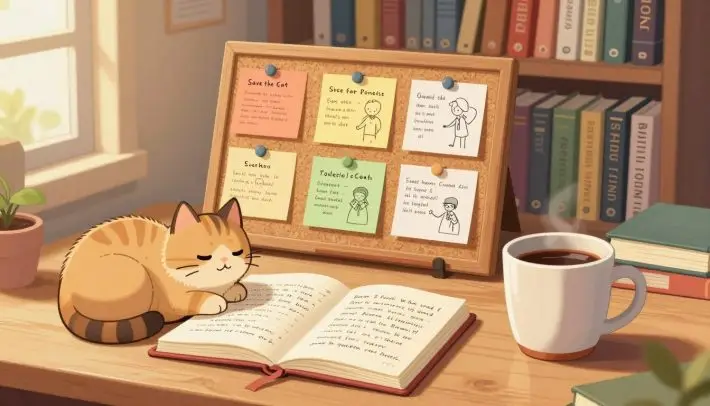
The next morning, I used index cards to jot down scenes. One card had a character’s name, another a feeling I wanted to share. I taped them to my kitchen wall and rearranged them until it clicked. That messy wall became my first short story. Fiction writing doesn’t need perfection at the start. It needs movement.
The Center for Fiction teaches that outlines are like road trip maps. You know the major stops but stay flexible about detours. Creative writing techniques like these help you avoid the pressure of having everything planned.
Through years of trying, I learned that storytelling is solving problems you create. You put a character in a tough spot. You write yourself into a corner. Then you find a way out. That’s the game. That’s the fun.
This guide is full of tips I wish I had before wasting hours staring at nothing. Whether you’re writing your first or tenth story, these techniques will help you move forward with confidence and less frustration.
Key Takeaways
- Starting messy beats not starting at all — use index cards, whiteboards, or paper scraps to get ideas flowing.
- Treat your outline like a flexible roadmap, not a rigid contract with yourself.
- Fiction writing is about solving problems you create for your characters and your plot.
- Strong storytelling methods focus on direction and purpose, not perfection from page one.
- Creative writing techniques are skills you build through practice, not talents you’re born with.
- The discomfort of avoiding your story is almost always worse than sitting down to write it.
Getting Started with Fiction Writing
Starting a new story is both exciting and scary. I’ve felt that mix of energy and fear when starting. The good news is, every published author has been there. The novel writing process starts with a simple willingness to try, not a perfect first sentence.
Overcoming the Blank Page
Page one is often the hardest. The blank screen stares back, and your inner critic doubts you. My best advice? Just start writing anything. It’s okay to write badly at first. A messy first page is better than a blank one.
Your creative fiction skills grow with practice, not perfection.
Finding Your Initial Inspiration
Inspiration is all around us. I find ideas in conversations, news, and memories. Think about events that interest you, like a wedding gone wrong or a heist.
Themes like space or ancient civilizations can create entire worlds in your mind.
“You can always edit a bad page. You can’t edit a blank page.” — Jodi Picoult
Creating a Simple Outline System
A basic outline helps a lot. Open a document and list broad categories about your book. Here’s a system I use:
| Category | What to Include | Example |
|---|---|---|
| Plot Events | Key scenes and turning points | A surprise inheritance, a car chase, a betrayal |
| Characters | Names, roles, and quirks | A retired detective with a fear of dogs |
| Themes | Big ideas to explore | Forgiveness, identity, survival |
| Settings | Locations and time periods | 1920s Chicago, modern-day Tokyo |
This system helps organize your thoughts and ideas. It lets your imagination breathe. As you list and move items, ideas start to connect. Your creative fiction skills grow as patterns emerge, and that’s when the magic starts.
Building Compelling Characters
Every story needs at least one character. Most need two or more. Before I start writing, I make sure my characters are clear in my mind. I need to know whose story this is and what makes that person tick.
One of the best tips I’ve learned is to dig deeper than surface traits. Eye color and hair style won’t make a reader care about your protagonist. What matters is what your character longs for, what they fear most, and what keeps them up at night in shame. These emotional layers are the heart of strong character development.
“A character is defined by what they want more than anything and what they’ll do—or refuse to do—to get it.”
Here’s what I consider for every major character before writing:
- Their deepest desire or goal
- Their greatest fear
- A secret source of shame or guilt
- How they speak and react under pressure
- What sets them apart from every other character in the story
Naming your characters deserves careful attention too. One often-overlooked tip is to pick names that look and sound distinct from each other. If your cast includes Laura, Louise, and Linda, readers will stumble and lose track. Stick to names with different first letters and syllable counts. Use one consistent name for each character in the narrative—switching between nicknames and full names creates unnecessary confusion.
Solid character development at this stage saves you from major rewrites later. Once you’ve built people who feel real and layered, crafting your story’s foundation—including genre, scope, and structure—becomes a much smoother process.
Developing Your Story’s Foundation
Before I start writing, I need a solid base. Think of it like building a house. Without a strong base, everything falls apart. The early choices I make about genre, length, and purpose shape every word.
Establishing Your Genre and Scope
Genre is more than a label. It’s a promise to the reader. A romance needs a happy ending. A thriller must keep the danger rising.
Scope is also key. Am I focusing on a single moment or building a whole world? A short story might focus on one character’s choice. A trilogy could span decades with many subplots. I decide this before I start writing.
Determining Story Length and Structure
The length of my project affects my plot. Each format has its own rules and needs a different approach.
| Format | Word Count | Typical Scope | Character Cast |
|---|---|---|---|
| Flash Fiction | Under 1,000 | Single incident | 1–2 characters |
| Short Story | 1,000–7,500 | One central conflict | 2–4 characters |
| Novella | 17,500–40,000 | Focused narrative arc | Small ensemble |
| Novel | 50,000–100,000+ | Multiple subplots | Large, layered cast |
Short stories are their own art form. They’re not just practice for novels. Creating a complete world in under 7,000 words requires careful word choice.
Setting Clear Direction and Purpose
Every story needs a reason to exist. I ask myself: What do I want the reader to feel when they finish? That answer guides me. Writing compelling stories means each scene moves toward that emotional goal. A well-planned plot keeps me on track as I build toward the characters and scenes ahead.
Mastering Character Development
Great stories are all about the characters. The most important skill is making them real. Your readers need to care about them.
Creating Authentic Character Voices
Every character should sound distinct. Imagine if you took out dialogue tags. Could you still tell who’s talking? Give each character their own way of speaking.
A nervous teenager won’t talk like a confident surgeon. Let their actions and words show who they are. It tells more than just what they look like.
Building Character Arcs That Resonate
Your main character should change. They should overcome false beliefs or fears. Think of Harry Potter, who grows from a kid under the stairs to a wizard.
Not all arcs are positive. Negative arcs are good for villains. K.M. Weiland’s writing resources explain these arcs well.
| Arc Type | Direction | Best Used For | Example |
|---|---|---|---|
| Positive Change | Growth | Protagonists | Harry Potter (Harry Potter series) |
| Negative Change | Decline | Antagonists or Tragic Heroes | Walter White (Breaking Bad) |
| Flat Arc | Steady | Inspirational Leads | Atticus Finch (To Kill a Mockingbird) |
Understanding Character Motivations and Fears
Every action should have a clear why. Ask yourself: what does this character want, and what are they afraid of losing? A character with a hot temper has built-in conflict.
Pair a strong desire with a deep fear. This makes your character development feel real from start to finish.
Crafting Your Plot Structure
Most great stories happen in a short time. We’re talking a day, a weekend, or maybe a week. A good plot doesn’t need months or years. It needs focus.
When I start my plot, I ask one question: what changes from the first page to the last? Something must change. A relationship might break. Or a desire could get crushed. That change is what drives your story.
Good stories are simple. Every character must have a purpose. If they don’t help the story, cut them. I once cut a 20,000-word draft to 5,000. The story became sharper and more alive.
Here are my rules for a lean plot:
- Focus on one main conflict — like marital issues or a secret
- Keep your cast small to those who matter
- Set the story in the shortest time possible
- Make sure the ending shows real change
“The ability to simplify means to eliminate the unnecessary so that the necessary may speak.” — Hans Hofmann
The best stories are simple. You don’t need many subplots or characters. You need a clear story with a start, middle, and end. Once you have your plot, it’s time to make your world feel real.
Essential Research Techniques
Good fiction writing needs solid research. Whether it’s a historical epic or a modern thriller, facts are key. Even small details, like driving times, are crucial.
Knowing how much research is enough is the trick. Here are some creative writing techniques I use.
Balancing Research with Writing Progress
Research can be a way to avoid writing. I’ve spent hours on ship rigging when I only needed a few sentences. The goal is to research just enough for the next scene.
I use a bracket method. When I hit a fact I don’t know, I type [RESEARCH: check train schedule from Boston to New York in 1942] and keep writing. This keeps my momentum while marking gaps for later.
Knowing When You Have Enough Information
In fiction writing, perfect accuracy is less important than emotional truth. My readers want to feel transported, not read an encyclopedia. Here’s a quick guide for different creative writing techniques:
| Genre | Research Depth Needed | Time Spent Before Writing |
|---|---|---|
| Historical Fiction | Deep — setting, language, customs | 2–4 weeks of focused reading |
| Contemporary Fiction | Moderate — locations, professions | A few days of fact-checking |
| Science Fiction | Selective — core science concepts | 1–2 weeks on key topics |
| Fantasy | Light — cultural inspirations | Ongoing as needed |
When I can describe a scene without doubting every detail, I’m ready. It’s time to stop researching and start writing. My characters are waiting.
Creating Your Ideal Writing Environment
Your surroundings affect your work. I’ve found that a dedicated space boosts your writing. You don’t need a fancy office. A corner in a spare bedroom or a kitchen table works well. The important thing is consistency.
Setting Up Your Physical Space
Begin by clearing clutter. Keep only what you need close: pens, a notebook, books, and a drink. One great tip is to make your desk like a cockpit. Everything has a purpose, and nothing extra is there.
“Almost all good writing begins with terrible first efforts. You need to start somewhere.” — Anne Lamott
A clean, focused space helps you start writing, even on tough days.
Minimizing Digital Distractions
Your phone and browser can distract you. Before you write, do these:
- Turn off your Wi-Fi or unplug your ethernet cable
- Silence your phone and put it in another room
- Use website blockers like Freedom or Cold Turkey to block social media and news
These steps help you focus on your writing, away from digital noise.
Finding Alternative Writing Locations
Home might not always be the best place. If you get too many interruptions, try a coffee shop, library, or hotel lobby. I’ve written great scenes at a library with just my laptop and headphones. Changing your location can refresh your ideas and help you plan your stories.
Visualization and Scene Planning
I love a storytelling method that changed my approach to scenes. Before I start writing, I close my eyes and watch the scene play out in my mind like a movie. This simple practice has improved my creative fiction skills more than any writing course.
Imagine you’re a film director. You need to know where your characters are, what they’re wearing, and how they move. Notice their body language. Is your character crossing their arms in defiance? Are their hands shaking with fear? These small details bring your writing to life.
Here’s what I focus on during my visualization process:
- The physical surroundings — lighting, weather, objects in the room
- Character positions and how they shift during the scene
- Facial expressions and body language showing emotion
- What each character is holding, wearing, or doing with their hands
- The mood and energy of the interaction
You don’t need to see the entire scene from start to finish. Just visualize the opening moment. That first clear image gives you an entry point. Once you step into it, the rest tends to flow.
This technique is especially useful when you’re stuck. If you can’t figure out how a scene should begin or what should happen next, take a mental step back. Close your eyes. Let your characters move and speak on their own. These storytelling methods tap into your subconscious, where some of your best creative fiction skills live.
Once you’ve built this mental picture, writing dialogue — which we’ll explore in the next section — becomes far more natural and grounded in real emotion.
Writing Authentic Dialogue
Great dialogue can make or break your story. In fiction writing, the words your characters speak carry weight. They reveal personality, drive the plot, and keep readers hooked. Here are a few creative writing techniques to help you write conversations readers can hear in their heads.
Making Conversations Feel Natural
Real people stumble over words, interrupt each other, and trail off mid-sentence. But if you transcribe actual speech word for word, it reads like a mess. Written dialogue needs to feel real without copying reality. I stick to a few guidelines:
- Use contractions — people say “don’t” not “do not”
- Keep exchanges short and punchy
- Add the occasional interruption for tension
- Skip the boring small talk unless it serves a purpose
Using Dialogue to Reveal Character
Every line a character speaks should tell the reader something. Consider the difference between these two responses to “How are you?”
| Generic Response | Revealing Response |
|---|---|
| “Fine, and you?” | “The store was closed when I went to get a bottle of vodka.” |
| “I’m doing okay.” | “My landlord changed the locks again.” |
The revealing responses show disappointment, possible struggles, and backstory — all in one sentence. That’s the power of fiction writing done well. Each character should have their own speech patterns, favorite phrases, and rhythm.
Balancing Realism with Readability
I avoid long monologues in dialogue. Nobody wants to read a character delivering a full speech. Break up longer passages with action beats, body language, or reactions from other characters. These creative writing techniques keep your scenes moving at a pace readers enjoy.
Once you’ve nailed authentic dialogue, you’re ready to think about perspective — and how to keep it consistent throughout your story.
Maintaining Consistent Perspective
Jumping between viewpoints in a scene can confuse readers. In narrative writing, a steady perspective is like a camera lens. It focuses the reader’s attention and builds trust in the story.
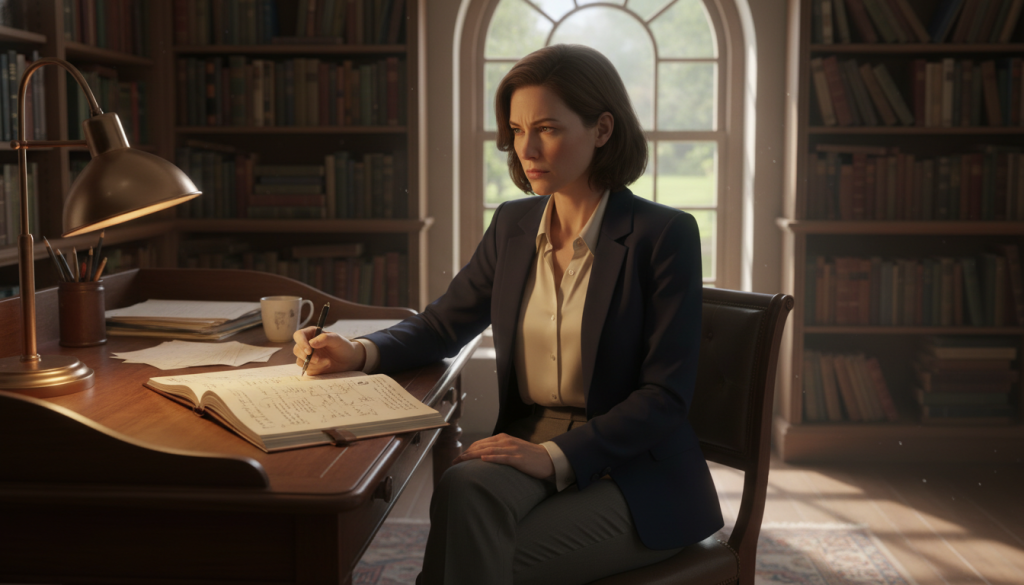
Every scene should stay in one character’s view. If it’s first person (“I”), the perspective is fixed. If it’s third person limited, we only see what that character sees and feels.
Third person omniscient is rare today. It was common in classic works by authors like Charles Dickens and Leo Tolstoy. But today, readers want a closer connection with characters.
For novels with many narrators, start each chapter clearly. Use a chapter label with the character’s name, as George R.R. Martin and Gillian Flynn do.
“Head-hopping is the quickest way to pull a reader out of your story.” — Writing Excuses podcast
Here’s a quick breakdown of common perspective choices in narrative writing:
| Perspective Type | Best Used For | Key Rule |
|---|---|---|
| First Person | Intimate, personal stories | Stay in “I” throughout |
| Third Person Limited | Multi-character novels | Switch only at scene or chapter breaks |
| Third Person Omniscient | Epic, sweeping narratives | Maintain a consistent narrator tone |
Switching perspectives mid-scene, or head-hopping, disorients readers. It disrupts the story’s flow. Save your shifts for scene breaks or new chapters. Give each character’s viewpoint its own space before moving on.
Creating Tension and Suspense
Tension keeps readers hooked. Without it, even the best writing falls flat. Learning to create suspense is key for fiction authors. It’s what keeps readers moving from one chapter to the next.
Raising Unanswered Questions
Every great story makes readers wonder. What happened in the character’s past? What secret is being hidden? These mysteries draw readers in. I add questions about the past and future to my stories early on.
Romance fans love the “will they or won’t they?” question. Thriller fans wonder, “Will they escape in time?” The more questions, the harder it is to stop reading. But, every question must be answered by the end.
Building Mystery Throughout Your Story
Mystery isn’t just for detective stories. In any genre, keeping secrets creates suspense. I slowly reveal information, like peeling an onion.
One top tip is to give readers enough to guess, but not enough to know for sure. This uncertainty makes stories hard to put down.
Making Bad Things Happen to Good Characters
Your characters must face challenges. This is crucial for a strong story. Readers care when good people face tough times or suffer.
| Genre | Type of Conflict | Example |
|---|---|---|
| Action Thriller | Physical danger and damage | A protagonist trapped in a collapsing building |
| Romance | Emotional turmoil and heartbreak | A lover forced to choose between career and relationship |
| Literary Fiction | Internal moral dilemmas | A parent confronting a painful family secret |
Conflict, whether physical or emotional, makes characters grow. Growth makes your story feel real. Now, it’s time to finish that first draft.
Pushing Through to Complete Your First Draft
I’ll be honest — the middle of a first draft is tough. Your story might hit a wall. Ideas might fade, self-doubt might creep in, and new ideas might distract you.
But, keep writing anyway. The messy work of drafting makes your creative fiction skills grow. You’ll figure out what your story needs while you write, not before.
Resisting the Urge to Edit While Writing
At about 7,000 words, you might want to go back and fix things. But, as one guide says, reducing the struggle of your first draft means accepting that it’s okay to write badly at first.
“Logic and rationality rarely jibe with the unknowable intangibles of creativity.”
Instead of editing, try these:
- Keep a separate notes file for changes
- Write as if those changes are already made
- Finish the draft before editing
Keeping Momentum When Inspiration Fades
Inspiration is not always there. Your writing needs momentum. Sit down and write, even when it’s hard. Creative skills grow with practice, not waiting for inspiration.
| Momentum Killer | Quick Fix | Why It Works |
|---|---|---|
| Editing previous chapters | Note changes, move forward | Preserves forward energy |
| Feeling lost in the plot | Write the next scene you can see | Breaks mental gridlock |
| Doubting your story’s worth | Set a daily word count goal | Replaces feelings with measurable action |
| Wanting to start a new project | Jot the idea down, return to your draft | Captures inspiration without derailing progress |
After finishing, read your draft, take a week off, and then outline your second draft. That’s where the real shaping begins, leading to the editing stages.
Writing Vivid Descriptions
Great narrative writing isn’t about describing everything in a scene. It’s about choosing the right details. A few well-picked words can paint a stronger picture than an entire paragraph of bland description.
Think about it this way. “Dead grass and peeling red paint” tells you something very different about a home than “sweeping stone steps and a polished door-knocker reflecting faces.” I didn’t describe every brick or window. I picked details that carry emotional weight. That’s one of the most powerful creative writing techniques you can develop.
Here’s my favorite trick: filter your descriptions through a character’s eyes. What a person notices about a room or a stranger says as much about them as it does about the thing being described. A nervous teenager walking into a party will notice the exits. A hungry kid will notice the snack table. This approach does double duty — it builds your setting and reveals character at the same time.
When sharpening your narrative writing descriptions, keep these guidelines in mind:
- Pick two or three telling details instead of listing ten generic ones.
- Appeal to senses beyond sight — sounds, smells, and textures make scenes feel real.
- Let your point-of-view character’s mood color what they observe.
- Cut any description that doesn’t serve the story or reveal character.
“Don’t tell me the moon is shining; show me the glint of light on broken glass.” — Anton Chekhov
Mastering creative writing techniques for description takes practice. I suggest revisiting your draft after completing it — which I’ll cover in the editing section ahead — and asking yourself one question about each descriptive passage: Does this detail earn its place? If the answer is no, cut it. Your story will be stronger for the restraint.
The Three-Stage Editing Process
Editing is where the magic of writing happens. I spend more time editing than writing. Editing is not just about typos. It’s about three stages, each with its own goal.
Structural Rewriting and Major Changes
This first stage looks at the big picture. I ask hard questions. Does the story drag in the middle? Is a subplot overshadowing the main story?
I might cut chapters, change character arcs, or add hooks. This stage is about making tough choices. It’s about killing your darlings.
Line Editing for Clarity and Flow
After the structure is set, I focus on sentences and words. Reading aloud helps catch awkward phrases. Editing on paper also gives a fresh view.
I aim to:
- Remove repetitive words
- Make sentences tighter
- Ensure smooth transitions
- Make dialogue sound natural
Final Proofreading for Polish
The last stage is for small details. I look for typos, spelling errors, and timeline issues. This is not for big changes. If I’m still making big changes, I need to go back to stage one.
Good writing is rewriting. The first draft is just you telling yourself the story.
Mastering these stages has changed my writing. Once your draft is polished, share it with trusted readers. They can offer valuable feedback.
Getting Valuable Feedback
After weeks or months of work, it’s hard to see your draft clearly. What seems dull to you might excite a new reader. Characters you know well might confuse others.

Finding the Right Beta Readers
Not every reader is a good beta reader. Look for people who love your genre and can explain why something works or not. Writers, book club members, and avid readers all have unique insights.
I suggest getting at least three to five beta readers. This helps spot common themes in their feedback.
Processing Criticism Constructively
Feedback can hurt. Remember, it’s about the work, not you. Take time to think about it before reacting.
If many readers point out the same problem, like unclear storytelling, listen to them.
Knowing Which Suggestions to Implement
Not all advice is good. Here’s how to decide:
| Feedback Type | When to Act | Helpful Tool |
|---|---|---|
| Plot confusion | Two or more readers agree | Beta reader notes |
| Grammar and style errors | Flagged by readers or software | Grammarly, ProWritingAid |
| Wordy sentences | Passages feel slow or bloated | Hemingway Editor |
| Personal taste preferences | Only one reader mentions it | Your own judgment |
Tools like Grammarly and ProWritingAid help with grammar and style. Use these tips with human feedback to improve your writing. But always check automated suggestions carefully.
Conclusion
I think every writer can get better, no matter if you’re starting or finishing your tenth book. Improving your creative writing is a journey. Choose one thing to work on, like dialogue or character development.
Focus on it and see how much you can improve in a few months. It’s amazing how much you can grow.
Try writing something new, like a different genre. If you usually write science fiction, try historical fiction. If you like romance, try a thriller. Exploring new areas helps you grow more than staying in one place.
Make writing goals for the year. Writing regularly helps avoid writer’s block. It’s better than waiting for inspiration.
Remember, don’t over-edit your work. Too much editing can make it feel fake. Set a deadline, trust your work, and share it with the world.
Your unique voice is what readers love. It’s not about perfect sentences. Keep writing, learning, and sharing your stories.
FAQ
How do I overcome the blank page and actually start my fiction writing?
Starting can be tough, but remember, the discomfort of not writing is often worse than writing itself. Try using a simple outline system. The Center for Fiction suggests using whiteboards, paper scraps, or index cards.
Think of your outline as a roadmap. It guides you through your story, even if you’re flexible about the details. Just getting something on paper helps break the barrier and lets your imagination flow.
What’s the best way to create a simple outline for my story?
I like using a basic high school outline method in a word document. List your book’s categories, like plot events, characters, and themes. This helps organize your ideas and clarify your story.
Remember, ideas connect naturally once you’ve outlined them. This process lets your unconscious mind work, making room for your imagination to grow.
How do I build compelling characters that readers actually care about?
Before you start writing, make sure your characters are well-defined. Focus on what they desire, fear, and are ashamed of. These details drive their actions.
Also, choose unique names for your characters to avoid confusion. Use tools like the Character Name Generator to find fitting names.
How do I determine the right length and scope for my story?
Knowing your story’s length is key. It affects the whole scope of your work. A short story, novella, or novel has different lengths and focuses.
A 1,000-word story might focus on a single event, while a trilogy supports multiple plots. Romance novels need happy endings, and novellas have smaller casts than novels.
What makes a strong character arc, and how do I write one?
Protagonists should show real change throughout the story. They overcome problems, false beliefs, or defects. Sometimes, characters become who they truly are.
Think of Harry Potter learning he’s a wizard and growing into that knowledge. Negative arcs work better for antagonists. K.M. Weiland’s posts offer great insights on this topic.
Remember, development comes from actions, not exposition. Behavior and dialogue reveal more than direct description.
How much research should I do before I start writing my fiction?
Research is crucial for novels, especially in historical fiction. But, don’t get caught up in endless research. It can become procrastination.
Even contemporary novels need fact-checking. The key is finding a balance between detail and preparation. You can always add details later during editing.
What’s the best writing environment for productive fiction writing?
Most writers make do with simple spaces. A spare bedroom with a desk works well. Set up your space by clearing distractions and gathering your tools.
When home is hard, try coffee shops, libraries, or hotels. For digital distractions, turn off your internet, silence your phone, and use software to block websites during writing.
How do I visualize scenes before writing them?
Before writing, mentally step into your scene. Consider the surroundings, character positions, and body language. Notice how characters move and respond to each other.
This technique helps you determine scene beginnings, unfolding events, and necessary characters. You don’t need to see the whole scene before starting. Just the beginning is enough.
How do I write dialogue that sounds natural without being messy?
Great dialogue should seem realistic but not too detailed. Avoid reproducing how people actually talk. Instead, focus on revealing character through dialogue.
Use idiomatic phrases and occasional interruptions. Short passages work better than long speeches. This approach enhances your narrative quality.
Should I write in first person or third person perspective?
Each scene should stay in one character’s perspective. First person is easy since the narrator is consistent. Third person limited works well for novels with multiple perspectives.
Third person omniscient is less common in modern fiction. Avoid changing perspectives within scenes to keep readers focused.
How do I create tension and keep readers turning pages?
Raise unanswered questions to keep readers engaged. Use mystery about past events and suspense about future ones. Romance adds tension with “will they or won’t they?” questions.
The more questions you raise, the more engaged readers will be. But, answer them all by the story’s end for satisfaction. Characters should face challenges and consequences.
How do I push through and finish my first draft when I lose momentum?
Losing momentum is common, especially in long works. The messy writing process clarifies your ideas. Don’t go back to edit already-written sections.
Keep notes on changes you want to make and keep writing. This way, you’ll avoid getting stuck on perfecting the beginning. Keep pushing forward, even when inspiration fades.
How do I write vivid descriptions without overdoing it?
Write specific, vivid descriptions instead of exhaustive catalogs. Use character perspectives to describe settings and people. Focus on telling details that matter.
This approach adds layers of interest and reveals character while establishing setting. It’s a valuable technique for creative writing.
What does the editing process actually look like for fiction?
Editing is more than just fixing typos. It’s divided into three stages. First, rewriting handles big-picture changes. Second, line editing focuses on sentence and word choices. Third, proofreading seeks minor mistakes.
Writers often spend more time editing than drafting, especially for beginners.
How do I get useful feedback on my fiction writing?
After working on a piece, it’s hard to see it objectively. Feedback from friends or dedicated readers is invaluable. Multiple sources help spot real issues.
Tools like Grammarly and ProWritingAid can catch mistakes and style issues. Always review automatic suggestions carefully before accepting them.
How can I keep improving as a fiction writer over time?
Improving is essential, regardless of experience. Focus on specific areas like voice, pacing, or character development. Try different genres for fresh perspectives.
Set annual writing goals for better progress and to avoid writer’s block. But, avoid over-editing, which can lose your unique voice. Set editing deadlines and share your work rather than constantly tweaking.