How to Do a Novel Outline for Beginners Made Easy
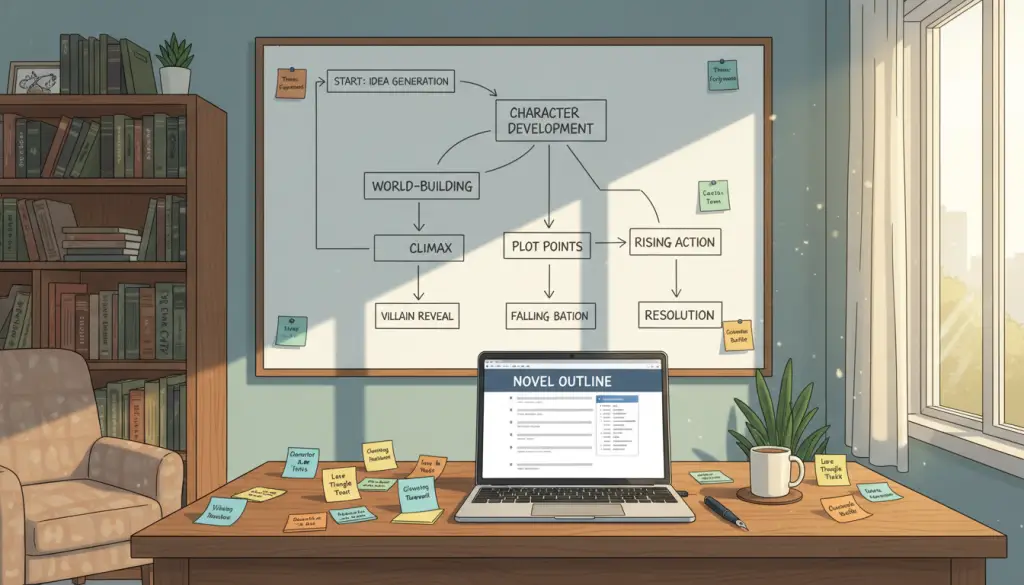
Imagine this: You have a brilliant story idea swirling in your mind, yet the thought of putting it on paper feels overwhelming. Staring at a blank page is like standing at the base of a mountain, ready to climb but unsure of the path. This is where learning the art of outlining comes into play.
Outlines are not just for meticulous planners; they serve as your roadmap, guiding you through the writing journey. They transform chaos into clarity, allowing you to focus on your characters and plot without losing your way. With the right structure, your story can unfold seamlessly, captivating readers from the very first page.
In this guide, you will discover how to craft an effective outline that suits your unique writing style. Whether you prefer a detailed plan or a loose framework, outlining can elevate your storytelling. Plus, with tools like Storyloft’s Free Outline Generator, you can quickly turn your ideas into a structured book plan.
Understanding the Importance of a Novel Outline
Writing a compelling story is like crafting a delicious recipe. You need the right ingredients and a clear process to create something extraordinary. Outlining serves as that essential recipe, guiding you through the intricate steps of storytelling. With a solid outline, you can navigate the twists and turns of your narrative with ease.
Why Outlining Saves You Time and Headaches
Let’s be brutally honest: writing a story without an outline is like assembling IKEA furniture without instructions. You might end up with something resembling a bookshelf, but it will probably wobble, leaving you with a handful of mysterious leftover screws.
Outlining acts as a long-term investment. Sure, you may spend extra hours upfront, but this time pays off. It prevents you from writing scenes that ultimately get scrapped because they don’t fit your narrative. Think of your outline as a compass, keeping you on track even when the journey gets confusing.
Plotters vs. Pantsers: Finding Your Writing Style
The debate between plotters and pantsers isn’t about who’s right; it’s about finding your unique style. Most writers are hybrids, needing a bit of both. Even Stephen King, the patron saint of pantsers, admits he has a main character in mind along with their challenges before he starts writing.
Outlining doesn’t stifle creativity; instead, it sets up guardrails. This framework allows you to explore your story without veering off course. It’s like having a security blanket that reminds you where you’re going and why you started this journey.
How Outlining Boosts Creativity, Not Stifles It
When you hit a wall at the halfway mark of your novel—and you will—having an outline can be a lifesaver. It helps maintain consistent character development and a cohesive plot, ensuring your protagonist doesn’t lose their drive midway through the story.
Think of your outline as a living document. It can evolve as your characters surprise you or as your plot takes unexpected turns. The real magic of outlining lies in its ability to keep your narrative focused while allowing your creativity to flourish.
How to Do a Novel Outline: Step-by-Step Process for Beginners
Your journey into storytelling starts with crystallizing your vision. This first step is crucial for setting the stage for your entire narrative. It’s about boiling your sprawling, magnificent idea down to a single, potent sentence—your elevator pitch. This concise statement will capture the essence of your story and intrigue readers.
For example, Jerry Jenkins distilled an entire novel into this compelling sentence: “A judge who tries a man for a murder that the judge committed.” Such clarity can be the seed that grows into a bestselling book.
Step 1: Distill Your Idea into One Sentence
In this step, think about what makes your story unique. Ask yourself: What is the core conflict? Who is the protagonist? This clarity will serve as your guiding light.
Step 2: Choose a Story Structure That Fits
Next, select a story structure that fits your narrative like a tailored suit. Popular options include:
- The Three-Act Structure
- The Hero’s Journey
- The Snowflake Method
- Dean Koontz’s Classic Story Structure
- The 7-Point Story Structure
- James Scott Bell’s “Disturbance and Two Doorways”
Each structure has its strengths, so choose one that resonates with your storytelling style.
Step 3: Develop Your Characters
Now, breathe life into your characters. Map out their backstories, conduct imaginary interviews, and ask them tough questions. Remember, character development will make or break your story. Flawed, human characters resonate with readers far more than perfect ones.
Step 4: Flesh Out Your Plot with Key Beats
In this step, flesh out your plot using classic plot types: Adventure, Change, Romance, Mistake, Lure, Race, or Gift. Each type can guide your writing and keep your audience engaged. The inciting incident, your story’s big bang moment, propels your protagonist into a journey they can’t return from, so make it count.
Step 5: Decide on Settings and Research Needs
Setting isn’t just backdrop wallpaper; it’s integral to your narrative. Consider how things look, smell, feel, and sound. Layer these sensory details into your scenes so seamlessly that readers feel immersed in your world.
Step 6: Write a Chapter-by-Chapter Synopsis
Finally, create a chapter-by-chapter synopsis. Write in third person, present tense, and leave no mysteries or teasers. This exercise exposes any fatal flaws in your story before you invest months in writing a first draft that doesn’t work.
| Step | Description |
|---|---|
| 1 | Distill your idea into one powerful sentence. |
| 2 | Choose a fitting story structure. |
| 3 | Develop multi-dimensional characters. |
| 4 | Flesh out your plot with key beats. |
| 5 | Decide on settings and research needs. |
| 6 | Write a detailed chapter-by-chapter synopsis. |
Exploring Popular Novel Outlining Methods
Creating a narrative is like setting off on a thrilling journey, and your outline is the map that keeps you on course. Various outlining methods can help you navigate the complexities of storytelling. Each method offers unique benefits, making it easier for you to organize your thoughts and ideas. Here’s a look at some of the most popular techniques.
The Three-Act Structure
The Three-Act Structure is the granddaddy of story frameworks. It divides your tale into Setup, Confrontation, and Resolution. This structure is akin to a three-course meal that leaves your readers satisfyingly full.
Using The Hobbit as our example, we see Bilbo Baggins move from cozy Bag End (Act One) through trolls, goblins, and a riddling Gollum (Act Two) to a dragon-induced battle and a changed hobbit returning home (Act Three).
The Snowflake Method
Created by Randy Ingermanson, the Snowflake Method builds your story from a single sentence into an intricately detailed beat-by-beat plan. This approach is perfect for writers who love systematic expansion.
Save the Cat! Beat Sheet
Originally from screenwriter Blake Snyder, the Save the Cat! Beat Sheet includes fifteen plot beats that appear in many American films. This method features the iconic “Save the Cat” moment, where your protagonist does something likable early on.
The Hero’s Journey
Joseph Campbell’s mythic structure takes your protagonist from the Ordinary World through the Call to Adventure, Meeting the Mentor, Crossing the Threshold, and eventually Returning with the Elixir. This framework is the backbone of many beloved stories, including Star Wars and The Hobbit.
Freytag’s Pyramid (Plot Pyramid)
Freytag’s Pyramid offers a simple five-stage structure: Exposition, Inciting Incident, Rising Action, Climax, Falling Action, and Resolution. This model is less character-focused and more plot-driven, making it a solid choice for those who prioritize action.
Mind Map and Zettelkasten
The Mind Map method is a visual brainstorming dream. It creates a web of interconnected ideas, allowing you to see the big picture and explore relationships between characters, subplots, and conflicts without linear constraints.
The Zettelkasten method lets you write brief descriptions of characters, plot points, and scenes on index cards. You can then drag and drop them until your story arc clicks into place.
Each of these methods can be adapted and hybridized. You might start with a Mind Map to brainstorm, apply the Save the Cat! beats to structure your plot, and finally use the Snowflake Method to flesh out character profiles. The key is to experiment until you find the method that makes your writer’s heart sing.
| Method | Description |
|---|---|
| The Three-Act Structure | Divides the story into Setup, Confrontation, and Resolution. |
| The Snowflake Method | Starts with a single sentence and expands into detailed plans. |
| Save the Cat! Beat Sheet | Includes 15 beats for effective story pacing. |
| The Hero’s Journey | A mythic structure guiding the protagonist through transformative stages. |
| Freytag’s Pyramid | Offers a five-stage plot structure focusing on action. |
| Mind Map | Visualizes interconnected ideas and relationships. |
| Zettelkasten | Utilizes index cards for flexible organization of plot elements. |

Using Storyloft’s Free Outline Generator to Fast-Track Your Planning
Picture this: you have a brilliant idea for your story, but the path to transforming it into a full-fledged book feels daunting. Enter Storyloft’s Free Outline Generator, your trusty sidekick in the writing process. This innovative tool takes you from a rough idea to a structured book plan in mere minutes.
Imagine having a witty, tireless writing coach named Eddy who doesn’t drink your coffee or judge your questionable plot twists. That’s exactly what Storyloft’s Free Outline Generator delivers through a sleek, interactive conversation.
How Eddy Guides You Through an Interactive Conversation
Instead of staring at a blinking cursor and questioning every life choice that led you to write a novel, you answer a few guided questions. Watch as Eddy transforms your rough idea into a complete working outline in minutes. This isn’t your grandma’s generic chapter list; Storyloft builds a full outline with sections, chapter breakdowns, subpoints, supporting notes, and early creative assets that make your project feel alive before you write page one.
Customizing Your Outline by Genre and Story Type
The experience adapts to your specific book type. Whether you’re crafting a sweeping fantasy epic, a heart-wrenching romance, or a practical non-fiction guide, Storyloft organizes themes, structure, audience, characters, ideas, and pacing into a format you can actually write from. Customizing your outline by genre means the pacing, structure, and even the types of creative assets generated will match the conventions and expectations of your specific story type.
Generating Sections, Chapter Breakdowns, and Creative Assets
Along the way, Eddy creates notes and visual inspiration. You’re not just getting a dry skeleton of an outline but a vibrant, breathing blueprint that sparks your imagination every time you open it. The chapter breakdowns come with subpoints and supporting notes, meaning you’ll never find yourself mid-draft wondering what the heck was supposed to happen in Chapter 12.
Creating Your Book Workspace with a Free Account
When you’re done with the interactive conversation, you create a free account, and your entire book workspace is ready to continue inside Storyloft. No complex setup, no blank page terror—just a faster way to turn an idea into a real book. Think of Storyloft as the literary equivalent of a meal kit delivery service—all the ingredients are prepped and measured; you just have to do the fun part of cooking up your story.
Character Development: The Heart of Your Novel Outline
At the core of every gripping tale lies the characters that breathe life into the narrative. Characters are the beating heart of your novel. If your readers don’t care about them, even the most brilliant plot won’t keep them engaged.
Crafting multi-dimensional characters means going beyond surface-level traits. Dig into their backstories, secret shames, and irrational fears. Consider even the specific brand of breakfast cereal they’d fight someone over! This depth creates relatable characters that resonate with readers.
Crafting Multi-Dimensional Characters
The Snowflake Method’s approach to character development is a chef’s kiss. Start with a brief summary of core traits, role, conflict, motivation, and arc. Then, expand into a full profile that includes backstory, personality, relationships, and how they evolve.
Take Bilbo Baggins as an example. His core traits include being adventurous, fastidious, humble, and kind. His conflict involves overcoming cowardice and self-doubt. His arc takes him from a slightly cowardly hobbit to a bold hero, earning his transformation through genuine struggle.
Mapping Character Arcs and Motivations
Mapping character arcs means tracking how your protagonist changes from page one to “The End.” What lessons do they learn? What flaws do they overcome? What scars do they earn along the way? These elements are crucial for a compelling journey.
Character motivations drive every decision your protagonist makes. If you don’t know what they want and why, your plot may feel like a series of random events. Every scene should serve a purpose in your protagonist’s transformation, preventing the dreaded mid-novel slump.
Balancing Flaws and Strengths for Reader Connection
Balancing flaws and strengths is the secret sauce of reader connection. Your hero should be vulnerable and flawed before becoming heroic. Nobody identifies with perfection; everyone has a little bit of a hot mess inside.
Conduct imaginary interviews with your characters. Ask them about their childhood, greatest regrets, and hidden desires. Even your antagonist needs development. The best villains are often the heroes of their own stories, convinced they’re right and armed with motivations that make sense to them.
Plot Development: Building Momentum and Conflict
Plot development is the engine that drives your story forward, making it essential for captivating your readers. This is where your narrative earns its keep, guiding your audience through twists and turns that keep them glued to the page. Without a solid plot, even the most vibrant characters can fall flat.
The inciting incident is your story’s big bang. It launches your protagonist from their ordinary world into a journey they can’t return from. For instance, in The Hobbit, this pivotal moment occurs when Gandalf persuades Bilbo to join a quest. This incident sets everything in motion, sparking the adventure ahead.
Inciting Incident and Rising Action
Following the inciting incident, the rising action is the delicious meat of your story sandwich. It consists of escalating challenges that build tension. Think of Bilbo facing trolls, elves, and goblins. Each challenge forces him to grow and adapt, keeping readers on the edge of their seats.
Utilizing the Scene and Sequel Method is crucial here. Each scene must have a goal, conflict, and disaster. This ensures that every character present has a purpose, making the narrative richer and more engaging.
Climax and Resolution
Your climax should be the most dramatic moment of the entire novel. It’s where all the tension explodes, much like a pressure cooker left on the stove too long. In The Hobbit, the climax features a dramatic alliance against goblins and Wargs, culminating in Thorin’s death.
After the climax, the resolution ties up loose ends, providing the emotional payoff readers crave. This isn’t just about wrapping things up; it’s about delivering a satisfying conclusion that resonates long after the last page is turned.
Integration of Subplots and Secondary Characters
Subplots are the supporting actors of your narrative. They enrich the main plot and reveal different facets of your characters. Secondary characters should have their own mini-arcs that intersect with the protagonist’s journey. This adds depth and keeps the story layered and engaging.
Don’t forget about the midpoint of your story. It should feature either a false victory or defeat, raising the stakes and pushing your protagonist toward their ultimate transformation. Use your outline to track where each subplot weaves in and out of the main narrative, ensuring nothing gets dropped or forgotten.
Balancing Planning and Flexibility in Your Outline
Every writer knows that balancing structure with spontaneity can be a tricky endeavor. Your outline should be fluid, able to change as you write and your plot develops. Its purpose is to keep you on track, prevent stalling, and provide a safety net.
For the Pantser, your structure may be as simple as a list of anticipated plot points—more of a roadmap. For the Outliner, it might be an ambitious 20+ page detailed list. Most writers find themselves somewhere in between.
When you hit the wall at the halfway to three-quarter mark of just about every novel, an outline becomes a security blanket. Deep down, even pantsers know that outlines can be helpful. When they try to plot everything in advance, things can get predictable.
Adapting Your Outline As Inspiration Strikes
Your outline is not a sacred text carved in stone tablets; it’s a living document. It should evolve as your characters surprise you and your plot takes unexpected detours into fascinating territory.
The sweet spot between planning and flexibility is where most successful writers thrive. They have enough structure to avoid getting lost but enough freedom to follow sudden bursts of inspiration.
When you’re in the flow and your protagonist suddenly does something unexpected yet right for the story, give yourself permission to deviate from the outline. See where this new path leads!
When to Revise Your Outline During Writing
Revising your outline mid-draft isn’t a sign of failure; it’s a sign that you’re engaged with your story. You’re willing to improve it, even if that means scrapping a few carefully planned chapters.
The halfway to three-quarter mark of a novel is notoriously where writers hit the wall. This is when your outline becomes a reminder of where you’re going and why you started.
If you’re a hardcore pantser who breaks out in hives at the thought of detailed planning, remember that your outline can be as simple as a list of anticipated plot points. Think of it as a roadmap with scenic routes marked, rather than a turn-by-turn GPS.
The key is to check in with your outline regularly. Use it as a friendly compass that confirms you’re still heading in the right direction. Sometimes, the best ideas arrive halfway through your first draft. Adapting your outline to accommodate them can turn a good story into a great one.
Don’t be afraid to kill your darlings—those beloved scenes or plot points that no longer serve the story. Just because they’re in the outline doesn’t mean they must stay. The outline serves the story, not the other way around.
Even the most meticulously planned novels evolve during the writing process. That’s not a bug in the system; it’s the beautiful, messy, human heart of creativity.
Tips for Effective Research and World-Building in Your Outline
Unlocking the full potential of your narrative hinges on thoughtful research and world-building. These elements are like seasoning that enhances your story’s flavor. However, nobody wants to read a story that tastes like pure oregano—research should enrich your narrative, not overwhelm it.
Your outline serves as the perfect platform to identify research needs. As you map out scenes, you’ll naturally pinpoint areas that require deeper investigation. Whether it’s medieval blacksmithing techniques or the mating habits of Komodo dragons, knowing what to research will streamline your writing process.
Incorporating Sensory Details Without Overloading
Sensory details are your secret weapon for immersive writing. Instead of telling readers it’s cold, let them feel the bite of wind through a threadbare coat. Show them how their breath crystallizes in the air before their face. These subtle hints create a vivid atmosphere that draws readers into your world.
Layering Setting into the Narrative Seamlessly
The golden rule of setting is to integrate it into the narrative. Describe creaky floorboards while your protagonist sneaks down the hallway, rather than in a separate paragraph that reads like a real estate listing. Avoid the dreaded “information dump” where you pause the action to deliver lengthy backstory. Readers will skim it, and frankly, they won’t miss it.
Use your outline to plan where sensory details will have the most impact. A single well-placed detail about the smell of rain on hot asphalt can do more emotional heavy lifting than three pages of description. This approach keeps your narrative flowing and engaging.
World-building for fantasy and science fiction requires extra attention in your outline. Ensure that the rules of your universe are consistent, so you don’t accidentally contradict your own magic system by Chapter 20. Research should be thorough enough to lend authenticity but invisible enough that readers feel the truth of your world without being lectured about it.
When outlining settings, consider how each location reflects or contrasts with your protagonist’s emotional state. A cheerful coffee shop can feel like a prison to a character nursing a broken heart. This layer of depth adds richness to your story.
Finally, Storyloft’s Eddy can help by creating notes and visual inspiration during the outlining process. This way, your settings already feel alive and textured before you write page one.
| Tip | Description |
|---|---|
| Research Needs | Identify areas requiring deeper investigation as you outline. |
| Sensory Details | Incorporate sensory elements to create an immersive experience. |
| Seamless Integration | Layer setting into the narrative without separate descriptions. |
| Avoid Information Dumps | Keep the action flowing without lengthy backstory interruptions. |
| World-Building | Ensure consistency in your universe’s rules and elements. |
| Emotional Reflection | Use settings to reflect or contrast your protagonist’s feelings. |
| Visual Inspiration | Utilize tools like Eddy to bring your settings to life. |
Managing Multiple Points of View and Emotional Arcs
Handling multiple characters’ viewpoints is akin to being a conductor, ensuring each instrument plays harmoniously. This balancing act can be challenging, but with the right techniques, you can create a cohesive narrative that resonates with readers.
For writers venturing into multi-POV stories, color-coding can be your new best friend. Assign each point-of-view character a distinct hue and use it throughout your outline. This visual aid allows you to see at a glance if one character is hogging the spotlight while another languishes in narrative obscurity.
Additionally, a detailed timeline showing where and how different POV characters’ narratives overlap is essential. Think of it as air traffic control for your plot, ensuring that every character’s journey is well-coordinated and engaging.
Color-Coding and Timeline Techniques for Multi-POV
When you outline for multiple perspectives, it’s crucial to track emotional journeys across scenes. This means going beyond what happens and mapping how each scene makes your characters feel. Create an emotional resonance map that ensures your readers are on the roller coaster with you.
For each scene, identify the emotional goal—fear, hope, relief, or dread. Outline how that emotion affects your character’s decisions and propels the plot forward rather than just decorating it. This practice not only enriches character development but also deepens the reader’s connection to the story.
Tracking Emotional Journeys Across Scenes
Your protagonist’s emotional arc should feature key shifts and moments of vulnerability that feel earned, not like sudden personality transplants between chapters. Each character’s emotional journey should intersect with and impact the others, creating a web of feeling that makes your story resonate on multiple levels.
As you outline, ensure no POV character disappears for so long that readers forget they exist—unless that disappearance is a deliberate narrative choice that serves the story. Balancing multiple emotional arcs in your outline guarantees that your readers are invested in every character’s journey, not just impatiently waiting to return to their favorite one.
| Technique | Description |
|---|---|
| Color-Coding | Assign a distinct color to each POV character for clarity in your outline. |
| Timeline Creation | Develop a timeline to visualize character interactions and narrative overlaps. |
| Emotional Resonance Map | Track emotional goals for each scene to enhance character depth. |
| Character Intersections | Ensure each character’s journey impacts others for a cohesive narrative. |
| Consistent Character Presence | Avoid letting any character disappear for too long unless intentional. |
| Balancing Arcs | Keep all characters’ emotional journeys engaging to maintain reader interest. |

Overcoming Common Challenges in Novel Outlining
Every writer faces challenges on their journey to craft a compelling narrative. Whether you’re battling writer’s block or grappling with a complex outline, these hurdles can feel daunting. The good news? There are effective strategies to help you navigate these obstacles and keep your writing process flowing smoothly.
Dealing with Writer’s Block Early
Writer’s block often strikes because you don’t know what happens next. An outline is like having a literary GPS that tells you exactly where to go when your creative engine stalls on the side of the road. By having a clear outline, you can avoid those frustrating moments of staring at a blank page.
Keeping Momentum When the Outline Gets Complex
When your outline becomes a tangled mess, take a breath. Remember, its only job is to keep you on track, not to win a design award. Here are some techniques to simplify your process:
- Reverse Outline: Start at the end and work backward. Ask questions like “How did she get injured?” to discover events that precede each scene.
- Puzzle Piece Outlining: Write key scenes on index cards or Post-it notes. Rearrange them until the narrative flow clicks.
- Nonlinear Outlining: Outline your favorite or pivotal scenes first, then connect them like building bridges between islands of inspiration.
Finding Your Balance Between Structure and Spontaneity
Finding your balance between structure and spontaneity is a personal journey. Some days, you’ll cling to your outline like a life raft; other days, you might chuck it overboard and swim for shore. If you’re feeling overwhelmed by complexity, try the “start at the end” approach. Knowing your destination makes it easier to plot the route, even if you take a few scenic detours along the way.
Ultimately, the hybrid approach—part plotter, part pantser—is where most writers land. This gives you enough structure to feel secure and enough freedom to feel alive. Don’t let perfectionism paralyze you; your outline doesn’t need to be a masterpiece, just functional enough to get you writing.
Remember, every writer faces these challenges. The fact that you’re wrestling with your outline means you’re doing the work, not just dreaming about it.
Conclusion
Writing a book is a thrilling adventure, filled with unexpected twists and turns. Just like any great journey, having a roadmap makes all the difference. By drafting an outline, you set the stage for your story, allowing creativity to flourish while keeping your narrative on track.
You’ve reached the end of this guide, and if your mind isn’t buzzing with outlining possibilities, it’s time to check your pulse! With the right tools, transforming your story idea into a structured plan is entirely within reach. Whether you’re drawn to the Three-Act Structure or the Snowflake Method, the key is to start writing.
Storyloft’s Free Outline Generator is here to fast-track your planning process. No more blank page paralysis or complex setups—just a smarter way to turn your idea into a captivating book. Remember, even the most renowned authors began their journey with a story waiting to be told. So, open that document, and let your characters lead the way!
FAQ
Why is outlining important for writing?
Outlining helps you organize thoughts, saves time, and reduces the chance of writer’s block. It’s like having a GPS for your story—no more getting lost in plot twists!
What are the different outlining methods?
Popular methods include the Three-Act Structure, Snowflake Method, and Hero’s Journey. Each has its own flair, so pick one that vibes with your style!
How do I develop characters in my outline?
Focus on crafting multi-dimensional characters with clear motivations. Think of them as your story’s heartbeat—keep it strong and engaging!
Can I change my outline while writing?
Absolutely! Flexibility is key. If inspiration strikes, feel free to revise your outline to better fit your creative flow.
What should I include in my plot development?
Make sure to outline the inciting incident, rising action, climax, and resolution. These elements build momentum and keep readers on the edge of their seats!
How can I balance planning and spontaneity?
Find a sweet spot where your outline guides you but leaves room for creative surprises. Think of it as a dance—follow the rhythm but feel free to improvise!
What are some tips for effective world-building?
Incorporate sensory details without overwhelming your readers. Layer settings into the narrative so they feel like characters in their own right!
How do I manage multiple points of view?
Use color-coding or timelines to track different perspectives. This keeps your narrative cohesive and helps maintain emotional arcs across scenes.
What should I do if I hit writer’s block?
Tackle it early by revisiting your outline. Sometimes, a little tweak is all you need to get those creative juices flowing again!
How can I ensure my outline remains effective?
Regularly review and adjust your outline as your story evolves. It’s a living document, just like your characters!