How Do You Write an Outline for a Book Step by Step
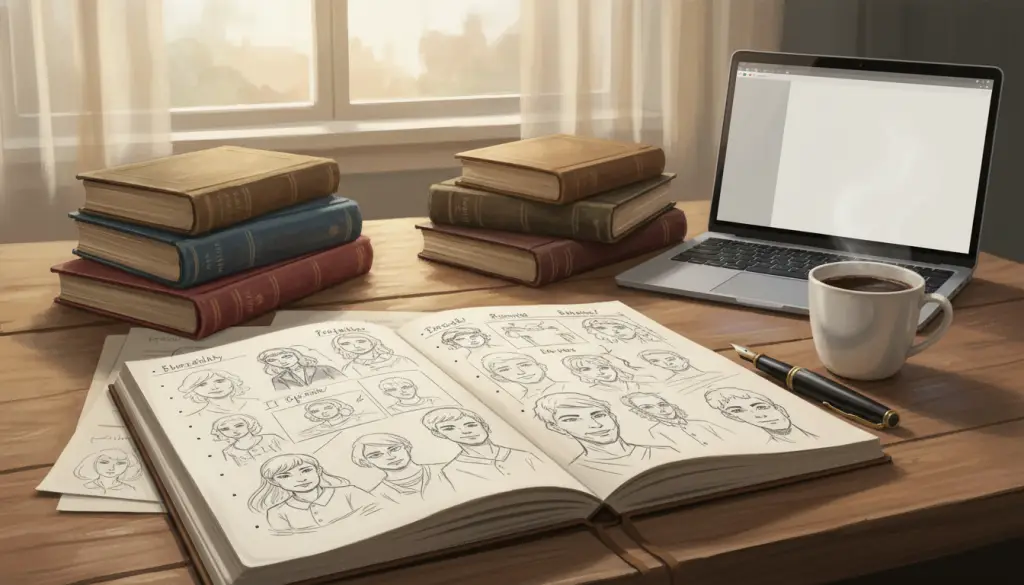
Picture this: you sit down at your desk, a fresh cup of coffee in hand, and your mind is buzzing with ideas. Scenes flash before your eyes like caffeinated fireflies, but there’s one problem—how to turn that chaotic energy into a structured story. The eternal question of crafting an outline creeps in, haunting you at 3 a.m. as you wonder if you left the stove on.
But here’s the liberating truth: an outline isn’t a straitjacket for your creativity. Instead, it acts like a GPS, guiding you through the winding roads of storytelling. Whether you meticulously plot every detail or prefer to discover your narrative as you go, having a roadmap transforms the daunting blank page into an exciting adventure.
This guide will lead you through each step of creating an effective outline. From condensing your big idea into a single sentence to fleshing out chapters that keep readers engaged, you’ll find everything you need to make your writing journey smoother. Plus, with Storyloft’s Free Outline Generator, turning your rough idea into a complete working outline has never been easier.
Key Takeaways
- Outlines provide structure without stifling creativity.
- Even pantsers like Stephen King benefit from a basic framework.
- A clear roadmap can ease the fear of the blank page.
- Storyloft’s Free Outline Generator simplifies the outlining process.
- Effective outlines help in crafting engaging narratives.
Why You Need a Book Outline (And How It Makes Writing Easier)
Visualize the frustration of crafting a story without a roadmap to guide you. Writing can feel like wandering through a dense fog, where every twist and turn leads to confusion. Without a solid outline, you might find yourself trapped in a maze of plot holes and character inconsistencies.
Common pitfalls arise when you dive into writing without a plan. Picture this: you’re 40,000 words into your novel when you realize your protagonist’s motivation makes about as much sense as wearing flip-flops to hike the Pacific Crest Trail. Now you’re facing a revision nightmare that makes you want to set your laptop on fire.
Writing without an outline is like attempting to build IKEA furniture without the instructions. Sure, you might end up with something that vaguely resembles a bookshelf, but those leftover screws will haunt you. The most common pitfall is the meandering middle, a vast wasteland between the inciting incident and the climax. Your story wanders aimlessly like a tourist who lost their map, boring readers into abandoning your book entirely.
Without a plan, character inconsistencies multiply like rabbits. Your brooding hero suddenly cracks dad jokes in chapter seven, and your villain’s evil scheme shifts three times because you forgot what you wrote last Tuesday. An outline saves your sanity by giving you a bird’s-eye view of your entire story before you invest months writing scenes that ultimately get scrapped.
Time is the one resource you can’t get back. Outlines are the ultimate time-saving investment. Spending a few hours planning upfront prevents weeks of rewriting later when you discover your plot has more holes than a block of Swiss cheese. When you know where your story is headed, your brain can focus on the actual craft of writing: vivid descriptions, snappy dialogue, and sentences that sing.
The structure an outline provides acts like guardrails on a mountain road. You’re still driving the story, but you’re far less likely to careen off a cliff into the abyss of abandoned manuscripts. Even a loose outline transforms the terrifying blank page into a manageable checklist, giving you the momentum to start writing with confidence.
| Benefits of Outlining | Description |
|---|---|
| Clarity | Provides a clear direction for your story. |
| Time-saving | Prevents extensive rewrites and saves time. |
| Character Consistency | Keeps character motivations aligned throughout the narrative. |
| Enhanced Creativity | Frees up mental space to focus on writing. |
| Engagement | Helps maintain reader interest with a structured plot. |
Are You a Plotter, a Pantser, or a Perfect Hybrid?
In the vast landscape of writing, two distinct camps emerge: the meticulous planners and the spontaneous creators. Each group approaches the process in unique ways, influencing how stories unfold on the page.
What Defines Plotters and Their Structured Approach
Plotters are the writers who thrive on structure. They meticulously plan every plot twist with the precision of a military strategist. Armed with color-coded spreadsheets and detailed character bibles, they ensure every chapter is a well-oiled machine. For them, knowing the destination before starting is crucial.
Embracing the Mystery: Pantsers and Discovery Writing
On the flip side, true Pantsers, like Stephen King, embrace the thrill of discovery. They dive into the writing process with a compelling character and an intriguing predicament, trusting that the story will reveal itself as they go. This approach often leads to unexpected brilliance, as they navigate the twists and turns of their narrative.
Finding Your Sweet Spot as a Hybrid Writer
But here’s the twist: most writers find themselves somewhere in between. This hybrid approach balances planning and spontaneity. As Jerry Jenkins suggests, you might start with a main character and a loose idea of their journey, while leaving room for surprises along the way.
Finding your sweet spot involves experimentation. Try outlining a chapter in detail and see if it feels liberating or constricting. Alternatively, write without a plan and gauge whether you feel free or lost. Understanding your position on the plotter-pantser spectrum can help you develop a writing process that aligns with your unique style.
Storyloft’s Free Outline Generator adapts to your natural writing style. Whether you crave detailed structure or just need a gentle nudge, this tool allows you to embrace both sides of your writing personality.
Distill Your Book Idea: Crafting a Blurb That Guides You
Imagine starting your writing journey not with a blank page, but with a powerful statement that captures the essence of your story. Crafting a blurb might seem counterintuitive at first, but it’s a game-changer. This concise summary serves as your story’s mission statement, keeping you focused as you outline and write.
Why Starting With a Blurb Is Counterintuitive but Crucial
At first glance, writing a blurb before diving into your story feels like putting on your shoes before your socks. Yet, this approach forces you to pinpoint the beating heart of your narrative. A well-crafted blurb, typically around 250 words, helps you clarify the central conflict and direction of your book.
Jena Brown emphasizes the importance of this step: “Before you write a single sentence or even outline a scene, you’ll need to spend time crafting your blurb.” This blurb acts as a compass, ensuring your plot remains on course and doesn’t meander into the narrative wilderness.
5 Key Questions to Capture the Heart of Your Story
To create a compelling blurb, consider these five essential questions:
- Who is your main character?
- What do they desperately want?
- What’s standing in their way?
- What impossible choice will they make to overcome it?
- What do they actually need versus what they think they want?
These questions guide you in distilling your novel idea into a succinct statement. For example, Jerry Jenkins’ blurb concept, “a judge who tries a man for a murder that the judge committed,” encapsulates dramatic tension in just one sentence.
Using Your Blurb as a Compass for Plot and Characters
Your blurb becomes the ultimate *bullshit detector* for your outline. Every scene, character decision, and subplot must serve the core promise you’ve made in those few paragraphs. If it doesn’t, it gets cut—no mercy.
Writing a blurb shifts your focus from trivial details to the central conflict. This big-picture perspective is crucial when building your outline. It ensures that you concentrate on what truly matters, keeping readers engaged and eager to turn the pages.
A strong blurb should evoke curiosity, making readers—and agents—ask questions they simply have to find the answers to. This creates that delicious “I need to know what happens” itch that only turning pages can scratch.
With Storyloft’s Free Outline Generator, Eddy guides you through this exact process. He helps you crystallize your rough idea into a compelling blurb that becomes the foundation of your entire outline. Plus, he provides visual inspiration to make your project feel alive from day one.
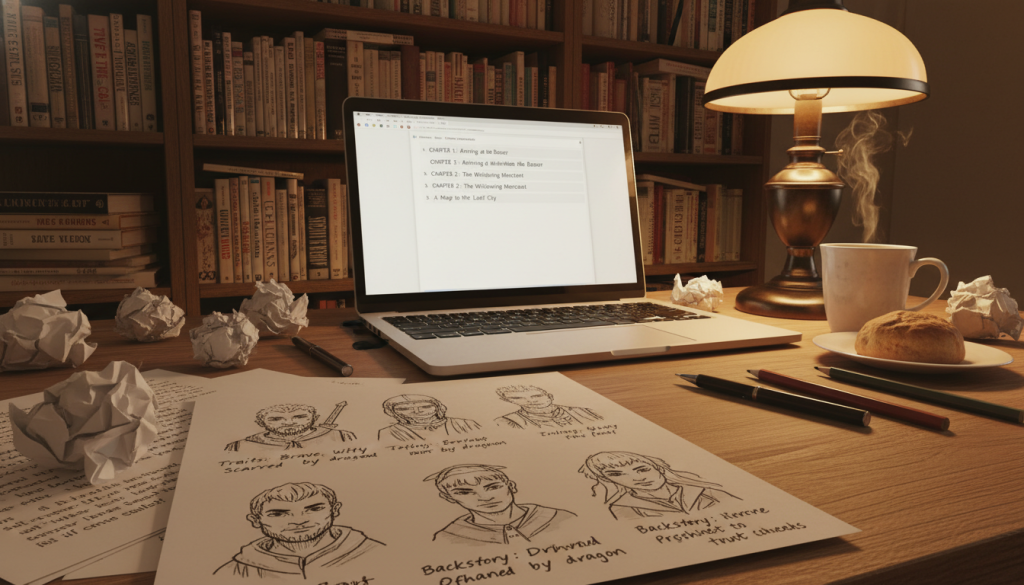
Develop Characters That Drive Your Story Forward
Characters are the lifeblood of your narrative, driving the action and emotion. Without them, your plot is just a skeleton without flesh. This section delves into crafting realistic, relatable characters with compelling arcs that resonate with readers.
Building Realistic, Relatable Characters with Arcs
Every character has a journey. The protagonist needs an internal arc that transforms them from who they are at the beginning to who they must become by the end. As Jena Brown states,
“While plot is obviously important, characters are the beating heart of your novel—which is why this step comes next, before any further ‘plot-based’ outlining.”
This transformation is crucial, as every plot point should challenge or reinforce that character’s development.
The most compelling heroes are not flawless; they are flawed and vulnerable. These imperfections make them relatable, allowing readers to connect with their struggles. When a character makes a choice, it should flow naturally from their beliefs and desires, making their journey feel authentic.
How Character Motivations Link to Plot Points
Character motivations are the invisible threads that connect your plot points. When your protagonist faces challenges, the stakes must be personal. Jerry Jenkins emphasizes this by suggesting that you plunge your main character into trouble early on. But this only works if readers understand why that trouble matters to them.
Mapping your character arcs alongside your plot beats ensures that external events and internal growth harmonize. This alignment creates a rich tapestry of storytelling, where each decision feels impactful and relevant.
Research Techniques for Lifelike Characterization
Creating lifelike characters requires research. Observe real people in everyday situations, like grocery stores. Dive into memoirs and biographies to understand diverse experiences. Explore personality profiles and psychological theories to add depth to your characters.
Conduct imaginary interviews with your characters, asking them about their fears and desires. This technique can unveil layers of complexity, making them feel like real people. The emotional journey of your characters is what keeps readers engaged. Without that investment, even the cleverest plot twist can fall flat.
With Storyloft, you can organize character details, motivations, and arcs directly into your outline structure. This way, you never lose track of why your protagonist is doing what they are doing in chapter twelve.
| Character Development Techniques | Description |
|---|---|
| Character Arcs | Ensure each character has a transformative journey throughout the story. |
| Motivations | Link character choices to their internal desires and fears. |
| Research | Utilize real-life observations and studies to create relatable characters. |
| Imaginary Interviews | Ask characters about their deepest fears to add depth. |
| Emotional Journeys | Map character growth alongside plot developments for coherence. |
Know Your Genre Inside and Out
Understanding the intricacies of your genre can elevate your writing to new heights. Every genre comes with its own set of rules that can either make or break your story. By familiarizing yourself with these elements, you can create a narrative that resonates with your audience.
Jena Brown emphasizes, “Readers pick up a book with certain expectations. If you’re holding a thriller, you might expect a ticking clock, a bad guy threatening the hero in a personal way, unexpected plot twists, and more.” Recognizing these expectations is vital for reader satisfaction.
Genre Expectations and Reader Satisfaction
Readers come to your book with a mental checklist of genre expectations. Ignoring those expectations is like serving someone a pizza when they ordered sushi—they might not hate it, but they’ll definitely feel betrayed. Each genre has its rhythm and pacing DNA:
- Thrillers: Demand a ticking clock and escalating stakes.
- Romances: Need that delicious will-they-won’t-they tension.
- Mysteries: Require carefully planted clues that make readers feel brilliant when they connect the dots.
Identifying and Tweaking Tropes and Story Beats
Tropes aren’t dirty words—they’re the familiar ingredients your readers crave. Your job is to cook them up in a way that feels fresh and surprising rather than serving the same reheated leftovers everyone’s tasted before. The key story beats in your genre function like the load-bearing walls of your novel’s structure:
- Understanding your genre means knowing exactly when the inciting incident should hit (earlier is almost always better).
- Knowing where the midpoint reversal belongs.
- Pacing the climax so readers are breathless rather than bored.
How Genre Influences Plot and Pacing
Genre influences everything from your sentence-level prose style to your chapter length. A literary novel might luxuriate in lyrical descriptions, while a thriller demands short, punchy chapters that propel readers forward like a bullet train. When you’re building your outline, genre awareness helps you place your major plot points at the precise moments readers unconsciously expect them.
This creates that satisfying “this story just works” feeling that keeps them recommending your book to everyone they know. With Storyloft, you can adapt your outlining guidance based on your book type, helping you hit the right beats for your genre—whether you’re writing a cozy mystery, an epic fantasy, or a heart-wrenching memoir.
| Genre Elements | Description |
|---|---|
| Expectations | Readers have a mental checklist based on genre. |
| Pacing | Each genre has its unique rhythm and pacing. |
| Tropes | Familiar ingredients that can be made fresh. |
| Story Beats | Key points that must be hit for satisfaction. |
| Structure | Genre dictates the overall structure of your novel. |
Develop Your Theme(s) Without Sounding Like a Lecture
Every great story has a heartbeat, a theme that resonates beneath the surface. This underlying truth can elevate your narrative from a mere collection of words to an unforgettable experience. Yet, weaving a theme into your novel requires finesse. You want it to emerge naturally, rather than being force-fed to your readers like a poorly-timed lecture.
Jena Brown explains, “Even if you don’t think your novel has a specific message, every story that resonates with readers has some sort of underlying theme.” Think of your theme as the guiding light of your story. It can be as profound as “love conquers all” or as nuanced as “the lies we tell ourselves are more dangerous than the lies others tell us.” The key is that it should develop organically from your characters’ journeys.
Finding the Universal Truth at Your Story’s Core
To discover the universal truth at the heart of your story, reflect on your characters’ struggles. What do they grapple with? What lessons do they learn? This exploration helps reveal the deeper meaning of your narrative.
Each character should contribute to this theme, even if they express differing viewpoints. For instance, if your theme revolves around the complexities of family, one character might yearn for connection, while another feels stifled by obligations. This diversity enriches your narrative, allowing readers to engage with the theme on multiple levels.
Subtle Thematic Threading Through Plot and Characters
Thematic threading works best when it’s woven into your plot and character decisions so subtly that readers feel the resonance without consciously noticing it. Think of it like a bass line in a song—it’s there, supporting the melody, but not always front and center.
Your protagonist’s journey from the lie they believe at the beginning to the truth they embrace at the end is where the theme truly lives. This transformation is not about preaching a message; it’s about demonstrating a journey that feels earned and authentic.
As you outline your story, ask yourself what each major plot point reveals about your theme. Consider whether your hero’s choices consistently illuminate the deeper questions your narrative explores about life, love, justice, or the human condition. The most powerful themes leave room for ambiguity, allowing readers to see themselves in the story and draw their own conclusions.
With Storyloft, you can identify and organize your thematic threads during the outlining process. This ensures that your story’s deeper meaning shines through without ever sounding like a sermon from a soapbox. Along the way, Eddy also creates notes and visual inspiration, making your project feel alive before you even write page one.
Bring Your Story’s World to Life
The world you create can shape your story in ways that resonate deeply with readers. Setting is not merely a backdrop; it is an active force that influences characters and plot. Jena Brown emphasizes, “All stories take place in a specific world. Even if you’re writing a contemporary novel, the real world is still a world!”
Why Setting is More Than Just Background
Setting is the unsung hero of storytelling. It’s not just the wallpaper behind your characters but an active force that shapes their choices and reveals their personalities. Imagine your characters having a heartfelt conversation in a generic coffee shop. Now picture that same scene unfolding in a crumbling Victorian library. The latter adds depth and intrigue, making the setting earn its place on the page.
Using Setting to Reveal Character and Advance Theme
The places your characters inhabit reveal who they are without a single line of exposition. A meticulously organized apartment suggests a very different person than a chaotic studio littered with half-finished art projects. Moreover, weather, architecture, and local customs can subtly advance your theme. A story about isolation hits differently when set in a bustling city versus a remote mountain cabin.
Research Tips for Authentic and Immersive Worlds
Research is the foundation of authentic world-building. Whether you’re crafting a fantasy realm or depicting a real-world city, readers can smell inauthenticity from a mile away. For contemporary settings, Google Street View is your best friend. For historical settings, primary sources like diaries and newspapers provide the lived-in details that make a world feel genuine.
When outlining, consider how each major setting serves multiple purposes: advancing the plot, revealing character, and reinforcing theme. This approach creates an emotional atmosphere that keeps readers immersed in your fictional dream. Along the way, Eddy also creates notes and visual inspiration so your project already feels alive before you write page one.
Choosing the Right Outlining Method for Your Style
Selecting the right outlining method can feel like choosing the perfect ice cream flavor—there are so many delicious options! Each writer has their unique taste, and the method you choose should complement your style, not constrain it.
Here are some popular outlining methods to consider:
The Traditional Novel Outline: Detailed and Structured
The Traditional Novel Outline is the overachiever’s dream. It offers a detailed, chapter-by-chapter, sometimes scene-by-scene breakdown. This method leaves nothing to chance, making your first draft feel more like filling in the blanks than facing the void.
The Three-Act Structure and Beat Sheet: Classic Storytelling Frameworks
The Three-Act Structure is a classic storytelling framework that has satisfied audiences since Aristotle was a boy. It divides your story into Setup, Confrontation, and Resolution, with key turning points that keep the narrative engine humming.
Beat Sheets, popularized by *Save the Cat! Writes a Novel* by Jessica Brody, break your story into specific emotional moments—from the Opening Image to the Final Image. This gives you a rhythm and pacing blueprint that works across virtually every genre.
Innovative Alternatives: Snowflake Method, Mind Maps, and Reverse Outlines
If you crave something different, consider innovative alternatives:
- The Snowflake Method: Created by Randy Ingermanson, this method starts with a single sentence and expands outward like a crystal forming. It’s perfect for writers who feel overwhelmed by planning an entire novel at once.
- Mind Maps: These are the visual thinker’s best friend, creating a web of interconnected ideas. They let you see the big picture and explore relationships between characters, subplots, and conflicts without getting trapped in linear thinking.
- Reverse Outlines: This method starts at your story’s ending and works backward. It’s brilliant for ensuring every plot point builds inevitably toward your climax without meandering detours.
- Zettelkasten Method: Using index cards for scenes, characters, and plot points, this tactile approach appeals to writers who need to see and touch their story structure to understand it.
Ultimately, the key is to experiment. What worked for one project might not suit your next. Storyloft’s Free Outline Generator combines the best elements of these methods, adapting to your preferred style. It builds a complete outline with chapter breakdowns, subpoints, and supporting notes that you can actually write from.

How Do You Write an Outline for a Book: A Step-by-Step Guide
Starting your writing journey can feel like standing at the edge of a vast ocean, ready to dive into the waves of creativity. The process of outlining your story can be both exhilarating and daunting. But fear not! This guide will break it down into manageable steps that will help you transform your ideas into a structured plan.
Step 1: Brainstorm Your Raw Ideas
Step one is pure creative chaos: let your imagination run wild like a toddler after a sugar binge. Write down every single idea, scene fragment, and character quirk that floats through your brain without judging or organizing anything yet. This is the exploratory phase where you give yourself permission to be messy.
Remember, you can’t sculpt a masterpiece until you’ve got a big enough lump of clay to work with—so capture everything, even the ideas that seem ridiculous at 2 a.m.
Step 2: Identify Core Story Elements
Now that you have a heap of ideas, it’s time to sift through the creative rubble. Identify your core story elements: the main plot, the central conflict, your protagonist’s goal, the setting, and the overarching themes. These elements will give your book meaning beyond just “stuff happens.”
Step 3: Draft Your Outline with Flexibility in Mind
When drafting your outline, remember that flexibility is your friend. Your outline should be a living document that breathes and evolves, not a stone tablet that condemns you to follow a path that no longer serves the story. This approach allows room for experimentation and surprises.
Step 4: Build Out Chapter and Scene Breakdown
Building out your chapter and scene breakdown is where the magic happens. Aim for a sentence to a paragraph per chapter, capturing what happens, why it matters, and how it moves both the plot and the character arcs forward. This structure will keep you on track as you start writing.
Step 5: Revise Your Outline as Your Story Evolves
Step five is the revision phase. Look at your completed outline with fresh eyes and ask the hard questions: Does each scene earn its place? Do the character motivations track consistently? Is the pacing building toward a satisfying climax? Your outline should evolve as you write your first draft.
When your characters surprise you (and they will), update the outline to reflect those discoveries rather than stubbornly sticking to a plan that no longer fits.
The entire process becomes dramatically faster when you use Storyloft’s Free Outline Generator. Eddy guides you through an interactive conversation that transforms your rough idea into a complete working outline with chapter breakdowns, subpoints, and supporting notes in minutes instead of weeks.
Unlock the Power of Storyloft’s Free Outline Generator
Think of the relief when a simple process guides you from chaos to clarity in your writing. Storyloft’s Free Outline Generator is here to help you turn a rough idea into a structured book plan in just minutes. Whether you’re crafting fiction or non-fiction, Eddy, your writing assistant, will lead you through an interactive conversation that transforms your concept into a complete working outline—absolutely free.
Unlike those sad, generic chapter list generators that spit out bland titles like “Chapter 1: Introduction,” Storyloft creates a full outline with actual sections, detailed chapter breakdowns, subpoints, and supporting notes you can genuinely write from. This makes the process of structuring your narrative not only efficient but also enjoyable.
How Eddy Guides You From Idea to Complete Outline Fast
Eddy’s guidance feels less like filling out a bureaucratic form and more like brainstorming with a friend who’s exceptionally good at organizing thoughts. The interactive nature of the tool ensures that you remain engaged while building your outline. You’ll quickly find that the journey from your initial idea to a comprehensive outline is smoother than you might have imagined.
Benefits Over Generic Chapter Lists: Supporting Notes and Creative Assets
The outline generated by Storyloft goes beyond mere chapter titles. It includes organized themes, audience considerations, character frameworks, pacing guidance, and structural elements. This way, your scattered ideas are transformed into a cohesive roadmap you can actually follow.
Adapting to Your Book Type and Writing Style Seamlessly
The experience adapts seamlessly to your book type—whether you’re writing a thriller, a memoir, or anything in between. You’re never forced into a one-size-fits-all template that doesn’t fit your unique style. This flexibility ensures that the outline feels personal and relevant to your narrative.
Getting Started: Setting Up Your Free Story Workspace
When you’re ready to dive in, creating a free account gives you a complete book workspace inside Storyloft. Your outline, notes, and creative assets will be ready and waiting—no complex setup or learning curve. Just a faster way to turn an idea into a real book.
Visit https://storyloft.app/tools/free-outline to start your free outline today. Life’s too short to stare at a blinking cursor wondering where to begin when Eddy could have you mapped out and ready to write in minutes.
| Feature | Description |
|---|---|
| Interactive Guidance | Eddy helps you transform ideas into structured outlines through engaging conversation. |
| Comprehensive Outlines | Generates detailed chapter breakdowns, subpoints, and supporting notes. |
| Customization | Adapts to various book types and personal writing styles. |
| Free Workspace | Offers a complete workspace for organizing your outline and notes. |
| Time Efficiency | Speeds up the process of turning ideas into a real book. |
Tips to Keep Your Outline Alive and Your Writing Rolling
Crafting a story can feel like trying to catch smoke with your bare hands, especially without a clear direction. An outline is your best friend, but it should never feel like a prison sentence. Instead, treat it as a living document that breathes and evolves alongside your narrative.
Use Your Outline as a Living Document, Not a Cage
Your outline shouldn’t be set in stone; it should be a living, breathing document that evolves and allows your story to bloom. Jena Brown emphasizes this by aiming for “a decent paragraph per chapter with the beats highlighted at the top,” which becomes her “draft zero.” Think of your outline like a jazz musician treats a chord chart—it’s the foundation for improvisation, not a rigid score that forbids unexpected notes.
Balance Planning With Creative Discovery
Balancing planning with spontaneity means holding your outline loosely enough that your characters can surprise you. If your protagonist suddenly does something unexpected in chapter seven, don’t panic. Update your outline to accommodate this new development and see where it leads. The most productive writers treat their outline as a safety net, not a straitjacket. Knowing the major story beats are mapped out frees your brain to focus on the sentence-level craft that makes prose sing.
Stay Flexible and Embrace Surprises in Your Story
Embrace the surprises your story throws at you during the writing process. Those unexpected twists often become the moments readers remember long after they’ve finished the final page. If you hit a wall mid-draft, return to your outline and revise it. Sometimes the problem isn’t your writing but a structural issue that a quick outline adjustment can solve without requiring you to scrap weeks of work.
Remember that your outline exists to serve your writing, not the other way around. The goal is a finished book that readers love, not a perfectly preserved planning document that belongs in a museum of good intentions.
| Tip | Description |
|---|---|
| Living Document | Treat your outline as a flexible guide that adapts to your story’s needs. |
| Embrace Surprises | Allow unexpected developments to shape your narrative and enhance creativity. |
| Balance | Find harmony between planning and spontaneity for a more engaging writing process. |
| Revisit and Revise | Don’t hesitate to adjust your outline if you encounter structural issues. |
| Serve Your Writing | Ensure your outline supports your writing goals, leading to a finished book. |
Conclusion
Embarking on the adventure of crafting a story can feel like setting sail into uncharted waters. The journey from a flicker of an idea to a finished book is one of the most rewarding adventures a person can undertake. Having the right outline transforms that journey from a terrifying leap into the unknown into a confident stride toward a destination you can actually see.
There’s no single “correct” way to approach your novel. What works for a meticulous plotter might make a free-spirited pantser break out in hives. That’s perfectly okay because your process should fit your brain, not someone else’s rulebook. The most important lesson from every successful author is deceptively simple: just keep writing. An outline is merely the map, and the real magic happens when you start putting words on the page.
Whether you’re a plotter, a pantser, or a hybrid, the goal remains the same: to write a book that keeps readers turning pages. Your protagonist’s journey mirrors your own as a writer. You start with a dream, face obstacles, and ultimately create something that didn’t exist before you sat down to work.
Storyloft’s Free Outline Generator stands ready to help you skip the blank-page paralysis. Jump straight into a structured, inspiring book plan that makes the writing process feel less like a slog and more like the creative adventure it’s meant to be. Visit https://storyloft.app/tools/free-outline to start your free outline today. Your story deserves to be told, and the world deserves to read it—no complex setup required, just a faster way to turn your idea into a real book.
FAQ
Why should I bother with an outline?
An outline is like a GPS for your writing journey. It keeps you on track and helps avoid those pesky detours into writer’s block!
What if I prefer to write spontaneously?
No worries! You can still outline loosely. Think of it as a safety net that catches you if you start to free-fall into chaos.
How detailed should my outline be?
It depends on your style! Some writers prefer a detailed map, while others like a simple sketch. Find what works best for you!
Can I change my outline later?
Absolutely! Your outline is a living document. Feel free to adjust it as your story evolves and surprises you.
What’s the best way to brainstorm ideas?
Try free writing, mind mapping, or even talking it out loud. Sometimes, your best ideas come when you’re not trying too hard!
How do I know if my characters are strong enough?
Check if they have clear motivations and arcs. If they can make readers laugh, cry, or throw the book across the room, you’re on the right track!
Do I need to know my genre before outlining?
Knowing your genre helps, but don’t let it box you in! Use it as a guide, not a rulebook. Explore and have fun!
What if I get stuck while outlining?
Take a break! Sometimes stepping away gives your brain the space it needs to connect the dots. Or try discussing your ideas with a friend!
How can I keep my outline flexible?
Write with a mindset that embraces change. Use phrases like “this might happen” instead of “this will happen” to keep the door open for creativity.
Is there a right or wrong way to outline?
Nope! Every writer has their unique approach. The right way is whatever helps you craft your story best. So, experiment and find your groove!