How Do I Write an Outline Step by Step Guide for Beginners
Picture this: you’re sitting at your desk, staring at a blank page. A spark of a story idea ignites in your mind, but it feels like trying to catch smoke with your bare hands. Every writer has been there. The thrill of creation can quickly turn into a fog of confusion without a clear path.
But fear not! Crafting a novel outline isn’t about stifling creativity; it’s more like having a GPS for your journey. It helps steer your plot away from dead ends while allowing for spontaneous detours. Even renowned authors like Stephen King, known for their free-spirited writing style, often have a roadmap before diving into their first draft.
This guide will transform your nebulous ideas into a structured outline that excites you to write. It’s about making the writing process feel less like wandering through a foggy forest and more like a thrilling adventure. So, let’s dive in and discover how to bring that brilliant idea to life!
Key Takeaways
- A novel outline serves as a creative roadmap, not a restrictive straitjacket.
- Even famous authors plan their stories to avoid major rewrites.
- Planning ahead saves time and keeps your sanity intact.
- Storyloft’s Free Outline Generator simplifies the outlining process.
- Understanding outlining strengthens your first draft and eases revisions.
Understanding Why an Outline Matters for Your Novel
Picture the thrill of watching your scattered thoughts coalesce into a cohesive narrative. An outline acts as your guiding star, illuminating the path from a mere idea to a structured story. It transforms the daunting blank page into a canvas ready for your creativity.
When staring at that cursor blinking back at you, it’s easy to feel overwhelmed. But with a solid outline, that sinking feeling fades away. Think of your outline as the architectural blueprint for your story. Just as you wouldn’t build a house by randomly nailing boards together, constructing a 300-page book without knowing where the load-bearing plot points go is a recipe for disaster.
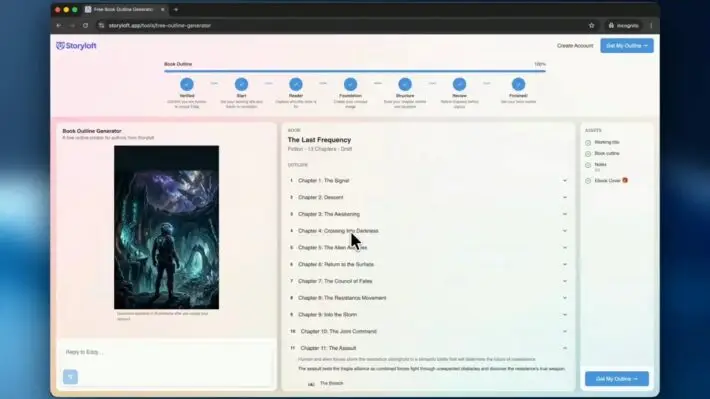
That’s where Storyloft’s Free Outline Generator comes into play. This innovative tool helps you turn a rough idea into a structured book plan in minutes. Through a brief interactive conversation with Eddy, it prompts you with the right questions, building a complete working outline complete with chapter breakdowns and supporting notes.
Unlike generic templates that leave you filling in blanks until your eyes glaze over, Storyloft adapts to your specific book type—whether fiction or non-fiction. It organizes everything from themes to pacing into a format you can actually write from, making the process smoother and more enjoyable.
Suddenly, that intimidating blank page is less daunting. Even a simple one-sentence summary of your story idea can blossom into a full outline with sections, subpoints, and early creative assets. This makes your project feel alive before you even write page one.
Kirsten Bakis reminds us not to judge our ideas too harshly at this stage. If a novel about a man buying shoelaces can become a critically acclaimed book, your story idea deserves the chance to grow into something remarkable. Your outline serves as a safety net, catching you when you fall into the murky middle of your draft and reminding you where you intended to go before your characters started misbehaving.
Pantsers vs Outliners: Discovering Your Writing Style
Every writer has a unique approach to crafting their stories. Understanding whether you lean toward being a Pantser or an Outliner can significantly impact your writing journey. Let’s break down what these terms mean and how they can shape your process.
What It Means to Be a Pantser
If the phrase “detailed outline” makes you cringe, you might be a Pantser. Pantsers thrive on spontaneity. They embrace the thrill of discovery, allowing their characters to lead the way. Notable authors like Jerry Jenkins and Stephen King exemplify this style. Jenkins has penned nearly 200 books, finding inspiration in the unexpected twists of his narratives. King famously states he puts “interesting characters in difficult situations and writes to find out what happens.”
About half of all writers identify as Pantsers. They enjoy the freedom of letting their stories unfold organically. The process feels like an adventure, where each chapter reveals new surprises.
Traits of an Outliner
On the other hand, Outliners prefer a more structured approach. They meticulously plan every detail of their story before writing. This includes researching characters, plot twists, and even potential backstories. Outliners often conduct imaginary interviews with their characters, mapping out elements that may never appear in the final draft but enhance the overall narrative.
If you find comfort in knowing each plot twist ahead of time, you might lean toward being an Outliner. This method can help prevent feelings of being lost in the narrative. However, it’s essential to remember that many writers fall somewhere in between—hybrids who appreciate both structure and spontaneity.
Why Knowing Your Style Boosts Your Novel’s Success
Recognizing your writing style is crucial. It’s not about labeling yourself; it’s about understanding what process works best for you. When you hit that inevitable wall in your draft, knowing whether you need more structure or freedom can make all the difference.
- Pantsers might feel overwhelmed by rigid outlines and prefer discovering their stories through character-driven plots.
- Outliners find solace in knowing the details and enjoy having a roadmap for their characters’ journeys.
- Most writers are hybrids, balancing the need for structure with the desire for creative freedom.
- Understanding your style can prevent you from getting stuck in an endless loop of planning or writing aimlessly.
Ultimately, whether you’re a Pantser or an Outliner, embracing your unique style will enhance your writing experience. As Jenkins notes, “When I hit the wall at the halfway to three-quarter mark of just about every novel, a story outline sounds like a great security blanket.” Knowing your preferences will help you finish your draft instead of leaving it in a drawer.
The Role of Story Structure in Novel Outlining
Every compelling story has a backbone that holds it together. A solid story structure is essential for guiding your narrative from beginning to end. It provides the necessary framework that keeps your plot on track, ensuring that readers remain engaged throughout.
Why Every Story Needs a Solid Framework
Don’t mistake a story structure for an outline. Even if you’re a diehard Pantser who wouldn’t touch a formal outline with a ten-foot pole, you still need a solid framework to keep your plot from collapsing like a soufflé in an earthquake. This framework is what gives your story its rhythm and flow.
Dean Koontz’s Classic Story Structure is the literary equivalent of a four-step recipe that turned Jerry Jenkins from a mid-list genre writer into a bestselling author. It starts with plunging your protagonist into terrible trouble faster than you can say “inciting incident.” The stakes must be dire enough to justify a book-length story.
Dean Koontz’s Classic Story Structure Explained
The genius of Koontz’s approach lies in its brutal simplicity. Every time your character tries to fix their problem, you make it worse—logically, not through cheap coincidences. This escalation keeps readers on the edge of their seats, wondering how the protagonist will escape the mess they’ve created.
Eventually, things reach a point of apparent hopelessness. This moment is crucial, as it forces your lead to use every new muscle and technique gained from facing all that trouble. When your protagonist finally reaches that moment of apparent hopelessness, they’re transformed from a reactive victim into a proactive hero who earns their victory.
A solid framework ensures your story doesn’t meander through 200 pages of beautiful prose that goes absolutely nowhere. Readers will appreciate a narrative that has direction and purpose. Whether your character faces life-or-death stakes in a thriller or the emotional devastation of choosing between two suitors in a romance, the escalating trouble keeps readers turning pages.
You’ll find that having a framework actually liberates your creativity rather than stifling it. With a clear structure, you can focus on writing compelling scenes without wasting mental energy wondering what happens next.
Popular Story Structures to Inspire Your Outline
Every great story starts with a solid framework. Understanding various story structures can help you craft an outline that captivates readers and keeps your plot on track. Here are some popular frameworks that can inspire your creative journey.
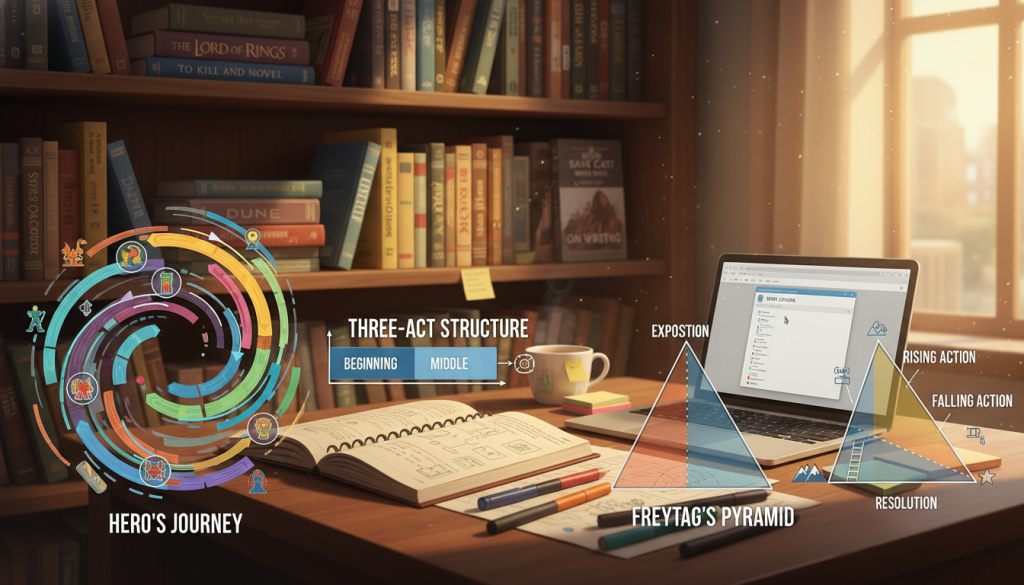
The Three-Act Structure
The Three-Act Structure is a classic Hollywood framework. It divides your story into three parts: Setup, Confrontation, and Resolution. This structure ensures your plot has a satisfying arc. Readers won’t be left wondering why they invested their time.
The Hero’s Journey
If your protagonist is destined for an epic transformation, consider The Hero’s Journey. This framework features twelve stages, including the thrilling “Ordeal” where everything seems lost. It has shaped timeless stories, from Star Wars to The Wizard of Oz.
Randy Ingermanson’s Snowflake Method
Randy Ingermanson’s Snowflake Method appeals to those who love a step-by-step approach. It starts with a one-sentence summary and expands outward, creating a complex outline. This method helps you build a multi-layered novel that even Sheldon Cooper would admire.
Other Helpful Frameworks: In Medias Res, Beat Sheet, and More
Experimenting with different story structures is like trying on outfits before a big date. Each framework offers unique benefits:
- In Medias Res: This technique throws your reader straight into the action. Who says you can’t start with a car chase and explain the backstory later?
- Beat Sheet: Borrowed from screenwriting, this method lets you map out pivotal moments without detailing every scene. It provides a blend of structure and flexibility.
- James Scott Bell’s “Disturbance and Two Doorways”: This framework simplifies how your protagonist transitions from their normal world into the heart of the story.
Each structure serves as a tool to enhance your writing. Embrace the one that resonates with you and start crafting your outline with confidence!
How Do You Outline a Novel: A Six-Step Practical Guide
Imagine transforming your initial spark of inspiration into a detailed roadmap for your story. This six-step guide simplifies the outlining process, taking you from a mere idea to a comprehensive narrative framework. With these steps, you can navigate your writing journey with confidence and clarity.
1. Distill Your Novel Idea into One Sentence
The first step demands you boil your entire novel down to a single, juicy sentence. This is your elevator pitch that would make a literary agent forget to check their phone between floors. For instance, Jerry Jenkins crafted a gripping line about a judge who tries a man for a murder the judge himself committed. This concise summary sets the stage for everything that follows.
2. Choose a Story Structure That Fits Your Vision
Choosing a story structure that fits your vision isn’t about cramming your unique idea into a prefabricated box. Instead, it’s about finding the framework that enhances your narrative’s natural rhythm and keeps readers hooked. Whether you opt for the Three-Act Structure or The Hero’s Journey, the right structure can elevate your plot.
3. Develop Your Characters Deeply
Next, get to know your characters inside and out. Conduct imaginary interviews and map out their backstories. Make them so human and flawed that readers will forgive them for the terrible decisions you’re about to force them to make. Remember, a relatable protagonist is key to driving your plot forward.
4. Flesh Out Your Plot and Key Scenes
When fleshing out your plot, consider which plot type drives your story. Is it an Adventure where your protagonist faces myriad obstacles? Or perhaps a Change where they undergo dramatic transformation? Identifying the core of your plot will guide your writing and keep readers engaged.
5. Decide on Your Novel’s Setting
Your setting should never read like a travel brochure awkwardly stapled into your novel. Layer it into the narrative so subtly that readers absorb the atmosphere through their pores while focusing on the action and dialogue. A well-researched setting enhances your story without overshadowing the main plot.
6. Create Chapter Synopses to Map Your Narrative
Finally, create chapter synopses in third person, present tense. For example, “Jason learns his daughter has been kidnapped.” This acts as an X-ray for your story, revealing fatal structural flaws before you’ve invested months writing scenes that ultimately don’t work. Each synopsis should include brief character sketches, providing a clear map of your narrative.
This six-step process transforms the overwhelming question of outlining into a manageable sequence. It takes you from a one-sentence idea to a complete narrative map ready for drafting. So, roll up your sleeves and start outlining your masterpiece!
Character Development: Making Your Protagonist and Cast Real
Characters are the heart and soul of your story, breathing life into every page. Without them, your plot is just a series of events waiting to happen. To engage readers, your characters must feel real, relatable, and, most importantly, flawed.
According to Jerry Jenkins, character development will make or break your story. Characters should be human and vulnerable, eventually rising to the occasion but starting from a place of reality. This journey is what keeps readers invested in their lives.
Understanding your protagonist’s journey is essential. Think of them as a living, breathing mess of contradictions. They should drive the story forward through their desperate attempts to get what they want while misunderstanding what they truly need.
Why Characters Drive Your Plot Forward
Character arcs are crucial in plotting emotional journeys. Readers will forgive a predictable plot if they fall in love with your characters. But if your protagonist is as interesting as wet toast, they might just hurl your book across the room.
The magic of a character arc lies in the gap between wants and needs. For instance, take Nick Carraway from The Great Gatsby. He thinks money and Gatsby’s world will bring happiness, but by the end, he realizes that this glittering world is emptier than a politician’s promises.
Using Character Arcs to Plot Emotional Journeys
Try Rachael Herron’s deceptively simple exercise: fill in “I started out _______” and “I ended up _______” in your character’s voice. Do this three more times quickly to uncover layers of transformation you didn’t know were there.
Your hero must earn their victory by growing from a flawed, vulnerable human into someone capable of heroic action. Perfection is boring, but watching someone overcome their limitations keeps readers turning pages at 2 a.m.
Outliners have a distinct advantage here. Mapping character backstories and conducting imaginary interviews reveal motivations that naturally generate plot complications without feeling contrived. When your protagonist finally rises to the occasion and wins against all odds, readers should feel that the victory was both inevitable and surprising.
| Character Development Aspect | Description |
|---|---|
| Wants vs. Needs | Understanding the difference between what a character desires and what they truly require for growth. |
| Character Arcs | The journey of a character from one state to another, showcasing growth and transformation. |
| Flaws and Vulnerabilities | Creating characters that are relatable through their imperfections and struggles. |
| Engagement | How well characters resonate with readers, impacting their investment in the story. |
Alternative and Advanced Outlining Methods
Exploring diverse outlining methods can unlock new pathways for your storytelling. While traditional approaches have their merits, alternative strategies can enhance your creative process. Here’s a look at some innovative outlining techniques that can help you structure your narrative effectively.
The Snowflake Method Deep Dive
Randy Ingermanson’s Snowflake Method is ideal for those who enjoy a layered approach. It begins with a one-sentence summary of your story. From there, you expand this into a paragraph, then a page, gradually adding details about characters and plot. This method allows for a deep exploration of your story’s essence, ensuring every layer contributes to the overall narrative.
Mind Mapping Your Novel’s Elements
Mind mapping unleashes your inner visual thinker. This technique creates a hierarchical diagram that visually represents plot points, characters, themes, conflicts, and chapters. Nina Amir recommends using separate mind maps for each chapter, character, and major event. This way, you can see how everything connects, sparking creativity and clarity.
Reverse Outlining: Starting From the End
Reverse outlining is a detective-like approach to structuring your story. K.M. Weiland suggests starting at the end and working backward. Ask questions like, “How did the character get injured?” or “What events led to this climax?” This method helps ensure every plot point has a logical predecessor, enhancing the story’s flow.
Zettelkasten and Beat Sheets for Scene Organization
The Zettelkasten method transforms your novel into a tactile playground. Write brief descriptions on index cards for characters, plot points, or scenes. You can shuffle and rearrange these cards until your story flows perfectly. On the other hand, Beat Sheets offer a bullet-pointed roadmap of pivotal moments. This technique keeps your pacing tight without the need to plan every line of dialogue before writing.
These alternative methods exist because no two writers’ brains work the same way. What feels like a straightjacket to one writer feels like a warm, comforting hug to another. The goal of any outlining method is to narrow your focus enough that you can stop planning and start writing your novel before the heat death of the universe.
| Outlining Method | Description |
|---|---|
| Snowflake Method | Starts with a one-sentence summary and expands into detailed layers of plot and character. |
| Mind Mapping | Visual representation of ideas, showing connections between characters, themes, and plot points. |
| Reverse Outlining | Working backward from the end to ensure logical progression of events. |
| Zettelkasten | Using index cards to organize plot points and scenes, allowing for easy rearrangement. |
| Beat Sheets | A bullet-pointed list of key story elements that keeps pacing tight. |
Balancing Flexibility and Planning in Your Outline
Finding harmony between a detailed outline and creative freedom can enhance your writing process. As you embark on your storytelling journey, remember that your outline is not a sacred text carved in stone. It’s a living document that should evolve as your characters surprise you and your plot takes unexpected detours.
Kirsten Bakis drops the liberating truth bomb that your outline will change before your last draft is done—probably a lot. This isn’t a sign of failure; it’s evidence that you’re growing as a writer. Embrace the idea that things can shift as you learn more about your story and characters.
The sweet spot between planning and flexibility involves having enough structure to avoid writing yourself into a corner. At the same time, leave room for those magical moments of discovery that make writing feel like alchemy. If you find yourself forcing your characters to follow your outline when they’re clearly screaming to go in a different direction, listen to them. They usually know what makes a better story than your planning brain does.
Think of your outline as a safety net, not a cage. It catches you when you fall but doesn’t prevent you from performing breathtaking aerial stunts that you never could have choreographed in advance. The purpose of an outline is to keep you on track and prevent stalling, not to suck every ounce of spontaneity out of your writing process.
When you finish your draft, take a moment to sit down with your original outline. Compare it to what you actually wrote. This exercise will reveal how much your understanding of the story has evolved—and that evolution is the whole point.

Overcoming Common Novel Outlining Challenges
Navigating the winding road of novel outlining can feel like a daunting challenge for many writers. It’s not uncommon to hit bumps along the way, leaving you feeling stuck or overwhelmed. Recognizing these obstacles is the first step in overcoming them.
When you’re staring at your outline, it might feel like you’ve built a prison for your creativity rather than a playground. This is the moment to step back and assess your needs. Do you require more structure, or is it time to give yourself permission to break free?
What to Do When You’re Stuck or Overwhelmed
The dreaded midpoint slump hits almost every writer. Jerry Jenkins admits he hits the wall at the halfway to three-quarter mark of every novel. Sometimes, the solution is to add more detail to your outline. Other times, it’s best to throw the outline out the window and let your characters drive the story.
If your outline feels overwhelming, try breaking it into smaller chunks. Instead of facing down a 20-page document, focus on outlining just the next three scenes. This can help restore your momentum and make the process feel less daunting.
When to Outline Heavily and When to Loosen the Reins
Heavy outlining works best when you’re writing complex plots with multiple timelines or points of view. In these cases, keeping track of who knows what and when requires the organizational skills of a project manager.
On the other hand, loosen the reins when crafting character-driven literary fiction. Here, the emotional journey matters more than the plot mechanics. Discovering your protagonist’s inner world often requires the freedom to explore without a strict map.
The real problem isn’t whether you outline too much or too little; it’s whether your current approach is helping you write or merely giving you an excuse to procrastinate under the guise of “planning.” Remember, even the most detailed outline can’t predict when a minor character might walk onto the page and steal the entire show, forcing you to rewrite everything. That’s not a bug; it’s a feature of the creative process.
| Challenge | Solution |
|---|---|
| Feeling Stuck | Break your outline into smaller sections to regain momentum. |
| Overwhelmed by Details | Assess whether you need more structure or creative freedom. |
| Midpoint Slump | Add detail to your outline or let characters lead the way. |
| Complex Plots | Use heavy outlining to keep track of timelines and points of view. |
| Character-Driven Stories | Allow for flexibility to explore emotional journeys. |
Getting Started: Moving from Outline to First Draft
The leap from outline to first draft is an exciting moment for every writer. It’s where your carefully crafted plans meet the chaos of creativity. Your outline serves as a roadmap, guiding you through the twists and turns of your story. But remember, it’s not the destination; it’s merely a way to navigate your writing journey.
Using Your Outline as a Writing Roadmap
Think of your outline as a GPS for your writing. It helps you move from chapter to chapter without panicking about what comes next. However, don’t hesitate to take the scenic route when inspiration strikes!
Kirsten Bakis suggests using sticky notes or index cards to visualize your story. Arrange nine key scenes—Opening, Catalyst, Action, Rocks 1-3, The Big Rock, Resolution, and Last Scene—on a wall or board. This visual map allows you to see your entire novel at a glance, providing guideposts as you start writing.
Keeping Creativity Alive While Following the Plan
The transition from outline to first draft is where the magic happens. All that planning pays off as you write with the confidence of someone who knows where they’re going, even if you end up somewhere slightly different. Treat your outline like a jazz musician treats a chord chart: know the structure, but feel free to improvise wildly within it.
When you finish your outline in Storyloft, your book workspace is ready and waiting. No blank page, no complex setup—just a clear path from idea to manuscript that doesn’t require a PhD in project management.
Remember, the first draft will be messy—that’s its job! With an outline guiding you, the mess will be contained to individual scenes rather than sprawling across your entire narrative structure like an untended vine. Start writing knowing your outline has already saved you from the worst fate a novelist can suffer: reaching page 200 and realizing you have absolutely no idea what happens next.
The Benefits of Outlining for Time, Efficiency, and Creativity
Harnessing the power of an outline can lead to greater efficiency and creativity in your writing. Many writers underestimate the long-term benefits of investing time in outlining. The initial effort pays off significantly when it comes to reducing rewrites and enhancing the overall quality of your work.
Saving Time by Reducing Rewrites
Outlining is the ultimate time-saving hack for writers. Investing a few hours in planning can save you months of rewriting scenes that veer off course like lost hikers. Without an outline, you might spend weeks crafting beautiful scenes only to realize they don’t fit your narrative. Killing your darlings hurts a lot less when you never had to write them in the first place.
Strengthening Plot and Character Consistency
Plot and character consistency become almost effortless when you can see your entire story at a glance. An outline helps catch moments when your protagonist’s eye color mysteriously changes or their motivation evaporates without explanation. This clarity ensures that every character and plot point builds on the last, creating a cohesive narrative.
Ensuring You Keep Readers Captivated
Readers stay captivated when every scene builds on the last with purpose and momentum. Outlining prevents you from meandering through subplots that go nowhere and characters who forget their goals. The mental freedom that comes from having an outline is like clearing clutter from your desk. Suddenly, you can focus on the craft of writing instead of juggling plot threads in your head.
Your outline acts as a diagnostic tool, revealing structural weaknesses before you’ve invested emotional energy in scenes that might need to be cut. The stakes of your story become clearer when you plan them in advance, ensuring that every obstacle your protagonist faces escalates logically. This approach keeps readers invested until the final page.
| Benefit | Description |
|---|---|
| Time-Saving | Investing time in outlining reduces the need for extensive rewrites. |
| Consistency | Helps maintain character and plot consistency throughout the story. |
| Reader Engagement | Keeps readers captivated by ensuring each scene has purpose. |
| Mental Clarity | Frees up mental space, allowing focus on writing rather than plotting. |
| Structural Diagnostics | Reveals weaknesses in the narrative before significant emotional investment. |
Conclusion
As you gather your thoughts, remember that every story is a unique journey waiting to unfold. You’ve now journeyed from the blank page to a complete understanding of how to create a compelling outline. Methods like Dean Koontz’s classic structure and the intricate Snowflake Method are at your disposal.
The debate between Pantsers and Outliners isn’t about who’s right; it’s about discovering which approach helps you reach “The End” with your sanity intact. With Storyloft’s Free Outline Generator, transforming your rough idea into a structured book plan is just moments away. Eddy will guide you through an interactive conversation, creating a complete working outline.
When you create your free Storyloft account, your book workspace awaits—no blank page, no complex setup. Just a faster way to turn that idea burning in your brain into a real book. Remember, your outline will change, your characters will surprise you, and your story will evolve. Each of these is evidence that you’re on the right path.
The best time to start writing was yesterday; the second best time is now. Your story deserves to be told, and with the right outline as your guide, you’ll move from “someday I’ll write a novel” to “let me tell you about the book I just finished.”
FAQ
Why should I bother with an outline?
An outline saves you from staring at a blank page, guiding your creative genius while keeping chaos at bay. It’s like a GPS for your writing journey—no one wants to get lost!
What if I prefer to write spontaneously?
Embrace your inner pantser! But even free spirits can benefit from a loose outline. Think of it as a safety net that catches you when your ideas take a nosedive.
How detailed should my outline be?
The level of detail depends on your style. Some thrive on a broad overview, while others prefer every twist and turn mapped out. Find your sweet spot!
Can I change my outline later?
Absolutely! Outlines are not set in stone. As your story evolves, feel free to tweak it. Flexibility is key to keeping your narrative fresh and exciting.
What if I get stuck while outlining?
Take a break! Sometimes stepping away clears the mind. Or try brainstorming with a friend—two heads are better than one when it comes to sparking ideas!
Are there specific structures I should follow?
There are plenty of popular structures, like the Three-Act Structure or Hero’s Journey. Explore them to see what resonates with your story’s vibe!
How can outlining improve my writing efficiency?
An outline helps streamline your writing process, reducing rewrites and keeping your plot consistent. It’s like having a trusty sidekick on your creative quest!
Is it necessary to develop characters before outlining?
While not mandatory, understanding your characters can enhance your outline. After all, well-developed characters often lead the way in plot development!
What’s the best way to start my outline?
Start by distilling your novel idea into a single sentence. This will serve as your guiding star, keeping you focused on the core of your story.
How can I keep my readers engaged throughout the story?
Focus on high stakes and character arcs. A well-structured outline will help ensure your readers are on the edge of their seats, eager to turn the page!