How to Write a Book A Friendly Guide for Beginners
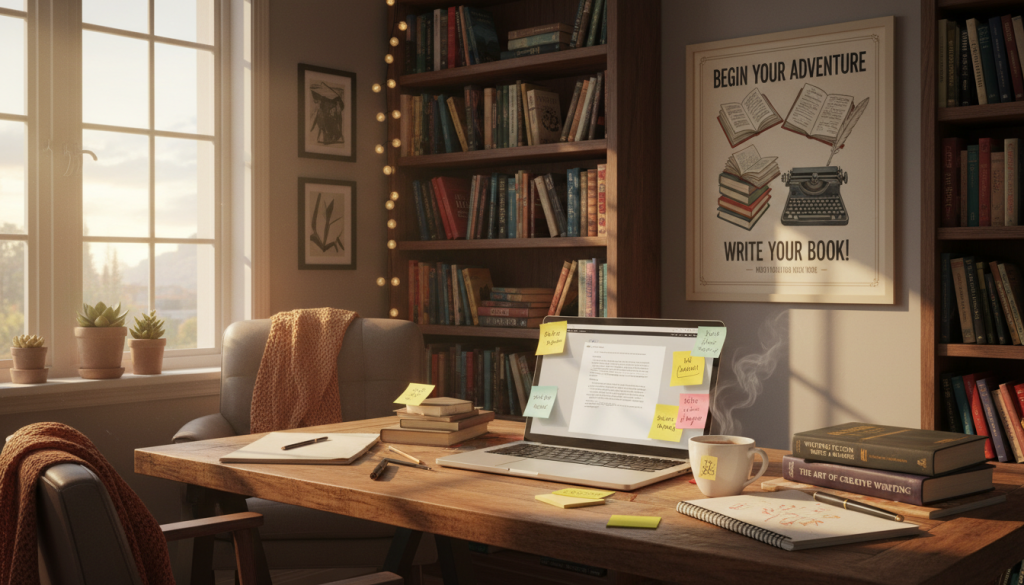
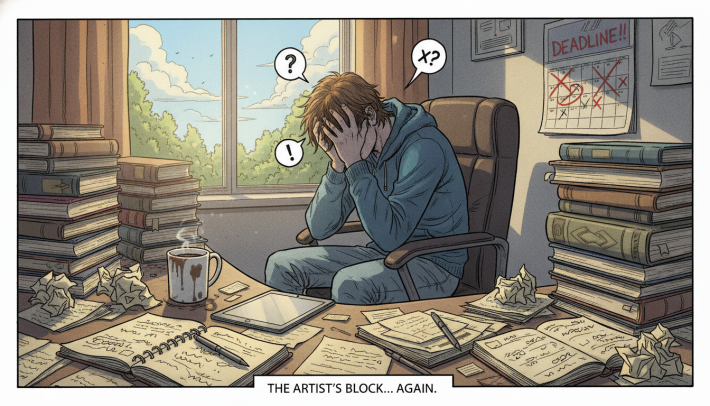
Every January, I’d write the same goal in my notebook. “This is the year I write a book.” I did this for six years. Each year, I’d start a new document, stare at the cursor, and quit in twenty minutes.
The dream seemed too big. The blank page felt too empty. I felt stuck, like Stephen King’s “scariest moment” — right before starting.
Then, I changed my approach. I stopped seeing my story as a huge mountain. I broke it into small steps. I learned I didn’t need a degree or a cabin to write.
I just needed a plan and the courage to start.
This guide is for people who’ve always wanted to write but never started. You’ll learn how to build your plot, create characters, and write scenes easily.
This guide is straightforward. It’s not full of theory. It’s a real plan from someone who’s written a book.
Whether you want to write for yourself, your family, or for a bookstore, this guide will help. Let’s start.
Key Takeaways
- You don’t need special talent or formal training to write a book — just a clear plan and consistent effort.
- A simple three-step story recipe can help you build your plot, characters, and scenes from scratch.
- This writing guide breaks the entire process into small, manageable steps designed for first-time authors.
- Beginner-friendly novel writing focuses on progress over perfection — your first draft doesn’t need to be flawless.
- Reading within your chosen genre and doing basic research will strengthen your story before you type a single word.
- Setting realistic daily goals and tracking your word count keeps you moving forward without burnout.
Why I Decided to Write a Book and Why You Should Too
I used to say I’d write a book someday. But someday kept coming and going. Then I figured out why I wanted to write. This changed everything.
Before you choose your genre, find your reason. It’s the key to starting your writing journey.
Finding Your Personal Writing Motivation
A novel can have 100,000 words. That’s a lot of pages. You need a reason to keep going.
Here are some reasons to write:
- A story that won’t stop playing in your head
- A desire to share expertise or life experience
- Building a business through ebook revenue
- Leaving a legacy for family and future generations
- Pure creative joy and self-expression
There’s no wrong reason. Just be true to yourself.
Understanding the Benefits of Becoming a Book Author
Writing a book opens doors you might not see. A 2023 survey showed self-published authors with three books made $12,749 a year. It’s not just about money.
It builds credibility, opens new career paths, and connects you with readers.
“Start writing, no matter what. The water does not flow until the faucet is turned on.” — Louis L’Amour
Overcoming the Fear of Starting Your First Manuscript
Fear almost stopped me. What if it’s terrible? What if nobody reads it? These doubts are normal.
But here’s the secret: Your first manuscript doesn’t have to be perfect. It just needs to exist. You can always fix mistakes later. But you can’t write on a blank page.
Once you accept this, starting becomes less scary. It becomes exciting.
Choosing Your Book Genre and Target Audience
Before you start writing, you must answer two big questions. What kind of book am I writing? and Who am I writing it for? Knowing your book genre and target audience early saves you from confusion later.
First, decide between fiction and nonfiction. Fiction lets you create imaginary worlds. Nonfiction shares real events and ideas. Think: Do I want to tell a story that never happened, or share something true?
“Write the book you want to read.” — Toni Morrison
Fiction has many genres. Here are some popular ones with typical word counts and examples:
| Genre | Word Count Range | Notable Example |
|---|---|---|
| Literary Fiction | 80,000–120,000 | One Hundred Years of Solitude by Gabriel García Márquez |
| Romance | 50,000–100,000 | The Notebook by Nicholas Sparks |
| Science Fiction | 80,000–120,000 | Dune by Frank Herbert |
| Young Adult | 55,000–80,000 | The Hunger Games by Suzanne Collins |
| Novella | 17,000–40,000 | The Old Man and the Sea by Ernest Hemingway |
Nonfiction also has many types. Memoirs like Eat, Pray, Love by Elizabeth Gilbert appeal to those seeking personal growth. Journalism books like Nomadland by Jessica Bruder offer social insight. Self-help books like The 7 Habits of Highly Effective People by Stephen R. Covey help professionals.
Knowing fiction vs nonfiction helps set your expectations. It guides your research, structure, and tone. Choose a genre you love, and know your audience well. This makes your writing journey less daunting.
Essential Pre-Writing Research and Preparation
Before I start writing, I do a lot of research. This step makes my book better. It’s key for both fiction and nonfiction.
Researching Your Topic or Story World
For nonfiction, I look into history, science, and culture. I also visit places I write about. Fiction writers build their world, making characters and settings.
Even fantasy writers need real-world anchors. A medieval kingdom should have real social structures. A sci-fi planet must follow physics rules.
Reading Books in Your Chosen Genre
Reading books in your genre is fun. I read 5 to 10 recent books before I start. It helps me know what readers want and what’s missing.
| Genre | What to Study | Popular Example |
|---|---|---|
| Science Fiction | World-building, nonlinear timelines | Project Hail Mary by Andy Weir |
| Memoir | Voice, emotional honesty | Educated by Tara Westover |
| Thriller | Pacing, plot twists | The Silent Patient by Alex Michaelides |
| Self-Help | Actionable frameworks, case studies | Atomic Habits by James Clear |
Gathering Resources and Expert Interviews
I talk to experts to check my ideas. A short interview can give me insights. I also gather papers, podcasts, and documentaries.
With good research and expert advice, your book will stand out.
Creating Characters Readers Will Fall in Love With
Great stories are all about the people in them. I’ve found that characters are the heart of any book. Readers follow someone they care about, not just a plot.
Begin by making detailed character sketches. Write down each character’s background, fears, dreams, and how they speak. A character’s voice should match their life. For example, a teenager from rural Texas won’t sound like a Wall Street banker.
Your characters must change. People who don’t grow are boring. A good character arc shows how someone changes, like a shy kid becoming confident or a bitter loner learning to trust.
Here are key things to include in every character sketch:
- Core motivation — what does this person want more than anything?
- Fatal flaw — what internal weakness holds them back?
- Speech style — vocabulary, slang, sentence length
- Backstory wound — what past event shaped their worldview?
| Character Trait | Weak Example | Strong Example |
|---|---|---|
| Dialogue | Everyone sounds the same | Each voice reflects education, region, and personality |
| Character Arcs | Character stays unchanged from start to finish | Character grows through meaningful conflict and choices |
| Motivation | Vague or unclear desires | Specific, emotionally driven goals |
| Flaws | Perfect hero with no weaknesses | Relatable imperfections that create tension |
After you’ve written your draft, get feedback from beta readers who fit your target audience. Their input is invaluable for making your characters more real before you start plotting.
How to Write a Book Using the Three-Step Story Recipe
When I first tried to write a book, I felt overwhelmed. That changed with Abbie Emmons’ three-step story recipe. It makes story structure easy to follow. Let me show you each step.
Building Your Story Foundation
Every great book starts with a strong foundation. Before I write, I choose a broad theme. It could be familial love, personal redemption, or climate change’s impact on a small town.
This theme guides every decision I make. It’s like a compass for my story.
“A story without a theme is like a house without a foundation — it might look good for a while, but it won’t stand.” — Abbie Emmons
Your foundation includes your main character’s desire, their inner conflict, and their world. When these elements click, your story starts to take shape.
Developing Your Plot Structure
Plot development turns your theme into action. I write a short treatment. It’s a brief summary of every major plot point.
Think of it as a mini version of your book in a few paragraphs.
| Story Phase | Purpose | Key Question to Answer |
|---|---|---|
| Beginning (Act 1) | Introduce the character and their world | What does my character want? |
| Middle (Act 2) | Raise stakes through conflict | What stands in their way? |
| End (Act 3) | Resolve the story’s central tension | How are they transformed? |
Mapping Out Scenes That Write Themselves
After my treatment, I break it into scenes. Each scene has a goal, conflict, and outcome. This makes my story feel real.
With characters built and scenes mapped, you’re ready to outline. This brings it all together.
Outlining Methods That Actually Work for Beginners
Writers don’t all outline the same way. Some like a strict plan, while others prefer a loose guide. I’ve tried a few methods that work well for beginners. They help with story organization without feeling trapped.
Traditional Outlines and Bullet Points
This classic method involves listing chapters, scenes, and key events with bullet points. It’s great for seeing your book’s big picture. It’s perfect if you know your major turning points and plot structure before you start.
The Index Card System for Scene Organization
For a jumbled mess of scenes and ideas, index cards are the way to go. Write one scene or idea per card. Then, arrange them until your story makes sense. This method is perfect for those who think visually.
“The outline is the bones of your story. Without it, even the best ideas can collapse under their own weight.”
Writing Treatments for Better Story Flow
Writing treatments are more than bullet points. They’re a short version of your book, written in paragraphs. They cover every major plot point and the emotional journey. Treatments are great for checking if your story flows well before you start writing.
| Method | Best For | Level of Detail | Format |
|---|---|---|---|
| Traditional Outline | Plotters who plan ahead | Medium | Bullet points in a document |
| Index Card System | Visual thinkers with scattered ideas | Low to Medium | Physical or digital cards |
| Writing Treatments | Writers who want narrative flow early | High | Paragraph-style summary |
Choose the method that fits your style. You can even mix them. The goal is to create a roadmap that keeps your writing on track.
Writing Your First Draft Without Getting Stuck
Here’s a secret I wish someone told me sooner: your first draft doesn’t need to be good. It just needs to exist. The entire writing process gets easier once you accept that messy pages are better than blank ones.
I write about ten pages per week. At that pace, I can finish a full draft in roughly forty weekends — less than a year. That’s a real book, written in stolen weekend hours. The trick is to never stop moving forward.
“Start writing, no matter what. The water does not flow until the faucet is turned on.” — Louis L’Amour
So what happens when you hit a wall? You skip it. To overcome writer’s block, I use a simple placeholder method. If I’m stuck on a scene, I type something like “a bunch of scary stuff happens here” and keep going. The momentum matters more than perfection.
I keep a running “fix later” list for any changes that pop into my head mid-draft. If I realize a sister character should be a brother, I jot it down and move on. Stopping to rewrite kills your flow during the first draft stage.
Here are my favorite tricks to stay unstuck:
| Technique | How It Works | When to Use It |
|---|---|---|
| Placeholder Text | Write a short summary of what should happen in a scene | When a scene feels too hard to write in the moment |
| TK Marker | Insert “TK” where you need research later (T and K rarely appear together in English, so Ctrl+F finds them fast) | When you’re missing facts, names, or details |
| Fix Later List | Note character or plot changes in a separate document | When you spot continuity errors but don’t want to stop |
These small habits protect your writing process from grinding to a halt. Once you have a complete first draft in hand, you can circle back and fill every gap. For now, just keep the words flowing — your future editing self will thank you.
My Favorite Book Writing Tips for Consistent Progress
Writing a book is like running a marathon. It’s not a race. The secret to finishing is showing up every day. These tips helped me get through the hard parts and keep going, even when I wanted to stop.

Setting a Realistic Writing Schedule
Finding a writing schedule that works for you is key. I write an hour before work. Others might write at night or during lunch. Choose a time that fits your life, not someone else’s.
NaNoWriMo is great for getting started. It challenges you to write 50,000 words in 30 days. This deadline helps you see how a consistent schedule can help.
Using the TK Method to Keep Writing Flow
The TK method is one of my top tips. When I need to look up something, I type “TKTK” and keep writing. “TK” is rare in English, so it’s easy to find later.
“You can always edit a bad page. You can’t edit a blank page.” — Jodi Picoult
This trick helps you avoid getting stuck in research. Save fact-checking for later, when you’re editing.
Tracking Your Daily Word Count Goals
A typical novel has 80,000 to 100,000 words. Tracking your daily word count makes it easier. Here’s what different paces look like:
| Daily Word Count | Days to Reach 80,000 Words | Days to Reach 100,000 Words |
|---|---|---|
| 500 words | 160 days | 200 days |
| 1,000 words | 80 days | 100 days |
| 1,667 words (NaNoWriMo pace) | 48 days | 60 days |
| 2,000 words | 40 days | 50 days |
If you’re stuck, don’t force it. Jump to a scene that excites you. Your word count will still grow, keeping your creativity alive. This momentum will help you through editing.
Self-Editing and Manuscript Editing Techniques
You’ve finished your first draft — congratulations! Now comes the revision process, and I won’t sugarcoat it: this stage takes real effort. The good news? Self-editing transforms a rough draft into something you’re proud to share. Let me walk you through my approach to manuscript editing that keeps things manageable.
Taking a Break Before Your First Read-Through
I cannot stress this enough — step away from your manuscript. Wait at least two weeks before you read it again. Some authors wait months. This distance gives you fresh eyes. You’ll spot problems you were blind to during the writing phase.
Stephen King recommends at least six weeks in his book On Writing, and I think that’s solid advice.
Identifying Pacing and Structure Issues
Your first read-through during the revision process should focus on the big picture. Don’t fix typos yet. Instead, ask yourself these questions:
- Does each main character have a complete arc?
- Are there scenes that drag or feel rushed?
- Do any plot points contradict each other?
- Is the story structure holding up from beginning to end?
Circle awkward passages, but don’t try to fix them right away. Your second draft might involve adding new chapters, cutting unnecessary characters, or doing fresh research. Multiple drafts are completely normal in self-editing.
Polishing Your Language and Grammar
Once the structure feels solid, zoom in on sentence-level manuscript editing. Here’s what to check:
| Focus Area | What to Look For | Helpful Tool |
|---|---|---|
| Grammar & Spelling | Subject-verb agreement, misspellings | Grammarly |
| Sentence Variety | Mix of short and long sentences | ProWritingAid |
| Tone Consistency | Voice stays steady throughout chapters | Reading aloud |
| Word Choice | Repetitive or overused words | Hemingway Editor |
Reading your work aloud is one of the best self-editing tricks I know. Your ear catches clunky phrasing your eyes skip right over. This final polish prepares your manuscript for outside feedback — which is exactly where we’re headed next.
Working with Beta Readers and Professional Editors
You’ve self-edited your manuscript. You’ve polished every chapter. Now it’s time to let other eyes see your work. Getting manuscript feedback from real people is one of the most powerful steps in the writing process.
Beta readers are your first real audience. Choose people who match your intended readership, not your writing circle. For example, if you wrote a marketing book, give it to a small business owner, not another marketer.
When you share your draft with beta readers, give them clear direction. Instead of asking “Did you like it?” try something specific:
- Was the pacing too slow in the middle chapters?
- Did any character feel flat or unbelievable?
- Were there sections where you wanted to stop reading?
Make it easy on your readers. Offer their preferred format — printed pages, a PDF, or an ebook file for their tablet. A box of pizza or homemade cookies never hurts as a thank-you gift, either.
Once manuscript feedback starts rolling in, listen without defending your choices. Ask clarifying questions. Pay close attention when multiple readers flag the same issue — that’s a signal you can’t ignore.
| Feedback Source | Best For | Typical Cost |
|---|---|---|
| Beta readers (friends/fans) | Story engagement, pacing, clarity | Free (offer a small gift) |
| Professional editors (developmental) | Plot structure, character arcs, theme | $1,000–$5,000+ |
| Professional editors (copy editing) | Grammar, style, consistency | $500–$3,000 |
Professional editors are worth every dollar if your budget allows it. They bring trained expertise that beta readers simply can’t replicate. Think of it as an investment in your book’s success — and in your growth as a writer. With solid feedback in hand, you’re ready to format your novel for a professional presentation.
Formatting Your Novel for Professional Presentation
Your story is ready to shine. Now, it’s time to make it look as good as it reads. Proper formatting turns a raw document into a real book. It’s all about making it look professional.
Setting Proper Margins and Page Layout
Your page design starts with margins. For a 5×8 inch book, use 5/8-inch margins on all sides. For a 6×9 inch book, use 3/4 inch margins. Make the inside margin a bit bigger, about 1/8 inch extra.
Running headers are a nice touch. Put your book title on left-hand pages and your name on right-hand pages.
Choosing Readable Fonts and Text Justification
Font choice is key. Use serif fonts made for books. Here are my top picks:
| Font Name | Style | Best For |
|---|---|---|
| Garamond | Classic, elegant | Literary fiction, memoirs |
| Caslon | Traditional, warm | Historical fiction, nonfiction |
| Minion Pro | Clean, modern | All genres |
| Janson | Sturdy, readable | Thrillers, genre fiction |
Set your type at 11 points. Aim for 10–15 words per line. Justify your text for even edges. Indent the first line of each paragraph by a quarter inch.
Creating Special Chapter Openings and Scene Breaks
Great page design includes eye-catching chapter openings. Start each chapter about one-third down a new page. Use a drop cap or small caps for the first few words.
For scene breaks, insert a blank line with a centered ornament (like ✦ or ※). This signals a shift without confusing readers. With these basics, you’re ready to explore your publishing options.
How to Publish a Book Through Traditional and Self-Publishing Routes
Your manuscript is ready. Now, you must decide how to publish a book. I’ll explain the two main paths to help you choose.

Traditional publishing means writing a query letter and pitching to agents. If an agent signs you, they’ll show your book to big publishers. These publishers handle printing, distribution, and marketing. This path makes your book credible but takes a year or two.
Self-publishing lets you control everything. You decide on cover design, pricing, and marketing. Platforms like Amazon Kindle Direct Publishing help you reach readers worldwide. Genres like science fiction and fantasy have seen huge success, with authors earning up to 70% on each sale.
“You don’t need permission to publish a book anymore. You just need a great story and the willingness to learn the business side.” — Joanna Penn, bestselling indie author
| Feature | Traditional Publishing | Self-Publishing |
|---|---|---|
| Timeline to Publication | 1–2 years | 1–3 months |
| Upfront Cost to Author | None | $500–$5,000+ |
| Royalty Rate | 5–15% | 35–70% |
| Creative Control | Limited | Full |
| Distribution Reach | Bookstores and online | Primarily online |
When submitting to agents or publishers, use standard formatting. This means Times New Roman, 12-point font, double-spaced, with 1-inch margins. Ignoring this can lead to your manuscript being rejected without being read.
Choose your path wisely. Each has its own advantages and disadvantages. Pick the one that fits your timeline, budget, and vision. Then, get your book to readers.
Conclusion
Writing a book is incredibly rewarding. This guide took you through every step, from finding your motivation to publishing. Each step helps turn your dream into a real book you can hold.
Success as a book author takes time and effort. It requires patience, many drafts, and a willingness to improve your work. Good writing habits, beta readers, and professional editing are key to a great book.
Whether you go for traditional publishing or self-publishing, the journey begins with writing. I hope this guide boosts your confidence to start now. Your story is worth telling, so go ahead and share it.
FAQ
How long does it take to write a book from start to finish?
Writing a book can take less than a year if you write 10 pages a week. This is based on my experience. The time it takes depends on your writing schedule and the manuscript’s length.
Novels usually have about 100,000 words. Setting weekly goals helps you make progress without getting tired. Add time for editing and getting feedback, and you should plan for one to two years.
What’s the difference between a novel, a novella, and a short story collection?
Novels are 80,000 to 120,000 words long and tell a complete story. Novellas are shorter, with 17,000 to 40,000 words. They focus on a single story without the length of a novel.
Short story collections and poetry collections gather multiple stories or poems. Knowing your book’s type helps plan your writing.
How do I choose the right genre for my book?
Start by reading what you love. There are many genres like science fiction, fantasy, and romance. Reading widely helps you understand what readers want.
It also helps you find your unique voice. This is key for writing a good book.
What is the three-step story recipe for beginners?
The three-step story recipe is simple and helpful. First, focus on broad themes like family or climate change. Then, plan your story’s structure and plot points.
Finally, break down your story into individual scenes. This makes writing feel less scary.
What outlining method works best for first-time book authors?
The best method depends on your brain. Try different approaches like traditional outlines or the index card system. Treatments offer more detail and flexibility.
Many writers mix methods. Don’t stick to just one.
How do I keep writing when I feel stuck on my first draft?
Don’t write in a straight line if you’re stuck. Jump to a scene you’re excited about. Use placeholder text for tricky parts.
Try the TK method for research. This keeps you writing without getting bogged down. Remember, your first draft is just a start.
What does the TK method mean, and why should I use it in my writing?
TK means “to come.” It’s a trick for keeping your writing flowing. Type “TKTK” for research you’ll do later.
This method makes finding missing info easy. It’s great for staying focused while writing.
How long should I wait before editing my first draft?
Wait until you can see your work with fresh eyes. This could be days, weeks, or months. Start by looking at the big picture, not small details.
Check for story flow and character arcs. Remember, editing is a process. Give yourself time.
Should I hire a professional editor or just use beta readers?
Use both if you can. Beta readers offer audience feedback. Professional editors refine your work. Listen to feedback and ask questions.
Professional editing is worth it if you can afford it. It makes your book better.
What fonts and formatting should I use when preparing my manuscript?
For traditional publishing, use Times New Roman, 12-point, double-spaced. For self-publishing, choose fonts like Garamond for long reads.
Use 11-point size and 10 to 15 words per line. Follow specific margin and spacing rules for a professional look.
What’s the difference between traditional publishing and self-publishing?
Traditional publishing means working with agents and publishers. They handle printing and marketing. Self-publishing lets you control marketing and distribution.
Both paths have benefits. Choose based on your goals and preferences.
How do I find my motivation to actually finish writing a book?
Know your “why” before starting. Your reason could be a burning story or a business goal. Having a clear purpose helps you stay motivated.
Write your reason down and keep it visible. This clarity is what sets writers apart.