How to Perfect Your Agent Query with Storyloft AI
Imagine sitting at your desk, staring at a blinking cursor while your manuscript feels like a mountain you cannot climb. You have poured your heart into your story, but the path to publication feels overwhelming. Many writers struggle to bridge the gap between a finished draft and a professional submission.
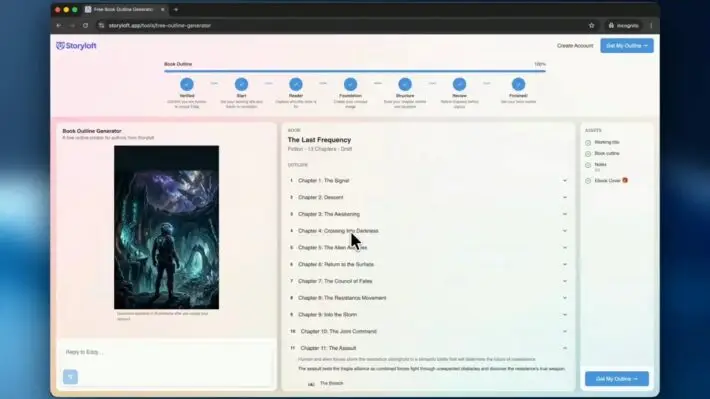
Founded in 2026, Storyloft is an AI-native platform built to change this experience for authors across the United States. Whether you are writing fiction, nonfiction, or a personal memoir, this platform acts as your central hub for every stage of the process.
By leveraging advanced technology, the platform handles the technical demands of book production so you can focus on your creative vision. You can now refine your agent query with precision, ensuring your work stands out in a crowded market. Storyloft streamlines your journey from a rough draft to a polished, professional-quality book.
Key Takeaways
- Storyloft is an AI-native platform launched in 2026 to support modern authors.
- The platform serves as a comprehensive hub for writing, editing, and formatting.
- It supports diverse genres, including fiction, nonfiction, and memoirs.
- Advanced AI tools help authors manage technical book production tasks efficiently.
- Users can focus on their creative vision while the platform handles complex publishing requirements.
Understanding the Importance of an Agent Query
Literary agents act as the gatekeepers of the publishing industry, and they look for one specific document. This brief, professional letter serves as your primary introduction to the people who can turn your manuscript into a published book.
What Is an Agent Query?
An agent query is a concise pitch letter designed to pique the interest of a literary agent. It functions as a business proposal for your creative work, summarizing the core conflict and stakes of your story.
Think of this document as your first impression in a competitive marketplace. It must be polished, professional, and persuasive to stand out among the thousands of submissions agents receive every single year.
Why It Matters for Authors
The reality of traditional publishing is that agents are incredibly busy professionals. A well-crafted agent query acts as a vital gateway, determining whether your manuscript gets requested for a full read or rejected immediately.
Clarity and impact are essential for capturing an agent’s attention within seconds. By mastering this document, you significantly increase your chances of securing the representation needed to bring your story to the world.
Ultimately, your ability to communicate the value of your book determines your success in the industry. Investing time into your agent query is not just a task; it is a strategic move toward achieving your publishing goals.
Key Elements of a Compelling Agent Query
A standout agent query acts as your literary business card in a crowded marketplace. It serves as the primary bridge between your creative vision and a potential publishing partner. By focusing on specific structural pillars, you can ensure your submission leaves a lasting impression on busy industry professionals.
The Hook: Grabbing Attention
The hook is the initial spark that compels an agent to keep reading. It should be a concise, high-stakes sentence that highlights the central conflict of your work. Think of this as the elevator pitch that defines the unique value of your story.
When you draft your agent query, avoid vague generalizations. Instead, focus on the specific stakes that make your narrative impossible to ignore. A strong hook creates immediate curiosity and sets the tone for the rest of your letter.
Synopsis: Captivating Your Audience
Once you have captured their interest, the synopsis provides a gripping overview of your premise. This section must distill your complex narrative arc into a few powerful paragraphs. You want to showcase the emotional journey of your characters while maintaining a clear sense of pacing.
Keep the focus on the primary protagonist and the obstacles they face. A well-crafted agent query avoids getting lost in subplots or minor details. Your goal is to leave the reader wanting more by highlighting the core tension of the book.
Author Biography: Showcasing Credibility
Your biography is the place to establish your professional identity. You should highlight relevant credentials, writing experience, or unique perspectives that inform your work. It is possible to demonstrate your potential for success without appearing overly boastful.
Keep this section brief and relevant to your writing career. If you have previous publications or awards, mention them clearly. If you are a debut author, focus on your dedication to the craft and your understanding of the target market.
| Element | Primary Goal | Key Focus |
|---|---|---|
| The Hook | Engagement | High-stakes conflict |
| Synopsis | Clarity | Core narrative arc |
| Biography | Credibility | Relevant experience |
| Closing | Professionalism | Call to action |
How Storyloft AI Enhances Your Query Writing
Your manuscript deserves a query letter that reflects its unique spirit and tone. Many writers struggle to condense hundreds of pages into a single, punchy page that captures an agent’s interest. While standard writing tools often rely on repetitive templates, Storyloft offers a more sophisticated approach to help you stand out.
At the heart of this platform is Eddy, an advanced editorial AI designed specifically for authors. Unlike generic software, Eddy functions as a partner that understands the nuances of your narrative.
Manuscript Awareness: Tailoring Suggestions
The true power of this tool lies in its manuscript-aware technology. Before you write a single word of your query, Eddy reads your entire book to grasp the core elements of your story. It analyzes your work for:
- Pacing: Identifying where your story gains momentum.
- Voice: Recognizing the specific tone you have cultivated.
- Structure: Mapping out the logical flow of your plot.
- Story Logic: Ensuring your pitch aligns with the actual events in your manuscript.
Because Eddy understands your specific content, the feedback you receive is never generic. It provides context-driven suggestions that are tailored to your unique plot points and character arcs. This ensures that your pitch remains grounded in the reality of your book.
Maintaining Author Voice with Eddy
One of the biggest fears authors have when using technology is losing their creative identity. Many AI tools produce robotic, flat text that sounds nothing like the human who wrote the book. Eddy is different.
This editorial assistant is built to preserve your unique creative voice throughout the drafting process. By analyzing your writing style, it helps you refine your query while keeping the personality that makes your manuscript special. You can feel confident that your final draft will sound authentic, compelling, and entirely like you.
“The best writing tools act as a mirror, reflecting your own brilliance back to you with more clarity.”
Structuring Your Agent Query Effectively
Structure serves as the backbone of every successful submission. When you organize your thoughts logically, you help the reader understand the value of your work immediately. A well-planned agent query ensures that your message remains clear and persuasive from start to finish.
Crafting an Engaging Opening Paragraph
Your opening paragraph acts as the first impression for your manuscript. You must establish the genre and the stakes of your story within the first few sentences. This section should hook the reader by highlighting the central conflict or the primary argument of your book.
Avoid long introductions that delay the core premise. Instead, focus on the unique selling points that make your project stand out in a crowded market. By getting straight to the point, you demonstrate respect for the agent’s time and professional focus.
Sequencing Your Key Points
Once you have captured attention, you must maintain momentum through a logical sequence of ideas. Whether you are writing fiction or nonfiction, the flow of your agent query should guide the reader toward a natural conclusion. You want to build excitement while providing enough detail to prove your book is ready for publication.
Consider these essential steps to keep your pitch organized and effective:
- Start with the hook: Clearly define the protagonist’s goal or the main problem your book solves.
- Develop the stakes: Explain what happens if the goal is not met or why the argument is urgent.
- Highlight the resolution: Briefly hint at the outcome without giving away every plot twist.
- Maintain brevity: Keep your paragraphs short to ensure the narrative flow remains sharp and engaging.
Proper organization allows an agent to see the potential for a successful partnership. When your agent query follows a predictable yet compelling path, you increase your chances of moving to the next stage of the submission process.
Common Mistakes to Avoid in Agent Queries
Crafting the perfect pitch requires more than just a good story; it requires avoiding specific pitfalls. Many writers inadvertently sabotage their submissions by relying on templates that feel cold or impersonal to industry professionals. By steering clear of these common errors, you ensure your agent query reflects the professionalism and dedication required to succeed in the competitive publishing industry.
Overly Generic Pitches
One of the biggest mistakes authors make is using vague language that lacks a unique selling proposition. When your pitch sounds like it could apply to any book in your genre, agents often lose interest quickly. Specificity is your greatest asset when you are trying to stand out in a crowded inbox.
Instead of relying on broad statements, focus on the specific stakes and emotional core of your manuscript. A strong agent query highlights exactly what makes your story different from the rest. Avoid filler words that dilute your message and keep your pitch sharp and focused.
Lack of Personalization
Failing to tailor your pitch to a specific agent is a missed opportunity that can lead to an immediate rejection. Agents want to know why you chose them specifically for your project. Taking the time to research their recent sales or interests shows that you respect their time and expertise.
Personalization goes beyond just using the agent’s name in the salutation. Mentioning a specific book they represented or a recent interview they gave can demonstrate that you have done your homework. This extra effort proves that your agent query is not just a mass-produced email sent to dozens of people at once.
| Query Element | Weak Approach | Strong Approach |
|---|---|---|
| Opening Hook | Generic, vague premise | Specific, high-stakes conflict |
| Agent Research | Mass email to everyone | Targeted, personalized note |
| Tone | Overly formal or robotic | Professional yet authentic |
| Value Proposition | “My book is like Harry Potter” | Unique market position |
The Role of Storyloft in Editing Queries
Every author knows that the difference between a rejection and a request lies in the details. When you prepare your agent query, the quality of your prose serves as your first impression. Storyloft provides the essential tools to polish your writing to a professional standard, ensuring your pitch stands out in a crowded inbox.
Real-time Feedback and Suggestions
Editing is a critical phase of the submission process. Storyloft offers real-time feedback that helps you identify weaknesses in your narrative flow and improve overall clarity. By catching awkward phrasing early, you can refine your message until it resonates perfectly with your target audience.
The platform acts as a dedicated writing partner, highlighting areas where your voice might falter. This AI-driven guidance allows you to maintain your unique style while adhering to the high expectations of literary professionals. You will find that your agent query becomes much more persuasive when every sentence is sharp and purposeful.
Formatting Tips for Professional Appearance
A clean, error-free document demonstrates your commitment to excellence. Storyloft simplifies the design process through integrated features that handle complex layout tasks automatically. You can easily apply customizable book themes and manage your chapter organization without needing advanced technical skills.
To elevate your presentation, consider these integrated design advantages:
- Professional Templates: Ensure your document follows industry-standard spacing and font requirements.
- AI Illustration Suite: Generate unique interior art and chapter headers to add a polished, creative touch.
- Publishing-Ready Exports: Convert your work into clean, high-quality files ready for any submission platform.
By utilizing these sophisticated tools, you present a professional agent query that reflects your dedication to your craft. A well-formatted document shows agents that you are serious about your career as an author. Confidence in your presentation is the final step toward success.
Customizing Your Query for Different Agents
Customizing your pitch is the secret weapon for getting noticed in a crowded market. Sending a generic letter to every professional on your list often leads to missed opportunities. Instead, you should treat each submission as a unique conversation with a potential partner.
Researching Agent Preferences
Before you hit send, you must perform a thorough real estate agent search—or in this case, a literary agent search—to ensure your work aligns with their current list. Utilizing a reliable agent directory allows you to filter professionals by genre, tone, and submission requirements. This initial step saves you time and ensures your manuscript lands in the right inbox.
Many authors find success by using an agent lookup tool to verify if a representative is currently accepting new clients. Taking the time to find an agent who actively seeks your specific style demonstrates that you have done your homework. It shows you are a serious professional who respects the industry standards.
Tailoring Your Approach
Once you have identified your target, it is time to refine your message. You should adjust your query to highlight why your book is a perfect fit for that specific agent’s portfolio. Mentioning their recent sales or specific interests can make a significant impact on your response rate.
Consider these tips for a more personalized approach:
- Reference a specific book they represented that shares a similar vibe to your own.
- Follow their submission guidelines to the letter, as these are often unique to each agency.
- Clearly state why you chose them, focusing on their expertise in your specific genre.
By carefully tailoring your approach, you show that you understand the market and the specific needs of the person you are contacting. This level of attention to detail sets you apart from the crowd and increases your chances of securing representation.
Finalizing Your Agent Query with Storyloft
Once your draft is complete, the focus shifts to refining every detail for maximum impact. A polished agent query serves as your professional calling card in the competitive publishing industry. By using advanced digital tools, you ensure that your pitch remains sharp, clear, and entirely free of distracting errors.
Utilizing AI-Driven Edits for Clarity
Before you hit the send button, it is vital to tighten your prose. Storyloft offers intelligent editing features designed to identify wordiness and remove lingering ambiguity from your pitch. These tools help you maintain a professional tone while ensuring your unique voice shines through every sentence.
By leveraging AI-driven suggestions, you can transform a rough draft into a compelling narrative. This process allows you to focus on the emotional core of your story rather than getting bogged down in minor grammatical hurdles. A clean, concise agent query is far more likely to capture the attention of busy literary professionals.
Exporting with Professional Formatting
Beyond editing, the platform simplifies the technical side of your submission process. You can easily generate a professional-looking document that meets the strict industry standards required by KDP, IngramSpark, and other major distributors. This means you no longer need to rely on separate design software or expensive formatting services to achieve a polished look.
Whether you are preparing a query letter or a full manuscript, the export tools ensure your work is ready for immediate submission. This final step guarantees that your materials make a lasting impression on every agent who reviews them. The following table highlights the advantages of using integrated export tools over manual formatting methods.
| Feature | Manual Formatting | Storyloft Export |
|---|---|---|
| Industry Compliance | Requires manual research | Automatic standards |
| Time Investment | High (hours of work) | Low (one-click process) |
| Design Consistency | Prone to human error | Perfectly uniform |
| Platform Support | Limited compatibility | KDP & IngramSpark ready |
Success Stories: Authors Who Used Storyloft
From initial draft to final publication, Storyloft has powered countless literary journeys. Many writers struggle to balance the creative process with the technical demands of the industry. Our platform provides a unified workspace that simplifies every stage of the book-making experience.
Case Studies of Published Works
We have seen incredible growth among authors who utilize our integrated suite of writing and design tools. For instance, Sarah Jenkins, a debut novelist, used our platform to organize her complex narrative structure. By leveraging our chapter management features, she successfully navigated a multi-POV manuscript that previously felt overwhelming.
Another success story involves Marcus Thorne, who utilized our built-in design tools to prepare his interior layout. By keeping his writing and formatting in one place, he reduced his production time by nearly forty percent. His work now stands as a testament to how streamlined workflows lead to professional-quality results.
Testimonials from Satisfied Authors
Authors often highlight how our AI-assisted editing tools provide the clarity needed to polish their prose. These features act as a digital partner, ensuring that the author’s unique voice remains intact while improving readability. Many users report feeling more confident when they finally hit the submit button.
“Storyloft changed how I approach my writing. The ability to organize my chapters and refine my tone with AI feedback made my manuscript ready for agents in record time.”
The following table illustrates the typical improvements authors experience when transitioning to our platform for their creative projects.
| Feature | Traditional Workflow | Storyloft Workflow |
|---|---|---|
| Drafting | Fragmented files | Centralized hub |
| Editing | Manual proofreading | AI-assisted feedback |
| Formatting | Outsourced design | Integrated tools |
| Efficiency | Slow progress | Rapid publication |
Next Steps: Preparing for Submissions
Your journey toward publication requires a clear roadmap to keep your momentum high. A structured plan turns the daunting task of querying into a manageable series of professional milestones.
Creating a Submission Checklist
Start by building a master list to track every agency you contact. Use a top agent finder to identify professionals who represent your specific genre. This log helps you monitor response times and follow-up dates with ease.
Keep your notes organized to avoid sending duplicate queries to the same firm. A reliable agent locator tool serves as your primary hub for managing these vital connections. Consistency in your outreach efforts often leads to better results.
Building a Strong Query Letter Portfolio
Develop a collection of tailored pitches that highlight the unique strengths of your manuscript. You can use a high-quality agent search engine to match your work with representatives who value your specific writing style. This proactive approach ensures your materials remain polished and ready for any opportunity.
Refining your portfolio allows you to adapt quickly when new submission windows open. Stay persistent as you navigate the publishing landscape. Your dedication to perfecting these documents will make a lasting impression on industry professionals.
FAQ
What is an agent query, and how does Storyloft help me craft one?
An agent query is your professional introduction and pitch to a literary agent. Storyloft simplifies this daunting process by providing an AI-native platform that helps you distill your manuscript into a compelling hook and synopsis. By using Eddy, our manuscript-aware AI assistant, you can ensure your query letter is authentic and perfectly aligned with the tone of your book.
How does Eddy AI differ from generic writing tools for my agent search?
Unlike standard tools that produce repetitive text, Eddy is specifically designed to be manuscript-aware. It analyzes your specific content—whether it is fiction, nonfiction, or a memoir—to provide context-driven feedback. This helps authors maintain their unique creative voice while Storyloft handles the technical demands of refining the pitch, making your outreach much more effective when you find an agent.
Can I use Storyloft to assist with a real estate agent search or an agent directory?
While Storyloft is the premier tool for authors looking to find an agent in the publishing world, its features are specialized for literary submissions. If you are looking for an agent lookup or a top agent finder for property, you might be thinking of a real estate agent search. However, for writers, our platform acts as the ultimate agent locator and agent search engine prep tool, ensuring your manuscript is polished before you hit any literary agent directory.
What are the key elements of a successful query letter on Storyloft?
A high-quality query requires a captivating hook, a concise synopsis, and a professional author biography. Storyloft provides real-time feedback to help you identify weaknesses in your prose, ensuring these elements are clear and persuasive. The platform’s integrated design features also ensure that your final document meets the strict formatting standards required by industry professionals.
How do I customize my query for different agents using the platform?
Personalization is vital. Storyloft allows you to leverage AI-driven edits to tailor your approach for specific recipients you may find via an agent lookup. By researching agent preferences and using Storyloft’s export tools, you can generate multiple versions of your query that are professional, error-free, and ready for submission to any top agent finder database.
Are there real-world success stories from authors who used Storyloft?
Yes! Many authors have navigated the path to publication using our tools. For instance, authors like Katelyn Monroe have utilized Storyloft to organize complex chapters and refine their agent query letters, resulting in successful literary representation. These case studies and testimonials demonstrate how our platform helps writers achieve a professional-quality finish that makes a lasting impression.
Is Storyloft suitable for nonfiction and memoirs as well as fiction?
Absolutely. Storyloft is a central hub for all genres. Whether you are writing a fast-paced thriller or a deeply personal memoir, the platform’s AI-assisted editing and chapter organization tools provide the structure needed to move from a draft to a submission-ready document. It is an essential agent locator companion for any serious writer.
How do I finalize my query before sending it to an agent search engine?
Before you submit your work, use Storyloft’s advanced editing features to tighten your sentences and remove ambiguity. Once perfected, use the export tools to generate a professional document. This final step ensures that when you use an agent locator or agent directory, your pitch stands out for its clarity and excellence.