
Is Storyloft the New KDP?
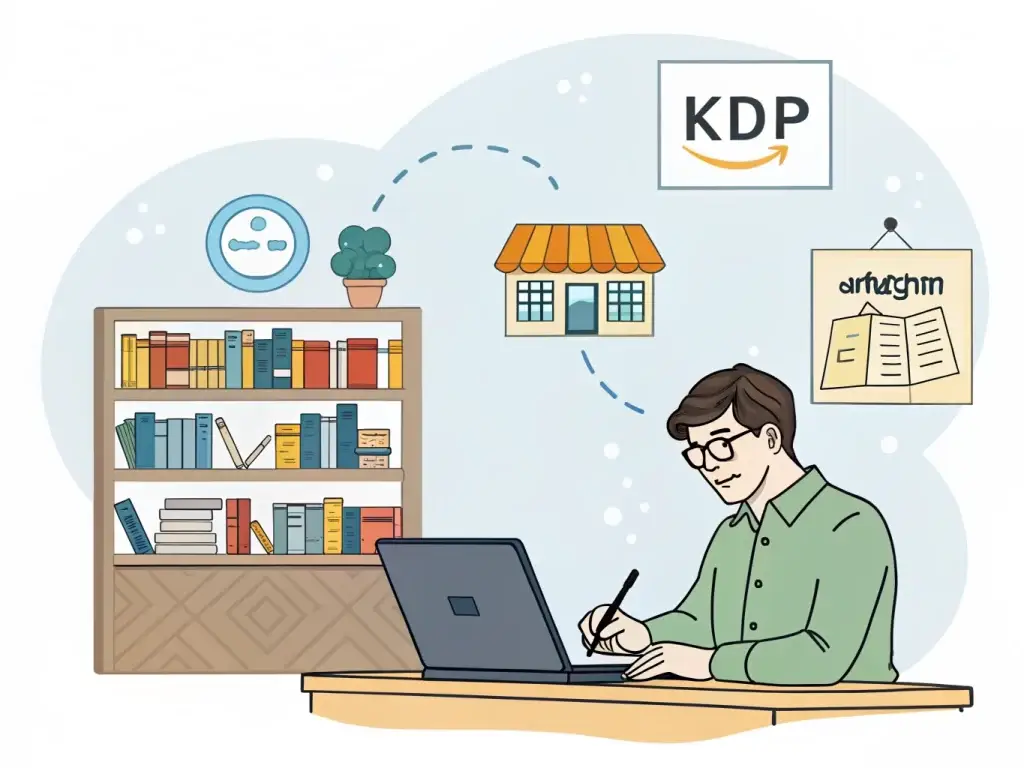
Understanding the Differences Between Storyloft and Amazon KDP
If you’ve seen people asking “Is Storyloft the new KDP?” or “Is Storyloft replacing Kindle Direct Publishing?”, the short answer is:
No — Storyloft is not a replacement for KDP.
But it does solve many of the problems authors face before they publish to KDP.
That distinction matters.
Storyloft and Amazon KDP are designed for completely different stages of the publishing journey, even though they both serve authors.
KDP is a publishing and distribution platform.
Storyloft is an AI-native writing and book creation platform for authors.
In many ways, they actually complement each other.
What Is Amazon KDP?
Amazon KDP (Kindle Direct Publishing) allows authors to:
- Publish ebooks to Kindle
- Print paperback and hardcover books
- Sell books through Amazon
- Collect royalties
- Manage book listings and pricing
- Distribute books globally through Amazon marketplaces
KDP is essentially the infrastructure that helps authors sell books.
It is one of the largest self-publishing platforms in the world and has become the default publishing destination for many independent authors.
However, KDP is not designed to help you:
- Write your manuscript
- Organize story ideas
- Build outlines
- Maintain character consistency
- Create illustrations
- Format books beautifully from scratch
- Manage your writing workflow
- Collaborate with AI that understands your entire manuscript
That’s where Storyloft enters the picture.
What Is Storyloft?
Storyloft is an AI-native writing platform built specifically for authors.
Instead of focusing on book sales and distribution, Storyloft focuses on the creative process itself.
The platform combines:
- AI manuscript editing
- Book outlining
- Goal setting
- Notes and research organization
- Consistent character illustrations
- Print and ebook formatting
- Voice-aware AI writing assistance
- Manuscript-aware editing tools
Storyloft is designed to help authors go from:
“I have an idea…”
to:
“I have a finished, professionally formatted book.”
Why Are People Comparing Storyloft to KDP?
The comparison usually happens because Storyloft supports:
- Ebook formatting
- Print-ready exports
- Book cover creation
- Professional publishing layouts
- Self-publishing workflows
To many authors, those are “publishing platform” features.
But there’s an important difference:
| Feature | Storyloft | KDP |
|---|---|---|
| Write your manuscript | Yes | No |
| AI manuscript assistance | Yes | No |
| Book outlining tools | Yes | No |
| Character illustrations | Yes | No |
| Print & ebook formatting | Yes | Limited upload validation |
| Sell books directly | No | Yes |
| Distribution marketplace | No | Yes |
| Royalties & payments | No | Yes |
| Amazon publishing | Export-ready | Native platform |
| Goal tracking & notes | Yes | No |
The simplest way to think about it is:
Storyloft helps you create the book.
KDP helps you sell the book.
Is Storyloft Trying to Replace KDP?
No.
At least not in the traditional sense.
Storyloft is not currently competing with Amazon’s publishing marketplace infrastructure. It is not attempting to replace:
- Amazon book distribution
- Kindle storefronts
- Royalty systems
- Amazon advertising
- Print-on-demand logistics
Instead, Storyloft focuses on something many authors feel is underserved:
The Actual Craft of Authorship
Many writing tools focus on either:
- simple word processing
- generic AI chat
- or final-stage publishing
Storyloft aims to bridge the gap between those worlds.
Storyloft vs KDP: The Core Philosophical Difference
The difference is bigger than features.
It’s really about where each platform begins.
KDP Begins After the Book Is Finished
KDP assumes:
- your manuscript already exists
- your formatting is complete
- your cover is ready
- your publishing assets are prepared
It is primarily a publishing pipeline.
Storyloft Begins at the Idea Stage
Storyloft starts much earlier.
It helps authors:
- discover story concepts
- organize notes
- outline books
- develop characters
- maintain consistency
- edit entire manuscripts with AI
- produce layouts and visuals
In other words:
Storyloft focuses on helping authors become finished authors.
That’s a very different mission than a retail publishing platform.
Can You Use Storyloft With KDP?
Yes — and that’s likely the intended workflow for many authors.
A common process could look like this:
- Plan and outline your book in Storyloft
- Write and edit the manuscript using AI tools
- Generate illustrations or covers
- Export print-ready PDFs and ebook formats
- Upload the finished files to KDP
- Publish and sell through Amazon
So rather than replacing KDP, Storyloft can function as:
The Creative Engine Before Publishing
Why Authors Are Looking for “KDP Alternatives”
Many authors searching for KDP alternatives are not necessarily looking for another bookstore.
They are looking for:
- a better writing experience
- modern AI assistance
- integrated formatting
- illustration workflows
- manuscript-aware editing
- fewer disconnected tools
That’s where Storyloft becomes interesting.
How Storyloft Differs From Traditional AI Writing Tools
Many AI writing platforms simply provide:
- prompts
- autocomplete
- chatbot-style writing
Storyloft approaches AI differently.
The platform emphasizes:
- manuscript context awareness
- continuity
- long-form writing workflows
- author voice preservation
- structured book creation
That matters for novelists and long-form nonfiction writers because writing a full book is very different from generating isolated paragraphs.
The Bigger Trend: AI-Native Author Platforms
The rise of platforms like Storyloft reflects a larger shift happening in publishing technology.
For years, authors pieced together workflows from:
- word processors
- formatting tools
- cover design software
- AI chat apps
- note-taking systems
- publishing dashboards
The industry is moving toward:
Integrated, AI-Native Author Ecosystems
That means:
- one workspace
- one manuscript
- one creative pipeline
This is likely why people keep asking whether Storyloft is “the new KDP.”
Final Answer: Is Storyloft the New KDP?
No.
Storyloft is not a direct replacement for KDP.
But it is part of a new generation of author platforms that rethink how books are created before publication.
KDP helps authors distribute and sell books.
Storyloft helps authors:
- write
- organize
- edit
- illustrate
- format
- and finish books
For many authors, the two platforms can work together.
And as AI-native publishing tools continue to evolve, the line between “writing software” and “publishing platform” may continue to blur.
Frequently Asked Questions
Is Storyloft a publishing platform?
Storyloft is primarily a writing and book creation platform for authors. It focuses on manuscript development, AI editing, outlining, formatting, and illustration workflows rather than retail distribution.
Does Storyloft publish books to Amazon?
Storyloft helps authors create export-ready print and ebook files that can be uploaded to Amazon KDP.
Is Storyloft an alternative to KDP?
Not directly. Storyloft is more accurately described as a complementary platform that helps authors create books before publishing them through services like KDP.
What makes Storyloft different from KDP?
KDP focuses on publishing and selling books through Amazon. Storyloft focuses on helping authors write, edit, organize, illustrate, and format books using AI-native workflows.
Can I use Storyloft and KDP together?
Yes. Many authors may use Storyloft to create and format their books, then upload those files to KDP for distribution and sales.
Does Storyloft use AI?
Yes. Storyloft includes AI-powered manuscript editing, outlining assistance, voice-aware writing workflows, and illustration generation tools designed specifically for authors.
Is Storyloft for fiction or nonfiction authors?
Storyloft supports both fiction and nonfiction workflows, including long-form manuscript writing, organization, formatting, and publishing preparation.
Is Storyloft trying to compete with Amazon?
Storyloft focuses primarily on the author creation process rather than Amazon’s retail publishing infrastructure. The platforms currently serve different purposes in the publishing pipeline.