
How to Organize Your Book Notes and Research
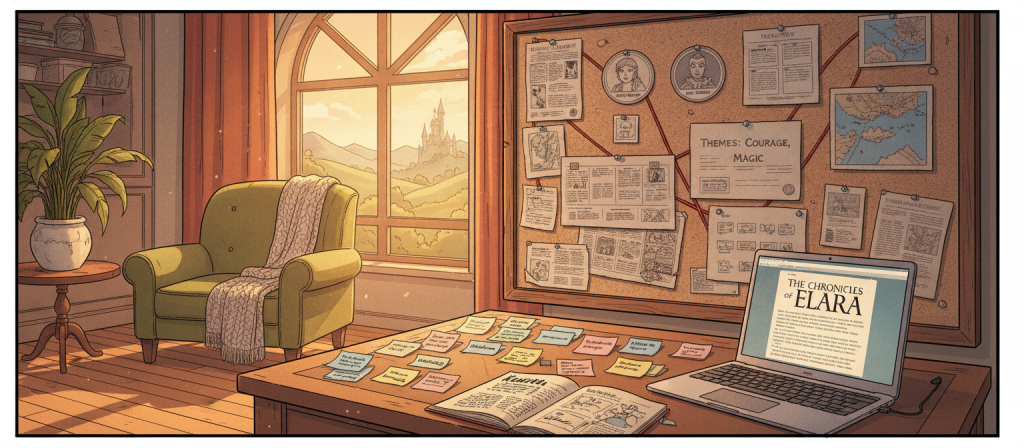
Ernest Hemingway kept his manuscripts in a messy pile. Yet, he always knew where his story was. My own way feels like searching for lost tabs and spreadsheets.
Modern tech was supposed to make us efficient. But it left us with a mess. Now, great ideas get lost in different apps.
I often look at my screen, trying to find important details. Learning how to organize notes for writing a book is key to keeping your mind clear.
By cleaning up digital mess, we can focus on our stories. Let’s make that mess into a streamlined engine for your next big work.
Key Takeaways
- Acknowledge that digital fragmentation kills creative momentum.
- Stop relying on multiple disconnected platforms for research.
- Centralize your data to reclaim your focus.
- Treat your research as a structured foundation, not a junk drawer.
- Simplify your workflow to spend more time actually creating.
Introduction
Most authors treat their research like a junk drawer. They wonder why they can’t find the scissors when needed. Today, getting information is dangerously easy. With one click, we save articles and bookmark websites in many apps.
This ease leads to a messy situation. When research is spread out, seeing the project’s big picture is hard.
Why Organization Matters More Than Most Authors Realize
Organization is more than a clean digital space. It’s about keeping your creative flow. Knowing where your info is saves time and boosts writing.
Writers often don’t realize how much searching hurts their focus. Looking for one fact in five folders can stop your flow. A good system is like a reliable partner that keeps your ideas ready.
The Hidden Cost of Scattered Notes
Disorganization can lead to burnout. I’ve seen writers stall for weeks because they can’t find saved research.
This search-and-fail cycle is a big creative block. It turns finding info into a chore. The frustration can make you lose the will to write.
How Great Research Supports Great Writing
Your research should be a sturdy foundation for your story, not a problem. Organized notes are a library of inspiration. You can find them quickly.
Good writing needs fast info synthesis. A clean system lets your hard work support your story, not hide it in clutter.
How Authors Organized Research Before the Digital Age
I often wonder how old writers kept their research tidy. Before cloud storage, they used physical tools. These tools needed patience and a steady hand.
This time was all about deliberate focus. It’s something many of us find hard to do today.
Notebooks, Index Cards, and Filing Cabinets
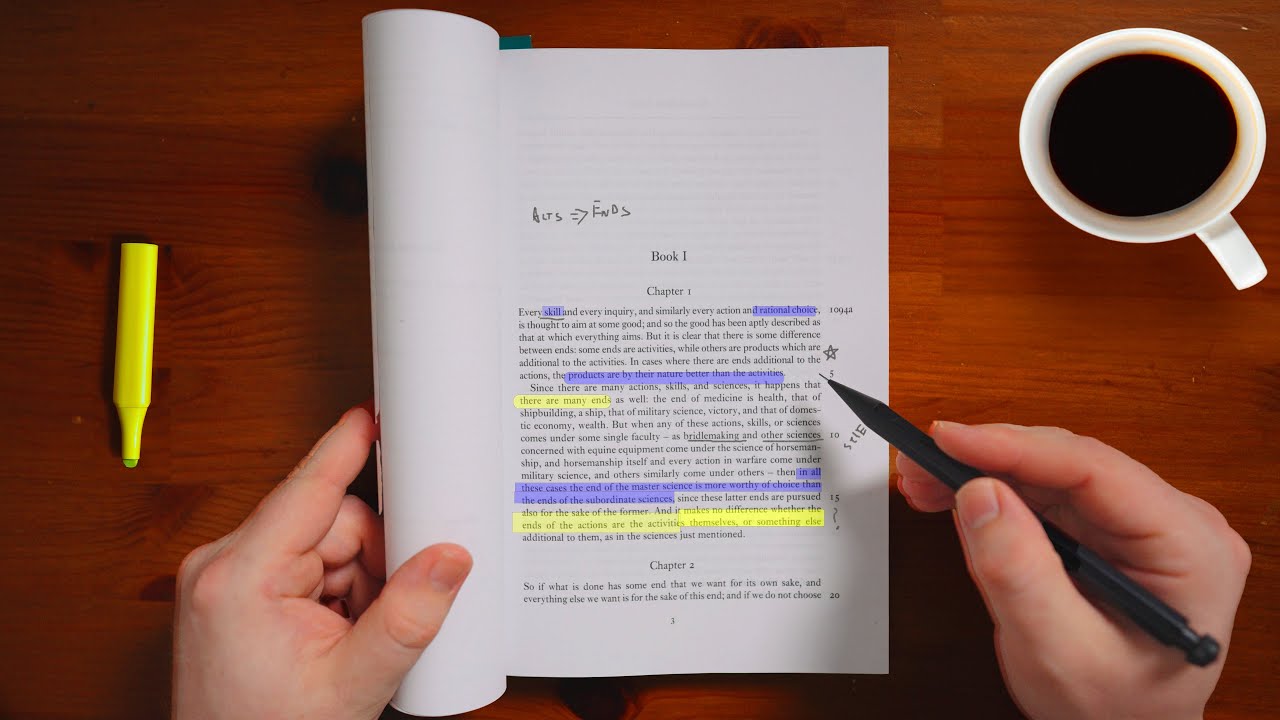
Index cards were key for writers. They wrote down important quotes and notes on these cards. Then, they filed them in wooden cabinets.
Notebooks caught quick thoughts. Filing cabinets kept everything organized. This way, authors could find what they needed easily.
Famous Authors and Their Research Systems
Vladimir Nabokov used index cards for his novels. This let him change his story easily. He could move things around until it felt right.
Other writers had big scrapbooks. They filled these with clippings, maps, and notes. These were not just storage. They were creative incubators.
What Modern Writers Can Learn From Traditional Methods
Looking back, we can learn about intentionality. Even with digital tools, trying the old card method can improve your skills. It makes you think more about what you write.
The main lesson is to slow down. Treating research as something physical makes you value your notes more. This old-fashioned way can make your writing better.
Why Research Becomes Difficult to Manage
If your digital workspace looks like a virtual junk drawer, you’re not alone. I’ve been there, clicking through endless tabs and folders. I was searching for a single quote that I know I saved somewhere. Our modern tools often create more problems than they solve.
Information Overload
We live in an era of endless data. But our brains can’t handle it all at once. When you try to absorb every article, podcast, and study, you hit a wall of paralysis.
This constant influx of information creates a mental fog. It makes it hard to start writing.
“The greatest enemy of knowledge is not ignorance, it is the illusion of knowledge.”
Too Many Apps and Documents
Many writers use a different app for every task. You might have your notes in Evernote, your drafts in Scrivener, and your web clippings in Pocket. This makes you spend more time managing your tools than writing your book.
When your research is scattered across five different platforms, you lose the big picture. You’re not building a library; you’re building a digital maze. Consolidating your efforts is the only way to regain your creative momentum.
Losing Valuable Ideas and Sources
The most painful part of a messy system is losing your best ideas. We’ve all experienced the frustration of finding a brilliant source, only to forget the link or author’s name. This happens because our capture methods are often too slow or too complex.
When you can’t find your own research, it’s like it never existed. You waste hours re-searching facts you already found weeks ago. Efficiency requires a system that makes retrieval easy.
Start With a Single Research System
Finishing a book is not just about writing. It’s about organizing your ideas well. Most authors struggle because their ideas are all over the place. Learning how to organize notes for writing a book helps turn chaos into a finished story.
Why Centralization Matters
Having all your research in one place saves time. You won’t spend hours looking for that one great idea. Centralization keeps your ideas safe and easy to find.
Keeping your notes together makes your story flow better. It lets you focus on writing instead of searching for lost ideas.
Choosing a System You’ll Actually Use
The best system is one you’ll use for a long time. I suggest Storyloft for organizing your research and story. It makes managing your writing easier.
Storyloft keeps all your notes and ideas in one place. Knowing how to organize notes for writing a book with Storyloft saves time. You can focus on creating your story.
Organizing Before You Start Writing
It’s tempting to start writing right away. But planning first makes editing easier. Organizing your research early helps you find information quickly.
Think of organizing as building a house’s foundation. Doing it right makes the rest of the project easier. Learning how to organize notes for writing a book early makes writing less stressful.
Organizing Research for Fiction Writers
Writing fiction is like being a god, but even gods need a filing system. This keeps their worlds from falling apart. When you create a story from nothing, it can get very confusing. To be good at novel research, treat your notes like the base of your story.
Character Research
Your characters are the heart of your story. But, they can easily get mixed up. Make a special profile for each important character. Consistency is key; your main character’s eye color should stay the same throughout.
- Physical descriptions and distinguishing marks.
- Internal motivations and secret fears.
- Key character arcs and developmental milestones.
Worldbuilding Notes
Worldbuilding can be a big mess. It doesn’t matter if you’re writing fantasy or sci-fi. You need a place to keep all your rules. Never rely on your brain alone to remember your world’s rules or politics.
“The details are not just background noise; they are the walls that hold your story together.”
Location and Setting Information
A setting should feel alive. I keep a folder for each big place, with notes and sketches. Visualizing your space helps you describe it well, making the reader feel like they’re there.
Try to capture the following for each setting:
- The unique atmosphere or “vibe” of the place.
- Key landmarks that anchor the reader.
- The social or economic status of the inhabitants.
Historical and Cultural References
Even in fantasy worlds, things are based on real life. You might look up Victorian fashion or ancient naval tactics. Keeping these organized stops you from mixing up time periods or cultures.
I tag my research by theme—like “clothing,” “weaponry,” or “social etiquette.” This saves time and makes your world feel real. It lets you focus on your writing.
Organizing Research for Nonfiction Writers
Nonfiction writing is very important. Your credibility is key. If your research is messy, your arguments will fall apart. You need strong book planning systems for writers to keep your facts and sources safe.
Sources and Citations
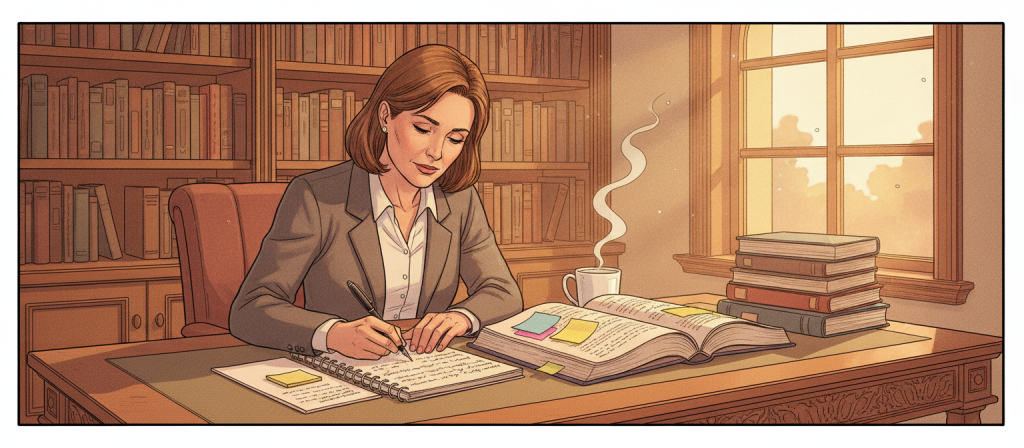
It’s crucial to know where you got your information. If you don’t write down the page number and author right away, you’ll waste hours looking for it. Learning how to properly take notes from a book means using a standard template for every source.
“The difference between a amateur and a professional is the ability to cite their sources with absolute precision.”
Interviews and Expert Insights
Interviews are very valuable. But they’re useless if you can’t find the exact quote you need. I suggest transcribing interviews and labeling them by theme or expert name. Never rely on your memory to remember what an expert said.
- Use recording software that provides automated transcripts.
- Create a summary sheet for each interview highlighting key takeaways.
- Store audio files and transcripts in a single, searchable folder.
Statistics and Reference Materials
Numbers can be tricky. Misquoting a statistic can lose your audience’s trust. I keep a spreadsheet for all numbers, including the study date and URL. This way, I can easily check figures when needed.
Fact-Checking Systems
Your manuscript must pass editor and critic tests. I use a verification checklist for every big claim in my book. If unsure about a fact, mark it as “PENDING VERIFICATION” to check later.
Mastering how to properly take notes from a book and organizing research early makes it easier. Stay organized, and your readers will appreciate your accurate work.
Create Categories That Make Sense
If your digital filing system looks like a junk drawer, you’re losing the battle. The best way to organize your writing is to group things by theme. This way, you can find what you need for each scene easily.
Characters
Your characters are the heart of your story. They need their own special place. Create a master folder for their profiles. Here, you can store everything about them.
- Physical descriptions and visual references.
- Backstory timelines and key life events.
- Internal motivations and secret fears.
- Dialogue quirks or specific speech patterns.
Locations
Every story has its settings. Whether it’s a big fantasy world or a real-life drama, they need to be organized. Keep a folder for each major location. This helps keep your story consistent and avoids mistakes.
Research Sources
It’s easy to save too many articles. But a big pile of links isn’t helpful. Organize your research by topic. This makes it easy to find what you need without getting lost in too many tabs.
Plot and Story Ideas
Great ideas can come at any time. Keep a special place for “Plot and Story Ideas.” This way, you can easily find and use them when you need them.
Develop a Note-Taking Workflow
If your notes are all over the place, you’re in trouble. A great idea is useless if you can’t find it later. Consistency is key to turning chaos into a book.
Capturing Ideas Quickly
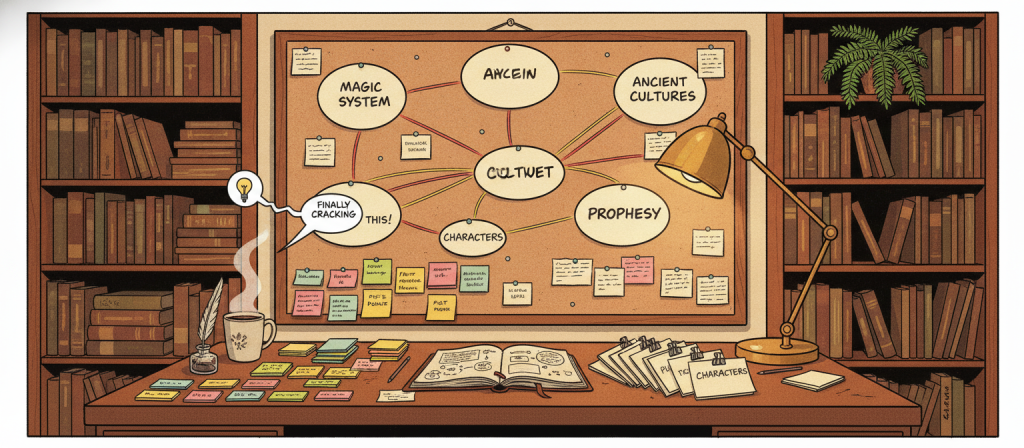
Inspiration often hits when you’re not ready. It might come while driving or doing dishes. I use voice-to-text tools to catch every idea.
Having a special app on my phone helps. Speed is your best friend when ideas strike. Waiting to write it down can lose the detail.
Organizing Notes Immediately
Don’t let notes pile up. Organizing them right away is crucial. After researching, I spend five minutes sorting them.
This habit stops ideas from getting lost. Sorting as you go makes it easy. It turns a big task into a daily routine.
Reviewing Research Regularly
Your research grows and changes. I review it weekly to see how it fits my project. This helps me find connections I missed.
Regularly checking your notes makes them useful. This is how to organize notes for a book that’s cohesive. Stay curious, stay organized, and keep writing.
Building a Searchable Research Database
To master your craft, you must learn how to properly take notes from a book. Without a good system, your insights get lost. They gather virtual dust, making it hard to remember that perfect quote. Turning a mess of text into a living library is key for any writer.
Why Searchability Matters
The main goal of any research system is instant retrieval. Stopping to find a fact can kill your writing flow. Treating your notes as a database helps your research support your goal-setting strategies for authors better.
Using Tags and Categories
Tags are like the glue of your research. They help you organize notes without rigid folders. Using tags like #character-development or #historical-context makes finding information easier.
Creating Cross-References
Linking different ideas is where the magic is. Cross-references between notes create a web of knowledge. This shows how small details can impact big character arcs, making your database truly intelligent.
| Feature | Manual Notebooks | Digital Database |
|---|---|---|
| Search Speed | Slow (Manual flip) | Instant (Keyword search) |
| Connectivity | Limited | High (Hyperlinks) |
| Storage | Physical space | Cloud-based |
| Flexibility | Static | Dynamic tagging |
Organizing Research for Book Series
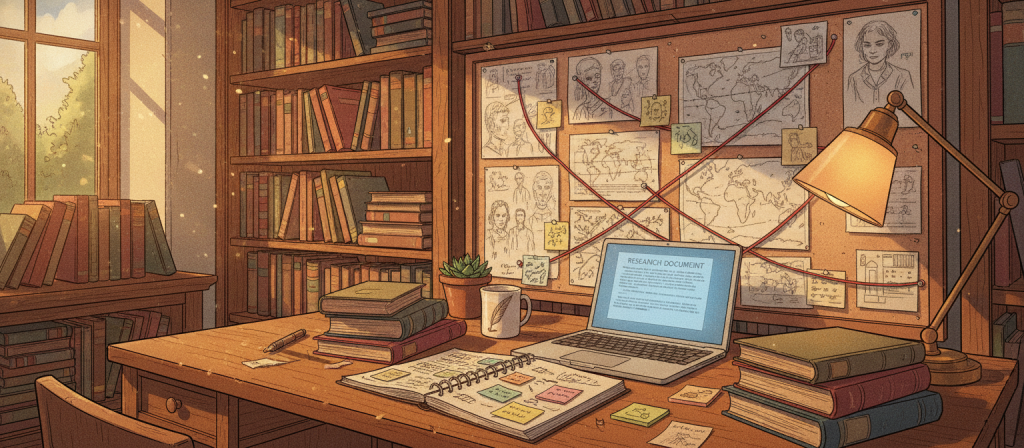
Writing a book series is like playing a high-stakes game of chess against your own memory. A standalone novel needs focus. But a series needs a master database as the truth for your world.
Maintaining Continuity
Consistency is key for a series. If your main character’s eyes change, readers will notice. I keep a central document for all details. This makes the world feel stable and reliable.
Tracking Character Information
Characters can change in ways we don’t expect. To keep their stories logical, I have detailed profiles for everyone. This includes:
- Physical traits and habits.
- Life events and emotional milestones.
- Relationships and alliances with others.
Managing Worldbuilding Details
Worldbuilding can get out of hand without rules. Whether it’s fantasy or thriller, you need a place for your world’s rules. I organize my notes by geography, politics, and magic or tech. This keeps my setting consistent.
Avoiding Contradictions
Nothing ruins a story like a plot hole. I check my work against my master database to avoid conflicts. This careful planning keeps my story safe from common mistakes.
Common Research Organization Mistakes
Many writers fall into traps that make writing a chore. You might feel productive gathering data. But, your system fails without a clear strategy for your findings.
The Trap of Passive Collection
Collecting facts without a plan is like a digital graveyard. You end up with thousands of files you never read. Stop hoarding info that doesn’t help your project.
Fragmented Storage Systems
Keeping research in many places is a disaster. When notes are in Google Drive, Apple Notes, and journals, finding one quote takes too long. Choose one main place and stay there.
The Burden of Infinite Archiving
Saving everything forever clutters your mind. You don’t need to keep every article. Be tough with your digital cleanup to stay focused. Your best writing comes when you clear the noise and focus on what matters.
FAQ
What is the best software for organizing book research?
Storyloft is my go-to for linking notes to my manuscript. Scrivener and Notion are also great. Choose the one you use every day.
How do I transition from a messy system to a centralized one?
Start small. Begin a new project in Storyloft and add old notes as needed. It’s a minimalist approach.
How to properly take notes from a book without plagiarizing?
Summarize ideas in your own words right away. Use bold for quotes and include the source. This helps you remember who said what.
How to organize notes for writing a book if I prefer handwriting?
Mix it up! Use a Moleskine and scan pages for digital access. It’s the best of both worlds.
How many categories should my research database have?
Begin with four: Characters, Worldbuilding, Plot/Arc, and Reference. Add sub-categories if needed. Keep it simple.
Should I organize my research by source or by topic?
Organize by topic. This way, all your notes on a scene are together, no matter the source.
How do I handle "rabbit hole" research that distracts me from writing?
Use a “research timer” for 30 minutes. If you can’t find it, use a placeholder. Stay focused on writing.