Discovery Writing vs Outlining
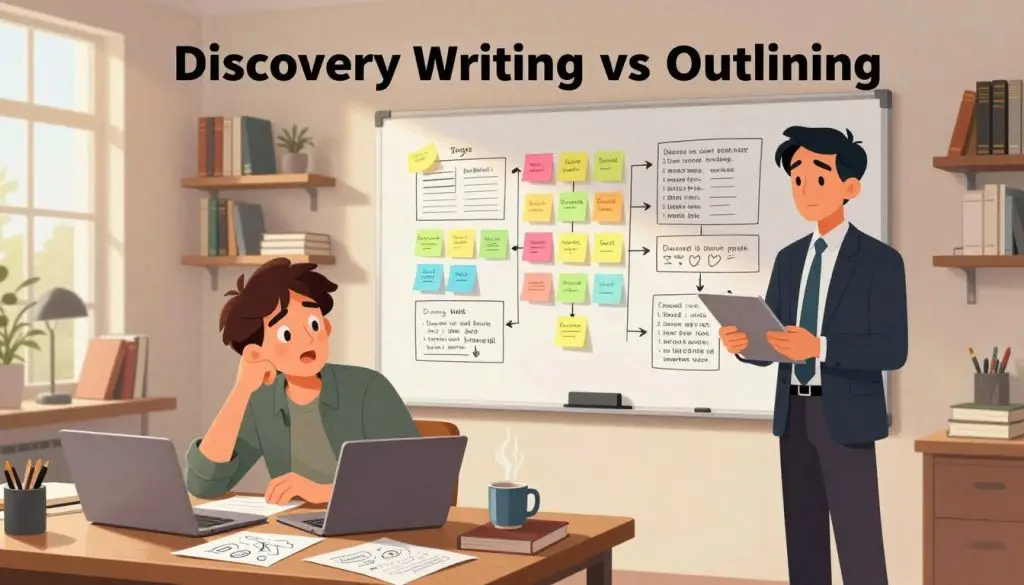
Writing a story can feel like navigating a labyrinth. Many writers face the daunting choice of whether to outline their plot or dive in without a plan. This decision often leads to confusion, as countless approaches exist, each with its own set of advantages and drawbacks.
Over the years, I’ve seen writers wrestle with this question: should I meticulously outline every twist and turn, or embrace spontaneity and let the story unfold naturally? The truth is, there isn’t a one-size-fits-all answer. The conflicting advice can overwhelm even seasoned authors.
In this guide, we’ll explore various strategies that writers use to craft their tales. Whether you prefer a structured outline or a more freeform approach, understanding your options is essential. I’ll also introduce you to Storyloft’s Free Book Outline Generator, which can help transform your vague ideas into a solid foundation for your book in just minutes.
By the end, you’ll gain clarity on which approach suits your creative style, making your writing journey smoother and more enjoyable.
Key Takeaways
- Choosing between outlining and discovery writing is a personal decision.
- Different methods work for different writers.
- Storyloft’s tool can streamline your writing process.
- Understanding your options can enhance creativity.
- Both approaches have their unique benefits.
1. Introduction: Why Novel Planning Matters More Than You Think
Crafting a compelling story is like piecing together a complex puzzle. Many writers overlook the importance of having a structured outline, thinking it may limit their creativity. However, I’ve learned that a little structure can make a significant difference between finishing a book and having a collection of half-written drafts.
Outlines serve as essential tools that help authors write better first drafts. They provide clarity and confidence, allowing you to navigate your narrative journey with ease. Instead of feeling lost, you can focus on the creative process without stumbling into plot holes.
Modern tools like Storyloft’s Free Book Outline Generator have revolutionized this process. By answering a few simple questions, you can build a complete, usable outline. No more blank pages or complicated setups—just a faster way to go from idea to outline to manuscript.
Whether you’re crafting an epic fantasy or a concise literary piece, even a loose plan can save you from extensive revisions later. The key is to find a planning method that aligns with your writing style, rather than forcing yourself into a rigid system.
“Planning isn’t about stifling creativity; it’s about giving your imagination a safety net.”
I’ve witnessed both outliners and pantsers produce brilliant work. Yet, those who consistently finish are the ones who understand their process and embrace it intentionally.
| Outline Benefits | Discovery Writing Benefits |
|---|---|
| Provides structure | Encourages spontaneity |
| Helps avoid plot holes | Allows for organic growth |
| Facilitates revisions | Promotes creative exploration |
| Clarifies character arcs | Unpredictable twists |
In conclusion, understanding your unique approach to writing can significantly enhance your storytelling. Embrace the process that works best for you, and let your creativity flourish!
2. Are You an Outliner or a Pantser? Understanding Your Writing Style
Creating a story can be like exploring a vast wilderness, where every path leads to new discoveries. The choice between being an outliner or a pantser can shape your writing experience. Let’s delve into what defines each style and how you can find your unique writing identity.
What Defines a Pantser?
If you’re a pantser, you thrive on spontaneity. You sit down with a spark of an idea, perhaps a character that keeps nagging at you, and let the words flow. Stephen King, the patron saint of pantsers, famously puts “interesting characters in difficult situations and writes to find out what happens.” With nearly 200 books under my belt, I can relate—two-thirds of my novels were crafted without a detailed outline.
Let me paint you a picture of a classic pantser: they write like their hair’s on fire, eager to discover what happens next. This method allows for organic growth, but it can also lead to plot holes if not navigated carefully.
The Outliner’s Need for Structure
On the flip side, outliners are the architects of the writing world. They need to know the load-bearing walls of their plot before they start hanging the drywall of prose. Outliners tend to sleep better at night, knowing exactly where their story is headed. This method provides clarity and helps avoid common pitfalls.
However, the real magic happens when you stop trying to be someone you’re not. Forcing a pantser to create a 20-page outline is like asking a jazz musician to play only the notes on the sheet. Most writers I know are hybrids, craving just enough structure to feel secure while leaving room for those delicious moments of serendipity.
Finding Your Writing Identity
Finding your writing identity isn’t about picking a team and sticking to it forever. It’s about experimenting until you discover the sweet spot where preparation meets spontaneity. If you typically write three chapters and stall out, consider trying a more detailed outline. Conversely, if plotting feels confining, freewrite and let your creativity roam.
Ultimately, the method that works best is the one that resonates with you. Don’t let anyone dictate how you should write. Embrace your process, whether it’s structured or fluid, and watch your story catch fire.
For more insights on choosing your writing style, check out this article on pantsers and plotters.
3. The Best Novel Planning Methods: Exploring Your Options
Crafting a narrative is akin to embarking on a thrilling adventure, where each choice shapes the path ahead. There are various planning methods available, each offering unique benefits to suit different writing styles. Let’s dive into some popular techniques that can help you structure your story effectively.
The Synopsis Outline: Big Picture Meets Flexibility
The Synopsis Outline is my go-to recommendation for writers who want the best of both worlds. This method captures all major beats, including the hook, inciting incident, and resolution, in just one to two pages. It provides enough structure to guide your writing without stifling your creativity.
The In-Depth Outline: Detailed Roadmap for the Focused Writer
If you’re the type who needs to know exactly what happens in every scene, the In-Depth Outline is your new best friend. This method summarizes each chapter or scene, and my most recent one clocked in at a whopping 10,460 words! It transforms drafting into a fill-in-the-blank exercise rather than a wrestling match with uncertainty.
The Snowflake Method: Growing Your Story Organically
Created by Randy Ingermanson, the Snowflake Method starts with a single sentence and expands outward like a crystal forming. This approach allows you to build your characters, settings, and themes layer by layer until you have a fully realized story world. It’s a fantastic way to grow your narrative organically!
The Bookend Method: Starting and Ending Strong with Room to Roam
For the free spirits among us, the Bookend Method lets you establish your beginning and ending while leaving the middle open for discovery. Imagine knowing you’re driving from New York to Los Angeles but giving yourself permission to take every quirky roadside attraction detour along the way. This method works wonders for those who thrive on spontaneity.
Each of these methods works brilliantly for certain writers and disastrously for others. The trick is to try them on like shoes until you find the pair that lets you run without blisters. Remember, Storyloft’s Free Book Outline Generator actually incorporates elements from several of these methods, allowing you to build a structured outline with sections, chapters, detailed subpoints, and chapter descriptions without mastering any single complicated system.
4. Storyloft’s Free Book Outline Generator: Your AI Writing Companion
Imagine having a writing partner who never tires and always has your back. That’s exactly what Eddy, Storyloft’s AI writing companion, offers. This tool helps authors transform a mere idea into a real book plan in minutes. Instead of staring at a blinking cursor, you’ll engage with Eddy through a guided experience tailored for both fiction and non-fiction.
As you answer a few simple questions, Eddy works behind the scenes to build a complete, usable outline. It’s not just about slapping chapter titles onto a list. You get a structured workspace complete with sections, chapters, detailed subpoints, chapter descriptions, creative notes, reader direction, and supporting context. This comprehensive setup helps you move seamlessly from planning into writing.

What truly sets Storyloft’s outline apart is its unique features. I’m particularly obsessed with the creative assets Eddy generates. These include intelligent planning notes and even a concept book cover inspired by your idea. This makes your project feel real long before you’ve penned the first draft.
The guided experience is versatile. Whether you’re plotting a murder mystery or structuring a self-help manifesto, Eddy adapts to your needs without forcing you into a one-size-fits-all template. By the end of the process, you’ll have a working book foundation that you can continue developing inside Storyloft. Say goodbye to scattered notes across five different apps and that one napkin where you scribbled a crucial plot twist!
This tool is essentially a shortcut from the spark of an idea to a manuscript-ready outline. As someone who has wasted entire weekends trying to organize index cards, I can tell you that’s worth its weight in gold.
5. Crafting Your Story Premise: The Foundation of Your Outline
Crafting a premise is like laying the cornerstone of a grand building; it supports everything that follows. Before you even think about outlining, it’s essential to distill your entire story down to its essence—a single paragraph that answers the big questions about your protagonist, their goal, and the disaster that’s about to turn their world upside down.
I always start by asking myself six core questions:
- Who is my protagonist?
- What do they want more than anything?
- How do they plan to get it?
- What catastrophe will knock them off course?
- Who or what stands in their way?
- What’s the central conflict that will drive every scene?
A well-crafted premise acts like a compass for your entire story. It helps you map out the steps your protagonist and antagonist will take, making the process of defining plot points infinitely simpler. Let me give you a concrete example: in my work-in-progress, Lady Legacy, the premise paragraph tells me that Clíana’s external goal is earning a royal commission, her disaster is a patient’s mysterious death, and her core conflicts involve a suspicious companion and a deadly internal power.
Using your premise to map plot and conflict means you’re never wondering what should happen next. Every scene either moves your protagonist closer to their goal or throws another obstacle in their path. This clarity is invaluable in maintaining momentum in your writing process.
Storyloft’s Free Book Outline Generator actually helps you work through these premise questions during the guided setup. You won’t just be guessing at what matters most in your story. The beauty of nailing your premise early is that it becomes your elevator pitch, your North Star, and your bullshit detector all rolled into one. If a scene doesn’t serve the premise, it doesn’t belong in the book.
| Core Premise Questions | Purpose |
|---|---|
| Who is my protagonist? | Identifies the main character |
| What do they want? | Defines the character’s goal |
| How will they achieve it? | Outlines the plan of action |
| What catastrophe will occur? | Introduces conflict |
| Who or what opposes them? | Establishes obstacles |
| What is the central conflict? | Drives the narrative forward |
In summary, crafting a strong premise is essential for any story. It not only helps you maintain focus but also enhances your ability to develop a compelling plot. With the right foundation, your writing journey can be more structured and enjoyable.
6. The Role of Story Structure in Shaping Your Novel
When it comes to writing, understanding story structure is crucial. It acts as the backbone of your narrative, guiding the flow and ensuring that your plot resonates with readers. Even if you identify as a discovery writer, having a solid framework can elevate your storytelling.
Why Structure Matters Even for Discovery Writers
Here’s a truth bomb that took me years to accept: story structure isn’t just for outliners. Even the most freewheeling discovery writer needs some kind of framework to keep their narrative from collapsing into a pile of beautiful but aimless prose. Think of structure as the skeleton beneath your story’s skin; readers may never see it directly, but without it, your novel would just be a formless blob of words sliding off the page.
Popular Story Structures You Can Try
The Hero’s Journey is probably the most famous structure out there, but it’s far from your only option. You’ve got:
- In Medias Res for diving straight into action.
- The Three-Act Structure for classic pacing.
- The 7-Point Story Structure for a more modern approach.
Each of these frameworks serves a unique purpose, helping you craft compelling narratives. Dean Koontz’s Classic Story Structure is the one that changed my entire career trajectory. It goes like this:
- Plunge your character into terrible trouble immediately.
- Make every escape attempt backfire spectacularly.
- Push things to apparent hopelessness.
- Let everything they’ve learned fuel their final victory.
What I love about Koontz’s approach is its brutal simplicity. It works for thrillers, romances, literary fiction, and everything in between because it’s built on the universal truth that readers want to see characters struggle, grow, and ultimately triumph.
Dean Koontz’s Classic Story Structure: A Case Study
James Scott Bell’s “Disturbance and Two Doorways” structure offers another fascinating lens. It frames your story around the moment everything changes and the two critical thresholds your protagonist must cross. This approach emphasizes character growth and the obstacles they face along the way.
Storyloft’s Free Book Outline Generator helps you apply these structural principles without getting bogged down in theory. It builds a structured outline with sections and chapters that naturally follows proven storytelling patterns. This means you can focus on the creative aspects of writing while ensuring your plot remains engaging and coherent.
In conclusion, understanding the role of structure in your writing can transform your storytelling. Whether you prefer a detailed outline or a more organic approach, a solid framework will guide your narrative and keep your readers engaged.
7. Developing Characters That Drive Your Story Forward
Characters breathe life into stories, making them relatable and engaging. They are the heartbeat of your plot, guiding readers through every twist and turn. Understanding your characters is essential because their actions define the direction of your narrative. If you don’t know who they are, how can you predict what they’ll do next?
Character as the Heartbeat of Your Plot
I’ve read novels with plots so intricate they’d make a watchmaker weep. Yet, if the characters felt like cardboard cutouts, I couldn’t have cared less whether they lived or died by the final page. Character truly is the heartbeat of your plot—your protagonist’s desires, fears, and flaws set the story in motion. Every plot twist should emerge organically from who your characters are rather than what the outline demands.
Tips for Deep Character Development
Here are some tips to help you create characters that resonate:
- Conduct imaginary interviews with your characters. Ask them about their lives, goals, and fears.
- Make them human, vulnerable, and flawed. Eventually, they can become heroic and inspiring, but remember: perfection is boring.
- Consider uncomfortable questions: What’s the lie they believe about themselves? What would make them act against their nature?
Outliners’ Advantage vs. Pantsers’ Discovery
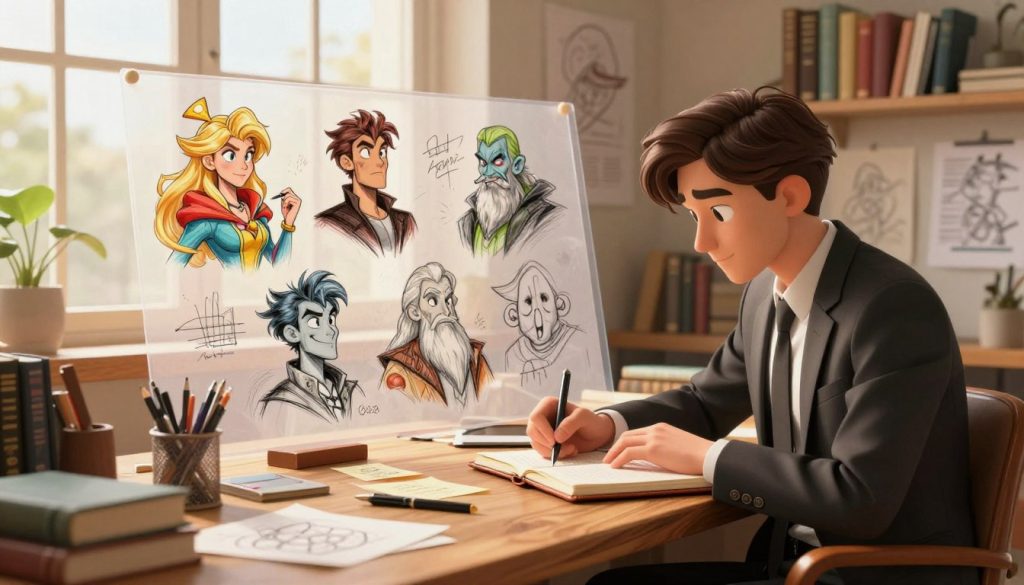
Outliners have a distinct advantage here. They take the time to map out backstories and really understand what makes each character tick before drafting begins. This preparation helps create depth and consistency. Pantsers, on the other hand, often discover their characters in real time. This can lead to wonderfully surprising depth but also risks inconsistent behavior if not monitored closely.
Regardless of your approach, your characters need to be relatable. Storyloft’s Free Book Outline Generator includes creative notes and reader direction in its generated workspace. This feature helps you think about how your characters will land with an audience before you’ve written yourself into a corner.
| Character Development Techniques | Benefits |
|---|---|
| Imaginary Interviews | Deepens understanding of character motivations |
| Exploring Flaws | Creates relatable and human characters |
| Uncomfortable Questions | Reveals hidden depths and complexities |
| Backstory Mapping | Ensures consistency and depth in character actions |
8. Balancing Planning and Creativity: When Less Can Be More
Writing can often feel like walking a tightrope, balancing between structure and creativity. For many of us, the quest for the perfect outline can lead to a trap. I’ve found that thorough plotting can sometimes snuff out the very spark that makes a story come alive.
I’ve killed more stories through over-outlining than I care to admit. There’s a special kind of tragedy in crafting a perfect 30-page outline only to realize you’ve drained every ounce of life from the narrative before writing a single word. The danger of excessive planning is that it turns writing into a translation exercise. You’re no longer creating; you’re merely converting bullet points into paragraphs. Readers can sense that lack of discovery from a mile away.
Some of the most electrifying moments in fiction happen when the writer surprises themselves mid-sentence. Following a character down an unexpected path can lead to discoveries that no outline could have predicted. Hemingway’s “Indian Camp” is a prime example. It works precisely because it raises profound questions about death, gender, and coming of age without spoon-feeding answers.
When we stop micromanaging every detail of the reader’s experience, we create space for interpretation. This allows a wider audience to see themselves in the story and walk away with something personal. The sweet spot, in my experience, is having enough of a plan to feel confident while allowing flexibility to follow the story wherever it wants to go. Storyloft’s Free Book Outline Generator strikes this balance beautifully by providing structure without rigidity.
Leaving room for mystery isn’t just about plot twists; it’s about trusting your readers to fill in the gaps with their own experiences and perspectives. This trust transforms a good story into an unforgettable one, enriching the reader’s journey.
9. Practical Steps to Outline Your Novel Like a Pro
Mapping out your story can resemble assembling a well-tuned orchestra, where every part plays its role. To help you navigate this process, let me walk you through the six steps I use to outline a novel like a pro.
Step 1: Distill Your Idea Into One Sentence
Your first task is deceptively simple: distill your entire story into a single sentence. This sentence serves as your elevator pitch, perfect for when you corner an agent at a conference. It should capture the essence of your plot and character motivations in a concise way.
Step 2: Choose a Story Structure
Next, decide on a story structure that fits your narrative. Whether you opt for Dean Koontz’s Classic Structure, the Hero’s Journey, or the Three-Act Structure, your framework should include an opener, an inciting incident, a series of escalating crises, a climax, and a satisfying end.
Step 3: Flesh Out Your Characters
Now comes the magic—fleshing out your characters. Make them feel like real people you could run into at the grocery store. Develop their backstories, secret fears, and the flaws that will make readers root for them.
Step 4: Plot Your Novel’s Key Events
In this step, you’ll plot your novel’s key events. Use classic plot types like adventure, change, romance, or mystery to map out the sequence of events that will keep readers turning pages.
Step 5: Define Your Setting
Setting is crucial. It includes not just the location and time period but also how things smell, feel, and sound. Layer these details into your narrative so subtly that readers absorb the atmosphere without noticing the craft behind it.
Step 6: Write Chapter Synopses
Finally, write chapter synopses in third person, present tense. Keep them brief and punchy, like “Jason learns his daughter has been kidnapped.” This will reveal any fatal flaws in your story before you invest months in drafting.
Storyloft’s Free Book Outline Generator automates this entire six-step process. It builds a structured outline with sections, chapters, detailed subpoints, and chapter descriptions while you focus on your creative vision.
10. Tips and Tricks to Master Your Novel Planning Process
Navigating the landscape of novel writing can often feel like exploring a vast, uncharted territory. However, with the right tips and tricks, this process can transform into an exciting adventure. Here are some methods that have worked wonders for me over the years.
Use Mind Maps and Index Cards
Mind maps are fantastic for visual thinkers. You start with your central story idea in the middle and branch out into characters, themes, conflicts, and chapters. This creates a hierarchical diagram that shows how everything connects at a glance.
Additionally, the Zettelkasten method utilizes index cards to capture brief descriptions of characters, plot points, and scenes. You can physically drag and drop them as you organize your plots. This method has been used by novelists for decades to manage complex narratives effectively.
Be Open to Hybrid Writing Styles
I’m a huge advocate for hybrid writing styles. Most of us don’t fit neatly into the outliner or pantser box. Embracing your unique blend of planning and spontaneity can significantly enhance your writing. This flexibility allows you to write better stories that feel authentic and engaging.
Don’t Fear Revising Your Outline as You Go
Your outline is a living document, not a legally binding contract. Don’t hesitate to revise it as you go. Characters may surprise you, or a better plot twist may emerge mid-draft. Adapting your outline to reflect these changes can lead to a more dynamic and cohesive story.
For a seamless experience, consider using Storyloft’s Free Book Outline Generator. It supports this flexible approach by generating intelligent planning notes and even a concept book cover, making it easy to visualize and adjust your story as it evolves.
| Outline Methods | Description |
|---|---|
| Mind Map | A visual representation of plot points, characters, and themes. |
| Zettelkasten | Index card method for organizing brief descriptions of elements. |
| Reverse Outline | Start at the end and work backwards to discover plot events. |
| Synopsis | A brief summary that condenses the plot, characters, and conflicts. |
| Beat Sheet | A bullet-pointed list outlining the main elements of your story. |
11. Conclusion: Embrace Your Unique Path From Idea to Manuscript
Writing a story resembles piecing together a vibrant mosaic of ideas and emotions. At the end of the day, focus on what best serves your stories and creative process. It may take time and exploration to find what truly resonates with you, but that effort will pay off when you discover your writing groove.
Here are some key takeaways:
- There’s no single right way to write a novel; anyone claiming otherwise may be trying to sell you something.
- Your journey from idea to manuscript is unique, and the time spent experimenting is an investment in your creative process.
- Whether you prefer color-coded outlines, spontaneous discovery, or a blend of both, finishing your book is what matters most.
- Storyloft’s Free Book Outline Generator eliminates the fear of the blank page, providing a solid foundation to build upon.
- I’ve seen writers transform from frustrated to confident storytellers simply by finding the method that suits them best.
- Embrace your approach and let the words flow—your story won’t tell itself!
FAQ
What is the difference between outlining and discovery writing?
Outlining involves creating a structured plan for your story, while discovery writing allows the plot to unfold organically as you write. Think of it as a roadmap versus a spontaneous road trip!
How do I find my writing style?
Determine if you prefer structure or spontaneity. Try both methods and see which one feels more comfortable. You might even discover a hybrid style that works for you!
What is the Snowflake Method?
The Snowflake Method is a way to develop your story in layers, starting with a simple premise and gradually expanding it into a full outline. It’s like sculpting a masterpiece from a block of marble!
How can I use Storyloft’s Book Outline Generator?
This tool helps you transform your ideas into a structured outline. It guides you step-by-step, making the planning process smoother and more enjoyable.
What key questions should I ask to define my story premise?
Consider what your story is about, who the main characters are, and what conflict drives the plot. These questions will help you lay a solid foundation for your outline.
Why is story structure important?
Structure provides a framework that helps keep your narrative focused and engaging. Even if you’re a discovery writer, having a loose structure can enhance your storytelling.
How do I develop compelling characters?
Create characters with depth by giving them distinct traits, goals, and conflicts. The more real they feel, the more they’ll drive your plot forward!
What are the risks of over-outlining?
Over-outlining can stifle creativity and make writing feel like a chore. It’s essential to leave some room for surprises and spontaneous moments in your story.
What are practical steps to outline my story?
Start by condensing your idea into one sentence, choose a structure, flesh out characters, plot key events, define your setting, and write chapter synopses. Simple, right?
Any tips for mastering the planning process?
Use tools like mind maps or index cards to visualize your ideas. Stay flexible and don’t hesitate to revise your outline as your story evolves. Embrace the chaos!