How to Produce Your Own Book: A Complete Guide
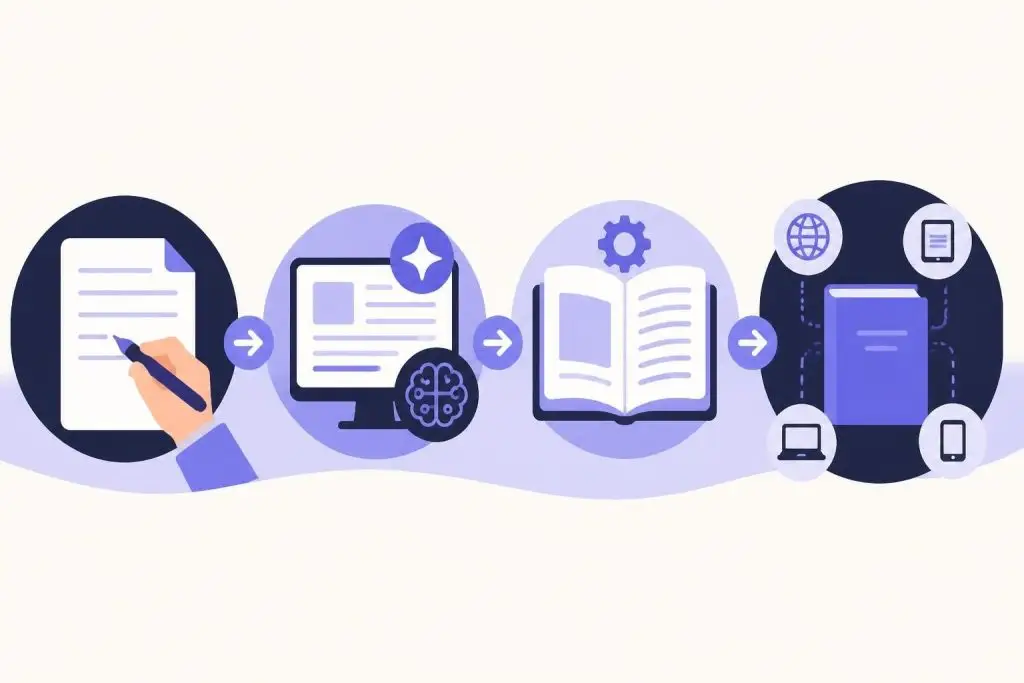
I still remember the moment I held my first self-published book in my hands. The weight of it felt surreal-not because of the physical pages, but because of everything those pages represented. Years of dreaming, months of writing, weeks of editing, and countless hours of figuring out how to actually produce your own book without losing my mind in the process. That book changed my life, not because it became a bestseller (it didn't), but because it proved to me that authors no longer need permission slips from traditional publishers to share their stories with the world.
Why Authors Choose to Produce Their Own Books
The landscape of self-publishing has transformed dramatically over the past decade. What once seemed like a complicated, expensive process has become accessible to anyone with a story to tell and the determination to see it through.
Financial control sits at the top of most authors' reasons for choosing this path. When you produce your own book, you keep the majority of your royalties-often 70% on digital sales compared to the 10-15% traditional publishers typically offer. That difference adds up quickly, especially for prolific authors building a backlist.
Creative freedom runs a close second. You decide on your cover design, your book's title, your marketing strategy, and your publication timeline. No waiting 18-24 months for a traditional publisher's release schedule. No compromising your vision to fit market trends a committee deemed profitable.
The Modern Author's Advantages
Today's authors have access to tools our predecessors couldn't imagine:
- Professional-quality formatting software that produces print-ready files in minutes
- AI-powered editing assistants that catch consistency errors and pacing issues
- Global distribution networks that place your book in readers' hands worldwide
- Direct reader relationships through email lists and social media
- Real-time sales data and instant updates to your content
The barrier to entry has dropped so low that the question isn't whether you can produce your own book, but whether you're willing to invest the time to learn the process.
Planning Your Book Production Journey
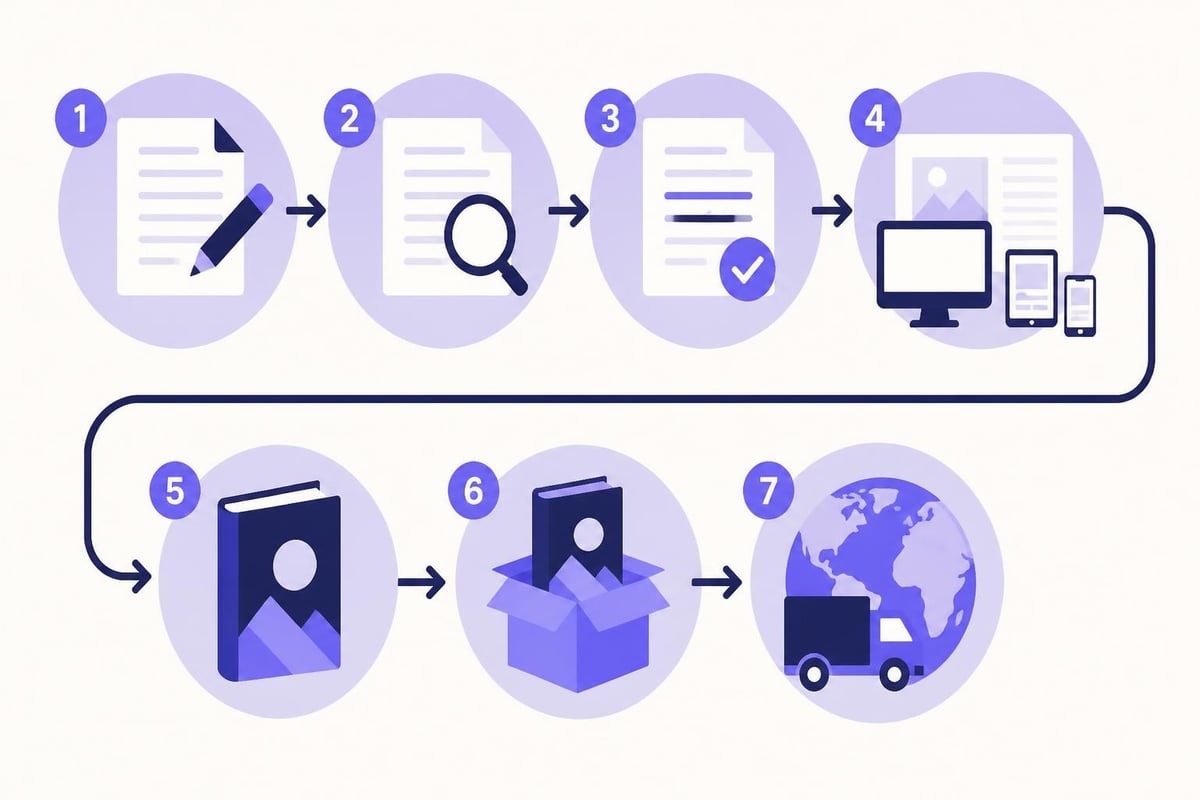
Before you dive into the technical aspects, you need a roadmap. I learned this lesson the hard way with my second book when I jumped straight into formatting before my manuscript was truly ready. Three expensive revisions later, I developed a system that saves time, money, and sanity.
Start with the end in mind. What format will your book take? Ebook only? Paperback? Hardcover? Each format requires different specifications, and knowing your destination shapes every decision along the way.
Your production timeline depends on several factors:
- Manuscript completion and quality (varies widely by author)
- Editing rounds needed (typically 2-4 passes)
- Cover design and revisions (2-4 weeks if hiring out)
- Formatting and file preparation (1-2 weeks for DIY, days with proper tools)
- Platform approval processes (1-3 days per platform)
- Marketing preparation (ongoing, but plan 4-6 weeks pre-launch)
Writing and Developing Your Manuscript
The foundation of any successful book production starts with a solid manuscript. This seems obvious, but many authors rush this phase, eager to see their name on a cover. Resist that temptation.
Fiction writers need complete character arcs, consistent world-building, and pacing that keeps readers turning pages. I recommend writing your entire first draft before switching into editing mode. The story needs to breathe as a whole before you start dissecting individual scenes.
Nonfiction authors benefit from detailed outlines that map each chapter's purpose and main points. Your argument or information needs to build logically, with each chapter supporting your larger thesis or teaching goal.
Managing Your Writing Process
| Writing Stage | Time Investment | Key Focus |
|---|---|---|
| Outlining | 1-4 weeks | Structure, flow, argument development |
| First Draft | 3-6 months | Completion, not perfection |
| Self-Editing | 2-4 weeks | Big-picture issues, plot holes, weak arguments |
| Beta Readers | 2-3 weeks | Reader experience, confusion points |
Track your progress using whatever system keeps you accountable. Word count goals, time-based targets, chapter completion-the method matters less than the consistency.
Editing: Where Good Books Become Great
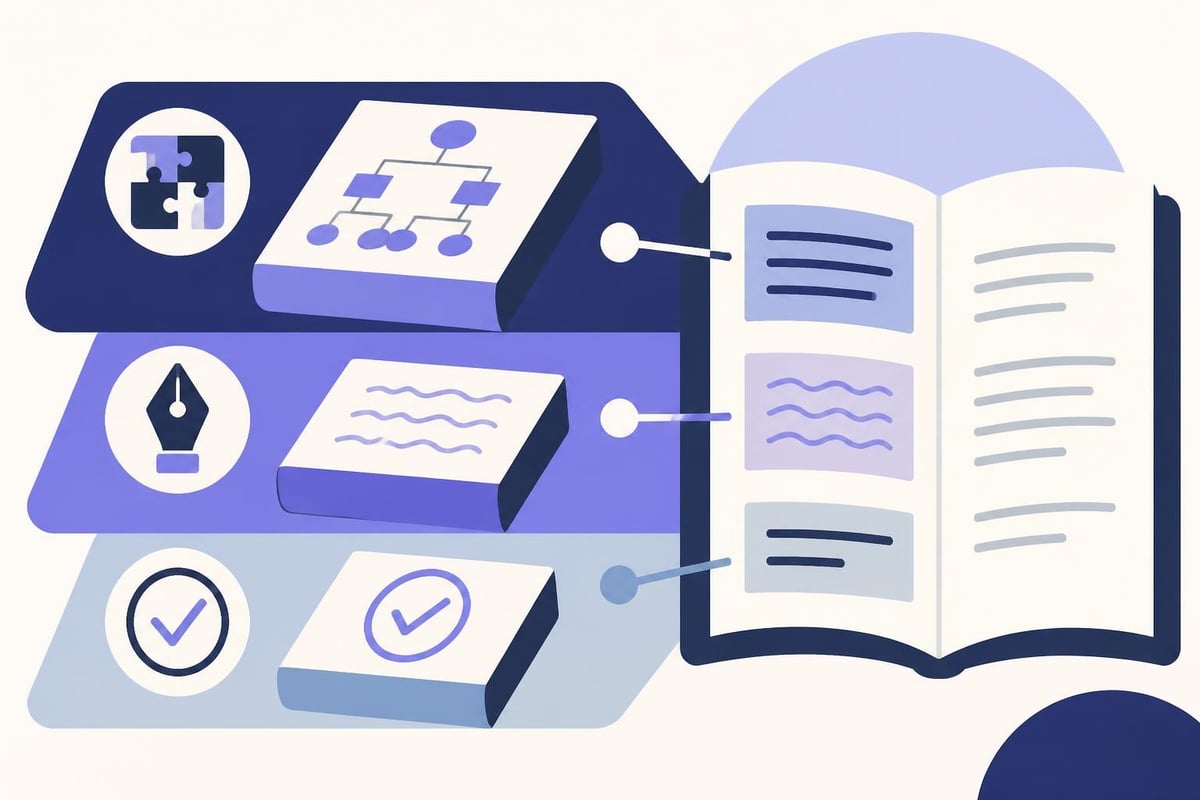
The editing phase separates published books from professional books. When you produce your own book, you're responsible for quality control, and that means multiple editing passes with fresh eyes.
Developmental editing addresses big-picture issues: structure, pacing, character development in fiction, or argument flow in nonfiction. This is where you might realize an entire chapter needs repositioning or a subplot isn't working. Don't skip this step, even if it means significant rewrites.
Line editing zooms in on sentence-level craft: word choice, rhythm, clarity, and voice consistency. This is where prose transforms from functional to beautiful. Many authors find that AI manuscript editors excel at catching repetitive phrasing, passive voice overuse, and pacing inconsistencies that human eyes might miss after the tenth read-through.
Copy editing and proofreading catch the grammar mistakes, typos, and formatting inconsistencies that make readers question your professionalism. These final passes happen after your content is locked and your formatting is complete.
Formatting Your Book for Professional Results
Here's where many authors either waste hundreds of dollars or waste dozens of hours teaching themselves complex software. Print book formatting requires attention to industry standards that readers expect, even if they don't consciously notice them.
Interior formatting elements include:
- Margins that accommodate binding methods (different for paperback vs. hardcover)
- Headers and footers with appropriate page numbering
- Chapter openings with consistent styling
- Scene breaks marked clearly
- Font choices that enhance readability
- Proper widow and orphan control
- Print-specific considerations like bleed and trim sizes
Ebook formatting follows different rules since readers control text size and device orientation. Clean HTML structure, logical heading hierarchy, and properly formatted front and back matter make your ebook work smoothly across Kindle, Apple Books, Kobo, and other platforms.
Modern book writing software features often include built-in formatting tools that handle these technical requirements automatically, outputting files ready for upload to major publishing platforms. This approach saves significant time compared to learning InDesign or wrestling with Microsoft Word's quirks.
Designing a Cover That Sells
Your cover does heavy lifting in the marketplace. It needs to communicate genre, quality level, and emotional tone in a split second as potential readers scroll through search results.
Professional cover design typically costs between $300 and $2,000 depending on the designer's experience and your book's complexity. For many authors, especially those producing their first book, this represents the single largest production expense.
DIY covers work for some genres-particularly clean, text-focused nonfiction or literary fiction where simplicity signals sophistication. But most genres have visual expectations that require design skills beyond basic photo editing.
Cover Design Investment Options
| Approach | Cost Range | Best For |
|---|---|---|
| Professional designer | $500-$2,000 | Fiction, competitive genres, authors with budget |
| Premade covers | $50-$200 | Romance, fantasy, genres with strong conventions |
| DIY with templates | $0-$50 | Nonfiction, minimalist designs, tight budgets |
| Stock photo + designer | $300-$800 | Realistic photography needs, hybrid approach |
Test your cover at thumbnail size. If the title isn't readable or the image looks muddy at 200 pixels wide, redesign before committing.
Choosing Your Publishing Platforms
When you produce your own book, you're not limited to a single distributor. Most successful independent authors use multiple platforms to maximize their reach, though the specific mix depends on your goals and capacity for managing uploads.
Amazon KDP dominates the market with roughly 70% of ebook sales and significant print-on-demand capabilities. Their exclusivity program (KDP Select) offers promotional tools but prevents wide distribution. Many authors start here due to the platform's reach and relatively simple interface. Understanding the KDP vs IngramSpark decision helps authors make strategic distribution choices.
IngramSpark provides access to bookstores and libraries through traditional distribution channels. The setup is more complex, and they charge for file uploads and revisions, but the expanded distribution can be valuable for print books.
Draft2Digital aggregates distribution to Apple Books, Kobo, Barnes & Noble, and other ebook retailers with a single upload. Their interface simplifies wide distribution, though you sacrifice some control and pay a small percentage of royalties for their service.
Direct platform uploads to Apple Books, Kobo, and Google Play give you maximum control and royalty percentages but require managing multiple dashboards and formatting requirements.
Setting Up Your Book's Metadata
The words surrounding your book matter almost as much as the words inside it. Search algorithms and recommendation engines rely on metadata to connect your book with interested readers.
Your book description needs to hook browsers immediately. Start with a compelling question or statement that addresses your target reader's desire or pain point. Include relevant keywords naturally, but write for humans first and algorithms second.
Categories determine where your book appears in store browsing structures. Choose the most specific categories that accurately describe your book-you want to be a big fish in a small pond rather than drowning in the ocean of "Fiction."
Keywords work differently across platforms. Amazon allows seven keyword phrases, while other retailers vary. Research what terms readers actually search for in your genre using Amazon's search suggestions and tools like Publisher Rocket.
Pricing strategy balances profit margin against market positioning. Ebooks typically range from $2.99 to $9.99, with $3.99-$4.99 being the sweet spot for many genres. Print books need to cover printing costs while remaining competitive-check comparable titles in your category.

Storyloft brings together everything needed to produce your own book in one integrated platform, eliminating the juggling act between multiple tools and services. Storyloft for Authors combines manuscript writing, AI-powered editing through Eddy, and professional formatting for both print and digital publication.
Uploading and Publishing Your Files
The technical requirements for uploading your book vary by platform, but all require properly formatted files that meet their specifications. Most print-on-demand services want PDF files with embedded fonts and specific color profiles. Ebook platforms prefer EPUB files or sometimes DOCX files they'll convert.
Pre-upload checklist prevents costly mistakes:
- Final proofread completed on formatted files
- Front matter includes copyright page and title page
- Back matter includes author bio and next book preview if applicable
- ISBN assigned and embedded in metadata (if using one)
- Cover files meet size and resolution requirements
- Interior files have correct trim size and bleed settings
- All images are high-resolution and properly embedded
Order a proof copy before approving your print book for sale. Screen displays don't reveal issues like text too close to the gutter or images printing darker than expected.
Marketing Your Self-Published Book
Publication day marks a beginning, not an ending. The most beautifully produced book in the world needs readers to find it, and that requires strategic marketing effort.
Pre-launch activities build momentum:
- Build an email list of interested readers
- Reach out to book bloggers and reviewers in your genre
- Create social media content showcasing your writing journey
- Prepare launch day promotions and pricing strategies
- Line up author interviews or podcast appearances
Launch week focuses on visibility and early reviews. Amazon's algorithm favors books with rapid early sales and reviews, so concentrating promotional effort during your first week creates momentum.
Long-term marketing sustains sales through consistent reader engagement, regular new releases, and building your author platform. The authors who succeed at self-publishing treat it as a business, not a one-time event.
Building Your Author Business
To successfully produce your own book repeatedly, you need systems that scale. One book is a project; multiple books require business thinking.
Financial tracking separates expenses by book-editing costs, cover design, marketing spend, software subscriptions. Understanding your per-book investment helps you make smart decisions about where to allocate resources.
Time management balances writing new books with marketing existing ones. Most successful independent authors follow the 80/20 rule: 80% of time on writing, 20% on marketing and administration.
Continuous learning keeps you current as platforms update requirements and reader preferences evolve. Follow industry blogs, join author communities, and don't be afraid to experiment with new approaches. Resources like Books.by’s self-publishing guide and Shopify’s publishing strategies offer updated insights as the industry changes.
Understanding Printing and Production Costs
Your profit margin depends on understanding the economics of book production. Print-on-demand services charge per-copy printing costs that vary by page count, trim size, and binding type.
| Trim Size | 200 Pages (B&W) | 300 Pages (B&W) | 400 Pages (B&W) |
|---|---|---|---|
| 5" × 8" paperback | $2.80 | $3.50 | $4.20 |
| 6" × 9" paperback | $3.10 | $4.00 | $4.90 |
| 6" × 9" hardcover | $7.50 | $9.00 | $10.50 |
These costs affect your retail price. If printing costs $4 and you want to earn $3 per book while giving retailers a 55% discount, your retail price needs to be approximately $15.55. The math shapes what's feasible for your book.
Maintaining Quality Across Editions
When you produce your own book, you control quality maintenance forever. Reader feedback might reveal errors you missed, or you might want to update content for accuracy.
Version control prevents confusion about which file is current. Date your file names and keep previous versions archived. When you make changes, update all platforms simultaneously to maintain consistency.
Handling corrections professionally reassures readers you care about quality. If someone reports an error, thank them genuinely, fix it promptly, and upload the corrected version. Most platforms allow unlimited revisions to ebook files.
Expanding Your Publishing Formats
Start with one format and expand strategically. Many authors begin with ebooks due to lower barriers and faster turnaround, then add print after validating market interest.
Audiobook production opens another revenue stream but requires significant additional investment-either hiring narrators ($100-400 per finished hour) or narrating yourself with quality recording equipment and editing software. ACX connects authors with narrators and distributes to Audible, Amazon, and iTunes.
Large print editions serve readers with vision challenges and appeal to libraries. The formatting differs only in font size and spacing, making it a relatively simple addition once your standard print edition is finalized.
Specialty editions like signed copies, special bindings, or illustrated versions create premium offerings for dedicated fans but work best after establishing a reader base.
Learning from Your Publishing Data
Every platform provides sales data and reader insights. Use them to improve your craft and business decisions.
Sales patterns reveal which marketing activities drive results. Track promotional spikes, review-driven discovery, and seasonal trends. What worked for one book might work for your next.
Reader reviews contain valuable feedback about pacing, character development, or unclear explanations. Don't argue with negative reviews, but look for patterns in criticism that indicate genuine issues versus individual preference.
Page read data (available through KDP and some other platforms) shows where readers stop engaging with your book. High drop-off at specific chapters might indicate pacing problems or confusing sections worth revising.
Building a Sustainable Publishing Schedule
Authors who produce their own books successfully often follow predictable release schedules. Readers love series and reliable authors who deliver new content regularly.
Annual planning maps out writing time, editing windows, cover design lead times, and publication dates. Working backward from your target release date ensures each step gets adequate attention.
Balancing quality with productivity challenges every author. Perfectionism kills publishing schedules, but rushing books out damages your reputation. Find your sustainable pace-whether that's one book per year or six-and commit to it.
Producing your own book transforms from overwhelming to empowering once you understand the complete process and assemble the right tools for each stage. The journey from manuscript to published author requires dedication, but modern technology has made professional-quality self-publishing accessible to anyone willing to learn. Storyloft streamlines this entire workflow by combining writing, AI-assisted editing, and professional formatting in a single platform built specifically for authors ready to take control of their publishing journey.