How to Write a Bestselling Non Fiction Book

In 2010, Tim Ferriss released The 4-Hour Body. It sold 63,000 copies in just two weeks. The book hit #1 on the New York Times, Barnes & Noble, and Amazon bestseller lists — all at the same time. This success didn’t happen by chance. It was due to a special nonfiction book writing process.
Did you know over 500,000 books get published every year? But only 20, including fiction, sell a million copies. Michael Pollan’s The Omnivore’s Dilemma took a decade to reach 2 million readers. Most books sell less than 1,000 copies and fade away.
So, what makes a book a hit? It’s not just a lucky media spot. Good Morning America appearances don’t always boost sales. Publishers handle distribution, but marketing is up to the author. The real secret lies in the writing itself.
When I studied Adam Grant’s Hidden Potential, I found five creative techniques that grab audiences. Great ideas are important, but knowing how to write a bestselling non fiction book means combining those ideas with proven craft and structure. This guide will show you how.
I wrote this to give you a step-by-step guide from idea to launch. Let’s dive in.
Key Takeaways
- Fewer than 20 books per year sell a million copies, making the nonfiction book writing process critical to standing out.
- Massive media coverage alone won’t drive sales — your book’s content and structure do the heavy lifting.
- Bestselling author strategies involve specific writing techniques, not just good ideas or big platforms.
- Publishers distribute your book but rarely market it, so your approach to writing and launching matters enormously.
- Learning how to write a bestselling non fiction book requires studying what top authors like Tim Ferriss and Adam Grant do differently.
- Long-term success is possible — some books take years to reach millions of readers through strong word-of-mouth momentum.
Understanding What Makes Non Fiction Books Bestsellers
Not every nonfiction book makes it to the bestseller list. But the ones that do have some key traits. They solve real problems, offer new views, and mix stories with facts. Getting your book’s structure right is just the start. You need to offer something that readers can’t stop thinking about.
The Power of Solving Painful Problems
The top nonfiction books tackle problems that keep people awake. They make readers feel the need to act. Your book should give readers at least 10 times the value of its price.
If someone pays $20, they should get $200 worth of insights. This is how your book gets talked about and marketed long after it’s released.
“People don’t buy books. They buy solutions to problems they desperately want solved.”
Creating Category-Defining Content
Bestsellers don’t just enter a category — they redefine it. Think of how Brené Brown made vulnerability seem strong, not weak. Your book needs its own language and a fresh view on a common topic.
This is what makes your book memorable, not just another title.
Why Substance and Stories Matter Equally
Stories help ideas stick in our minds. Adam Grant uses stories in every chapter of his books. Research shows that stories make complex ideas easier to remember.
But stories alone aren’t enough.
Data adds credibility. In Give and Take, Grant uses hundreds of studies. He shows how specific goals beat the vague “do your best” advice. A good nonfiction book balances stories and data:
- Stories engage readers emotionally and build drama
- Data and research results add weight and authority
- The combination creates a reading experience that’s both compelling and trustworthy
Mastering this balance is key for marketing your nonfiction book. Readers share books that move them and convince them at the same time.
Developing Your Book’s Core Message and Unique Angle
Every great nonfiction book starts with a clear core message. You can’t fake passion. You can’t write a book because you “should” or because you want quick riches.
Publishing nonfiction books successfully demands that you transform your deepest struggle into your greatest gift for readers.
Before you sit down to outline chapters, you need three things locked in: your story, your credibility, and your ideal reader.
Finding Your Transformational Story
Your most painful experience often holds the key to your book’s message. David Goggins turned a childhood of abuse and failure into Can’t Hurt Me, which sold over four million copies. James Clear built Atomic Habits from his own recovery after a baseball injury nearly ended his dreams.
Writing compelling nonfiction content means sharing personal truth — not preaching. Put your journey’s hard-won wisdom on the page. Readers connect with real transformation, not theory.
Establishing Your Authority and Credibility
You must be the ultimate success story of your own advice. Before writing a single chapter, I recommend helping at least three people achieve the transformation you promise. Tim Ferriss, Tucker Max, and Ramit Sethi each sold millions of copies because they lived their messages first.
| Author | Book | Credibility Source | Copies Sold |
|---|---|---|---|
| James Clear | Atomic Habits | Personal habit-building journey and newsletter with 1M+ subscribers | 15 million+ |
| David Goggins | Can’t Hurt Me | Navy SEAL, ultramarathon runner, world record holder | 4 million+ |
| Charles Duhigg | The Power of Habit | Pulitzer Prize-winning journalist, years of behavioral research | 3 million+ |
Targeting Your Uber Reader
Your “uber reader” is the person who reads your book multiple times, recommends it to hundreds of people, and becomes a lifelong fan. Think your niche audience feels too small? Make it smaller. A focused audience creates passionate word-of-mouth that broad audiences never will.
“Write for one specific person. If you try to write for everyone, you end up writing for no one.”
Nailing your core message and unique angle sets the stage for the actual writing process — where stories, research, and metaphors bring your ideas to life.
How to Write a Bestselling Non Fiction Book
Writing a bestselling non fiction book needs four key tools. These tools turn simple ideas into exciting stories. Let’s explore each one.
Crafting Stories in Miniature
Telling small, vivid stories is a top strategy. Think of Adam Grant’s story about architect Tadao Ando’s tiny house. It’s a concrete box with a single skylight. This image stays with you.
I aim for one miniature story per chapter. These stories pull readers into the scene.
Adding Research and Data for Substance
Stories need a strong foundation. That foundation is evidence. Non fiction readers seek real answers and proof.
I add studies, experiments, and data to support my claims. This makes my book credible, not just a blog post.
Using Metaphors for Power and Pizzazz
Metaphors make complex ideas simple. Grant compares perfectionism to a medication with warning labels. He uses a green apple to show growth.
These comparisons add energy to your writing. They make complex ideas easy to understand.
Including Your Personal Experiences
Your life is full of valuable lessons. Grant shares diving stories to teach about aiming for excellence, not perfection. Including personal stories makes your writing feel like a conversation, not a lecture.
Here’s how these tools work together:
| Writing Tool | Purpose | Reader Impact |
|---|---|---|
| Miniature Stories | Create vivid scenes | Emotional connection |
| Research and Data | Back up claims | Trust and credibility |
| Metaphors | Simplify complex ideas | Memorable understanding |
| Personal Experiences | Build authenticity | Conversational tone |
Mastering these strategies gives your book depth and personality. Add soundbites like “Finding the Sweet Spot Between Flawed and Flawless,” and your ideas will be unforgettable.
Creating a Compelling Book Proposal That Sells
Here’s a secret in publishing: you don’t need a finished book to get a deal. The nonfiction book writing process lets you sell your idea before you write it. A strong proposal is your key to success.
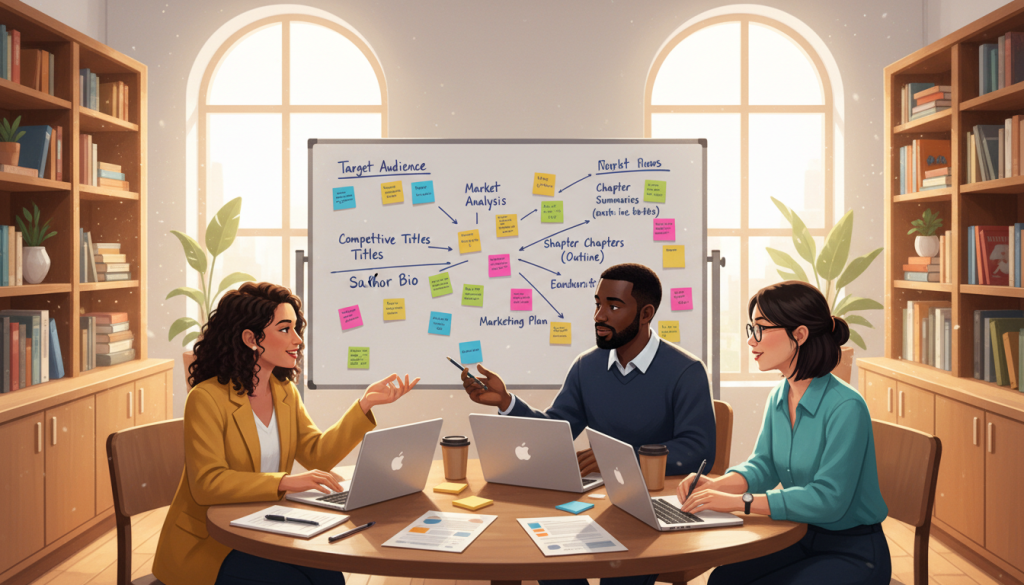
I’ve seen new authors get deals on Publishers Marketplace every day. They didn’t have big platforms or MFA degrees. They had three things:
- A message they were passionate about sharing
- Real dedication to book proposal development
- A genuine willingness to promote their work
Your proposal must answer key questions for publishers. Why is your book special? What makes your angle new? Why should readers buy it? You can’t be half-hearted. Publishers spot lukewarm pitches fast.
Many publishers buy books from experts and pair them with ghostwriters. So, your expertise and story are more important than your writing. The nonfiction book writing process rewards those who bring real authority.
“A book proposal is a business plan for your book — it must sell the idea, the author, and the market all at once.”
Book proposal development means making your idea sharp and convincing. Think of it as a pitch that shows you’re the only one who should write this book. Bring your transformational story, credibility, and passion. That’s what gets publishers to say yes.
Structuring Your Manuscript for Maximum Impact
A great idea is not enough if your manuscript doesn’t grab readers. I’ve seen amazing ideas fail because the chapters didn’t flow well. After writing a strong book proposal, focus on creating a structure that keeps readers engaged.
Hooking Readers with Your First Chapter
Your first chapter must be powerful. Start with something that scares or excites your reader. Make it real and emotional. Your title should promise a clear benefit from reading your book.
A 2023 Bookstat report shows 60% of readers quit nonfiction books after two chapters. Your first chapter is crucial — don’t use it for background info.
Building Momentum Through Each Chapter
Each chapter should do three things:
- Understand a specific problem your reader faces
- Solve that problem better than the last chapter
- Show progress so readers feel they’re moving forward
Include tools like worksheets or apps to help readers change. This makes your book valuable for marketing. Readers love to share books that help them.
Delivering on Your Promise
Answer every question in the order your reader will ask them. Don’t leave gaps. Your book should have a big payoff hinted at throughout.
When readers feel changed, they become your best marketers. This kind of marketing starts with a well-structured manuscript. It sells itself through word of mouth.
Writing Techniques That Captivate Readers
Great ideas don’t matter if they’re forgotten soon. To make your nonfiction content memorable, use special techniques. The best authors make complex info into vivid, unforgettable stories. Here are three ways to make your book unforgettable.
Making Abstract Ideas Concrete
Our brains love pictures. Ideas like “growth” or “resilience” are hard to remember. But a green apple sculpture sitting on a desk or a medicine bottle label with faded ink are easy to remember.
When writing nonfiction, turn every big idea into something we can see or touch. Our brains are wired to remember visuals, clear stories, and threats.
Using Sensory Details and Imagery
Use metaphors from everyday life. Draw from fields your readers know:
- Parenting and raising children
- Sports and athletic training
- Cooking and recipes
- Gardening and growing plants
These familiar areas add emotional depth to your ideas. Make your writing so vivid that readers feel the truth before they think it.
Creating Memorable Soundbites
Every chapter should have a line readers want to share. Adam Grant says: “The more you grow, the better you know which flaws are acceptable.” This is a memorable summary of a big idea.
Good writing informs. Great writing transforms regular information into something readers carry with them for years.
Keep your language simple. This simplicity is key to reaching many readers. It’s the secret to publishing nonfiction books that stick with people.
Building Your Author Platform Without Social Media
Many think you need a big following on Instagram or TikTok to build an author platform. But that’s not true. Bestselling authors often skip social media. They build their platform through offline and traditional ways.
Focus on what you’re good at. Choose one or two areas to excel in. As you write, you become an expert and refine your message. This is how you build your platform.
Leveraging Professional Networks
Your professional circles are valuable. If your audience shares your profession, you can reach real readers. Go to industry meetups and join organizations. This shows publishers you can sell books.
Writing Essays for Major Publications
Publications like The New York Times, The Atlantic, and Harvard Business Review take essays from new writers. A single byline can boost your credibility fast. You can also be an expert source for journalists through Help a Reporter Out (now Connectively).
Speaking at Conferences and Podcasts
Guest spots on podcasts and speaking at conferences test your ideas with live audiences. You’ll improve your message and reach more people.
| Platform Channel | Time Investment | Credibility Impact | Best For |
|---|---|---|---|
| Professional Networks | Low | High | Niche audiences |
| Major Publication Essays | Medium | Very High | Broad visibility |
| Podcast Guesting | Low | Medium | Building loyal listeners |
| Conference Speaking | High | Very High | Industry authority |
If a publisher rejects your book because of a small platform, it’s a good sign. It means your idea is strong. A weak idea can’t be fixed, but a good one can always grow.
Research Methods and Fact-Checking Strategies
Every bold claim in your book needs proof. Nonfiction book research is a layered process. It mixes scientific data, real stories, and verified facts.
Adam Grant’s Hidden Potential is a great example. He uses hundreds of experiments in his book. Each study is more than just a stat; it has a story behind it.
“The best nonfiction doesn’t just tell you what’s true. It makes you feel the weight of the evidence.” — Steven Pinker
To write a bestselling non fiction book, start with solid research. Data gives your ideas weight. Stories make those ideas memorable. You need both.
Here are some research methods I use:
- Search peer-reviewed journals through Google Scholar and PubMed
- Interview subject-matter experts for firsthand insight
- Cross-reference every statistic with at least two credible sources
- Read original studies — not just summaries or press releases
- Keep a running research log organized by chapter topic
| Research Method | Best For | Credibility Level |
|---|---|---|
| Peer-reviewed journals | Scientific claims and data | Very High |
| Expert interviews | Unique perspectives and quotes | High |
| Government databases (CDC, BLS) | Statistics and demographic data | Very High |
| Books by established authors | Building on existing frameworks | High |
| News archives | Real-world examples and case studies | Moderate |
Strong research makes a book unforgettable. It builds trust with readers. This trust keeps them coming back for more.
Making Your Book Accessible to Mass Audiences
Writing a great book is not enough if it’s hard to read. The nonfiction book writing process focuses on clarity. You want your sentences simple, so everyone can enjoy them, from teens to seniors.
Writing at a Tenth-Grade Reading Level
Authors like Malcolm Gladwell and Brené Brown write for an eighth-to-tenth-grade level. They use short sentences and common words. Tools like Hemingway Editor or Grammarly check your readability fast. If a ten-year-old can follow your argument, you’re doing well.
Eliminating Jargon and Complex Language
Jargon can turn readers off. You should be easy to understand. I replace technical terms with simple words. This makes your book memorable.
“Easy reading is damn hard writing.” — Nathaniel Hawthorne
Using Beta Readers for Feedback
Beta readers are key. I get feedback from five to ten people in my target audience. They tell me what’s confusing or boring. Their feedback helps me improve before the book is released.
| Beta Reader Focus Area | Question to Ask | Why It Matters |
|---|---|---|
| Clarity | Did any section confuse you? | Reveals jargon or unclear logic |
| Engagement | Where did you want to stop reading? | Identifies boring passages |
| Emotion | Did any part make you laugh or tear up? | Measures shareability potential |
| Actionability | Could you apply the advice right away? | Tests real-world usefulness |
Good marketing for nonfiction books means people want to talk about them. Make your title catchy and your content emotional. When people talk about your ideas, your book markets itself, even before you spend money on ads.
Marketing Your Book Before Publication
Your book’s success starts long before it’s published. A good marketing plan begins well before your book comes out. Many authors spend years writing but forget this crucial step.
Planning Your Launch Four Months in Advance
Start making noise four months before your book is released. Twelve months is even better. You need time for podcast interviews, sending advance copies, and getting endorsements.
Tim Ferriss planned The 4-Hour Body launch carefully. It sold 63,000 copies in just two weeks.
Here’s a basic pre-launch timeline:
| Months Before Launch | Key Action | Goal |
|---|---|---|
| 12 months | Build email list and identify target communities | 1,000+ engaged subscribers |
| 6 months | Send advance reader copies to influencers | 15–25 endorsements secured |
| 4 months | Begin podcast tour and essay placements | 20+ media appearances booked |
| 1 month | Activate email sequences and partnerships | Drive pre-orders and bulk buys |
Creating Urgency and Scarcity
Make readers want to buy now, not later. Offer special bonuses for pre-orders. Create limited-time bundles. Encourage buying two or more copies for gifting.
“Give 100 times more value than what you’re asking people to spend.”
Building an Echo Chamber Effect
Your ideal readers should see you everywhere. Coordinate your marketing efforts across email, social media, podcasts, and partnerships. Market directly to groups most likely to become fans.
- Activate your email list with a dedicated launch sequence
- Partner with brands or organizations that serve your target reader
- Flood your audience’s feeds through coordinated influencer posts
This effort builds a community of evangelists. Readers who don’t just buy your book but promote it for years.
Publishing Options and Distribution Strategies
Choosing the right publishing path is key to your book’s success. Many authors miss this: publishers focus on getting books into stores, not on marketing. The Big Five publishers are great at getting books into stores. But, they won’t help you sell your book. That’s your job.
How you organize your nonfiction manuscript is important. A well-organized manuscript is attractive to traditional publishers. Self-publishing works better with a flexible structure, making updates easy. Consider if your book could grow into a series or franchise.
Self-published authors can earn money in many ways, not just from book sales. Here are some strategies:
- Create an ad funnel with a “free plus shipping” offer to sell books all the time
- Build a content marketing engine with SEO videos, blog posts, and email sequences to promote your book for years
- Find companies that will buy thousands of copies for their employees
- Package your book with courses, consulting, or products that many people already want
Building a strong author platform boosts these strategies. Your platform keeps sales going long after the launch.
| Factor | Traditional Publishing | Self-Publishing |
|---|---|---|
| Royalty per Copy | 10–15% | 35–70% |
| Distribution Reach | Bookstores, libraries, airports | Amazon, IngramSpark, direct sales |
| Time to Market | 12–24 months | 1–3 months |
| Creative Control | Limited | Full |
| Marketing Responsibility | Mostly on author | Entirely on author |
| Update Flexibility | Requires new edition approval | Update anytime |
Whether you choose traditional or self-publishing, a strong author platform and a well-organized manuscript are key. They help you sell books for years, not just weeks.
Essential Ingredients for Long-Term Success
Learning to write a bestselling non fiction book is just the start. The real challenge is keeping your creative spark alive. It’s about making a book that sells for years, not just weeks. I’ve found that three key habits are often overlooked by authors.

Staying Green Like Ando’s Apple
Japanese architect Tadao Ando had a green apple in his studio. It reminded him to stay unfinished and keep growing. This mindset is perfect for writing compelling nonfiction content.
Don’t get too comfortable thinking you’ve “arrived.” Stay curious and hungry. Keep growing.
Maintaining Daily Book Habits
You don’t need to write every day. But you do need to engage with your book daily. Here’s how I do it:
- Watch films or read books related to my topic
- Listen to music that evokes the same emotions as my chapters
- Talk about my book with friends or colleagues
- Dictate ideas during my commute or while waiting at appointments
Your unconscious mind works on your book even when you’re not writing. But you need to feed it daily. Schedule writing time first. Wake up early. Use short breaks to write.
Block one long weekend each month for binge writing.
Creating Content That Markets Itself
To reach a million copies, your book must sell itself forever. Books like Atomic Habits by James Clear and The Subtle Art of Not Giving a F*ck by Mark Manson are rare. Most authors sell fewer than 100,000 copies a year.
The secret to a bestselling non fiction book? Make it so useful that readers can’t stop talking about it. Writing compelling nonfiction content means giving people transformation. The kind they have to share.
Conclusion
Writing a bestselling nonfiction book isn’t about chasing lists or gaming algorithms. It’s about living your book’s message. Your story is unique and can’t be copied.
When you mix your story with solid research, you create something readers love. This makes your book hard to put down.
The best strategies for authors are simple. Solve a problem your readers face. Use real data to back your ideas.
Tell stories that make complex ideas easy to understand. Build your platform through essays, speaking, and networks. Write for everyone, and listen to beta readers.
Plan your book launch four months ahead. Create excitement and buzz. Let your content reach every important channel.
Your goal is a book that changes lives through word of mouth. This is the real success.
Keep writing every day. Start with one paragraph or page. Your book will grow and inspire readers for years.
FAQ
How do I write a bestselling non fiction book if I don’t have a large social media following?
You don’t need a big social media following to write a bestselling nonfiction book. What’s more important is using your professional networks. These show you’re an expert and can sell books.
You can write essays for big publications, be an expert for journalists, and speak at conferences. Focus on one strength. Many successful authors built their author platform while working on their book.
What separates bestselling nonfiction from books that sell fewer than 1,000 copies?
Bestsellers have a few key things. They diagnose a painful problem and show the high cost of not solving it. They offer at least 10X more value than their price.
They also have category-defining content that reframes problems in a new way. Authors like James Clear and David Goggins are great examples. They embody their book’s message and create content that markets itself.
Can I sell a nonfiction book to a publisher before writing the complete manuscript?
Yes, nonfiction books can be sold with a book proposal before finishing the manuscript. Your proposal should show why your book is unique and why readers will be excited about it. Publishers buy books from experts, even if ghostwriters write them.
The key is to show your passionate message and be willing to promote the book.
How important are stories versus data in nonfiction writing?
Both stories and data are crucial. Stories engage readers emotionally and make ideas come alive. Research shows stories help people understand and remember ideas better.
Adam Grant uses stories in his book Hidden Potential. Data adds credibility and connects ideas to the bigger picture. The best books combine stories and substance to move readers emotionally and intellectually.
How far in advance should I plan my book launch, and what should my marketing strategy include?
Plan your launch at least four months in advance, but twelve months is better. Your marketing strategy should create urgency and scarcity. Use email lists, social media, and podcasts to promote your book.
Target specific groups and create an echo chamber effect. Tim Ferriss’s The 4-Hour Body sold 63,000 copies in two weeks and hit the top of bestseller lists.
Do mainstream media appearances guarantee book sales?
No, media appearances don’t guarantee book sales. Authors who appeared on Good Morning America sometimes sold fewer than 10 copies. Publishers focus on distribution, not marketing.
Building your own marketing engine is key. Your book needs to market and sell itself through word-of-mouth and evergreen content.
What makes a great first chapter in a nonfiction book?
Your first chapter should hook the reader with shock, fear, or intense desire. Your title should clearly state the transformation readers want. Every chapter should be valuable and solve the reader’s problem.
Include actionable items like worksheets and action plans. This keeps readers engaged and transforms them.
How do I find the right nonfiction book topic to write about?
Find a topic that’s your most painful problem turned into your greatest gift. You need to be passionate about your message. Write for your uber reader, who will love your book.
Authors like Charles Duhigg and James Clear target passionate niche audiences. Your book should share your personal truth and lessons.
What nonfiction book research methods should I use to add credibility?
Use tangible proof, data, and scientific evidence to back your claims. Adam Grant references hundreds of experiments in Hidden Potential. Keep research descriptions brief but interesting.
Extensive evidence is key for showing your ideas work. Pair your research with compelling storytelling to make ideas easier to understand and remember.
How do I use metaphors effectively in my nonfiction writing?
Metaphors explain abstract ideas clearly and add excitement to your writing. Adam Grant compares perfectionism to a medication with a warning label. Use familiar fields like parenting or sports for inspiration.
Make your language simple and add sensory details to make metaphors vivid and memorable.
Who is my “uber reader” and why does targeting them matter?
Your uber reader will love your book and recommend it many times. Targeting them is more valuable than trying to appeal to everyone. Make your niche audience feel too small, then smaller.
Write directly for this ultra-specific reader. Charles Duhigg and James Clear are great examples. Your book should share your personal truth and lessons.
What are the best long-term strategies for keeping my nonfiction book selling?
Create a book that markets and sells itself in perpetuity. Michael Pollan’s The Omnivore’s Dilemma took ten years to sell 2 million copies. Build a content marketing machine for a decade.
Create an evergreen ad funnel and identify companies that might buy thousands of copies. Consider expanding your book into a series. While Atomic Habits sold quickly, most authors should plan for the long game.
How do I develop a daily writing habit for my nonfiction book?
Create a daily book habit rather than a daily writing habit. Engage with your book every day. Your unconscious mind works on the book while you’re sleeping or driving.
Schedule writing time first. Use hidden time like dictating on your commute. Your book will grow and flower to captivate readers.
What role does book proposal development play in getting a publishing deal?
A: Book proposal development is crucial for nonfiction books. Your proposal should show why your book is unique and why readers will be excited. It requires dedication to shape your idea into a compelling document.
Most successful authors have a passionate message and are willing to promote their book. A half-hearted effort won’t work in today’s competitive publishing landscape.