
What Authors Can Learn From the 50-Page Rule
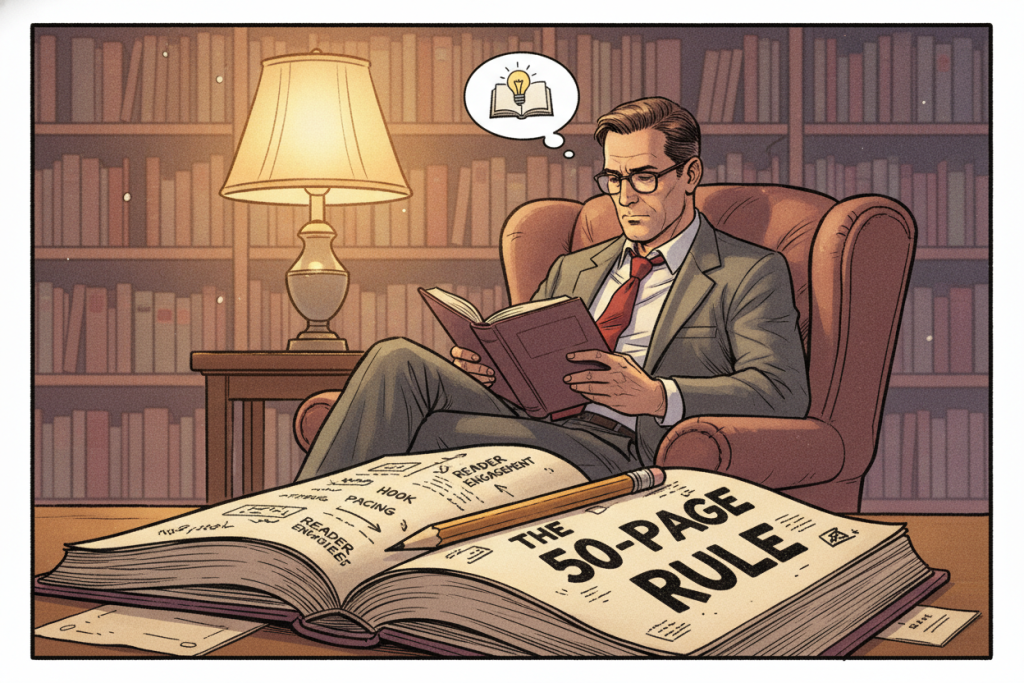
Did you know most readers decide on finishing a book early? This is a key fact for writers. It’s called the 50-Page Rule. It shows that readers judge your work from the start.
If your story starts slow, readers might leave. Mastering your craft means grabbing their attention right away. Strategic pacing keeps them interested.
Managing your content length well is key, even when writing more. Tightening your story early keeps readers engaged until the end. Let’s explore how to keep those pages turning.
Key Takeaways
- Most readers decide to abandon a book within the first few chapters.
- Pacing is the most important factor in early reader retention.
- Strategic structure helps maintain interest throughout the entire narrative.
- Efficient production allows you to focus more on high-impact storytelling.
- Understanding reader behavior helps you avoid common pacing pitfalls.
Introduction
Picking up a new novel is a leap of faith. But how long does that faith last? In today’s world, readers are picky about what they read.
The way we look at a book has changed. Knowing these changes is key for writers.
What Is the 50-Page Rule?
The 50-Page Rule is simple. It says give a book fifty pages to grab your interest. If it doesn’t, it’s okay to move on.
This rule helps readers be fair to authors. But it also reminds us that life is short. We shouldn’t waste time on books that don’t interest us.
The History of the 50-Page Rule
This idea didn’t just pop up. It came from readers tired of feeling forced to finish every book.
It became a common rule in book circles. It helps manage content length and time, making reading fun again.
Why Readers Have Less Patience Than Ever
We live in a time of quick fixes. Social media, streaming, and digital distractions have made us less patient.
Readers want stories that grab them fast. If a book takes too long to get interesting, they might switch to something else.
Why Every Author Should Care
As a writer, your first chapters are key. You can learn a lot about your story from the first 50 pages.
Ignoring these trends can hurt your book. Understanding the importance of your first 50 pages can help keep readers interested.
Before the 50-Page Rule: How Readers Chose Books Throughout History
I often wonder how people found their next favorite story before today. Back then, picking a book was slow and careful. It didn’t have the speed of today’s digital world.
The Early Days of Reading
For centuries, books were rare and costly. Most people had only a few texts to read. Patience was not just a virtue; it was a necessity.
Because there were few books, readers didn’t give up easily. If you had only three books, you read all of them. It didn’t matter if the start was exciting or not.
Libraries, Bookstores, and Word of Mouth
As printing got better, libraries and bookstores became key places to find new books. Readers trusted librarians and book placement to choose their next read.
Word of mouth was very powerful. If someone you knew or a scholar recommended a book, you were likely to try it. This time, people relied on each other’s opinions, not just data.
The Rise of Consumer Choice
The publishing world grew, giving readers more choices than ever. This change made readers the bosses of what they read.
This change is like how the google algorithm works today. Just as search engines sort through many pages, readers now pick from countless books to find the perfect one.
Why Reader Expectations Changed
With so many books available, we don’t wait for stories to start. We want to be hooked right away. That’s why the 50-page rule is so popular today.
The table below shows how reading has changed over time:
| Era | Primary Discovery Method | Reader Patience |
|---|---|---|
| Pre-19th Century | Limited availability | Very High |
| 20th Century | Bookstores & Reviews | Moderate |
| Digital Age | Algorithms & Social Media | Low |
Our way of reading has changed with technology. Like the google algorithm, we expect books to grab us quickly. If they don’t, we move on, using the 50-page rule to save our time.
Nancy Pearl and the Birth of the 50-Page Rule
Nancy Pearl is a big name in books. She’s a librarian and critic. She created The 50-Page Rule to help readers.
This rule lets readers stop reading if a book is boring. It’s about making time for good stories.
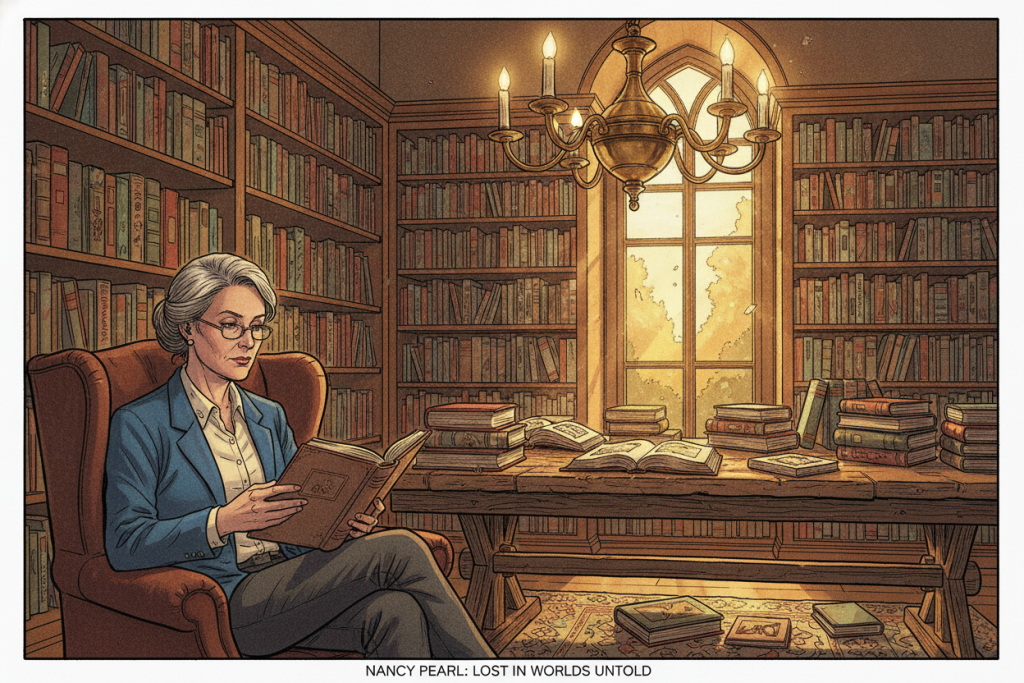
Who Is Nancy Pearl?
Nancy Pearl loves books. She worked in libraries, helping people find great stories. She’s known and trusted by many readers.
How the Rule Became Popular
Her idea became popular fast. It spoke to a common feeling: life is too short for bad books. You can learn more about the Nancy Pearl Rule online.
The Famous ‘100 Minus Your Age’ Variation
Nancy Pearl also had a special rule. It’s based on your age:
- Start with 100.
- Subtract your age from 100.
- The number you get is how many pages to read before quitting.
Why Readers Connected With the Idea
Readers liked this idea because it ended the guilt of stopping a book. It’s like a personal google algorithm for your reading list. It helps you choose quality over duty.
This rule lets you use your time better. It makes reading fun, not a task. Your time is valuable, so spend it on stories that excite you.
Why Readers Quit Books
Life is too short for boring books. I often look at my bookshelf and wonder why some books keep me up all night. Others just sit there.
The Psychology of Abandonment
Choosing a book is like investing our time. If it doesn’t grab us, we want our time back. Abandonment is just our brain’s way of saying, “No thanks.”
Stopping a book can make us feel guilty. But, it’s okay to choose fun over finishing a book.
Reader Expectations vs Reader Reality
Expectations and reality don’t always match. We might want a fast thriller but get a slow, deep story instead.
Alignment is key to keeping us interested. When what we get doesn’t match our excitement, we lose interest. The 50-page rule helps us decide what to read next.
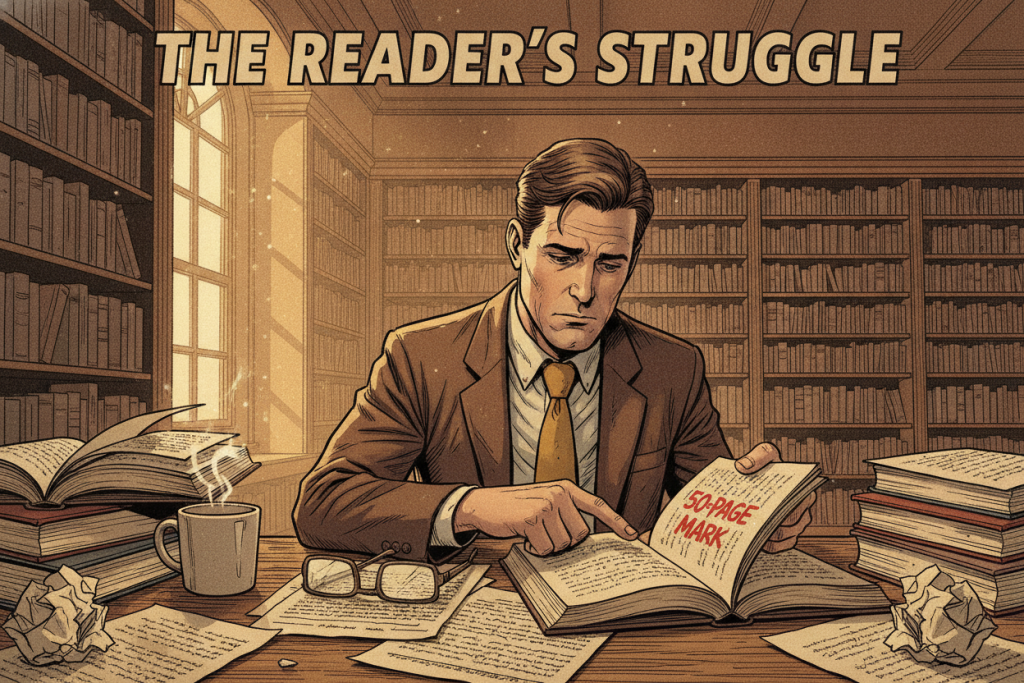
The Attention Economy and Modern Reading Habits
We’re always distracted today. Social media and streaming compete for our attention.
- Short content makes us want quick answers.
- Books must fight for our attention against fast digital fun.
- We’re less likely to stick with a slow start now.
When Readers Decide a Book Isn’t for Them
Deciding to stop reading is okay. If a book doesn’t grab you by page 50, it’s fine to move on.
A great digital marketing strategy can’t save a bad book. No hype can replace a real connection with a story. If it’s not sparking, it’s time for something new.
What Happens During the First 50 Pages
Your first sentence is key to keeping a reader. Many new writers start with boring history. You should grab attention with conflict or a strong voice right away.
Don’t tell readers how a character feels. Show their emotions through what they do. To get better, check out these common mistakes new authors make. This way, your book won’t end up in the trash.
Focusing on Your Narrative Arc
Pantsing might seem fun, but it can hit a wall by chapter five. You need a basic plan to keep your story going. Even a simple outline can help you finish strong.
Keeping Your Story Simple
Start with one main character and a clear goal. You can add more complexity later. Make your writing clear by cutting weak words and using strong verbs. Your readers will thank you and stay with you until the end.
FAQ
What exactly is the 50-page rule and why should I care as an author?
The 50-page rule is key for keeping readers interested. It’s based on what Nancy Pearl said. She thinks readers should give a book 50 pages to catch their attention.
If I haven’t grabbed them by then, they might look for another book. This rule is important for me because it shows how fast I need to draw them in.
How does Nancy Pearl’s “100 minus your age” variation work?
This rule is a fun twist. Nancy Pearl says to subtract your age from 100 to find out how many pages to read. For example, if you’re 70, you should only read 30 pages.
This rule makes sense as we get older. It tells us not to waste time on books that don’t interest us.
Can SEO best practices and website optimization really be applied to writing a book?
Yes, they can. A book’s start is like a website’s home page. It needs to be clear and engaging right away.
If the first chapter is slow or confusing, readers might leave. This is like a website losing a visitor.
Why do modern readers have so much less patience than they used to?
It’s because of the “attention economy.” In the past, buying a book felt like a big deal. Now, with so many choices online, readers have less patience.
They expect to find something interesting quickly. This means I have to make my book worth their time right from the start.
Will a solid digital marketing strategy help if my book’s opening is weak?
No, it won’t. Even with great marketing, a weak start will lose readers. Marketing brings them in, but the first pages keep them.
Good marketing can’t save a book that doesn’t grab the reader’s interest early on.
How do reader expectations differ from the actual reading experience in the first 50 pages?
Reader expectations and the actual experience can clash. A reader chooses a book based on what they’ve heard. If the first 50 pages don’t meet those expectations, they might leave.
I try to match the story with what the reader wants in those first pages. This helps keep them interested.
Is the 50-page rule only about the plot, or does it include the main character too?
It’s about both. The first 50 pages are for building a connection with the reader. If I don’t introduce a great main character or conflict, they might lose interest.
I see it like a digital experience. If the character is hard to follow or the story unclear, the reader will leave.