
How Do You Outline a Book for Beginners Made Easy

Ever stared at a blank page, feeling that familiar mix of excitement and dread? What if there was a way to transform that vague story idea into a clear path forward? The truth is, whether one prefers to plan meticulously or write spontaneously, a solid outline can serve as a roadmap for your narrative journey.
In this guide, I’ll share insights on crafting an effective novel outline. With tools like Storyloft’s Free Book Outline Generator, turning an idea into a structured plan can take mere minutes. This tool acts as your AI writing companion, guiding you through both fiction and non-fiction projects.
Understanding your unique writing style is essential. It can help keep the heart of your story alive while providing the structure needed to navigate the writing process. By the end, you’ll be equipped with practical strategies to kickstart your novel without succumbing to the fear of the blank page.
TLDR; Some authors never finish their book. You will. Try our Free Powerful Book Outline Generator Now
Understanding Outlining and Your Writing Style
Ever felt the thrill of creation but found yourself stuck on where to begin? Understanding your writing style can be the key to unlocking your storytelling potential. There are two main approaches: Outliners and Pantsers. Each has its own unique charm and challenges.
Outliners vs. Pantsers: Finding Your Natural Approach
As a writer, knowing your approach can make all the difference. If you lean towards being a Pantser, you thrive on spontaneity. You might not be interested in mapping out every detail before diving into your narrative. In fact, many renowned authors, like Stephen King, identify as Pantsers. They embrace the adventure of writing, discovering their stories as they go.
On the other hand, Outliners prefer a structured path. They map every plot point before typing a single word. This method provides a safety net but can sometimes lead to predictability. Finding the right balance between these two styles can transform your writing process.
Why Knowing Your Writing Style Boosts Your Outlining Success
Understanding your writing style is crucial. It allows you to tailor your outline to fit your creative process. Here are some insights:
- Even Pantsers can benefit from a loose roadmap to guide their journey.
- Outliners may need to allow flexibility for unexpected ideas that emerge during writing.
- Neither approach is superior; it’s about what feels most natural to you.
- Recognizing your style can help you create a structure that enhances your creativity rather than stifles it.
Ultimately, the best approach is the one that gets your novel written. Embrace your unique style, and let it guide you through the outlining process. Remember, no one method fits all, and that’s what makes writing such an exciting adventure!
Why Outlining Matters: From Idea to Manuscript
Every great story begins with a solid foundation; without it, chaos reigns. Outlining transforms your vague ideas into a structured narrative, making the writing process far more manageable. Think of it as your trusty roadmap, guiding you through the twists and turns of storytelling.
The Benefits of Outlines for Structure, Pacing, and Plot
A well-crafted outline provides the essential structure that keeps your story from meandering. It ensures every scene serves a purpose and moves the plot forward with intention. I learned the hard way that a novel without an outline is like a road trip without a map—you might eventually reach your destination, but you’ll waste precious time on detours and dead ends.
Pacing becomes infinitely easier to manage when you can see your entire novel at a glance. This allows you to spot where the action lags or where readers might need a breather between intense sequences. A strong outline helps maintain balance between expository, dramatic, and action scenes, making your story feel cohesive and engaging.
How Outlining Supports Character Development and Reader Engagement
Character development flourishes within an outline because you can track emotional arcs across chapters. This ensures your protagonist’s growth feels earned rather than rushed. I’ve discovered that outlining helps me identify which elements of my story need deeper research before I invest months in writing scenes that might not survive the edit.
Reader engagement isn’t accidental. When you outline with your audience in mind, you can strategically place hooks, reveals, and emotional beats that keep them turning pages. The best outlines don’t just list chapter titles; they include detailed subpoints, character motivations, and the underlying tension that makes stories resonate on a human level.
Modern tools like Storyloft’s generator take this even further by providing reader direction and creative notes alongside your outline. Essentially, it acts as your co-pilot for the journey from idea to manuscript.
Meet Storyloft’s Free Book Outline Generator and Eddy the AI Companion
Picture having a reliable guide that helps shape your novel from concept to outline. With Storyloft’s Free Book Outline Generator, that dream becomes a reality. Instead of facing a blank page, you’ll collaborate with Eddy, the AI writing companion. This tool is designed to make the writing process smoother for both fiction and non-fiction authors.
A Guided Experience from Idea to Usable Outline in Minutes
I remember the first time I tried Storyloft’s generator. Meeting Eddy felt like having a seasoned editor beside me, coaxing my story idea out of hiding. I simply answered a few questions about my novel idea, and within minutes, I had a complete, usable outline that made sense for my story.
What You Get: Sections, Chapters, Subpoints, Creative Notes, and More
The guided experience walks you through the entire process step by step. Whether you’re crafting a sweeping fantasy epic or a practical non-fiction book, the structure adapts to fit your genre and goals. What blew me away was that the generated workspace didn’t just spit out chapter titles. It provided detailed subpoints, chapter descriptions, and creative notes that helped me understand exactly how to transition from planning into writing.
Creative Assets That Bring Your Project to Life Early On
The supporting context alone saved me weeks of second-guessing myself. Each section came with intelligent planning notes explaining why certain story elements worked together. One of the most delightful surprises was the concept book cover inspired by my idea. Seeing a visual representation of my project early in the process made everything feel real and achievable.
By the end of the session, I had a working book foundation to continue developing inside Storyloft. No more juggling scattered notes across different apps and notebooks! This is genuinely the fastest way I’ve found to go from a vague idea to a structured novel outline to an actual manuscript, all without any complicated setup or learning curve.
The Ultimate Goal: What a Good Outline Should Include
An effective outline acts as a compass, steering your writing journey in the right direction. It should encompass more than just chapter titles; it needs to include detailed subpoints, reader direction, and essential context. This comprehensive approach ensures that your story remains engaging and focused.
Beyond Chapter Titles: Detailed Subpoints, Reader Direction, and Context
I used to think a good outline was just a list of chapter titles. However, I quickly realized that without detailed subpoints and context, I was essentially writing blind once I opened my manuscript. The ultimate goal of any novel outline is to serve as a reliable roadmap that keeps your story on track while giving you the confidence to write forward without constantly wondering what comes next.
Detailed subpoints transform a vague chapter heading like “The Confrontation” into an actionable writing prompt. It tells you exactly what happens, who’s present, and why it matters to the overall plot. Reader direction is another element I never knew I needed until I started considering how my audience would experience each scene. This shift makes a significant difference between writing for yourself and writing for engagement.
Using Your Outline as a Living Document for Writing Success
Supporting context within your outline helps you remember the emotional stakes, character motivations, and thematic threads that need to weave through every chapter. I’ve learned to treat my outline as a living document rather than a contract written in stone. The best stories evolve during the writing process, and your structure should flex to accommodate those discoveries.
A truly useful outline includes not just what happens but why it happens, connecting plot points to character development in a way that makes the writing flow naturally. Whether you’re using Storyloft’s generator or building your own, the measure of a good outline is simple: does it make you excited to write and clear about where you’re headed?
How Do You Outline a Book? A 6-Step Process for Beginners
Ever found yourself staring at a blank page, overwhelmed by possibilities? Outlining a novel can feel like a daunting task, but it doesn’t have to be. I’ve distilled the entire novel outlining process into six manageable steps that take you from a vague idea to a complete roadmap. Each step builds on the last in a way that feels natural rather than overwhelming.
Step 1: Distill Your Novel Idea into One Sentence
Step one is all about boiling your entire story down to a single sentence. This might also serve as your Elevator Pitch. For example, my first novel started as, “a judge tries a man for a murder the judge committed.” That one line became my North Star through every draft, guiding my decisions and keeping me focused.
Step 2: Choose a Story Structure That Fits Your Vision
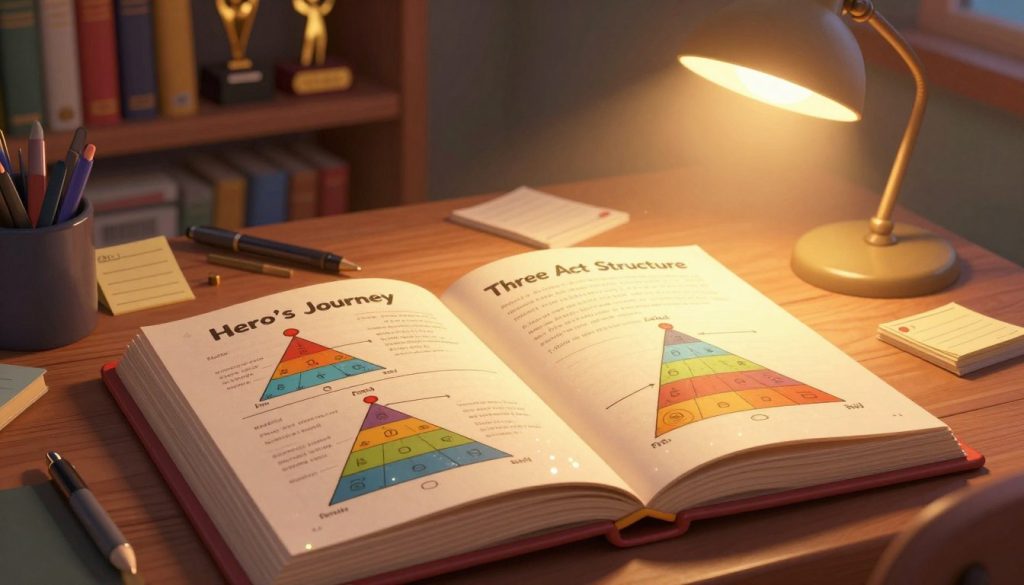
Choosing the right story structure in step two is like picking the frame for a house. Every effective story will include some version of an opener, an inciting incident that changes everything, a series of crises that build tension, a climax, and an end. Whether you go with the Three-Act Structure, the Hero’s Journey, or Dean Koontz’s Classic Story Structure, this skeleton will keep your plot from collapsing under its own weight.
Step 3: Develop Your Characters Deeply
I can’t stress enough how step three—deep character development—separates forgettable stories from ones that haunt readers. Your protagonist needs flaws, desires, and a compelling arc before they can carry a novel. Outliners tend to get to know each character by mapping out their backstories, making them human, vulnerable, and ultimately heroic.
Step 4: Flesh Out Your Plot With Purpose
Fleshing out your plot with purpose in step four means mapping every major plot point to your main character’s emotional journey. This ensures that external action and internal growth dance together rather than stumble over each other. Plot compels your reader to either keep turning the pages or set your book aside.
Step 5: Decide on Setting and Layer It Into Your Story
Step five tackles setting. I’ve learned that the best writers layer in sensory details—the smell of rain on asphalt, the weight of humid air—without ever stopping the story to deliver a weather report. Setting may include location, time, or era, but it should also encompass how something looks, smells, feels, and sounds.
Step 6: Synopsize Chapters and Scenes Briefly But Effectively
The final step is synopsizing chapters and scenes in present tense, third person. This is where you’ll catch fatal plot flaws before you’ve invested months writing scenes that don’t serve your story’s goal. Write briefly about what happens in each chapter; these synopses can reveal crucial insights about your narrative.
Throughout this entire process, I keep my mind open to discovery. The best novel outlines function as a map with room for scenic detours rather than a rigid GPS that recalculates at every deviation. Tools like Storyloft’s Free Book Outline Generator can accelerate these steps dramatically, helping authors turn an idea into a real book plan in minutes.
Popular Story Structures that Keep Your Story on Track
Choosing the right story structure is like selecting the perfect foundation for a house; it sets the stage for everything that follows. Each structure offers a unique way to navigate your narrative journey, ensuring that your story remains engaging and purposeful. Here are some popular structures that can guide your writing process:
Dean Koontz’s Classic Story Structure
This structure transformed my approach to novel writing. It’s deceptively simple:
- Plunge your main character into terrible trouble as soon as possible.
- Everything your character does to escape only worsens the situation.
- Eventually, things reach a point of apparent hopelessness.
- Finally, the character’s hard-won growth helps them triumph.
The Three-Act Structure
The Three-Act Structure remains the workhorse of storytelling for good reason. It provides a clear framework:
- Act One: Introduces characters and setting, culminating in an inciting incident.
- Act Two: Features rising action and conflict development, with a midpoint low point for the protagonist.
- Act Three: Delivers the climax, falling action, and resolution.
The Hero’s Journey
When I want to write an epic transformation, I turn to the Hero’s Journey. Its twelve stages map perfectly onto the protagonist’s psychological arc:
- Ordinary World
- Call to Adventure
- Refusal of the Call
- Meeting the Mentor
- Crossing the First Threshold
- Tests/Allies/Enemies
- Approach to the Inmost Cave
- Ordeal
- Reward
- The Road Back
- Resurrection
- Return with the Elixir
The Snowflake Method
Randy Ingermanson’s Snowflake Method appeals to my architectural side. It starts with a one-sentence summary and expands outward, requiring patience and a love for intricate plot points.
Additional Methods: Reverse Outline, Mind Map, Beat Sheet
Here are a few more methods that can enhance your outlining process:
- Reverse Outline: Start at the end and work backward to ensure your plot points align.
- Mind Map: A visual brainstorming tool that connects characters, themes, and plot elements.
- Beat Sheet: A bullet-pointed list of your story’s major moments, ideal for Pantsers who need just enough structure.
Each of these structures serves the same ultimate purpose: keeping your story’s action purposeful and your readers engaged from the first page to the last.
Crafting Characters that Drive Your Story Forward
Characters are the heartbeat of any novel. Without them, the story lacks life and depth. As writers, we must breathe authenticity into our characters, ensuring they resonate with readers. This process begins with understanding their backstories and emotional arcs.
Character Backstories and Emotional Arcs
Creating rich character backstories is essential. Think of it like building an iceberg—readers only see the tip, but the massive foundation beneath shapes every decision and line of dialogue. Each character’s past informs their actions and motivations throughout the story.
Every character needs an emotional arc. This journey often starts with a lie they believe at the beginning, which must evolve into a truth they embrace by the end. Each scene should either reinforce that lie or chip away at it, leading to meaningful growth.
Making Characters Human: Flaws, Growth, and Motivation
To make characters relatable, they must possess flaws. These should be specific and relatable, not generic weaknesses. For instance, a character might struggle with cowardice disguised as caution or pride masquerading as confidence. This adds depth and realism to their journey.
Character growth is rarely linear. Expect setbacks and moments of resistance as they strive to become who the story needs them to be. Motivation drives character-driven fiction. If you can’t articulate why your protagonist wants what they want, you may not know them well enough to write their story.
Questions to Ask Your Characters for Deeper Development
During the outlining phase, I often conduct imaginary interviews with my characters. Here are some questions that can lead to deeper insights:
- What’s the worst thing that ever happened to you?
- What’s the one thing you’d never admit out loud?
- Who are you at the beginning of this journey?
- How will the plot challenge you?
- What lie do you tell yourself, and what truth must you embrace to succeed?
These questions may never appear in the final draft, but they shape every action and reaction. A well-outlined character feels so real that they might even argue with you about plot points. When that happens, you know you’ve created someone worth following through an entire novel.
Building Your Plot and Setting with Purpose
To captivate readers, a novel must weave together a purposeful plot and immersive setting. The way these elements interact can make or break your story. Let’s dive into selecting plot types, incorporating setting, and tips for research that adds authenticity without overwhelming you.
Selecting Plot Types to Engage Your Readers
Choosing the right plot type for your novel is like selecting the engine for a car. Each type offers unique storytelling opportunities:
- Adventure: A person goes to new places, experiences new things, and faces myriad obstacles.
- Change: A person undergoes dramatic transformation throughout the story.
- Romance: Jealousy and misunderstandings threaten lovers’ happiness.
- Mistake: An innocent person caught in a situation must overcome foes.
- Lure: A person decides whether to give in to temptation, revenge, or rage.
- Race: Characters chase wealth or fame while overcoming others.
- Gift: An ordinary person sacrifices to aid someone else.
I’ve found that the most engaging stories often combine plot types. For example, layering a Romance plot over a Race plot creates natural conflict between competing goals, making the journey even more thrilling.
Incorporating Setting to Show, Not Tell
Setting became my secret weapon once I stopped describing rooms and started revealing character through the environment. The way a person keeps their kitchen tells you more about them than three paragraphs of backstory ever could.
The “show, don’t tell” rule finds its purest expression in setting. Instead of telling readers your main character is grieving, show them the untouched mug of cold coffee that’s been sitting on the windowsill for three days. This approach brings your scenes to life.
Research Tips to Add Authenticity Without Overwhelm
Research adds authenticity to your novel, but I learned the hard way that spending six months on one topic can be a procrastination tactic disguised as diligence. The best approach is to gather just enough information to write with confidence, then fill in the gaps during revisions.
Every setting element should pull double duty. It should advance the plot while revealing character. For instance, a thunderstorm can reflect your protagonist’s inner turmoil or serve as an obstacle that forces them into action.
During the outlining phase, I map out my novel’s key locations, treating each setting as a character with its own personality, challenges, and role in the protagonist’s journey.
Chapter Synopses and Outlining Your Scenes
Transforming your story into concise chapter synopses is an essential step in the writing journey. Writing brief summaries for each chapter allows you to clarify the action and intent behind your narrative. This process helps in structuring your novel and ensuring that each scene serves a purpose.
Writing Brief, Present-Tense Summaries for Each Chapter
Writing chapter synopses in present tense and third person felt awkward at first. However, it forced me to think like a director rather than a dreamer. This approach helps nail down exactly what happens in each scene without the luxury of vague literary hand-waving.
I treat each chapter synopsis as a promise to myself—“Bilbo discovers the ring and outwits Gollum.” If I can’t state the action that clearly, I know the chapter isn’t ready to be written yet.
Identifying the Goal, Conflict, and Disaster in Every Scene
The Scene and Sequel Method revolutionized my novel outline. It demands that every single scene contains a clear goal, escalating conflict, and some form of disaster. This structure propels the story forward rather than letting it idle.
Identifying the goal for every character in a scene, not just the protagonist, creates layered tension. This dynamic makes readers feel like they’re watching a high-stakes chess match rather than reading a monologue.
Detecting Plot Flaws Early Through Synopses
I’ve caught more plot flaws during the synopsis stage than in all my subsequent drafts combined. When forced to summarize my story in brief, present-tense statements, gaping holes in logic become impossible to ignore.
A good chapter synopsis includes not just what happens but why it matters. This connection links each plot point to the main character’s emotional journey and the overall story structure.
I aim for a paragraph per chapter in my novel outline. This length is enough to guide my writing without so much detail that I feel like I’ve already written the book and lost the joy of discovery.
Tools like Storyloft’s generator excel at this stage. They produce chapter descriptions with creative notes and reader direction, helping me see my story from the audience’s perspective before I’ve written a single word of prose.

Balancing Planning and Discovery: Staying Flexible While Outlining
Navigating the waters of writing often means balancing structure with freedom. Many writers find themselves at a crossroads, caught between the comfort of a detailed outline and the thrill of spontaneous creativity. It’s essential to embrace both sides of this coin.
Why Your Outline Should Be a Living Document
Your outline shouldn’t be set in stone; it should be a living, breathing document that evolves. The primary goal of planning is to serve the story, not the other way around. If parts of your outline don’t work as expected, don’t hesitate to adjust your characters, plot, or even the world you’ve built.
I’ve abandoned more novel outlines than I care to admit because I treated them like sacred texts. When I finally allowed myself to deviate from my outline, I discovered that better ideas often emerged during the writing process. The outline is a map, not a prison.
Allowing Room for Serendipity and Creative Discovery
Serendipity isn’t the enemy of structure. In fact, some of my best plot twists and character moments arrived uninvited while I was faithfully following my outline. I’ve learned to build flexibility into my novel outline from the start, leaving room for unexpected discoveries.
This approach makes the writing process feel like an adventure rather than a paint-by-numbers exercise. When my protagonist revealed a motivation I hadn’t planned, I didn’t panic. Instead, I adjusted the structure to accommodate the deeper, truer story that was emerging.
Hybrid Approaches: Combining Outlining with Pantsing
The hybrid approach—combining the security of an outline with the freedom of pantsing—works for most writers I know. It provides a safety net while still allowing characters to surprise you. Your outline should evolve through every draft, bringing you closer to the story you’re genuinely trying to tell.
Tools like Storyloft make this iterative process seamless. They provide a working foundation you can reshape as your novel grows. This way, you never face that terrifying blank page alone. By the end, you’ll have a working book foundation you can continue developing inside Storyloft.
Conclusion
Every aspiring author faces the daunting challenge of transforming ideas into structured narratives. The truth is, there’s no wrong way to approach your novel. Each journey begins differently, and that’s part of the magic.
Embrace the steps shared throughout this guide. Whether you lean toward the Snowflake Method or the simplicity of Storyloft’s Free Book Outline Generator, the goal remains the same: to bring your story to life.
Remember, an outline is a tool for writing, not a substitute for it. Your story deserves to be told, so grab your idea, choose your structure, and take that first step. Your readers are waiting, and your novel isn’t going to write itself!
FAQ
What is the best way to start outlining a story?
Start by boiling down your novel idea into a single, captivating sentence. This will serve as your guiding star!
How do I choose the right story structure?
Explore different structures like the Three-Act Structure or the Hero’s Journey. Pick one that resonates with your vision!
What should I include in my character development?
Dive into your characters’ backstories, flaws, and motivations. The more human they feel, the more readers will connect!
How detailed should my outline be?
Aim for a balance! Include key plot points and character arcs, but leave room for creativity and surprises.
Can I change my outline as I write?
Absolutely! Treat your outline as a living document. Flexibility can lead to unexpected gems!
What are some common pitfalls in outlining?
Avoid over-planning! While structure is essential, too much rigidity can stifle creativity.
How do I keep my readers engaged with my plot?
Incorporate conflict and stakes in every scene. Make sure your characters face challenges that keep readers on the edge of their seats!
What’s the role of setting in my outline?
Setting should enhance your story. Use it to show, not just tell, and create an immersive experience for your readers.
How can I effectively summarize my chapters?
Write brief, present-tense synopses for each chapter, focusing on the main goal, conflict, and disaster to keep the momentum going!
Is outlining necessary for every writer?
Not at all! Some writers thrive on spontaneity. It’s all about finding what works best for your creative process.