How to Write a Book: Easy Steps to Get Started Today

I stared at a blank Word document for three hours one rainy Tuesday night. My cursor blinked like a tiny heartbeat on the screen. I had a story burning inside me — a memoir about growing up in rural Kentucky — but I had no clue where to begin. That night, I typed one sentence. Just one. It was terrible. But it was a start.
Learning how to write a book felt impossible at first. I thought I needed some rare talent or a degree in creative writing. Turns out, I just needed a plan and the courage to start. Martin Cavannagh from Reedsy puts it best: every writer’s journey looks different, but successful authors rely on shared habits. They research books in their genre. They outline their stories. They set small, reachable goals each day.
Writing a book is part craft, part discipline. Jerry Jenkins, who has written over 200 books, stresses the importance of preparation. Set up a dedicated writing space. Get the right tools — whether that’s Microsoft Word, Scrivener, or a simple notebook. Invest in a good chair, too. Your back will thank you during those long writing sessions.
The best book writing tips I ever received came down to this: start with an idea you genuinely love. Ask yourself what feels urgent to write about. Think about who would want to read it. Consider whether you can bring it to life in a way that feels true. If the answer excites you, you’re ready.
This guide walks you through every step of writing a book — from finding your purpose to preparing for publication. I wrote it for anyone sitting in front of a blank page right now, wondering if they have what it takes. You do. Let me show you how.
Key Takeaways
- Start with a book idea that excites you and feels meaningful to write about.
- Research popular books in your chosen genre before you begin drafting.
- Create an outline to give your story structure and direction.
- Set up a comfortable, distraction-free writing space with proper tools like Scrivener or Microsoft Word.
- Set small daily writing goals to build consistency and momentum.
- Embrace imperfect first drafts — revision is where the real magic happens.
- Seek honest feedback from beta readers before preparing for publication.
Understanding Your Purpose for Writing
Before starting any writing project, I always ask myself: Why do I want to write this book? Knowing your purpose is key. It keeps you going when things get hard. It also shapes your decisions, like your tone and topic.
Explore Your Reasons for Writing
When starting a book, find your true motivation first. Maybe you have a story that won’t leave your mind. Or maybe you want to share something you know well. Your passion should carry you through the long process.
Think of books that excite everyone. J.K. Rowling’s Harry Potter and Suzanne Collins’ The Hunger Games started with big ideas. Your idea should be clear and exciting to keep you and readers engaged.
“A writer who waits for ideal conditions under which to work will die without putting a word on paper.” — E.B. White
Ask yourself these questions to test your idea:
- Does this topic excite me enough to spend a year on it?
- Can I explain my premise in one or two sentences?
- Do people light up when I describe the concept?
Define Your Audience
Every good writing guide says: know your reader. Look at Amazon Best Sellers in your genre. Read reviews and see what readers like and dislike.
| Research Method | What It Reveals | Time Needed |
|---|---|---|
| Amazon Best Sellers lists | Popular themes and trending topics | 1–2 hours |
| Goodreads reader reviews | Audience expectations and preferences | 2–3 hours |
| Genre-specific forums | Common reader complaints and desires | 1–2 hours |
With your purpose and audience in mind, you’re set to write. This clarity will help you choose the right genre for your book.
Choosing the Right Genre for Your Book
Picking your genre is super exciting. It affects everything, like your word count and story structure. Spend time reading top-selling books in genres you like. Look at their length, themes, and chapter structure.
Check out the Amazon Best Sellers lists in your target category. See what readers love right now.
Popular Genres to Consider
Not all genres need the same effort. Word counts vary, and knowing this is key. Reedsy says each genre has its own reader expectations.
| Genre | Average Word Count | Key Reader Expectation |
|---|---|---|
| Epic Fantasy | 100,000–150,000 | Deep world-building and complex plots |
| Mystery/Thriller | 70,000–90,000 | Suspense and satisfying twists |
| Romance | 50,000–80,000 | Emotional connection and a hopeful ending |
| Business/Nonfiction | 50,000–60,000 | Actionable advice and clear structure |
Mixing Genres: Is It Possible?
Absolutely! Mixing genres can make your book unique. Think of Colleen Hoover’s romance and suspense mix, or Andy Weir’s science fiction and humor blend. Being creative with genres makes the book writing process more fun.
“Genre is a set of reader expectations, not a cage.” — Brandon Sanderson
Here are tips for mixing genres well:
- Choose one primary genre to anchor your story.
- Borrow elements from a secondary genre without overwhelming the core narrative.
- Study hybrid bestsellers in your niche to understand what works.
- Make sure your book still fits a clear shelf in a bookstore or on Amazon.
Once you’ve picked the right genre, you can start developing your book idea with focus and confidence.
Developing Your Book Idea
Every great book starts with a spark. It’s an idea that won’t leave your mind. Learning to write a book begins here, turning that idea into something real. This stage is like building a foundation.
Without a strong foundation, your outline and draft will fall apart. Let’s explore how to develop a book idea that truly stands out.
Brainstorming Techniques
One top strategy is to boil your idea down to a single-sentence premise. This brings clarity. If you can’t explain your book in one sentence, it needs more work.
Try free-writing with plot generators or prompts. Set a timer for ten minutes and write without stopping. Don’t worry about what you write — just let your ideas flow.
Test your idea by seeing if it grows in your mind over days and weeks. Share it with friends. A good idea should excite and spark curiosity, not leave people silent.
| Brainstorming Method | Best For | Time Needed |
|---|---|---|
| Free-Writing | Unlocking hidden ideas | 10–15 minutes |
| Plot Generators | Fiction and genre writing | 5–10 minutes |
| Single-Sentence Premise | Clarifying your core concept | 15–30 minutes |
| Peer Feedback | Testing idea appeal | Varies |
Creating a Mind Map
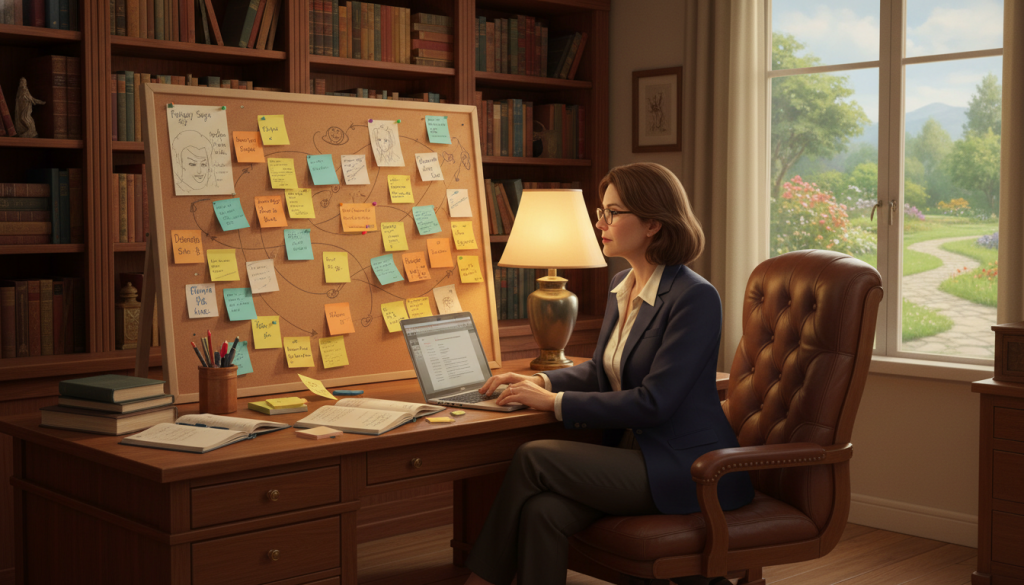
Mind mapping is great for authors who think in connections. Start with your central idea in the middle of a page. Then, add characters, themes, settings, and plot points.
This method helps see connections between ideas. Tools like Miro or a simple pen and paper work well. As you learn to write, a mind map connects your brainstorm to a formal outline.
Outlining Your Book Structure
Before I start writing, I always make an outline. It’s like a map for your story or nonfiction book. Without a plan, writing a book is like driving without GPS. You might reach your destination, but it takes a lot of time.
A good outline keeps your ideas in order. It helps you stay focused and keeps your writing flowing.
Different Outlining Methods
There’s no one “right” way to outline. I’ve tried a few methods and suggest you do the same. Here are some popular ones:
- Free-flowing mind maps — Perfect for those who think visually and like to brainstorm.
- Chapter-and-scene outlines — Great for breaking down your book into chapters and scenes.
- Character-based outlines — Focuses on your characters’ journeys and decisions.
For fiction, I plan out plot twists to keep the story exciting. For nonfiction, I list chapter titles with a brief summary. Jerry B. Jenkins advises keeping your outline simple, just one page. This helps you focus on the most important points.
“An outline is the skeleton of your book. Without it, the body of your story has nothing to stand on.”
Importance of a Solid Outline
A solid outline prevents you from having to rewrite a lot later. Reedsy experts say many writers forget to plan character motivations. This can make your story confusing.
Your outline helps catch these mistakes early.
| Outline Type | Best For | Detail Level |
|---|---|---|
| Mind Map | Brainstorming new ideas | Low to Medium |
| Chapter-and-Scene | Plot-driven fiction and nonfiction | High |
| Character-Based | Character-driven stories | Medium to High |
When your outline is ready, you can start writing. Set up a schedule to turn your plan into pages.
Establishing a Writing Schedule
You’ve got your outline ready. Now it’s time to build a writing routine. Every novel writing guide agrees: consistency beats inspiration every single time. I’ve learned this the hard way. Without a schedule, weeks can slip by with zero pages written.
Finding Time to Write
I recommend blocking at least six hours each week for writing. This might seem like a lot. But you can break it up in ways that fit your life:
- Three two-hour sessions spread across the week
- Two three-hour sessions on weekends
- Six one-hour sessions on most days
Pick consistent days and times. Your brain will start to expect the creative work. As Jerry Jenkins, author of over 200 books, puts it — writing at the same time each day trains your mind like a muscle.
Setting Goals for Consistency
Vague goals lead to vague results. I like to calculate a concrete page target for each session. Here’s a quick way to do it:
| Manuscript Length | Weeks Available | Weeks Off | Pages Per Week |
|---|---|---|---|
| 300 pages | 50 | 2 | 6.25 pages |
| 400 pages | 50 | 2 | 8.3 pages |
| 250 pages | 40 | 2 | 6.6 pages |
“A goal without a deadline is just a dream.” — Robert Herjavec
Set sacred deadlines and share them with a trusted friend or writing partner. Accountability makes procrastination harder. Accept that procrastination will happen — build buffer time into your timeline so it doesn’t derail you. This novel writing guide principle has saved me from missed targets more than once.
Drafting Your First Manuscript
Think about the opening line of The Da Vinci Code by Dan Brown or the first chapter of Harry Potter and the Sorcerer’s Stone. Those hooks grabbed millions of readers instantly. Your first draft is where you plant that seed. The book writing process truly begins the moment you start putting words on the page — not when they’re perfect, but when they exist.
Now that you’ve built your outline and set a writing schedule, it’s time to draft. This is the messiest and most exciting part of the journey. One of the best tips for writing a book is simple: just write.

Tips to Overcome Writer’s Block
Writer’s block hits almost every author at some point. I’ve been stuck staring at a blank page more times than I can count. Here are strategies that work for me:
- Write the scene that excites you most, even if it’s out of order.
- Set a timer for 15 minutes and write without stopping.
- Change your environment — a coffee shop or park can spark creativity.
- Talk through your scene out loud before typing it.
- Revisit your outline to remember where the story is heading.
According to Reedsy’s editorial team, most published authors experience self-doubt during drafting. Imposter syndrome is normal. Recognizing that feeling can help you push past it.
Embrace Imperfection in Drafting
Your first draft is not your final book. The book writing process involves layers of revision that come later. As one of the best tips for writing a book, I remind myself that good books are rewritten, not written. Focus on developing distinct characters with clear goals and raising the stakes chapter by chapter.
“Start writing, no matter what. The water does not flow until the faucet is turned on.” — Louis L’Amour
Give yourself permission to write badly. Every sentence you put down is one step closer to a polished manuscript you’ll refine in the revision stage ahead.
Revising and Editing Your Work
Your first draft is done — that’s a huge win. But learning how to write a book means understanding that the real magic happens during revision. Editing is like turning a rough block of marble into a sculpture. It makes your story or message sharper, cleaner, and ready for the world.
Before diving into edits, step away from your manuscript. Give yourself a week or two. Fresh eyes catch problems tired ones miss.
Importance of Multiple Drafts
No book reaches its best form in a single pass. Even bestselling authors go through several rounds of revision. Each draft serves a different purpose, and strong writing strategies for authors involve tackling edits in a specific order.
| Editing Pass | Focus Area | What to Look For |
|---|---|---|
| Pass 1: Big-Picture | Structure and Story | Plot holes, character arcs, pacing, chapter order, word count |
| Pass 2: Scene and Line Level | Style and Flow | Dialogue, transitions, sentence variety, clutter words like just, really, actually |
| Pass 3: Final Polish | Grammar and Consistency | Spelling, tense consistency, formatting, names, dates, timelines |
Tips for Effective Self-Editing
I recommend printing your entire manuscript. Reading on paper makes it easier to spot weak spots in pacing, dialogue, and structure. Keep a notebook handy for big-picture impressions.
“Don’t edit in chronological order — use a triage approach and revise the issues with the biggest potential impact first.”
Here’s my go-to self-editing checklist:
- Read your first 15 pages aloud to catch awkward sentences
- Cut weak adverbs and overused adjectives
- Replace clichés with original comparisons
- Use tools like Scrivener to find crutch words you overuse
Tiffany Hawk explains in her complete guide to editing your book, a solid self-edit saves you money and gets better feedback from professional editors. Once your manuscript feels tight, you’ll be ready to gather outside opinions — which is exactly what comes next.
Seeking Feedback on Your Manuscript
Writing a book is a personal journey, but it’s better with others. After finishing my draft, I seek feedback from others. This feedback helps me see things I missed.
Finding the Right Beta Readers
Finding the right beta readers is key. I look for people who fit my target audience. They should understand the story, pacing, and characters.
Writing communities like Reedsy or Goodreads groups are great for finding readers. These places connect authors with readers who know the craft.
When choosing beta readers, I consider a few things:
- Do they read my genre regularly?
- Can they explain why something works or doesn’t?
- Will they give honest feedback?
- Can they meet a deadline?
I aim for three to five beta readers. This number gives me enough feedback without too much.
How to Handle Criticism Constructively
Criticism can hurt. But it’s about the work, not me. Author Jerry Jenkins suggests finding a mentor for guidance and support.
I organize feedback using a simple system:
| Feedback Type | Action | Priority |
|---|---|---|
| Multiple readers flag the same issue | Revise immediately | High |
| One reader’s personal preference | Consider but don’t rush | Low |
| Structural or plot-hole concerns | Outline a fix before rewriting | High |
| Line-level grammar or style notes | Save for final editing pass | Medium |
One of the best tips is to address real concerns while staying true to your vision. After feedback, you’ll be ready for publication.
Preparing for Publication
Once your manuscript is ready, you face a big decision. I’m here to help you understand your options. Whether you choose traditional publishing or self-publishing, building your author platform is key. Jerry Jenkins says growing your audience is crucial, no matter your choice.
Traditional Versus Self-Publishing
Traditional publishing means finding a literary agent who loves your work. You’ll need a strong query letter that shows your story’s direction and market understanding. This guide also notes that traditional publishers have strict word count rules. They handle editing, cover design, and distribution for you.
Self-publishing lets you control everything. You decide on word count, cover, and royalties. But, you must pay for editing, design, and marketing yourself. Amazon Kindle Direct Publishing makes it easier, but success requires hard work.
Formatting Your Manuscript for Submission
Format your manuscript in Microsoft Word, the industry standard. Use Times New Roman at 12-point size, double-space, and set one-inch margins. When you reach this stage, follow each publisher’s or agent’s guidelines carefully. Small mistakes can get you rejected fast. Remember, presentation is as important as your writing.
FAQ
How do I write a book step by step if I’ve never written one before?
Start with a book idea you love. Think about what you want to write about and who will read it. The book writing process includes researching, outlining, and setting a writing schedule.
As Martin Cavannagh from Reedsy says, every writer’s journey is different. But, successful authors share common steps. Don’t skip any steps. Each one helps you get closer to finishing your book.
How do I choose the right genre for my book?
Research by reading books in genres you like. Look at their length, chapter count, and themes. Study Amazon Best Sellers to see what sells well.
Word counts vary by genre. Epic Fantasy needs more words for world-building. Business books are around 60,000 words. Mystery novels can be 30,000 to 130,000 words. Knowing these helps you write a book that finds its audience.
What are the best brainstorming techniques for developing a book idea?
Use free-writing exercises with prompts or plot generators. Mind maps are great for exploring ideas without structure. Jerry Jenkins says test your idea by seeing if it grows in your mind.
Share your ideas with trusted people. A good idea should excite and surprise. Think of big books like Harry Potter or The Hunger Games. Your idea should be specific and compelling.
What outlining methods work best when writing a book?
The best method depends on your personality and project. You can use mind maps, chapter-and-scene outlines, or character-based outlines. For fiction, list plot twists and developments.
For nonfiction, outline chapter titles with brief descriptions. Jerry Jenkins says keep initial outlines simple but thorough. Reedsy warns to remember character motivation and decision-making.
How many hours a week should I dedicate to writing a book?
Aim for at least six hours weekly. This can be in different sessions. Jerry Jenkins stresses the importance of regular writing times.
Calculate pages needed per session. For a 400-page book, aim for eight pages weekly. Set deadlines and ask for accountability. Remember, procrastination is normal.
How do I overcome writer’s block and imposter syndrome during drafting?
Start with a strong opening hook. Think of books like Harry Potter and the Sorcerer’s Stone or The Da Vinci Code. When doubts arise, remember that first drafts need work.
Focus on getting words down, not perfection. Keep the story exciting and remind yourself that good books are rewritten, not written.
How important is editing, and how many drafts should I expect?
Editing is crucial for transforming your draft into a polished manuscript. Multiple rounds of revision are common. Jerry Jenkins advises being a fierce self-editor but relax your internal editor during the first draft.
Start with structural issues, then line editing and proofreading. Consider a developmental editor for expert feedback.
How do I find the right beta readers and handle their feedback?
Choose beta readers who match your target audience. They should give honest feedback on your story. Reedsy recommends working with editors to improve your manuscript.
Prepare for feedback by understanding it’s meant to improve your work. Jerry Jenkins suggests finding a mentor for guidance. Organize feedback to fit your vision while addressing real issues.
Should I choose traditional publishing or self-publishing?
It depends on your goals and resources. Traditional publishing requires agent queries and strict word counts. Self-publishing offers flexibility but requires personal investment in editing and marketing.
Format manuscripts in Microsoft Word for industry standards. Jerry Jenkins notes that building an author platform is key, regardless of your choice.
What tools and writing software do I need to write a book?
Jerry Jenkins says you need a dedicated writing space and the right tools. Microsoft Word is the industry standard for formatting. Scrivener is popular for organizing complex projects.
Martin Cavannagh from Reedsy recommends distraction-free software. Don’t forget about ergonomic furniture for comfort during long writing sessions. The right tools and workspace support creativity.