
20 Best Books for Authors Who Want to Become Better Writers
The best writers are usually the best students of writing. These 20 books can help authors strengthen their prose, sharpen their storytelling instincts, build better writing habits, and approach revision with more confidence.
What makes a writing book worth reading?
A good book on writing should do more than inspire you for a weekend. It should change the way you see sentences, scenes, structure, characters, revision, or the daily discipline of authorship. Some books on this list are practical craft manuals. Others are about the inner life of the writer. A few are about editing, style, and professional polish.
The best choice depends on where you are in the writing process. A novelist struggling with plot may need structure. A memoirist may need voice. A nonfiction author may need clarity. A first-time writer may need permission to write badly before writing well. Together, these books form a strong self-guided education for authors who want to improve their craft.
Quick comparison: best books for different writing goals
| Writing Goal | Best Book to Start With |
|---|---|
| Build a consistent writing habit | On Writing by Stephen King |
| Overcome perfectionism | Bird by Bird by Anne Lamott |
| Improve nonfiction clarity | On Writing Well by William Zinsser |
| Learn story structure | Story by Robert McKee |
| Edit fiction more professionally | Self-Editing for Fiction Writers by Renni Browne and Dave King |
| Write better characters | Creating Character Arcs by K.M. Weiland |
| Improve sentence style | Several Short Sentences About Writing by Verlyn Klinkenborg |
1. On Writing by Stephen King

Best for: building discipline, confidence, and a professional writing routine.
On Writing is part memoir, part craft guide, and part tough-love encouragement for writers who want to take the work seriously. King writes plainly about the habits that support a writing life: reading widely, writing consistently, cutting unnecessary words, and treating revision as part of the job rather than a punishment.
This is one of the best books for authors because it makes writing feel both mysterious and practical. King respects talent, but he places far more emphasis on work. For aspiring authors, that is a useful correction. You do not need to wait for perfect inspiration. You need pages, standards, and the willingness to improve.
2. Bird by Bird by Anne Lamott

Best for: writers who feel overwhelmed, blocked, or too self-critical.
Anne Lamott’s Bird by Bird is a classic because it speaks to the emotional reality of writing. It is funny, humane, and unusually honest about the messy middle of the creative process. Lamott’s central lesson is simple: do not try to write the whole book at once. Take it piece by piece.
Authors who struggle with perfectionism will find this especially useful. Lamott gives writers permission to draft imperfectly, observe closely, and stay with the work even when it feels awkward. It is not a rigid technical manual. It is more like a trusted writing friend reminding you that every finished book begins as a flawed draft.
3. The Elements of Style by William Strunk Jr. and E.B. White

Best for: concise prose, grammar fundamentals, and clean style.
The Elements of Style is short, direct, and still one of the most referenced books on writing. Its advice favors clarity, brevity, and precision. While not every rule should be treated as sacred, the book is valuable because it trains writers to notice clutter.
Authors often think better writing means adding more. This book teaches the opposite. Strong writing frequently comes from subtraction: removing weak modifiers, vague phrasing, needless repetition, and ornamental language that does not serve the reader. For authors preparing a manuscript for publication, that discipline matters.
4. On Writing Well by William Zinsser
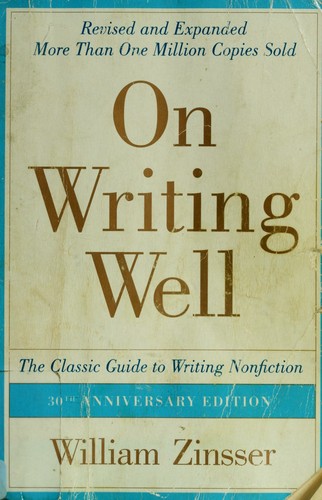
Best for: nonfiction authors, memoirists, essayists, and business writers.
William Zinsser’s On Writing Well is one of the best books for nonfiction writers because it treats clarity as a moral responsibility. Zinsser argues that readers should never have to fight through foggy writing to understand what the author means.
This book is especially useful for authors writing memoir, self-help, thought leadership, history, business, or educational nonfiction. It teaches that voice and clarity are not enemies. The best nonfiction can be clean, personal, intelligent, and readable at the same time.
5. Writing Down the Bones by Natalie Goldberg

Best for: developing a freer, more consistent writing practice.
Writing Down the Bones is less about rules and more about attention. Natalie Goldberg approaches writing as a practice: something you return to, sharpen, and inhabit over time. Her advice encourages writers to get words moving before they overthink them.
This is a strong choice for authors who feel stiff on the page. Goldberg helps writers reconnect with observation, memory, sensory detail, and creative momentum. If your drafts feel too controlled or overly self-conscious, this book can help loosen your voice.
6. Steering the Craft by Ursula K. Le Guin

Best for: writers who want to improve voice, syntax, rhythm, and point of view.
Ursula K. Le Guin was not only a master storyteller but also a careful teacher of prose. Steering the Craft focuses on the technical choices that shape a reader’s experience: sentence sound, grammar, repetition, point of view, and narrative distance.
This book is especially valuable because it treats prose as music and movement. Authors often focus on plot first, but readers experience a book sentence by sentence. Le Guin helps writers become more conscious of how language carries meaning, mood, and authority.
7. Story by Robert McKee

Best for: understanding structure, conflict, scenes, and narrative design.
Although Story is often associated with screenwriting, its lessons apply powerfully to novels and narrative nonfiction. Robert McKee explains how stories move, why conflict matters, and how scenes create change.
For authors, the most useful takeaway is that story is not just a sequence of events. A strong story turns on meaningful choices, pressure, reversals, and consequences. If your manuscript has interesting material but feels flat, this book can help you see where the dramatic engine is missing.
8. The Anatomy of Story by John Truby

Best for: authors who want a deeper system for plot and character development.
John Truby’s The Anatomy of Story is a detailed guide to building stories from the inside out. Instead of treating plot as a formula, Truby connects story structure to desire, weakness, moral conflict, and transformation.
This makes the book useful for novelists who want their plots to feel organic rather than mechanical. Truby’s approach helps authors ask better questions: What does the character want? What do they need? What lie are they living by? What opposition forces them to change?
9. Save the Cat! by Blake Snyder

Best for: authors who want a practical, accessible story structure framework.
Save the Cat! is famous for its beat sheet, a structure tool that helps writers think through major story moments. While the book was written for screenwriters, many novelists use its framework to diagnose pacing, stakes, midpoint turns, and endings.
The danger of any formula is that it can make stories feel predictable. The value of Snyder’s book is that it gives authors a shared language for structure. Used thoughtfully, it can help you see whether your manuscript has enough movement, escalation, and emotional payoff.
10. The Art of Fiction by John Gardner

Best for: literary fiction writers and authors who care deeply about craft.
John Gardner’s The Art of Fiction is thoughtful, demanding, and sometimes opinionated. It asks writers to take fiction seriously as an art form. Gardner is especially known for the idea that fiction should create a continuous dream in the reader’s mind.
That concept is useful for any author. Every clumsy sentence, false detail, inconsistent point of view, or unbelievable action can wake the reader from the dream. This book helps writers understand why precision and credibility matter, even in highly imaginative fiction.
11. Self-Editing for Fiction Writers by Renni Browne and Dave King

Best for: revising dialogue, scenes, exposition, and point of view.
Self-Editing for Fiction Writers is one of the most practical books an author can read after finishing a draft. It focuses on the problems that commonly separate amateur manuscripts from polished fiction: over-explaining, weak dialogue mechanics, inconsistent point of view, and scenes that lack tension.
This book is valuable because it teaches authors how editors think. Instead of only saying “make it better,” it shows you what to look for. If you are preparing a novel for beta readers, agents, editors, or self-publishing, this should be near the top of your list.
12. Plot & Structure by James Scott Bell

Best for: writers who need help shaping a manuscript into a compelling narrative.
James Scott Bell’s Plot & Structure is practical, clear, and especially helpful for commercial fiction authors. It explains how beginnings, middles, and endings work, while also giving writers tools for generating conflict and momentum.
This is a good book for authors who have strong ideas but struggle to turn those ideas into a full manuscript. Bell’s advice helps writers think about plot as pressure. A story becomes more engaging when characters face obstacles, decisions, consequences, and rising stakes.
13. The Emotional Craft of Fiction by Donald Maass

Best for: authors who want readers to feel more deeply connected to the story.
Donald Maass argues that emotional impact does not come from simply naming emotions on the page. It comes from situation, subtext, contradiction, tension, and the reader’s own participation in the scene.
The Emotional Craft of Fiction is especially useful for writers whose scenes are technically correct but emotionally thin. It helps authors create moments that linger. For fiction writers, memoirists, and narrative nonfiction authors, that emotional residue is often what makes a book memorable.
14. Creating Character Arcs by K.M. Weiland

Best for: building character transformation into the structure of a story.
K.M. Weiland’s Creating Character Arcs is a clear guide to positive, negative, and flat character arcs. It helps authors connect plot events to internal change, which is one of the most important skills in storytelling.
Many manuscripts have characters who do things but do not truly change. This book helps solve that problem. It gives writers a way to think about beliefs, wounds, desires, resistance, and revelation across the full shape of a story.
15. Wonderbook by Jeff VanderMeer

Best for: speculative fiction writers, visual thinkers, and imaginative storytellers.
Wonderbook is one of the most visually distinctive writing craft books available. Jeff VanderMeer approaches storytelling through diagrams, illustrations, essays, and exercises that encourage writers to think more imaginatively about narrative.
This is a particularly strong choice for fantasy, science fiction, horror, and weird fiction authors. It helps writers expand their sense of what a story can be while still paying attention to structure, scenes, characters, and revision.
16. The War of Art by Steven Pressfield

Best for: overcoming resistance, procrastination, and creative self-sabotage.
Steven Pressfield’s The War of Art is not a technical writing manual. It is a book about resistance: the inner force that keeps writers from doing the work they claim to care about.
Some authors need sentence-level advice. Others need a stronger relationship with discipline. This book is for the second group. It is direct, bracing, and useful for writers who keep planning, researching, outlining, or talking about a book but avoid sitting down to write it.
17. Big Magic by Elizabeth Gilbert

Best for: writers who want a healthier, more playful relationship with creativity.
Big Magic is about creative courage. Elizabeth Gilbert writes about fear, curiosity, permission, persistence, and the strange emotional contract between artists and their work.
This book is helpful for authors who have made writing feel too heavy. Serious writing still requires discipline, but Gilbert reminds writers that curiosity can be just as powerful as ambition. For authors recovering from burnout or creative pressure, that perspective can be refreshing.
18. Several Short Sentences About Writing by Verlyn Klinkenborg

Best for: improving sentence rhythm, clarity, and attention.
Verlyn Klinkenborg’s Several Short Sentences About Writing is unlike most writing books. It breaks prose down to the sentence level and asks writers to pay close attention to how thoughts are shaped.
This book is especially useful for authors who want to stop writing on autopilot. It challenges common habits and teaches writers to think in clearer units of meaning. If you want your prose to become sharper and more intentional, this is a strong choice.
19. Dreyer’s English by Benjamin Dreyer

Best for: grammar, copyediting, punctuation, and professional polish.
Benjamin Dreyer’s Dreyer’s English is a smart, funny, and highly readable guide to the details of English prose. It is useful for writers who want to understand punctuation, grammar, usage, and editorial judgment without feeling like they are reading a dry textbook.
For authors, this book is especially helpful late in the writing process. Once the big structural problems are solved, the small details start to matter. Clean punctuation, consistent usage, and polished sentences can make a manuscript feel more professional.
20. Making a Literary Life by Carolyn See

Best for: writers who want to build a sustainable author life.
Making a Literary Life is about more than craft. Carolyn See writes about the habits, relationships, generosity, and persistence that help writers stay connected to the literary world.
This is a valuable book for authors who want to think beyond one manuscript. Writing a book is difficult, but building a writing life requires patience, community, correspondence, resilience, and a long-term view. See’s advice is practical, warm, and grounded in the realities of authorship.
How to choose the right writing book first
If you are not sure where to begin, choose based on your current bottleneck. If you are struggling to write consistently, start with On Writing or The War of Art. If your prose feels cluttered, read The Elements of Style, On Writing Well, or Several Short Sentences About Writing. If your story feels weak, start with Story, The Anatomy of Story, or Plot & Structure.
The goal is not to read every writing book before you write. The goal is to read the book that solves the problem directly in front of you, then return to the manuscript with sharper instincts.
Final thoughts: better writers are better revisers
Most authors do not become better simply by learning more rules. They become better by noticing more. They notice where a sentence goes soft, where a scene loses tension, where a character avoids change, where an explanation replaces drama, and where a reader might quietly stop caring.
That is what the best books on writing teach. They train your attention. They help you see your manuscript with more honesty and more skill. Read them slowly, apply them directly, and keep returning to the page.
Frequently asked questions
What is the best book for beginner writers?
On Writing by Stephen King and Bird by Bird by Anne Lamott are two of the best starting points for beginner writers because they combine practical advice with encouragement.
What is the best book for improving prose style?
On Writing Well, The Elements of Style, Steering the Craft, and Several Short Sentences About Writing are excellent choices for authors who want cleaner, stronger prose.
What is the best book for learning story structure?
Story by Robert McKee, The Anatomy of Story by John Truby, and Plot & Structure by James Scott Bell are strong options for understanding structure, conflict, pacing, and narrative design.
Should authors read writing books while drafting?
Yes, but selectively. Reading too many craft books during a first draft can create self-consciousness. It is often better to use one book at a time to solve a specific problem in your manuscript.
Do writing books help with editing?
Yes. Books like Self-Editing for Fiction Writers, Dreyer’s English, and The Elements of Style can help authors revise more professionally before working with an editor or publishing.