
Writing for Myself: Finding Your Voice as an Author

I remember the first time I truly understood what writing for myself meant. I'd spent months crafting a novel I thought readers wanted, following trends, mimicking popular authors, and second-guessing every sentence. The manuscript sat lifeless on my screen, technically competent but utterly soulless. Then I started a separate document, something just for me, where I wrote the scenes I actually wanted to explore. Within days, that private writing had more energy than anything I'd produced in months. That experience changed everything about how I approach my craft.
The Liberation of Private Writing
Writing for myself means creating without the weight of external expectations pressing down on every word. When we write purely for ourselves, we unlock a freedom that's impossible to access when we're constantly thinking about agents, publishers, or reader reviews.
This isn't about being selfish or ignoring your audience. It's about discovering your authentic voice through uninhibited expression. The paradox is that the most universally resonant writing often comes from deeply personal exploration.
The Mental Health Foundation
Personal writing offers significant mental health benefits that extend far beyond your manuscript. When you practice writing for myself regularly, you create space to:
- Process complex emotions without judgment
- Explore difficult experiences in a safe environment
- Develop greater self-awareness and emotional intelligence
- Reduce anxiety about creative decisions
- Build confidence in your unique perspective
Think of it as a conversation with yourself, one where you can be completely honest. These private sessions often reveal truths about your characters, themes, and story that wouldn't emerge under the pressure of public scrutiny.

Building Your Authentic Voice
Your voice is the fingerprint of your writing, the distinctive quality that makes your work recognizable. But voice can't be manufactured or imitated. It emerges organically when you write for myself without self-censorship.
I've noticed that writers who maintain regular personal writing practices develop stronger, more distinctive voices in their publishable work. The connection isn't coincidental. When you write freely for yourself, you discover your natural rhythm, your instinctive word choices, and the particular way you construct meaning.
The Freewriting Advantage
Freewriting is one of the most powerful techniques for accessing your authentic voice. Set a timer for fifteen minutes and write continuously without stopping to edit, judge, or even think too hard about what you're saying.
During these sessions, bypass your internal critic entirely. The goal isn't to produce polished prose but to let your unconscious mind speak. You'll be amazed at what emerges when you remove the barriers.
Many authors I know use freewriting to:
- Warm up before working on their manuscript
- Break through creative blocks and resistance
- Explore character motivations without forcing outcomes
- Discover unexpected plot connections
- Process difficult scenes before committing them to the manuscript
The material you generate might never appear in your book, but the practice strengthens your ability to write truthfully when it matters most.
The Courage to Write What Matters
Writing for myself requires courage because it means confronting the stories, themes, and questions that genuinely matter to you, not the ones you think will sell. This can feel terrifying, especially in a market that seems to demand specific formulas and familiar patterns.
Yet the books that endure, the ones readers remember decades later, almost always spring from an author's personal obsessions and authentic concerns. Think about your favorite novels. Chances are, you can feel the author's genuine investment in the material, their willingness to explore territory that actually mattered to them.
Overcoming the Audience Anxiety
One of the biggest obstacles to writing for myself is the constant awareness of potential readers. We imagine critics dissecting our work, family members recognizing themselves in our characters, or industry professionals judging our commercial viability.
These concerns can severely limit creativity and lead to safe, conventional writing that lacks emotional power. The solution isn't to ignore your audience entirely but to establish a protected creative space where you can explore freely before considering how to share your work.
| Writing Stage | Primary Focus | Audience Consideration |
|---|---|---|
| Discovery | Personal exploration | None |
| First Draft | Story development | Minimal |
| Revision | Clarity and structure | Growing awareness |
| Final Polish | Reader experience | Primary focus |
Notice how audience awareness grows gradually through the process. In the early stages, writing for myself means protecting your creative exploration from premature judgment.

The Connection Between Personal and Professional Writing
Many authors maintain separate practices: morning pages for personal reflection, dedicated manuscript time for "real" writing. While this division can be useful, the boundary between personal and professional writing is more permeable than we often acknowledge.
The insights you gain from personal writing directly enhance your manuscript work. When I spend time writing for myself about my own experiences, fears, and observations, I develop a deeper emotional vocabulary that enriches my character development.
Enhanced Critical Thinking
Personal writing strengthens critical thinking abilities that benefit every aspect of the craft. When you write for myself regularly, you practice:
- Analyzing complex situations from multiple perspectives
- Connecting disparate ideas in unexpected ways
- Articulating nuanced emotions and motivations
- Questioning assumptions and received wisdom
- Developing original arguments and insights
These skills translate directly to stronger plotting, more complex characters, and thematic depth that resonates with readers.
Practical Applications for Fiction Writers
If you're working on a novel or short fiction, writing for myself can become an invaluable tool for development. Many authors create companion documents where they explore aspects of their story world without worrying about whether the material will appear in the final manuscript.
Try writing letters from your protagonist to yourself, explaining their deepest fears. Draft scenes from a minor character's perspective just to understand their worldview. Explore the backstory of your antagonist's childhood trauma in raw, unpolished prose.
This exploratory writing rarely makes it into the book directly, but it creates a foundation of understanding that makes your published scenes richer and more authentic. Readers sense when an author truly knows their characters, even if they never explicitly share all that knowledge.
Character Voice Development
One technique I've found particularly powerful is writing journal entries in my characters' voices. Not plot summaries but actual reflective writing where the character processes their experiences.
This practice helps you discover:
- How the character thinks when no one's watching
- Their recurring concerns and mental patterns
- The specific vocabulary and rhythm of their internal voice
- Contradictions between their public persona and private thoughts
- Emotional vulnerabilities they hide from other characters
After several sessions of writing for myself in a character's voice, I find that their dialogue flows more naturally and their decisions feel more authentic.
Nonfiction Authors and Personal Writing
If you're working on memoir, personal essay, or narrative nonfiction, the relationship between writing for myself and your manuscript is even more direct. Your personal writing is your raw material, the ore from which you'll refine your published work.
The challenge for nonfiction writers is developing enough distance from your personal experience to craft it into something universally resonant. Personal writing helps you process the emotional content so you can later approach the same material with the perspective needed to shape it for readers.
Many memoirists maintain two versions of difficult stories: one that's purely personal, expressing everything they felt and thought, and one that's crafted for publication, selecting and arranging details to serve the narrative. The private version makes the public version possible.
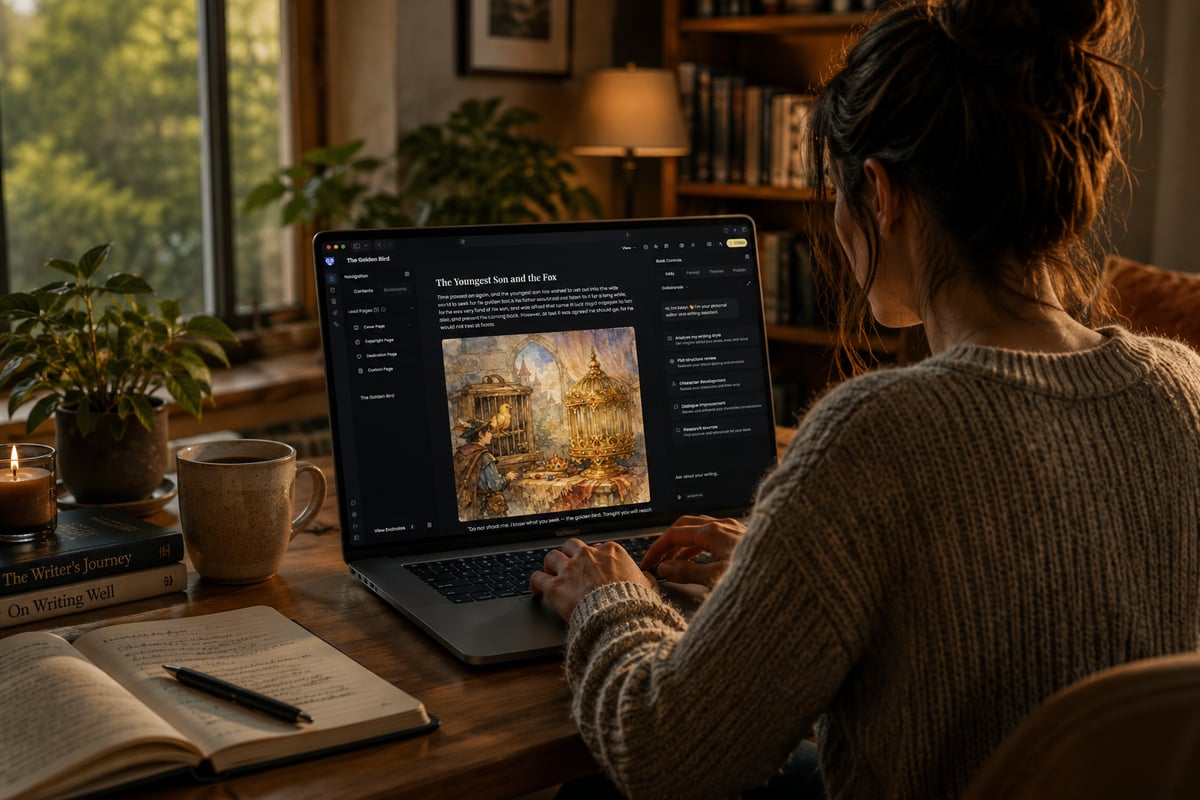
When working with tools like Storyloft for Authors, you can easily maintain both personal exploration and manuscript development within the same platform, organizing your private notes alongside your publishable chapters without mixing the two.

The AI Writing Companion Consideration
As we navigate 2026's writing landscape, many authors use AI tools to support their work. This raises interesting questions about the practice of writing for myself. Research on psychological ownership in AI-assisted writing suggests that maintaining personal connection to your work requires conscious effort when using these tools.
I've found that AI works best as a sounding board after I've done my personal exploratory writing. Use writing for myself sessions to discover what you actually want to say, then employ AI to help refine how you say it. This sequence preserves the authentic core while benefiting from technological assistance.
The key distinction is agency. When you write for myself first, you maintain creative ownership and direction. AI then becomes a tool that serves your vision rather than replacing it.
Integrating Personal Practice into Your Routine
Making writing for myself a sustainable practice requires intention. Here's a structure that works for many authors:
- Morning pages: 750 words of stream-of-consciousness writing before the day begins
- Character journals: Weekly entries from your protagonist's perspective
- Reflection sessions: Monthly reviews of your creative process and progress
- Freewriting breaks: 15-minute sessions when you feel stuck on your manuscript
- Project postmortems: After completing each book, write honestly about what worked and what didn't
| Practice Type | Time Investment | Primary Benefit |
|---|---|---|
| Morning pages | 20-30 minutes daily | Mental clarity, creativity |
| Character journals | 30 minutes weekly | Deeper characterization |
| Reflection sessions | 1 hour monthly | Process improvement |
| Freewriting breaks | 15 minutes as needed | Overcome blocks |
| Project postmortems | 2-3 hours per book | Long-term growth |
None of these practices need to be perfect or publishable. That's the entire point. They exist to serve your development as a writer, not to impress anyone else.
The Technology Question
Some writers prefer handwriting for personal writing, finding that the physical act creates a different quality of reflection. Others appreciate the speed and searchability of digital tools. There's no right answer, but consider experimenting with both.
If you're already working in digital writing platforms, you might create a dedicated section for personal writing that stays separate from your manuscript. The important thing is having a clear psychological boundary between writing for myself and writing for publication.
Many authors I know use different applications for different purposes: perhaps a simple text editor for freewriting, their main writing software for manuscript work, and a physical journal for the most personal reflections. Find the system that helps you access different mental states for different types of writing.
Show, Don't Tell Meets Personal Truth
The classic writing advice to “show, don’t tell” becomes easier when you've practiced writing for myself extensively. Personal writing is often highly expressive and abstract, full of statements about feelings and meanings.
When you transition to manuscript work, you naturally begin translating those abstract truths into concrete scenes and sensory details. The emotional honesty you developed in personal writing becomes the foundation, while craft techniques help you communicate it effectively.
For instance, instead of writing in your manuscript "She felt devastated," you might draw on your personal writing about devastation to create a scene showing:
- Her inability to complete simple tasks
- The specific physical sensations in her chest and throat
- How colors seemed muted and sounds distant
- The disconnect between going through motions and being present
Your personal writing taught you what devastation actually feels like. Your craft skills help you render it in ways readers can experience.
Balancing Self and Audience
The ultimate goal isn't choosing between writing for myself and writing for readers. It's developing a creative process where both coexist productively. Your personal writing feeds your authentic voice. Your awareness of audience helps you shape that voice into effective communication.
Think of it as a creative ecosystem where different types of writing serve different functions. Personal writing is the soil where ideas germinate. Manuscript work is the cultivation and harvest. Both are essential.
Some projects will lean more heavily toward personal expression, while others prioritize reader experience. That's natural. But even the most commercial work benefits from the authenticity that comes from writing for myself during development.
The Long-Term Benefits
Authors who maintain consistent personal writing practices over years report several long-term benefits:
- Faster drafting: Because they've developed fluency through daily practice
- Stronger voice: Their distinctive style becomes more pronounced and confident
- Better revision: They can distinguish between problems with execution and fundamental issues with conception
- Greater resilience: They're less dependent on external validation because they have an internal creative practice
- Deeper wells: They never run dry because they're constantly refilling through personal exploration
These advantages compound over time. A writer who's been practicing writing for myself for five years has developed capacities that can't be rushed or shortcut.
Platforms that support both your personal writing exploration and professional manuscript development, like those offering comprehensive book writing software features, can help you maintain this dual practice without fragmenting your creative process across multiple disconnected tools.
Permission to Be Honest
Perhaps the most important aspect of writing for myself is the permission it grants to be completely honest. Not cruel, not gratuitously shocking, but genuinely truthful about what you observe, feel, and believe.
This honesty becomes the bedrock of authentic writing. Readers can sense when an author is telling the truth as they understand it, even in fantasy or science fiction settings. That quality of truthfulness can't be faked, only developed through practice.
Your personal writing is where you rehearse that honesty. You write the things you're afraid to admit, explore the questions you don't have answers for, and articulate the observations that seem too obvious or too strange to mention.
Later, when you're working on your manuscript, you've built a capacity for truth-telling that makes your published work more powerful. You might moderate the expression, shape it for your audience, and embed it in fictional contexts, but the core honesty remains.
When SEO Content Meets Authentic Writing
In 2026's digital landscape, many authors also create content for their platforms and websites. Tools like RankPill can help automate some of that content creation, but your most compelling pieces will always spring from personal insight.
The difference between generic content and truly engaging articles is the same difference we've been discussing: authenticity versus performance. When you write from genuine experience and observation, even practical blog posts become more memorable and valuable.
Use your personal writing practice to discover what you actually think about craft, publishing, and the creative life. Then shape those insights into content that serves your readers while maintaining your authentic voice.
Writing for myself isn't an indulgence or a distraction from "real" writing. It's the foundation of everything authentic and powerful you'll create. When you protect space for exploration without judgment, you develop the voice, honesty, and depth that makes publishable work resonate. Ready to support both your personal writing practice and your manuscript development in one platform? Storyloft gives you the tools to nurture your authentic voice while crafting professionally formatted books, with AI assistance that preserves your unique perspective rather than replacing it.
Article written using RankPill.