BISAC Meaning Explained: How to Know When Your Book Needs New Categories
BISAC Meaning Explained: How to Know When Your Book Needs New Categories
Key Takeaways
BISAC codes are your book’s address in the publishing world—they determine where your book appears in searches, on shelves, and in online stores, directly impacting discoverability and sales.
Watch for these warning signs that your categories need updating:
• Sales plateau without explanation, or your book ranks well but generates minimal clicks and purchases • Your book appears alongside titles that don’t match your content or target audience • You’re using outdated codes from previous years (BISG updates annually each October/November) • Amazon places your book in categories you never selected based on consumer behavior
Take action with these strategic steps:
• Use all three available BISAC codes to maximize visibility across multiple categories • Make your first code the most specific and accurate—some retailers only read the primary category • Research competitor books on platforms like Books-A-Million and Google Play to identify effective category choices • Keep codes identical across all formats (ebook, paperback, hardcover, audiobook) for consistency
The bottom line: BISAC codes are free, easy to update, and should be reviewed annually. Specific, current categories connect your book with readers actively searching for exactly what you’ve written, while generic or outdated codes hide your work on empty digital shelves. 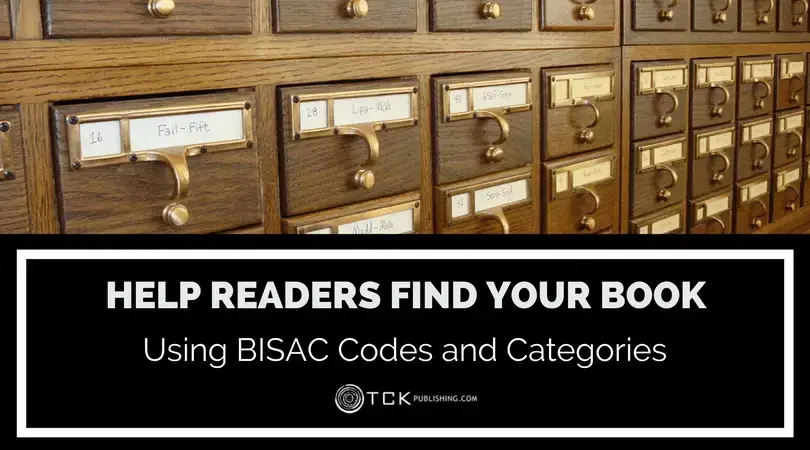 Understanding BISAC meaning might just be the secret to getting your book found. But here’s the thing: most authors pick their categories once and never look back.
BISAC stands for Book Industry Standards And Communications. It is a system for categorizing books that has global acceptance[15]. These BISAC codes for books provide a standardized way to classify content by subject. This makes it easier for retailers and libraries to identify what your book is about at a glance[16]. Choosing the right BISAC subject codes helps publishers market to target audiences. It lines up with reader interests and optimizes sales[16].
We’ll show you what BISAC categories mean for your book and the right time to update them.
What BISAC Codes Mean for Your Book
Each BISAC code contains a 9-character alphanumeric identifier paired with a descriptive heading. The heading itself can have up to four layers of specificity. It starts broad and drills down to precise topics. Think of it like an address for your book.
The Book Industry Study Group maintains 54 major sections[1] with over 3,000 distinct codes to choose from[2]. Fiction, History, Self-Help and Cooking are just a few examples. Within each major category, subcategories narrow the focus. A gardening book might go from GARDENING to GARDENING / Flowers to GARDENING / Flowers / Orchids.
Retailers use these codes to decide where your book lives on their shelves. Libraries rely on them to catalog their collections. Online stores use them to populate browsable category pages and power search results. When someone filters for mystery novels or searches for weight loss guides, your BISAC codes determine whether your book appears.
You can select between one and three codes per title. Use three whenever possible. This maximizes visibility across multiple shelves. Just make sure your first code is the most accurate one, since some retailers only read that primary category[3].
BISAC codes are free to use[4]. No permission required. BISG updates the list each year to keep pace with publishing trends.
Signs Your Book Needs New BISAC Categories
Your book’s performance often signals the need to update BISAC categories. Sales that plateau without explanation might point to a category problem. Ads that drive clicks but few purchases suggest your book reaches the wrong readers[5].
Check where your book ranks. A rank that generates few clicks or sales means nothing[6]. Look at the top book in your category. The number one spot with a sales rank above 200,000 means you sit in a low-traffic category that won’t help you[6].
Browse the books next to yours. Do they match what you wrote? Neighboring titles that feel disconnected from your reader mean you’re on the wrong shelf[6]. A bestseller badge that changed nothing about your visibility or sales shows the category itself lacks active buyers[6].
BISAC updates happen each year[7]. Codes get inactivated when they’re redundant or confusing[7]. Publishers should replace inactivated codes with active ones on both new and backlist titles[8]. Problems occur with outdated versions of the subject headings[8].
Amazon might place your book in categories you never selected. The platform bases these decisions on consumer behavior and how readers find your title[9]. Your metadata needs work if your book appears in adaptations or genres that don’t match your content.
How to Update Your Book’s BISAC Categories
“If your keywords are talking about romance, but you try to put your book into say, space opera, and there’s no sci-fi term in there (…) there’s no metadata that helps the algorithm figure this out.” — Dave Chesson, Founder of Kindlepreneur
Start at the BISG website where the complete BISAC subject headings list lives. No fees. No permissions needed[4].
A two-step process works best. Pick the major heading that describes your book’s content first. Click it to see specific subcategories[10]. Then choose the most precise term available. A police procedural mystery gets FIC022020, not the vague FICTION / General[10]. You can use up to three codes and order them by importance[10]. Some retailers only read your primary category, so that first one must count.
Comp titles deserve research before you commit. Books-A-Million, Google Play Books, and Bookshop.org show BISAC categories in their book details sections[11]. See what successful books in your niche use.
KDP authors make updates through their bookshelf. Click the ellipsis button next to your title and select edit details. Then go to the categories section[12]. Changes can take 72 hours to display[12]. IngramSpark requires at least one code and recommends three[13].
Your codes should be the same across ebook and print formats[11]. Trading partners work better when everyone uses current versions, so coordinate with retailers before sending updates[14].
Categories need an annual review[3]. BISG updates the list each year in late October or early November[10].
Conclusion
Right now, you have everything you need to choose better BISAC categories for your book. The right codes put your book in front of readers who actually want it. The wrong ones hide it on empty shelves where nobody looks.
Review your categories at least once a year. Check your rankings. Browse your neighbors and make sure readers finding your book are the ones you wrote it for.
Note that BISAC codes are free and easy to update. Keep them current and specific, and your book will reach the right readers.
FAQs
Q1. What exactly are BISAC codes and how do they work? BISAC codes are 9-character alphanumeric identifiers paired with descriptive headings that categorize books by subject. They work like an address system for your book, with up to four layers of specificity—starting broad (like GARDENING) and narrowing down to precise topics (like GARDENING / Flowers / Orchids). Retailers, libraries, and online stores use these codes to determine where your book appears in searches and on shelves.
Q2. How many BISAC categories should I assign to my book? You can select between one and three BISAC codes per title, and it’s recommended to use all three whenever possible to maximize visibility across multiple categories. Your first code should be the most specific and accurate since some retailers only read that primary category. Make sure to keep your codes identical across all formats—ebook, paperback, hardcover, and audiobook.
Q3. How do I know if my book is in the wrong BISAC categories? Several signs indicate your book needs new categories: sales that plateau without explanation, high ad clicks but few purchases, ranking in categories where the #1 book has a sales rank above 200,000, or finding that neighboring titles don’t match your book’s content. If your bestseller badge didn’t improve visibility or sales, you’re likely in a low-traffic category.
Q4. Where can I find and update BISAC codes for my book? The complete BISAC subject headings list is available for free on the BISG website with no permissions needed. For KDP authors, updates are made through your bookshelf by clicking the ellipsis button next to your title, selecting edit details, and navigating to the categories section. Changes can take up to 72 hours to display across platforms.
Q5. How often should I review and update my book’s BISAC categories? You should review your BISAC categories at least once a year since BISG updates the list annually, typically in late October or early November. Codes can become inactivated when they’re redundant or rarely used, and outdated codes should be replaced with active ones. Regular reviews help ensure your book remains discoverable as publishing trends and reader interests evolve.
References
[1] – https://www.bisg.org/BISAC-FAQ
[2] – https://authornews.penguinrandomhouse.com/bisacs-cracking-the-code/
[3] – https://firebrandtech.com/resources/metadata-minute-issue-29-common-publisher-questions-about-bisac-codes
[4] – https://www.bisg.org/BISAC-Subject-Codes-main
[5] – https://amarketingexpert.com/2026/03/19/finding-the-right-book-positioning-and-why-it-changes-everything/
[6] – https://hillshiremedia.co/blog/wrong-amazon-kdp-categories-kindle-sales/
[7] – https://www.bisg.org/changed-from-the-previous-edition
[8] – https://www.booknetcanada.ca/blog/2024/3/28/start-your-engines-new-bisac-codes-have-arrived-and-booknets-systems-are-updated
[9] – https://www.reddit.com/r/selfpublish/comments/1dtsi8n/book_ranking_in_wrong_categories/
[10] – https://www.bisg.org/selecting-a-BISAC-code
[11] – https://danieljtortora.com/blog/how-to-choose-bisac-codes-for-books
[12] – https://kdp.amazon.com/help/topic/G200652170
[13] – https://www.ebookpbook.com/2026/06/01/kdp-categories-keywords-explained/
[14] – https://booknetcanada.ca/blog/2025/03/07/navigate-the-new-bisac-2024-codes-like-a-pro/
[15] – https://blog.lulu.com/bisac-what-it-is-and-why-it-matters/
[16] – https://www.supadu.com/blogs/news-and-views/top-tips-to-help-you-navigate-the-bisac-selection-process