I Tested the Best AI Writer Tools in 2024
Last February, I stared at a blinking cursor for three hours. My deadline was near, and my brain was on vacation. That’s when I decided to try ai tools for writing.
I spent months testing the best AI writing tools. I used Grammarly for my writing. I also tried Cramly for school-style content. JotBot helped with quick drafts, and Storyloft was great for books.
I wanted to find tools that help writers, not just write. I looked for tools that get tone and context. I wanted writing to feel easier.
What I found changed my writing life. Some tools are great for short content. Others are perfect for long books. A few didn’t work. In this article, I share what I learned. You can find the right tool for your writing.
Key Takeaways
- Not all ai tools for writing serve the same purpose — matching the tool to your project type matters.
- Grammarly, Cramly, JotBot, and Storyloft each target different writing needs and skill levels.
- The best AI writing tools go beyond grammar checks and offer real creative support.
- Artificial intelligence writing assistants work best when they adapt to your voice instead of replacing it.
- Long-form writers and book authors need specialized platforms like Storyloft for manuscript-level projects.
- Testing multiple tools side by side reveals strengths you won’t notice from a features page alone.
Introduction to AI Writers
Writing has changed a lot in recent years. AI content generation software has grown from a curiosity to a key creative partner. Now, it helps millions write everything from blog posts to novels. Let’s explore what these tools are, how they evolved, and why you might want to try one.
What is an AI Writer?
An AI writer is a tool powered by artificial intelligence. It helps you create written content. It’s like a smart assistant that drafts text, suggests ideas, and mimics your style. These tools use large language models to understand and produce text that sounds human.
The Evolution of AI in Writing
Automated writing tools began as simple spell checkers and grammar fixers. Early tools could only catch typos. By the early 2020s, tools like Grammarly and Hemingway Editor improved a lot. In 2023 and 2024, platforms like ChatGPT, Jasper, and Storyloft offered even more, like full manuscript support and voice matching.
| Era | Capability | Example Tools |
|---|---|---|
| Early 2000s | Spell check and grammar | Microsoft Word, Grammarly (early) |
| 2010s | Style suggestions and readability | Hemingway Editor, ProWritingAid |
| 2023–2024 | Full content creation and voice preservation | ChatGPT, Jasper, Storyloft |
Why Use an AI Writer?
I use AI content generation software because it saves me time without losing quality. Here are some benefits I’ve seen:
- Faster first drafts and brainstorming sessions
- Consistent tone across long projects
- Built-in research and outline support
- Reduced writer’s block
These tools aren’t meant to replace writers. They’re here to make writing smoother and more fun. I experienced this firsthand with Storyloft.
Overview of Storyloft
Storyloft caught my eye because it’s not just another writing app. It’s a platform built from the ground up for authors. It focuses on fiction and nonfiction projects. Among many machine learning writing platforms, it stands out for its author-first approach.
Key Features of Storyloft
Storyloft is special because of its tools for writing. Here’s what impressed me the most:
- Full manuscript management to organize chapters and scenes
- Built-in notes system for tracking characters, settings, and plot threads
- Goal tracking to keep your writing on schedule
- Professional formatting tools for publishing-ready output
- AI assistance that understands your entire manuscript’s context
“A tool that knows your story as well as you do changes the entire writing experience.”
Target Audience for Storyloft
Storyloft is for novelists, memoirists, and nonfiction authors. It’s made for those working on long-form content. It’s not for marketers or bloggers looking for quick AI copywriting solutions. It’s for writers who value craft, voice, and narrative depth.
Comparing Storyloft with Other Tools
I compared Storyloft with popular alternatives. Here’s a quick breakdown based on my testing:
| Feature | Storyloft | Grammarly | Cramly |
|---|---|---|---|
| Manuscript Management | Full support | Not available | Not available |
| Author Voice Preservation | Yes | No | No |
| Source-Backed Content | Yes | N/A | Unsourced |
| Goal Tracking | Built-in | Word count only | Not available |
| Best For | Authors | Editing & grammar | Quick content drafts |
Grammarly is great for grammar and expanding word count. Cramly makes content fast but lacks sources. Storyloft offers a complete creative workspace for authors, powered by machine learning.
Manuscript-Aware AI
Most AI writing tools start fresh with each prompt. They don’t remember what you wrote before. But Storyloft is different. Its manuscript-aware AI reads your whole draft first. It knows your story, its characters, and its pace.
Understanding Your Manuscript
When I uploaded my draft to Storyloft, its AI scanned every chapter. It noticed themes, relationships, and subplots. This tool is like a writer who knows your story inside out.
Maintaining Continuity and Context
Keeping details consistent is hard in long manuscripts. Storyloft helps with this. It tracks details across chapters, so nothing gets lost.
- Tracks character traits, names, and physical descriptions
- Preserves timeline accuracy across chapters
- Flags contradictions in plot logic
- Remembers world-building rules you’ve established
Enhancing Character Development
Great stories have characters that feel real. Storyloft’s AI knows your manuscript well. It suggests ideas that fit each character’s voice and journey.
“The best writing tool isn’t one that writes for you — it’s one that understands what you’ve already written.”
Storyloft’s ability to understand your manuscript is key. Next, I’ll explore how it helps keep your unique voice in your writing.
Author Voice Preservation
I was worried about losing my personal style with ai tools for writing. Most AI text generators produce bland, generic text that doesn’t sound like me. Storyloft is different. It uses Author Voice Preservation technology to learn your writing patterns and keep them in your manuscript.
Importance of Author’s Unique Style
Your voice is your brand. Readers choose a book because they connect with how you tell a story. Losing that unique touch makes the story feel empty. Keeping your own style is key to winning over readers.
How Storyloft Achieves Consistency
Storyloft looks at your writing to create a style profile. It checks sentence length, word choices, and tone. Unlike JotBot, Storyloft keeps your style consistent across chapters and even books.
Here’s how Storyloft’s voice preservation compares to other ai tools for writing:
| Feature | Storyloft | JotBot | Jasper |
|---|---|---|---|
| Style Analysis Depth | Full manuscript-level | Sample-based mimicry | Tone selection presets |
| Cross-Chapter Consistency | Yes | Limited | No |
| AI Detection Bypass | Strong | Moderate | Weak |
| Best Use Case | Long-form fiction and nonfiction | Short essays and blogs | Marketing copy |
Real-life Application of Author Voice
I tested Storyloft with three chapters from a novel draft. It created new scenes that matched my tone perfectly. For writers who value authenticity, this is a huge advantage. It’s even better when you’re brainstorming new ideas.
Brainstorming Assistance
Storyloft is amazing for brainstorming. Getting stuck on a story idea is really frustrating. This platform is more than just an outline creator. It’s a true creative partner.
Generating New Ideas
Storyloft is great at targeted creative support. When I’m stuck, it suggests new plot directions. Unlike ChatGPT, Storyloft keeps its ideas real and based on your manuscript.
“Creativity is intelligence having fun.” — Albert Einstein
Enhancing Creativity with AI
AI content generation software has improved a lot. Storyloft doesn’t just throw random ideas at you. It looks at your story’s themes, characters, and conflicts to suggest ideas that fit.
- Context-aware suggestions based on your manuscript’s tone
- Character-driven plot ideas that match established arcs
- Genre-specific brainstorming that respects storytelling conventions
- Factually accurate references — no made-up sources
Tools like Cramly often give unsourced information. Storyloft avoids this problem.
Feedback Mechanisms for Authors
What really surprised me was the feedback loop. Storyloft lets you rate and refine its suggestions. The more you use it, the better it gets your creative direction.
This feedback makes AI writing assistants feel more like a brainstorming buddy. It’s ready for the next feature I tested — scene development.
Scene Development
Great stories are made of scenes. Each scene must pull readers forward, build tension, and reveal character. Storyloft takes scene development seriously, offering tools that go far beyond most automated writing tools. Let me show you how it works.
Structuring Compelling Scenes
Every strong scene has a few key elements. It needs a clear goal, rising conflict, and a shift that moves the story forward. Storyloft helps break scenes into these parts. Its AI reads your full manuscript, understanding where each scene fits in the story.
This context is crucial for pacing and structure.
- Goal-driven scene setups tied to your plot
- Conflict escalation prompts based on your characters
- Scene-ending hooks that keep readers turning pages
Using AI for Scene Suggestions
Generic machine learning writing platforms often produce disconnected content. You spend hours rewriting to make it fit. Storyloft’s approach is different. It analyzes your chapters, character arcs, and tone before suggesting new scenes.
The result? Suggestions that actually belong in your story. I didn’t feel like I was stitching in foreign material. The scenes blended naturally with what I’d already written.
Maintaining Narrative Flow
One thing that impressed me was how well the AI preserved narrative flow. Most automated writing tools ignore transitions between scenes. Storyloft tracked my timeline, subplots, and emotional beats.
When I asked for a bridge scene between two chapters, the output respected everything that came before it. The continuity felt seamless — almost like having a co-writer who’d read my entire draft twice.
“The best writing assistant is one that disappears into your process.”
This kind of manuscript-aware intelligence sets machine learning writing platforms like Storyloft apart. For me, this awareness made scene development faster and more enjoyable.
Editing and Formatting Support
Writing a book is one thing. Editing and formatting it is another. I was glad to find Storyloft goes well beyond basic grammar checks. Most AI tools only check grammar, but Storyloft looks deeper into your work’s structure.
Streamlining Editing Processes
I’ve used Grammarly and Chegg’s proofreading service. They catch typos and awkward phrasing. But Storyloft does more. It helps with pacing, consistency, and dialogue.
Natural language processing writers in the platform understand context. This saves me hours during revisions.
Formatting Tools within Storyloft
Formatting used to take up my weekends. Storyloft has built-in tools for chapter headings, page breaks, and layout. Here’s a comparison of what I got from different tools:
| Feature | Grammarly | Chegg Proofreading | Storyloft |
|---|---|---|---|
| Grammar Checking | Yes | Yes | Yes |
| Contextual Editing | Limited | No | Yes |
| Manuscript Formatting | No | No | Yes |
| Pacing Analysis | No | No | Yes |
Benefits for Fiction and Nonfiction
Whether I’m writing a novel or a self-help guide, Storyloft adapts. For fiction, it flags plot holes and dialogue issues. For nonfiction, it checks logical flow and argument strength.
This makes Storyloft one of the most versatile AI tools I’ve tried.
The best editing tool is one that understands what you’re trying to say — not just how you’re saying it.
Natural language processing writers in Storyloft make my revisions faster and smarter. This support is key for the outlining features I’ll discuss next.
Outlining Features
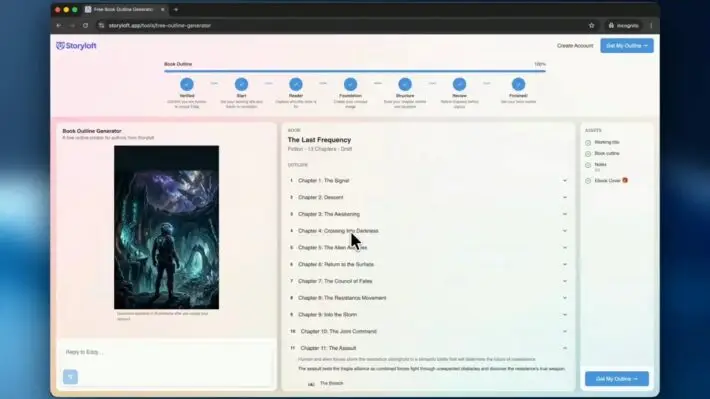
A good outline is key for any writing project. Storyloft makes outlining easy with its AI tools. I could create detailed outlines without starting from scratch.
Creating Detailed Outlines
Storyloft makes it simple to organize your work. You can divide your project into chapters and scenes. The AI helps by suggesting structures based on your content.
It’s like having Google’s NotebookLM, but better. It works with your entire manuscript, not just parts.
“An outline is not a cage — it’s a map that gives you the freedom to explore without getting lost.”
Collaborating with AI on Outlines
Collaborating with AI was amazing. I’d share an idea, and the software would turn it into a detailed outline. I could change it as I wanted.
It felt like working with a never-tiring co-writer.
- Get chapter-by-chapter suggestions based on your genre
- Reorganize sections with drag-and-drop simplicity
- Receive AI feedback on pacing and structure
Improving Outline Efficiency
Time is crucial when planning a book. Storyloft’s AI made outlining faster. It remembered important details, saving me time.
For writers using AI, good outlining tools are essential. Storyloft provides a solid base before editing and formatting.
Illustration Workflows
Words alone don’t always tell the full story. Storyloft stands out among the best AI writing tools by offering built-in illustration workflow support. This feature lets authors weave visual elements directly into their manuscripts. I found it handy for projects where images carry as much weight as the text itself.
Incorporating Visual Elements
Whether you’re crafting a children’s book or an educational guide, visuals matter. Storyloft lets you plan and place illustrations within your manuscript draft. You can mark spots for images, add notes about what each visual should convey, and keep everything organized in one place. I appreciated how this removed the guesswork from figuring out where an image should go.
AI Assistance for Illustrations
What sets Storyloft apart from other ai tools for writing is its AI-powered support for visual content. The platform can suggest illustration ideas based on your scene descriptions and narrative tone. It doesn’t replace a professional illustrator, but it gives you a strong starting point. I used it to generate rough visual concepts that I later shared with a designer for refinement.
Enhancing Reader Engagement
Studies from the Nielsen Norman Group show that content paired with relevant images receives 94% more views than text-only content. Storyloft’s illustration tools help you tap into that power. By planning visuals alongside your writing, you create a more immersive reading experience.
| Feature | Storyloft | Jasper | Sudowrite |
|---|---|---|---|
| Illustration Placement Planning | Yes | No | No |
| AI Visual Concept Suggestions | Yes | Limited (via integrations) | No |
| Manuscript-Integrated Workflow | Yes | No | No |
| Best Suited For | Illustrated fiction, nonfiction | Marketing copy | Fiction drafting |
Among the best AI writing tools I tested, Storyloft is the only one that treats illustrations as a natural part of the writing process — not an afterthought.
Subscription Plans
Choosing the right plan is key when using artificial intelligence writing assistants. I looked into Storyloft’s pricing to see how it compares. Here’s what I found.
Overview of the Author Plan
Storyloft’s Author Plan offers monthly access to its full writing platform. It includes manuscript management, a notes system, goal tracking, and formatting tools. You also get AI-assisted features like brainstorming, scene development, and editing.
“I wanted a single platform that handled everything from drafting to formatting. Storyloft’s Author Plan checked every box.”
Monthly Subscription Benefits
A monthly subscription is flexible. You’re not tied to a long-term contract. This is perfect for testing AI content generation software before committing long-term. The price is competitive compared to other tools:
| Platform | Monthly Price | Key Offering |
|---|---|---|
| Storyloft Author Plan | $9.99 | Full writing platform with AI features |
| JotBot | $14.00 | Unlimited AI writing access |
| Grammarly Premium | $12.00 | Advanced grammar and tone suggestions |
Storyloft is cheaper and offers more creative tools. It’s a great deal for writers of fiction and nonfiction.
What’s Included in the Core Platform
The core platform has everything you need to write and polish a manuscript. Here’s a quick overview:
- Manuscript management and chapter organization
- Notes and research storage
- Daily word count goal tracking
- Built-in formatting for export
- AI-powered brainstorming and editing tools
With all these features in one place, Storyloft makes writing easier. Next, I’ll explain the AI usage limits so you know what you get each month.
AI Usage Allowances
Every Storyloft subscription comes with a set number of monthly AI credits. These credits power the platform’s features. It’s essential to understand how they work before starting a big project. Many tools use credits, but not all explain costs clearly.
Understanding Monthly Allowances
Each AI action, like brainstorming or editing, uses your monthly credits. Some tools, like JotBot, offer only 10 free daily credits. These can run out quickly, as each action costs without clear pricing.
Storyloft is more open, showing how credits are used across features.
How to Maximize AI Usage
Here are some tips to stretch your credits:
- Batch similar tasks together instead of making one-off requests.
- Use outlining features before generating full scenes — outlines cost fewer credits.
- Save heavy editing passes for polished drafts rather than rough first attempts.
- Review AI suggestions carefully before accepting to avoid wasted regenerations.
Importance for Different Projects
Not all projects need the same AI support. A short story uses fewer credits than a long novel. Here’s a comparison based on my experience:
| Project Type | Estimated Credit Usage | Best Strategy |
|---|---|---|
| Short Story (5,000 words) | Low | Use brainstorming and light editing |
| Novella (30,000 words) | Medium | Focus credits on scene development |
| Full Novel (80,000+ words) | High | Prioritize outlining and batch edits |
| Nonfiction Book (50,000 words) | Medium-High | Lean on formatting and structure tools |
Plan your credit use based on project size to save money. Map out your needs before your billing cycle starts. This way, you won’t run out of credits when you need them most.
Personal Experience with Storyloft
I tested Storyloft for weeks. I wanted to see how it compares to other AI writing tools. I tried the subscription plan and pushed the AI limits. My experience was clear.
First Impressions of the Platform
The interface was clean and easy to use. I didn’t need a tutorial to start. The AI was impressive from the start. It understood my story without me explaining it.
Features I Found Most Useful
Two features really stood out:
- Voice preservation — Storyloft kept my writing style consistent.
- Manuscript context awareness — It remembered scenes and characters, saving me time.
I compared Storyloft to Grammarly’s AI. The results were surprising.
| Criteria | Storyloft | Grammarly AI |
|---|---|---|
| Voice Consistency | High — matched my natural tone | Moderate — generic phrasing |
| AI Detection (Originality.ai) | Low detection rate | 100% AI-detected content |
| Manuscript Awareness | Full context retained | No manuscript tracking |
| Best Use Case | Long-form fiction and nonfiction | Short-form essays and emails |
Challenges Encountered
Storyloft isn’t perfect. The AI sometimes repeats phrases. It also struggles with technical topics. But, it offers a real writing experience. Knowing these issues helps before you decide.
Conclusion
After using Storyloft and comparing it to other AI tools, I’m confident in my opinion. This platform is more than just a writing bot. It’s made for serious authors.
Final Thoughts on Storyloft
Storyloft is different from most AI writing tools. It looks at your whole manuscript, not just bits. It tracks characters, plot, and tone.
This makes it feel like working with a skilled partner, not a machine. I was amazed at how it kept my voice and story consistent.
Who Should Consider Using AI Writers?
If you write fiction or nonfiction and need manuscript support, check out Storyloft. It’s perfect for those who want unique, original work. Among the top AI tools in 2024, Storyloft is the most tailored for authors.
The Future of AI in Writing
I think AI writing tools will get smarter and more personal. Platforms like Storyloft show what’s possible when AI respects creativity. The future is bright for tools that boost a writer’s skills, not replace them.
FAQ
What exactly is an AI writer, and how does it differ from a basic grammar checker?
An AI writer is a tool that uses artificial intelligence to help with writing. It’s not just for checking spelling. Tools like Storyloft, Grammarly, and JotBot can help with outlines, keeping your writing style, and even research.
They are much more than simple grammar checkers. They understand your story and help you write better.
What makes Storyloft different from other AI writing tools like Grammarly or Cramly?
Storyloft is made for authors, not just for any content. It has features like manuscript management and goal tracking. It’s great for fiction and nonfiction projects.
Unlike Grammarly, which just expands text, Storyloft focuses on authors’ needs.
How does Storyloft’s manuscript-aware AI actually work?
Storyloft’s AI can read and understand your manuscript. It keeps your story consistent. It remembers details like your character’s eye color.
This is different from other AI tools that don’t remember your story.
What is Author Voice Preservation, and why does it matter?
A: Author Voice Preservation keeps your writing style. It’s important because it makes your writing unique. Storyloft does this better than Grammarly.
Unlike Grammarly, Storyloft’s content doesn’t get flagged as AI.
Can Storyloft help with brainstorming and idea generation?
Yes, Storyloft is great for brainstorming. It helps with outlines and ideas. It’s better than ChatGPT and Cramly.
It gives suggestions that fit your story well.
How does the scene development feature help with my writing?
Storyloft helps with scene development. It suggests scenes that fit your story. This is better than other AI tools.
It feels like having a writing partner.
What editing and formatting tools does Storyloft include?
Storyloft has editing and formatting tools. They are great for fiction and nonfiction. They make editing easier than other tools.
It saves time and makes your manuscript look good.
How do Storyloft’s outlining features compare to other platforms?
Storyloft’s outlining is better than most. It understands your story structure. It’s like Google’s NotebookLM but better.
It’s great for planning your project.
Does Storyloft support illustrations and visual elements in manuscripts?
Yes, Storyloft supports illustrations. It helps you add pictures to your manuscript. This is great for picture books and graphic novels.
It’s a feature many authors need.
How much does Storyloft cost, and how does pricing compare to competitors?
Storyloft’s Author Plan is affordable. It includes many features for authors. It’s better than JotBot and Grammarly.
It offers more value for authors.
How do AI usage allowances work on Storyloft?
Storyloft has monthly AI usage limits. It’s important to understand these limits. This is different from JotBot.
Storyloft is more transparent about its limits.
What were the standout features during personal testing of Storyloft?
Storyloft’s AI and voice preservation were impressive. It kept my writing unique. This is different from Grammarly.
Storyloft is great for authors who want to use AI without losing their style.
Who should consider using an AI writer like Storyloft?
Storyloft is for authors who need manuscript support. It’s great for novels and nonfiction. It’s not for quick blog posts.
It’s perfect for long projects that need a thoughtful AI partner.