
Advice for Writing a Book: A Complete Guide

Every writer remembers the moment they decided to write a book. Maybe it was a story that wouldn't leave you alone, a memory that demanded preservation, or expertise you felt compelled to share. But that initial spark of inspiration quickly meets the reality of the blank page. The journey from that first exciting idea to a finished manuscript requires more than motivation. It demands strategy, discipline, and a willingness to learn the craft. Whether you're writing your first novel or your tenth nonfiction guide, the right advice for writing a book can transform an overwhelming project into an achievable milestone.
Understanding Your Book's Foundation
Before you write a single word of your manuscript, you need clarity about what you're creating. Too many aspiring authors dive into chapter one without understanding their book's purpose, audience, or scope.
Identify Your Reader First
The most transformative piece of advice for writing a book is this: write for one specific person. Not everyone. Not "people who like thrillers" or "business professionals." Picture one real human being who needs your story or information.
Ask yourself these questions:
- What problem does my reader face?
- What emotional journey do they need to experience?
- What will they know or feel differently after reading my book?
- Why am I the right person to write this for them?
When you write with a specific reader in mind, every decision becomes clearer. You'll know which scenes to include, which tangents to cut, and what tone serves your purpose best.
Choose a Finishable Idea
Writers often fail not because they lack talent, but because they chose an idea too large to complete. Your first book doesn't need to be your magnum opus. It needs to be finished.
A finishable idea has clear boundaries. Instead of "a fantasy epic spanning three generations," consider "a blacksmith's apprentice discovers she can forge magical weapons." Instead of "everything about digital marketing," try "how small business owners can master email marketing in 90 days."

Building Your Writing Process
The difference between people who talk about writing a book and people who actually finish one comes down to process. You need systems that support consistent progress, not bursts of inspiration followed by months of silence.
Establish Non-Negotiable Writing Time
Here's the uncomfortable truth: you won't find time to write. You have to make it. Professional authors build daily writing habits not because they have more hours in their day, but because they protect their writing time fiercely.
| Writing Schedule Type | Best For | Weekly Word Count Potential |
|---|---|---|
| Early morning (60-90 min) | People with demanding day jobs | 3,500-7,000 words |
| Lunch break sprints (30 min) | Consistent daily writers | 2,500-4,000 words |
| Evening blocks (2-3 hours) | Night owls with flexible mornings | 5,000-10,000 words |
| Weekend intensive (4-6 hours) | Parents or shift workers | 4,000-8,000 words |
The schedule matters less than the consistency. Choose a time you can protect every single day or on specific days each week. Tell your family. Block your calendar. Treat it like a doctor's appointment you cannot miss.
Separate Drafting from Editing
This advice for writing a book appears everywhere because writers constantly violate it: don't edit while you draft. When you write your first draft, your only job is getting words on the page. Not good words. Not perfect sentences. Just words.
The internal editor who wants to polish every paragraph before moving forward is sabotaging your progress. First drafts are supposed to be messy. They're supposed to contain placeholder names, rough dialogue, and scenes that don't quite work yet.
Give yourself permission to write badly. You'll fix it later. That's what revision is for.
Structuring Your Manuscript
Even pantsers (writers who write by the seat of their pants) benefit from understanding structure. You don't need a detailed outline, but you need to know where you're going.
The Three-Act Framework Works
Whether you're writing fiction or nonfiction, the three-act structure provides a reliable framework. Act One introduces your reader to the world and establishes what's at stake. Act Two develops complications and deepens the journey. Act Three delivers resolution and transformation.
For fiction, this might mean:
- Introduce your protagonist and their ordinary world (Act One)
- Send them on a journey filled with obstacles (Act Two)
- Force them to face their greatest challenge and emerge changed (Act Three)
For nonfiction, consider:
- Establish the problem and why it matters (Act One)
- Present your methodology, research, or solution in detail (Act Two)
- Show implementation and results (Act Three)
Chapter Length and Pacing
New writers often agonize over chapter length. Should chapters be 2,000 words? 5,000 words? The answer is: chapters should be as long as they need to be to accomplish their purpose.
That said, here are useful guidelines:
- Fiction chapters: Typically 2,000-5,000 words, depending on genre
- Thrillers and middle grade: Shorter chapters (1,500-3,000 words) create urgency
- Literary fiction: Longer chapters (4,000-6,000 words) allow for deeper exploration
- Nonfiction chapters: Usually 3,000-6,000 words per chapter
More important than length is pacing. Each chapter should move the reader forward. End chapters with questions unanswered or tension unresolved. Give readers a reason to turn the page.

Developing Your Unique Voice
Voice is what makes your book sound like you and no one else. It's the personality that emerges in your word choices, sentence rhythms, and perspective on the world.
Read Your Work Aloud
The fastest way to develop and refine your voice is reading your manuscript aloud. When you read silently, your brain autocorrects awkward phrasing. When you read aloud, every clunky sentence announces itself.
Listen for:
- Sentences that make you stumble (they'll make readers stumble too)
- Dialogue that sounds wooden or unnatural
- Repetitive sentence structures
- Words you'd never say in conversation
Your spoken reading reveals your natural rhythm. Let your written voice match how you actually communicate, adjusted for your genre and audience.
Study Authors You Admire
You can't copy voice, but you can learn from it. Choose three authors whose writing resonates with you. Read their work critically, asking questions:
- What's the average length of their sentences?
- How do they balance dialogue with narration?
- What kinds of metaphors do they use?
- How much description versus action?
You're not trying to imitate them. You're understanding the craft techniques that create the effect you admire. Then you adapt those techniques to serve your own voice.
Handling the Middle of Your Manuscript
Every writer hits the dreaded "muddy middle" where momentum stalls and doubt creeps in. This is where most unfinished manuscripts die. Understanding the complete book-writing process helps you anticipate and survive this challenge.
Reconnect with Your Why
When you're 40,000 words deep and everything feels terrible, you need your original motivation. Why did you start this book? Who needs this story or information? What impact do you want to create?
Write these answers down during your planning phase. Pin them above your desk. Read them when you want to quit.
Use Checkpoints and Milestones
Breaking your manuscript into smaller victories makes the middle manageable. Instead of "write a 80,000-word novel," aim for "complete Part One by end of month" or "finish the conflict escalation by next Friday."
Celebrate these checkpoints. Finishing Act One deserves recognition. Hitting 50,000 words is worth celebrating. These small victories fuel the energy you need to keep going.
Leveraging Technology and Tools
Modern writers have advantages previous generations could only dream of. The right tools can streamline your process and help you focus on the creative work that matters.
Writing Software That Supports Your Process
Gone are the days of managing manuscripts in basic word processors while juggling separate apps for outlines, character sheets, and formatting. Comprehensive book writing software now integrates the entire writing and publishing workflow.
Tools like Storyloft give authors everything needed in one platform-manuscript writing, AI-powered editing that preserves your voice, professional formatting for print and digital publishing, and organization features for notes and research. Instead of exporting to multiple programs or hiring formatters, you can take your book from first draft to publication-ready files without leaving your writing environment.

AI Assistance Without Losing Your Voice
The emergence of AI writing tools raises valid concerns about authenticity. But when used thoughtfully, AI can enhance rather than replace your creative process. The key is choosing AI designed for authors, not generic content generators.
An AI editor built for writers can identify pacing issues, inconsistencies, and structural weaknesses while respecting your unique style. It's the difference between a tool that rewrites your work in bland corporate language and one that helps you express your vision more clearly.
Revision: Where Good Books Become Great
First drafts get the story out. Revision makes it sing. This is where you apply the most important advice for writing a book: writing is rewriting.
The Layered Revision Approach
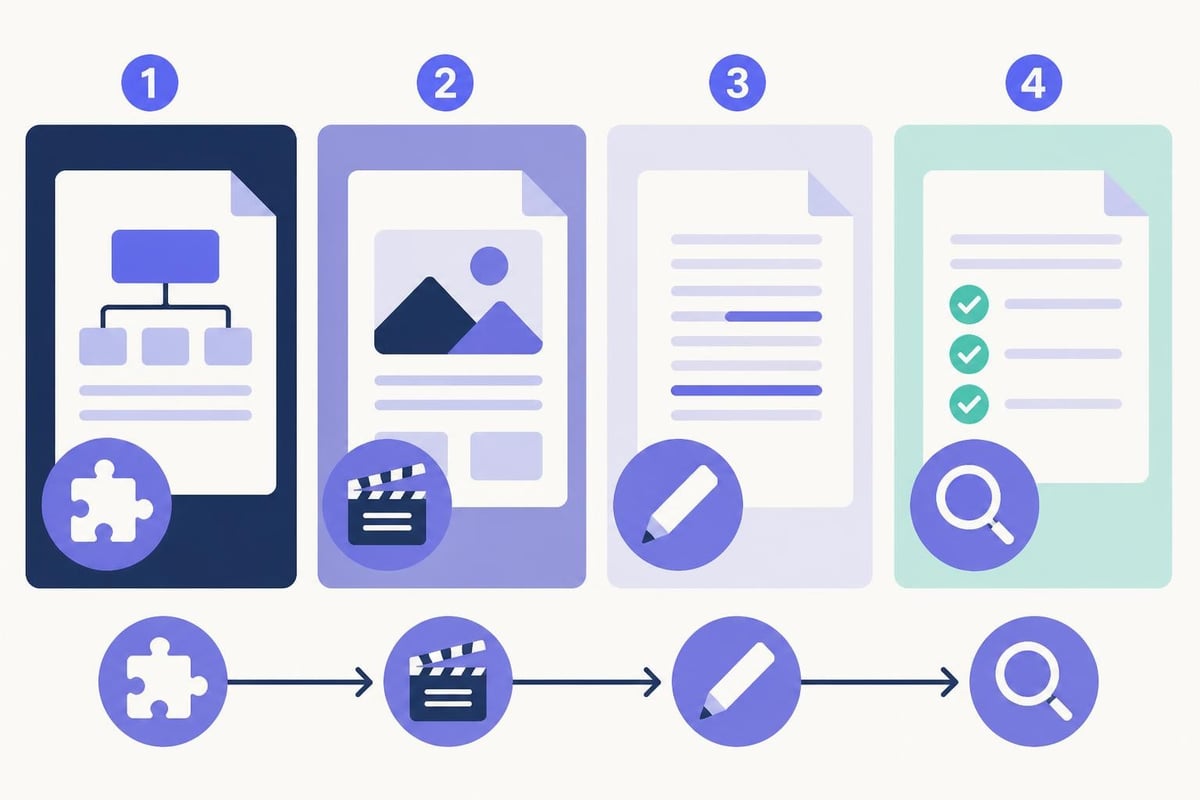
Trying to fix everything at once leads to overwhelm and incomplete revision. Instead, work in distinct passes:
Pass One: Structural Revision
- Does the overall arc work?
- Are there missing scenes or chapters?
- Do the pacing and tension build appropriately?
- Is information revealed at the right moments?
Pass Two: Scene-Level Revision
- Does each scene serve the story?
- Is there conflict or development in every scene?
- Do scenes start late and end early?
- Are there scenes that could be cut or combined?
Pass Three: Line-Level Revision
- Strengthen weak verbs
- Cut unnecessary adverbs and adjectives
- Vary sentence structure
- Sharpen dialogue
- Eliminate filter words ("he saw," "she felt," "he noticed")
Pass Four: Proofreading
- Grammar and punctuation
- Spelling and typos
- Consistency in names, dates, details
- Formatting issues
Getting Objective Feedback
You're too close to your manuscript to see all its problems. You need fresh eyes, but not all feedback is equally valuable.
Effective beta readers should:
- Represent your target audience
- Understand your genre's conventions
- Provide specific, constructive feedback
- Focus on reader experience, not personal preference
Ask focused questions: "Did the pacing drag anywhere?" "Were you confused about the timeline?" "Which character resonated most with you?" Vague questions like "What did you think?" generate vague, unhelpful responses.
Overcoming Common Writing Obstacles
Every author faces resistance. Knowing the common obstacles helps you recognize and overcome them when they appear.
Dealing with Perfectionism
Perfectionism whispers that your writing isn't good enough, will never be good enough, and you should stop trying. It's a liar. The antidote to perfectionism is embracing the iterative nature of writing.
Your first draft doesn't have to be perfect because it won't be your final draft. Your second draft doesn't have to be perfect because it won't be your final draft either. Progress beats perfection every time.
Set "good enough" standards for each stage:
- First draft: 60% quality, 100% complete
- Second draft: 75% quality, addressing major issues
- Third draft: 85% quality, polishing and refining
- Final draft: As good as you can currently make it
That final point matters. You can only write as well as your current skill level allows. Your next book will be better because you'll have learned from this one.
Managing Comparison and Impostor Syndrome
You'll compare your rough first draft to published books that went through multiple revisions, professional editing, and quality control. This comparison is absurd and destructive.
The only writer you should compare yourself to is who you were last year. Are you improving? Are you learning? Are you finishing projects? That's what matters.
Remember: every author you admire was once exactly where you are now, staring at a blank page and wondering if they could actually do this.
Preparing for Publication
The final stages of your manuscript require different skills than the creative writing process. Understanding your publishing options helps you make informed decisions about your book's future.
Traditional Publishing vs. Self-Publishing
Neither path is inherently better. They offer different advantages depending on your goals, timeline, and resources.
| Factor | Traditional Publishing | Self-Publishing |
|---|---|---|
| Upfront costs | None (publisher pays) | $500-$5,000+ for professional services |
| Timeline | 18-36 months from acceptance | 3-6 months from finished manuscript |
| Creative control | Shared with publisher | Complete control |
| Distribution | Automatic bookstore placement | You arrange distribution |
| Earnings per book | 10-25% of net | 35-70% of retail |
| Marketing support | Limited for debut authors | Entirely your responsibility |
Professional Formatting Matters
Whether you're self-publishing or pursuing traditional routes, understanding professional book standards helps you evaluate your options. The cost of professional book formatting varies widely, but the investment affects how readers perceive your work.
Books formatted in a basic word processor look amateurish. Proper formatting includes appropriate margins, professional fonts, correct spacing, proper front matter, and consistent styling throughout. Digital publishing adds another layer of complexity with reflowable text and device compatibility.
Modern book writing software can generate publication-ready files for both print and ebook formats, eliminating the need to hire separate formatters or learn complex design software. This democratizes publishing, allowing authors to maintain professional standards without professional-level budgets.
Building a Sustainable Writing Practice
Finishing one book is an achievement. Building a writing career requires sustainable practices that carry you through multiple projects over years.
Track Your Progress and Patterns
Keep a simple writing log that records your daily word count, time spent writing, and how you felt about the session. Over time, patterns emerge:
- Which times of day produce your best work?
- What's your realistic sustainable pace?
- What environmental factors help or hinder your writing?
- How long does each stage of your process typically take?
This data helps you plan future projects realistically and optimize your process.
Invest in Continuous Learning
Writing is a craft you can always improve. Read books about writing. Take workshops. Study story structure. Learn about character development, dialogue, description, and the specific conventions of your genre.
But balance learning with doing. Don't use education as procrastination. Read one craft book, then apply what you learned to your manuscript. Take one workshop, then implement the techniques in your next chapter.
Connect with Other Writers
Writing is solitary, but being a writer doesn't have to be. Other writers understand the unique challenges of this work. They celebrate your victories, commiserate with your setbacks, and hold you accountable to your goals.
Join a local writing group, participate in online communities, or find an accountability partner. These connections sustain you through the long middle of a project when enthusiasm wanes but the deadline still looms.
Setting Yourself Up for Success
The best advice for writing a book ultimately comes down to this: start before you feel ready, continue when it gets hard, and finish even when you're not sure it's good enough. Every published author faced the same doubts you're feeling right now. The difference is they kept writing anyway.
Create systems that support your success:
- Schedule your writing time like a non-negotiable appointment
- Set realistic daily goals based on your actual available time
- Separate drafting from editing to maintain momentum
- Track your progress to build motivation and identify patterns
- Seek feedback from people who understand your genre and audience
- Invest in tools that streamline your process and reduce friction
- Connect with other writers for support and accountability
- Keep learning but prioritize doing over studying
- Celebrate milestones to maintain enthusiasm through the long haul
- Remember your reader when motivation flags
Your book exists because you're the only person who can write it. The story in your head or the knowledge in your experience deserves to reach readers. But it won't happen by accident. It requires the advice for writing a book that we've explored here, adapted to your unique situation, combined with consistent effort over time.
The manuscript won't write itself. The perfect conditions won't arrive. Doubt won't disappear. But every word you write moves you closer to typing those two magical words: The End.
Start today. Write badly if you must, but write. Your future self, holding a finished book, will thank you for beginning.
Writing a book is one of the most challenging creative endeavors you'll undertake, but with the right approach and tools, it becomes achievable rather than overwhelming. The strategies we've explored transform the massive project of writing a book into manageable daily actions that compound into a finished manuscript. When you're ready to streamline your entire writing process from first draft through publication, Storyloft provides the integrated platform that supports every stage of your journey, helping you write better, revise smarter, and publish professionally without juggling multiple tools or compromising your unique voice.