What Is Third Person POV In Fiction Writing Explained
Third person point of view is the narrative mode where a narrator standing outside the story refers to characters using the pronouns he, she, or they. It is the most widely used perspective in published fiction, prized for its flexibility and scope. Whether I am drafting my first novel or refining a manuscript in its fifth revision, understanding how third person POV works is essential to making deliberate, effective craft choices. I built Storyloft to help writers plan and develop stories with exactly that kind of intentionality.
Definition and Core Mechanics of Third Person POV
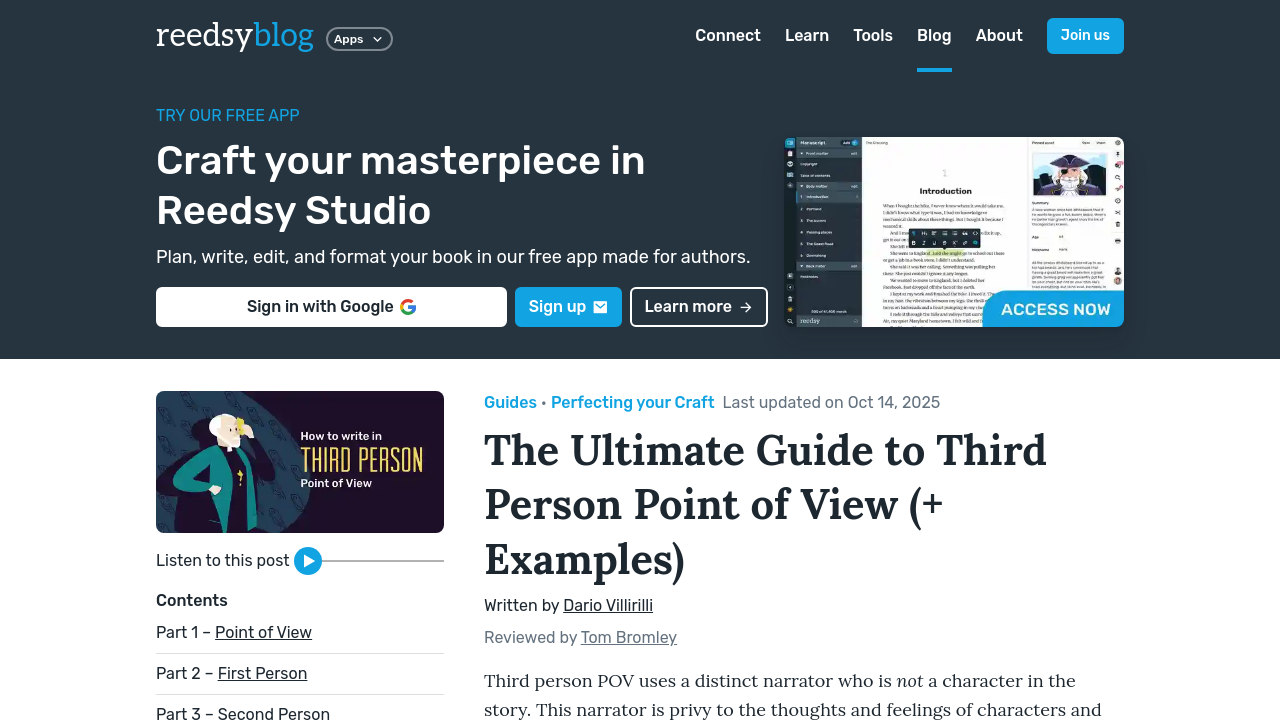
Third person POV is the perspective in which a narrator, positioned outside the events of the story, describes characters and their actions using he, she, or they. The narrator is not a character in the fiction. Instead, the narrator functions as a lens, sometimes intimate and pressed close to a single mind, sometimes hovering above the whole cast at a cool remove. That flexibility is why third person shows up across nearly every genre, from crime to literary realism to sprawling fantasy. When I map out a project inside Storyloft’s writing workspace, the first structural question I ask is which flavor of third person the story wants.
In plain English: third person means the narrator says “she opened the letter” rather than “I opened the letter” or “you opened the letter.”
What Third Person POV Means
The pronouns are the surface. The deeper move is that the narrator is a voice, not a person inside the plot. That voice can sit anywhere on a spectrum between total immersion in one character’s head and total detachment from every character’s inner life. The whole craft of third person lives inside that spectrum, and small shifts along it change how a scene feels on the page. A structured drafting environment makes it easier to hold a chosen distance consistently across a long manuscript.
How Third Person Differs from First and Second Person
First person (I, me, my) collapses narrator and character into one voice. Second person (you) turns the reader into the protagonist, or at least performs that trick. Third person adds a small, deliberate layer of distance between the teller of the story and the character being told about, and that gap is the writer’s instrument. According to Reedsy’s guide to third person, it is “perhaps the most enduring point of view in literature,” which tracks with what I see in my own manuscript development notes: most working novelists reach for third person because it lets them widen or narrow that gap scene by scene.
Takeaway: third person is not one voice but a spectrum of distance, and the pronoun is only the doorway in.
The Three Types of Third Person Point of View
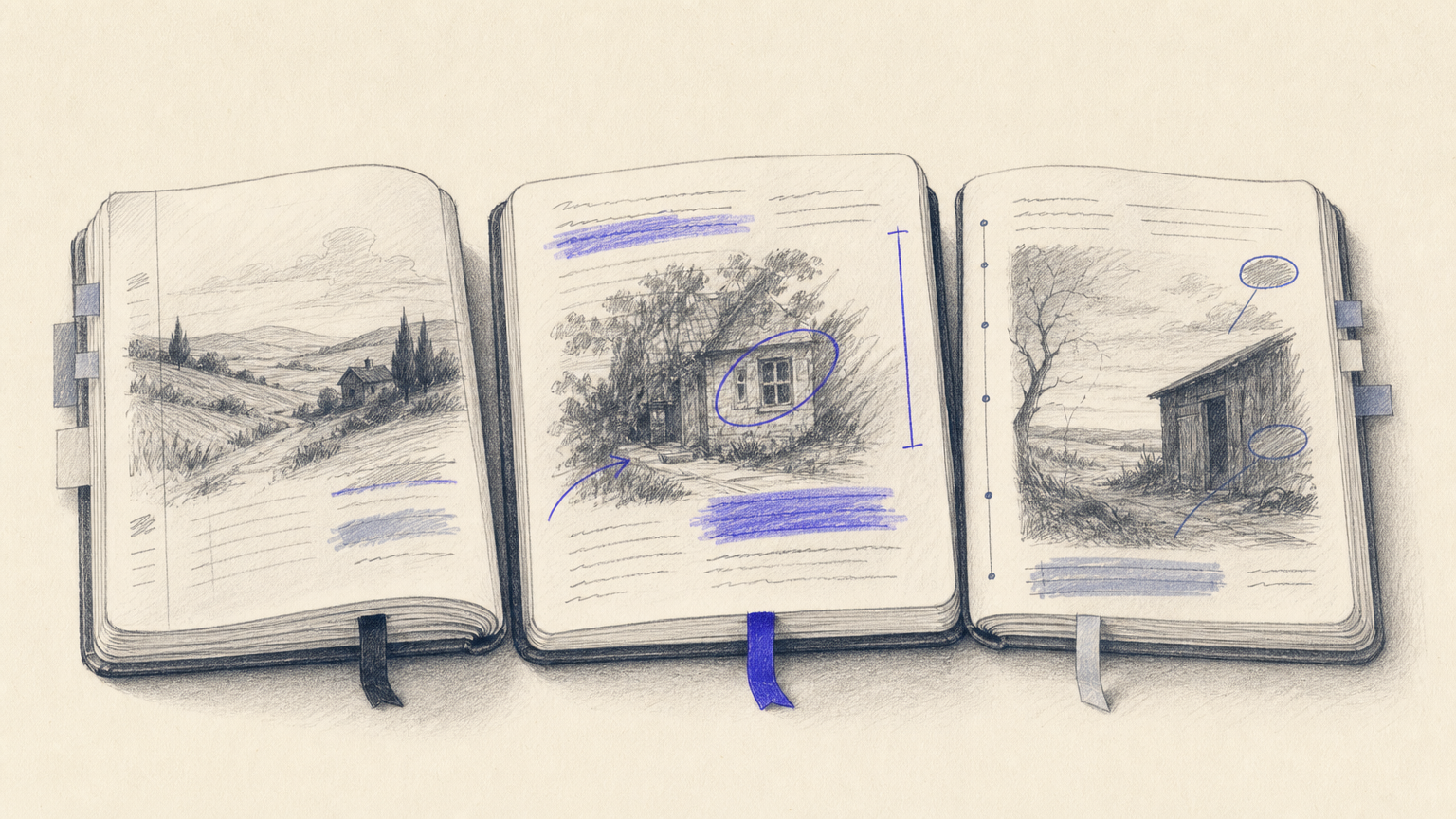
Third person is usually broken into three modes, each with its own contract with the reader. Choosing among them is a load-bearing decision, and the structured planning tools inside Storyloft exist partly to force that decision before chapter one.
Third Person Limited
Third person limited confines the reader to one character’s interior life at a time. If the POV character does not see it, hear it, or think it, the reader does not get it either. This is the most common contemporary approach. Writer’s Digest describes third person limited as the most prevalent narrative approach in literature since the early 20th century, citing examples from Harry Potter to J.M. Coetzee’s Disgrace. When I coach writers through their first novel inside my drafting workspace, limited is almost always where I start them.
Third Person Omniscient
Third person omniscient gives the narrator access to the thoughts, emotions, and histories of multiple characters. Charles Dickens is the classical touchstone, and Celeste Ng’s Everything I Never Told You is a strong contemporary example. Omniscient buys enormous range at the cost of intimacy: the reader knows more than any single character, which is fertile ground for dramatic irony. Handled poorly it collapses into head-hopping, which is why I like to sketch scene-level POV plans in a dedicated author workspace before I write.
Third Person Objective
Third person objective, sometimes called cinematic POV, refuses interior access altogether. The narrator is a camera on the wall. Characters reveal themselves through dialogue, gesture, and action only. Ernest Hemingway and Raymond Carver are the standard references, and beginning writers often try this mode because it looks easy on the page. It is not. Sustaining objective for a full novel is one of the harder feats in prose, which is worth flagging early in any long-form planning process.
Multiple limited (sometimes called shifting limited) sits alongside these three. It rotates the limited camera among several characters, usually one per chapter, as R.O. Kwon does in The Incendiaries. It is not a fourth mode so much as limited played across a wider cast.
Takeaway: pick the mode that matches the scope of the story, not the mode that looks impressive in workshop.
Deep Third Person POV: The Intimate Middle Ground
Deep third is the mode I see most often in current commercial and literary fiction, and it deserves its own section because it is genuinely a hybrid. It marries the immediacy of first person to the pronouns of third, and it is where a lot of contemporary voice lives. Writers moving from first to third often land here naturally when drafting inside a distraction-free environment.
What Makes Third Person ‘Deep’
Deep third removes the middleman narrator voice. Every sentence is understood to come from inside the POV character: their thoughts, biases, sensory perceptions, blind spots, and running interpretations. There is no neutral describer standing between the character and the reader. FoxPrint Editorial notes that deep third has become profoundly popular in the current market for the way it engages readers directly, which matches the trend I track when I audit new manuscripts imported into my project workspace.
Techniques for Achieving Deep Third Person
Two habits carry most of the weight. First, exhaustive familiarity with the protagonist: history, formative wounds, speech patterns, preferences, prejudices, the whole psyche. Vague character development shows up instantly in deep third as flat, generic prose. Second, free indirect discourse, which reports a character’s thoughts inside the narrative sentence without speech tags or italics. “She would not, absolutely would not, call him back” reads as thought and narration at once. Building a rich character bible in a purpose-built author platform is honestly the single biggest lever on deep third quality.
Takeaway: deep third is not a stylistic garnish, it is a full commitment to filtering every sentence through one interior life.
Advantages and Challenges of Writing in Third Person
Third person is popular because it does several things at once, but its flexibility is also what makes it easy to botch. I like to keep a running POV checklist inside the manuscript notes area so that scope and consistency stay honest across revisions.
What Third Person Does Well
- Scope. Third person can pan across multiple characters, settings, and timelines without breaking the narrative contract.
- Reader rapport. Limited third builds a tight bond between reader and POV character, letting readers feel grief, joy, or cynicism from inside that character’s eyes.
- Tonal control. The narrator’s distance can compress for intimate scenes and expand for exposition, all within the same chapter.
- Genre range. From thrillers to family sagas to speculative fiction, the mode adapts. That range is one reason I recommend it to most writers using a general-purpose author tool.
Common Pitfalls to Avoid
POV drift is the top offender. A scene starts firmly inside one character’s head and, three paragraphs later, quietly reports what a second character is thinking. Readers rarely notice consciously, but the ground shifts under them and the scene loses authority. Head-hopping is the omniscient cousin of drift, where the narrator jumps between minds without clear transitions. Reedsy’s editorial guidance is blunt about this: publishers care less about which POV you chose and more about whether you commanded it. That is exactly the discipline I try to bake into my structured drafting flow.
Takeaway: consistency of POV is more persuasive than any trend, and drift is the fastest way to lose a reader’s trust.
How to Choose the Right Third Person Mode for Your Story
POV is not a stylistic afterthought. It shapes what can be revealed, when, and how sentences are built. I always want writers to settle this before they draft, not retrofit it in copyedits. A short planning pass in a dedicated outlining workspace usually resolves it in under an hour.
Matching POV Type to Genre and Story Goals
- Limited suits thrillers, literary character studies, and any story where tight identification with one mind is the point.
- Omniscient fits epics, family sagas, and social novels where context matters as much as any single character.
- Objective works in short, controlled fiction where ambiguity is the artistic goal. It rarely sustains a novel.
- Multiple limited handles ensemble stories where the reader needs to inhabit two or three minds fully, not glance at ten.
If I am building an author platform around a series, I also think about which POV will scale across books without exhausting my range.
Practical Questions to Ask Before You Draft
I keep a short list I run through before chapter one:
- How much do I want readers inside one character’s head?
- How many story threads need to run at once?
- What emotional distance serves the tone I want?
- Do I want the reader to know more than the protagonist, or exactly what they know?
- Will I sustain this mode for the whole book, or rotate by chapter?
Answering these in a project brief inside my writing tool is faster than rewriting a first draft that picked the wrong POV.
Takeaway: choose POV as a structural decision, not a stylistic reflex, and record the choice somewhere you will actually re-read.
Third Person POV in Practice: Examples and Application
Reading published work in the mode you plan to write is the most reliable way to internalize it. Annotate. Mark where the author compresses distance and where they expand it. Notice where thoughts blur into narration and where they stay separated. My preferred loop is to read a chapter, note the technique, and then draft against it in my manuscript workspace.
Published Examples Worth Studying
- Harry Potter (Rowling) anchors third person limited to Harry, giving intimate access to his experience while keeping other characters’ motives shadowed.
- Everything I Never Told You (Ng) uses third person omniscient to move between family members, mining dramatic irony from the gap between what each character knows.
- Hemingway’s short fiction exemplifies third person objective: character reveals himself through dialogue and action, with zero interior access.
- Disgrace (Coetzee) shows what disciplined limited looks like in literary fiction, holding one consciousness across an entire novel.
When I set these up as comparison studies inside an author-and-editor collaboration space, the differences between modes stop being abstract and start becoming choices I can imitate.
Applying Third Person in Your Own Manuscript
Establish the POV mode inside the first paragraph of every scene. Signal it in the opening sentences: whose eyes, whose thoughts, whose distance. Then hold it until a clear chapter or section break. Do not slip into another character’s head to reveal information the reader “needs.” Find another route. This is the discipline that separates a competent third person novel from one that reads like it was assembled by three different writers, and it is the reason I lean on Storyloft as my drafting home for every long project.
Takeaway: pick the mode, mark the boundary at the top of each scene, and defend it through revisions.
Related Concepts Worth Knowing
Narrative distance
The measurable gap between the narrator’s voice and the character’s mind. Narrative distance can shift within a paragraph, and skilled third person writers modulate it constantly.
Free indirect discourse
A technique where a character’s thoughts appear in the narrative sentence without speech tags. It is the engine of deep third.
Dramatic irony
The gap between what the reader knows and what the character knows. Omniscient third person is the natural home of dramatic irony at scale.
Head-hopping
Uncontrolled jumping between characters’ minds inside a single scene. Distinct from intentional omniscient narration, which handles the jumps with authority.
Focal character
The character whose perspective anchors a limited scene or chapter. In multiple limited, the focal character rotates on a clear structural schedule.
How to Get Started
- Pick one published novel in the mode you want to write and annotate a chapter for distance shifts.
- Draft a two-paragraph POV brief for your project: mode, focal character, rules for transitions.
- Write a single scene in your chosen mode and read it aloud, listening for drift.
- Bring the brief and the scene into a dedicated workspace, keep them beside your outline, and refer back every time you start a new chapter.
Frequently Asked Questions
What is third person point of view in writing?
Third person point of view is a narrative mode where a narrator outside the story refers to characters using he, she, or they. It is the most common perspective in modern published fiction across nearly every genre.
What is the difference between third person limited and third person omniscient?
Third person limited confines the reader to one character’s interior life at a time. Third person omniscient gives the narrator access to multiple characters’ thoughts and emotions, allowing broader scope but less intimate identification with any single mind.
What is deep third person POV?
Deep third person POV filters every sentence through the protagonist’s consciousness while keeping he, she, or they pronouns. It combines first person intimacy with third person grammar, removing the neutral narrator voice entirely from the prose.
Can you switch between third person POV types in the same novel?
Mixing modes inside one novel is risky and usually reads as drift. Rotating limited perspectives chapter by chapter is common and controlled. Switching between limited and omniscient mid-book is rarely successful outside experimental fiction.
Is third person or first person better for fiction writing?
Neither is inherently better. First person offers immediate intimacy with one voice, while third person offers flexibility of scope and distance. Publishers care about command of the chosen POV, not the specific choice itself.
What pronouns are used in third person point of view?
Third person uses he, she, they, and their variants (him, her, them, his, hers, theirs). The narrator never uses I or you to refer to the POV character, which is what distinguishes third person from first and second.
How do you avoid head-hopping in third person POV?
Establish the focal character in the opening sentences of each scene and hold that perspective until a clear chapter or section break. If the reader needs information the POV character does not have, find another route rather than jumping minds.
What is third person objective point of view?
Third person objective, also called cinematic POV, presents events without access to any character’s interior life. The narrator functions like a camera on the wall, reporting dialogue and action while leaving thought and emotion for the reader to infer.
Conclusion
Third person POV is not a single tool but a family of them, and the choice among limited, omniscient, objective, and deep third shapes every sentence of the manuscript that follows. The writers I admire treat POV as a structural decision made before drafting, then defend it through every revision. That is the working habit I try to encode into Storyloft’s author workspace: a place to pick a mode, hold it, and finish the book.