Draft Editing: How Authors Turn Rough Pages Into Books
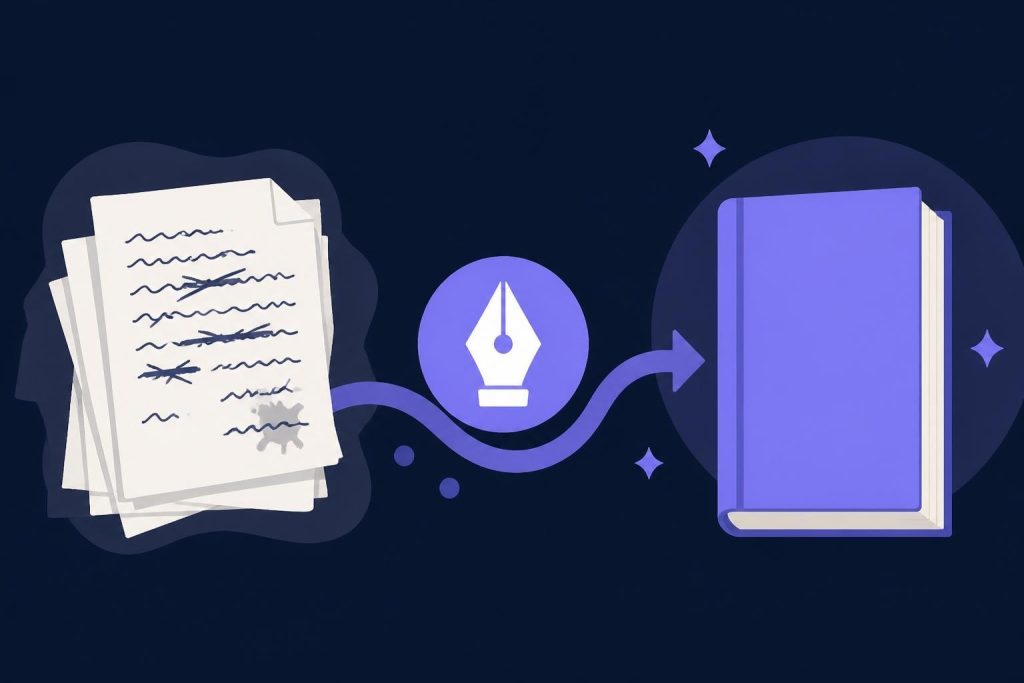
You've written your first draft. Congratulations! But here's the thing nobody tells you when you're starting out: writing the draft is only half the battle. The real magic happens during draft editing, when you transform those rough pages into something readers actually want to experience. Think of your first draft as the raw ingredients and draft editing as the cooking process. You need both to make a meal worth eating.
What Makes Draft Editing Different From Writing
Draft editing isn't the same as writing new words or fixing typos. It's a separate skill that most authors learn through trial and error. When you're drafting, you're creating. When you're editing, you're refining what already exists.
The biggest mistake new authors make is trying to edit while they write. You end up stuck on page three, polishing the same paragraph for hours instead of finishing your book. Drafting and editing require different mindsets, which is why separating these two phases makes your work stronger.
The Three Levels Every Author Should Know
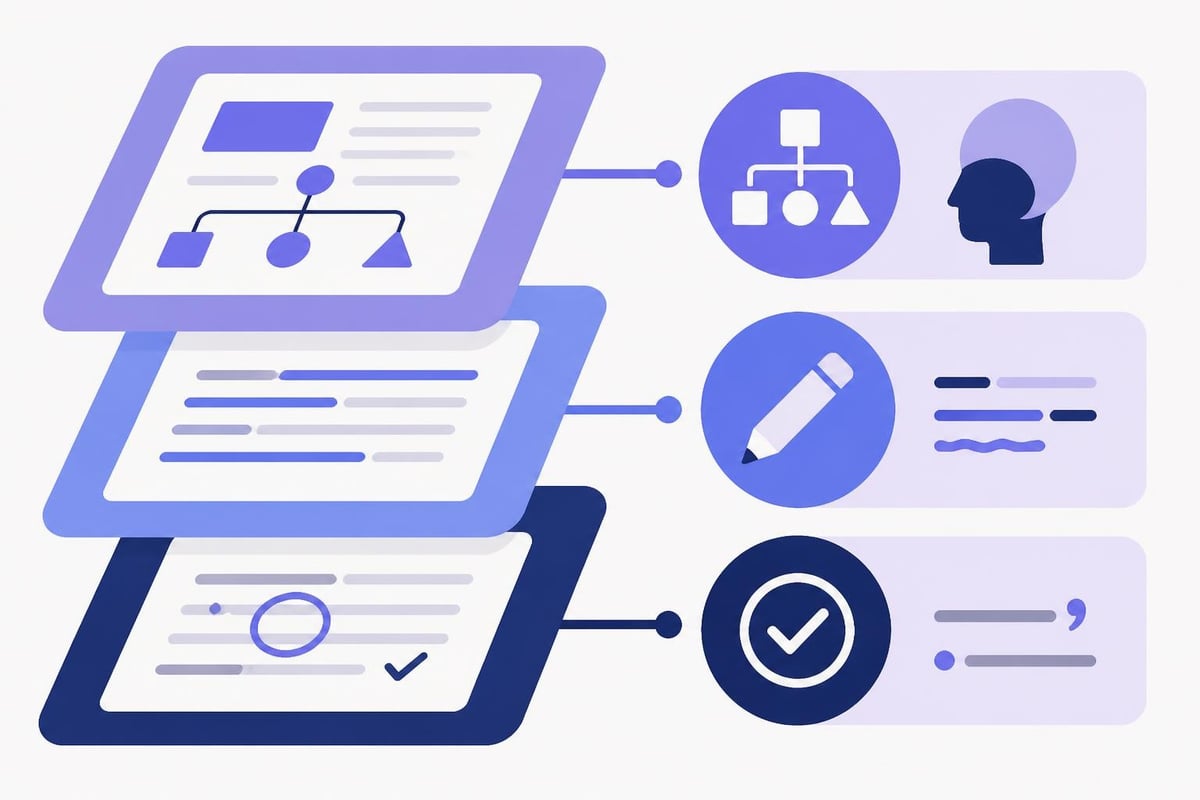
Draft editing happens in layers. You can't fix everything at once without losing your mind.
Structural editing comes first. This is where you look at the big picture. Does your story make sense? Are your chapters in the right order? Do your arguments build on each other logically? For fiction writers, this means checking plot holes, character arcs, and pacing issues. For nonfiction authors, it's about ensuring your ideas flow in a way that readers can follow.
Line editing focuses on how you say things. You're not changing what happens or what you're teaching. Instead, you're making sure each sentence does its job. This level catches repetitive phrases, awkward constructions, and places where your writing gets clunky.
Copy editing comes last. This is where you fix grammar, spelling, punctuation, and consistency. It's important, but it's pointless to fix commas in a scene you might delete during structural editing.
Why Distance Matters More Than You Think
Here's something that took me years to learn: you can't effectively edit something you just wrote. Your brain fills in gaps that readers will notice. You read what you meant to write, not what's actually on the page.
Professional editors recommend waiting at least two weeks between finishing your draft and starting edits. A month is better. I know that sounds impossible when you're excited about your project, but trust the process. Stepping away from your work gives you fresh eyes.
While you're waiting, work on something else. Start planning your next book. Write short stories. Read books in your genre. Just don't touch your manuscript.
When you come back, you'll spot problems immediately. That brilliant dialogue you loved? Suddenly you realize it's repetitive. That chapter you thought was perfect? Now you see it drags in the middle. Distance is the cheapest editing tool you have.
Reading Your Draft Like a Stranger Would
The first read-through after your break shouldn't involve any editing. Just read. Treat it like you're a reader who bought your book, not the person who wrote it.
I print my manuscript for this step. Reading on paper feels different than staring at a screen. You notice different things. Plus, you can scribble notes in the margins without getting distracted by the urge to fix things immediately.
Questions to Ask During Your First Read
- Where did you get bored?
- Which parts made you want to skip ahead?
- Did any characters confuse you?
- Were there spots where you lost track of what was happening?
- What questions did you have that never got answered?
Write down your reactions without judgment. Don't defend your choices or explain why you wrote something a certain way. If you're confused or bored, readers will be too.
Structural Draft Editing: The Big Stuff
Now we get into actual editing. Start with structure because there's no point polishing sentences in scenes you might cut.
For fiction, create a simple outline of what actually happens in your draft. Not what you planned, but what you wrote. Write one sentence per scene or chapter. This outline will reveal pacing problems fast. If you have five chapters of setup before anything interesting happens, you'll see it clearly.
Nonfiction writers should map their argument flow. Does each chapter build on the previous one? Are you repeating the same points? Best practices in manuscript editing emphasize checking structural integrity before diving into sentence-level work.
| Problem | What It Looks Like | How to Fix It |
|---|---|---|
| Sagging middle | Chapters 10-15 feel aimless | Cut subplots that don't serve your main story or add stakes |
| Weak opening | First chapter is all backstory | Start with action, weave in background later |
| Rushed ending | Last three chapters resolve everything too quickly | Give major plot points room to breathe |
| Repetitive content | Multiple scenes make the same point | Combine or cut the weaker versions |
Character Consistency for Fiction Writers
Read through your draft tracking one character at a time. Does their personality stay consistent? Do they make decisions that make sense based on what you've shown us about them? Did they have brown eyes in chapter two and blue eyes in chapter fifteen?
Create a simple spreadsheet with character names, physical descriptions, and key personality traits. Update it as you read. This becomes your bible for consistency checks.
Line-Level Draft Editing: Making Every Sentence Count
Once your structure is solid, zoom in on individual sentences and paragraphs. This is where editing techniques for first drafts really come into play.
Read your work out loud. Yes, the whole thing. Your ears catch problems your eyes miss. Awkward phrasing, repeated words, and weird rhythm all become obvious when you hear them. If you stumble while reading, your readers will stumble too.
Common Line Editing Issues
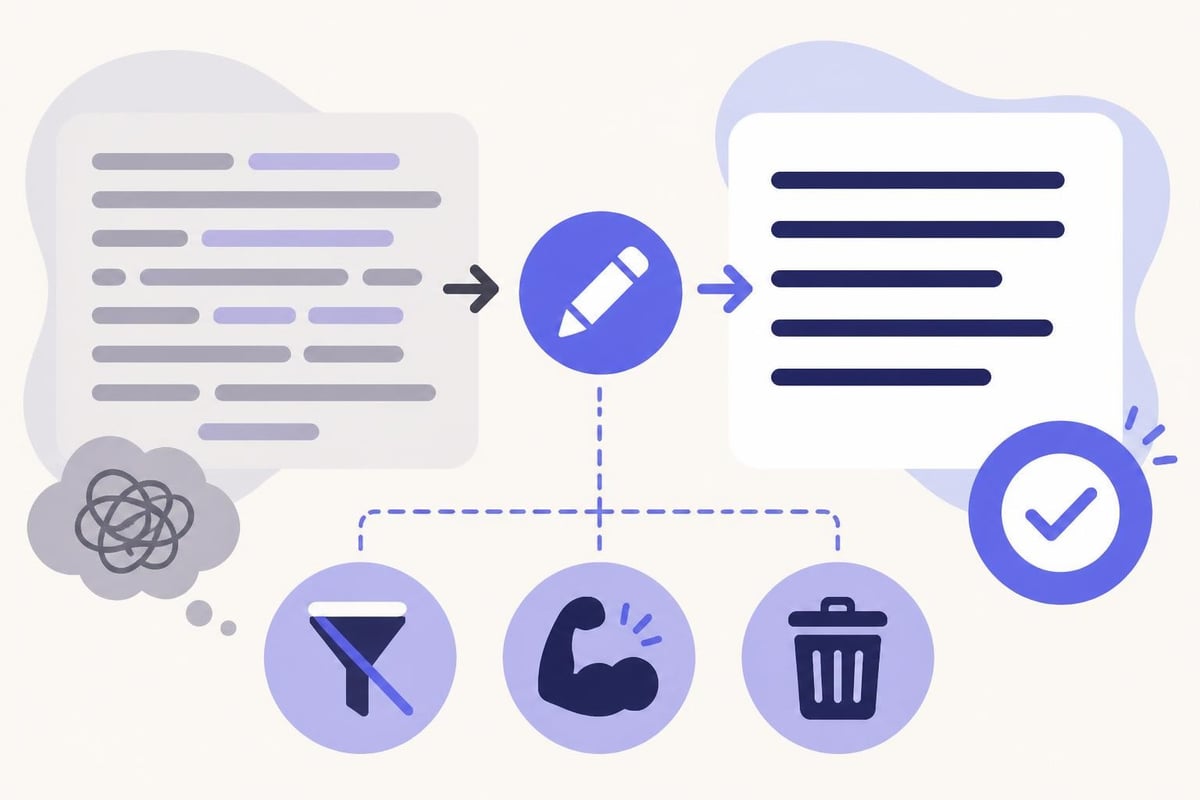
Filter words distance readers from the action. Watch for "saw," "heard," "felt," "thought," and "wondered." Instead of "She saw the dragon land in the field," write "The dragon landed in the field." We're already in her point of view, so we know she's seeing it.
Weak verbs make your prose sag. "Was walking" is weaker than "walked." "Started to run" is weaker than "ran." Look for helping verbs and see if you can cut them.
Overwriting happens when you use three words where one would work. "In spite of the fact that" means "although." "At this point in time" means "now." Every extra word is a chance for readers to get bored.
Show vs. tell matters more in some genres than others, but generally, showing creates stronger scenes. Instead of "John was angry," show us John slamming doors or speaking through clenched teeth.
Using Technology Without Losing Your Voice
Modern draft editing doesn't mean you're alone with a red pen anymore. Smart authors use tools to catch things human eyes miss. But here's the key: technology should support your voice, not replace it.
Grammar checkers catch obvious mistakes, but they don't understand context or style. They'll flag sentence fragments even when you're using them intentionally for effect. They'll suggest changes that make your writing technically correct but boring.
Storyloft's AI editor, Eddy, takes a different approach designed specifically for authors. Instead of just flagging grammar issues, Eddy provides feedback on pacing, structure, and prose while preserving your unique voice. It's built to understand the difference between a grammar rule and a stylistic choice, which matters when you're working on creative projects that need personality, not just correctness.

The University of Nevada’s editing techniques emphasize that good editing preserves the author's intent while improving clarity. That's exactly what the right tools should do.
The Multiple Pass Approach
Professional editors don't try to catch everything in one read. Neither should you. Each pass through your manuscript should focus on specific elements.
Pass one: Structure and plot. Does the story work? Are there holes in your logic? Does the pacing drag or rush?
Pass two: Character and voice. Do your characters sound distinct from each other? Is your narrative voice consistent? For nonfiction, does your authorial voice stay professional (or casual, or academic, or whatever you're going for)?
Pass three: Scene and paragraph level. Does each scene earn its place? Can you cut or combine paragraphs? Are transitions smooth?
Pass four: Sentence and word level. Fix awkward phrasing. Cut unnecessary words. Strengthen weak verbs. Vary sentence length and structure.
Pass five: Proofreading. Grammar, spelling, punctuation, formatting. This is the last pass, not the first.
When to Get Outside Eyes
You can only take your own editing so far. Eventually, you become blind to your manuscript's problems because you know it too well. UC Berkeley’s writing process guide emphasizes the value of external feedback at various stages.
Beta readers give you feedback on whether your story works. They're not editing your grammar. They're telling you if they got bored, confused, or emotionally invested. Choose beta readers who actually read your genre and will be honest.
Professional editors come in after you've done all the self-editing you can. A developmental editor helps with structure. A copy editor catches the technical stuff. Most authors working with traditional publishers get both. Self-published authors need to budget for these services too.
What to Look for in Beta Feedback
Not all feedback is useful. Pay attention when multiple beta readers mention the same problem. If three people say your main character is annoying, that's a pattern worth addressing.
Ignore feedback that tries to rewrite your book into what the beta reader would have written. Comments like "I would have made the main character a detective instead of a teacher" aren't helpful. You're not writing their book.
Look for feedback about reactions and comprehension. "I didn't understand why she made that choice" is useful. "I got bored in chapter seven" tells you something important. "I loved the scene where they finally confronted each other" shows you what's working.
Common Draft Editing Mistakes to Avoid
Starting too soon. I already mentioned this, but it bears repeating. You need distance before you edit. Revision techniques from the University of Minnesota stress the importance of seeing your work with fresh eyes.
Editing in the wrong order. Fix structure before you polish sentences. There's no point perfecting the prose in a chapter you're going to cut.
Being too precious. Your first draft is not sacred. Every word you wrote can be changed or deleted. The goal is making the book better, not protecting your ego.
Ignoring consistent feedback. If everyone says your opening is slow, your opening is slow. Don't explain why you wrote it that way. Fix it.
Over-editing. Yes, this is a thing. At some point, you're not making your book better. You're just making it different. If you've been editing for months and you're changing things back to how they were three drafts ago, you're done.
Making Draft Editing Less Overwhelming
The whole process I've described probably sounds exhausting. It can be. But you don't have to do it all at once.
Set daily or weekly goals. "Edit three chapters this week" is more manageable than "edit the whole book." Break the work into chunks that fit your schedule.
Celebrate small wins. Finished your structural edit? That's huge. Completed a character consistency check? Mark that progress. Building a sustainable writing routine includes making time for editing, not just drafting.
| Editing Stage | Time Estimate | What Success Looks Like |
|---|---|---|
| Structural | 2-4 weeks | Plot holes fixed, pacing improved, chapters in right order |
| Line editing | 3-6 weeks | Sentences flow smoothly, voice is consistent, no repetitive phrasing |
| Copy editing | 1-2 weeks | Grammar correct, formatting consistent, typos eliminated |
| Proofreading | 1 week | Final polish complete, ready for publication |
Use tools that actually help. A simple checklist keeps you focused. Digital content editing processes work well for authors too. Track what you've checked and what still needs work.
The Draft Editing Mindset
Here's what nobody tells you about draft editing: it requires a completely different mindset than writing. When you draft, you're creating something from nothing. You're in possibility mode, where anything can happen.
When you edit, you're in refinement mode. You're making decisions, cutting options, committing to specific choices. This feels different in your brain. Some writers love it. Others find it tedious.
The trick is accepting that both phases are necessary. Understanding revision techniques helps you see editing as part of the creative process, not a chore that comes after the "real" writing is done.

Think of draft editing as problem-solving. You have a manuscript with issues. Your job is to identify those issues and fix them. When you frame it this way, editing becomes less about judging your writing and more about improving a product.
Knowing When You're Actually Done
This might be the hardest part of draft editing: figuring out when to stop. You can edit forever if you let yourself. At some point, you need to call it finished.
Signs your manuscript is ready:
- You've addressed all the major structural issues
- Beta readers aren't finding new problems
- Your changes are getting smaller and more nitpicky
- You're starting to second-guess changes that actually improved the manuscript
- You've completed all your planned editing passes
Signs you need more work:
- Test readers are confused about plot points
- You're still finding major inconsistencies
- Chapters don't flow into each other smoothly
- Your pacing feels off when you read it aloud
- You know there are scenes that don't earn their place but you haven't cut them yet
Remember that "done" doesn't mean "perfect." It means "ready for the next step," whether that's querying agents, hiring a professional editor, or formatting for publication. Books are never perfect. They're abandoned at their best possible state given time and resources.
Professional authors set deadlines. "I will finish draft editing by March 1st" gives you a target. Without deadlines, you can tinker forever. Publishing schedules force you to make decisions and move forward.
How Draft Editing Changes With Experience
Your first book's editing process will probably be messy. You'll make mistakes. You'll waste time fixing things in the wrong order. You'll maybe even have to restart certain passes because you didn't understand what you were doing.
That's completely normal. Every author goes through this. The good news? Each book gets easier.
By your third or fourth manuscript, you'll catch problems in your first draft that used to make it all the way to beta readers. You'll internalize structure lessons and write cleaner opening chapters. Your natural voice will get stronger, requiring less line editing to sound like yourself.
This doesn't mean editing gets faster. It means you get better at knowing what needs fixing and how to fix it. Experienced authors often spend just as long editing as beginners do, but the quality jump between draft and final version gets smaller.
Keep notes about what works for you. Did outlining ahead of time reduce your structural editing time? Did reading your draft on a different device help you catch more issues? Build your own editing process based on what actually helps your work improve.
Draft editing transforms rough manuscripts into publishable books, but you don't have to tackle it alone. Storyloft combines writing and editing tools in one platform, with Eddy, an AI editor built specifically to help authors improve pacing, structure, and prose while keeping your unique voice intact. Whether you're working on your first draft or your fifth round of edits, having the right tools makes the process smoother and less overwhelming.