
How to Write About a Book: A Complete Guide for Authors

Whether you're sharing your thoughts with fellow readers, helping market your own work, or analyzing someone else's writing, knowing how to write about a book is a skill every author should have in their toolkit. It's different from actually writing a book, but it's just as important. You might need to write reviews to support other authors in your genre, create summaries for your own marketing materials, or analyze books to improve your craft. Whatever your reason, this guide will walk you through everything you need to know.
Understanding Different Ways to Write About a Book
Not all book writing is the same. When you write about a book, you need to know what type of writing you're doing.
A book review shares your opinion. It tells readers whether you liked it and why. BookTrust offers top tips for writing a brilliant book review, emphasizing honesty and helping other readers find books that suit them.
A book summary gives the facts. It covers the main points without adding your personal take. You're just explaining what the book says.
A book report combines both. Concordia University Library explains the differences between reviews and reports, showing how reports include bibliographical information, background context, and critical comments.
Choosing Your Approach
Think about your audience first. Are you writing for readers who want to know if they'll enjoy the book? Write a review. Are you creating content for students or people who need the key points? Write a summary. Need both elements? Go with a book report.
Your purpose matters too:
- Marketing: Reviews help sell books and build community
- Education: Summaries and reports show understanding
- Craft development: Analysis helps you learn from other writers
- Professional development: Reviews build your author platform

Preparing to Write About a Book
You can't write well about something you barely remember. Taking notes while you read makes everything easier later.
Keep a notebook or digital file handy as you read. When something strikes you, write it down immediately. Don't trust your memory. You'll forget that perfect example or that quotable line.
What to track as you read:
- Passages that made you feel something
- Characters who stood out
- Plot points that surprised you
- Writing techniques you noticed
- Questions that came up
- Themes that emerged
Mark pages with sticky notes or use your e-reader's highlighting feature. This saves so much time when you're ready to write.
Reading with Purpose
Lumen Learning details the skills involved in summarizing, including identifying important material and restating text in your own words. The same principles apply when you write about a book in any format.
Read differently depending on what you'll write. For a review, focus on your emotional reactions and overall impressions. For a summary, track the main arguments or plot progression. For analysis, look at structure, pacing, and craft choices.
Don't rush through the book just to finish. Speed reading works for some things, but not when you need to write about a book with depth and insight.
Writing a Book Review That Connects
Start with what readers actually want to know. They don't need a full plot summary. They want to know if the book is worth their time.
Your opening paragraph should hook readers and give your overall impression. Was it great? Just okay? Worth reading despite flaws? Be honest right away.
Structuring Your Review
| Section | Purpose | Length |
|---|---|---|
| Opening | Overall impression and hook | 1-2 paragraphs |
| Context | Genre, author background, premise | 1 paragraph |
| Discussion | What worked and what didn't | 2-4 paragraphs |
| Recommendation | Who should read this | 1 paragraph |
Talk about specific elements without spoiling the experience. Mention characters, writing style, pacing, and themes. Use examples, but keep them vague enough that you're not ruining surprises.
Grammarly’s guide on writing a book review includes tips on avoiding repetition, being concise, and supporting your claims with insights from the book. These principles help you write about a book in a way that feels substantive rather than superficial.
Be specific about why something worked or didn't. "The pacing dragged" tells readers nothing. "The middle section spent three chapters on backstory that could've been woven into the action" gives them real information.
Finding Your Review Voice
Write like you're telling a friend about the book over coffee. You don't need to sound like a literary critic unless that's your brand. Readers connect with authentic voices.
Avoid spoilers unless you clearly mark them. Nothing annoys readers more than having a twist ruined in a review.
Balance criticism with appreciation. Even books you didn't love have something worth mentioning. Even books you loved have flaws.
Creating Effective Book Summaries
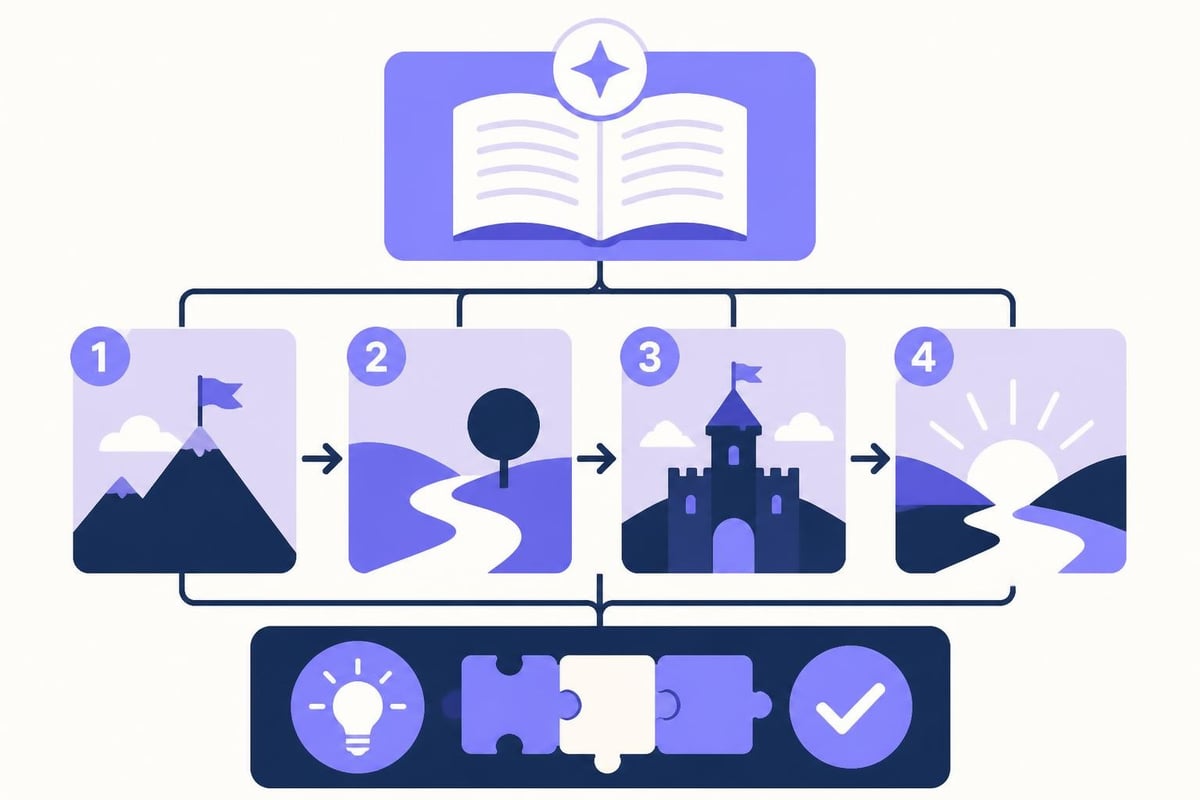
When you write about a book as a summary, you're condensing the essential information. This is harder than it sounds.
This step-by-step process for summarizing any book covers note-taking, structure, examples, and a layered framework that works for any genre or length.
Start with the main idea. What is this book fundamentally about? Fiction or nonfiction, every book has a central thesis or theme.
Steps for writing a strong summary:
- Identify the main idea or thesis
- List the major supporting points or plot events
- Note key characters or concepts
- Write in your own words
- Keep it objective (no opinions)
- Stay concise (typically 10-20% of original length)
For fiction, focus on the core plot without getting lost in subplots. Mention the protagonist, their goal, the main conflict, and the resolution. Skip minor characters and side stories.
For nonfiction, outline the author's argument and the evidence they provide. What are they trying to convince you of? How do they support their claims?
Keeping Summaries Useful
Your summary should let someone understand the book's content without reading it. That's the whole point. Test this by asking yourself: "If someone read only my summary, would they grasp what this book is about?"
Use clear transitions between ideas. "First," "Additionally," "However," and "Finally" help readers follow your logic.
Don't copy the author's exact words unless you're using a brief quote. Paraphrase everything in your own language. This shows you actually understand the material.
Writing Book Reports and Analysis
Book reports dig deeper than reviews or summaries. When you write about a book in report format, you're combining factual information with critical thinking.
The Purdue Online Writing Lab offers guidance on structuring reviews and reports effectively, including elements to consider before reading and organizing your analysis.
Include bibliographical details at the start: title, author, publication date, publisher, page count, and genre. This gives readers context.
Discuss the author's background when relevant. A memoir by a war veteran hits differently than one by someone who researched war. Context matters.
Analyzing Craft Elements
For authors, this is where you learn. When you write about a book analytically, you're studying how it works.
Look at structure. How did the author organize information or plot? Why did they make those choices? What effect does it have?
Examine the prose style. Short sentences or long ones? Simple vocabulary or complex? First person or third? Every choice creates a different reading experience.
Consider pacing. Where did the book speed up or slow down? Did it work? Learning to identify pacing issues in other books helps you spot them in your own writing. For authors working on their manuscripts, Storyloft’s AI editor Eddy can help identify pacing problems and structural issues while preserving your unique voice.
Elements to analyze:
- Point of view: How does the perspective shape the story?
- Dialogue: Does it sound natural? Does it move the plot?
- Description: Too much? Too little? Just right?
- Character development: Do characters grow and change?
- Theme: What bigger ideas does the book explore?
Common Mistakes When You Write About a Book
Giving away too much is the biggest error. You want to discuss the book, not retell it word for word. Summaries need key points, but they don't need every detail.
Being too vague is equally bad. "It was good" or "I liked the characters" tells readers nothing. What made it good? Which characters and why?
Letting bias cloud your judgment happens more than you'd think. Maybe you hate love triangles, but that doesn't mean this particular love triangle wasn't well-executed. Separate personal preferences from craft quality.
Forgetting your audience leads to confusing writing. Are you writing for fans of the genre who know the tropes? Or for general readers who need more context?
Avoiding Plot Summary Overload
New reviewers especially fall into this trap. They spend 80% of their review recounting the plot. Your readers can get plot details from the book description.
Instead, give just enough plot to make your points. "The protagonist's journey from self-doubt to confidence mirrors the book's shift from introspective to action-packed" tells readers more than a chapter-by-chapter breakdown.
Focus on your analysis, your reactions, and your insights. That's what makes your writing valuable.

Practical Tips for Different Formats
Blog posts about books work best at 800-1500 words. Give readers enough substance without overwhelming them. Use subheadings, bullet points, and short paragraphs to make scanning easy.
Social media posts need brevity. A Twitter thread can be effective if you break your thoughts into digestible chunks. Instagram captions should hook readers in the first line since most people won't click "more."
Academic book reports follow stricter formats. Check your assignment guidelines, but generally expect formal language, citations, and a specific structure.
Author platform reviews serve dual purposes. You're helping readers and building your network. Tag the author, be thoughtful, and engage with comments.
Adapting Your Style
When you write about a book for Amazon or Goodreads, keep it conversational and helpful. Other readers want recommendations from people like them, not literary criticism.
For your author blog, you can go deeper into craft analysis. Your audience includes fellow writers who appreciate technical discussion.
Newsletter reviews can be more personal. Your subscribers already know you, so you can reference previous books you've discussed or inside jokes.
| Platform | Ideal Length | Tone | Focus |
|---|---|---|---|
| Amazon/Goodreads | 150-300 words | Helpful, casual | Reader recommendation |
| Author blog | 800-1500 words | Professional, insightful | Craft analysis |
| Newsletter | 300-600 words | Personal, conversational | Connection with readers |
| Social media | 50-280 characters | Punchy, engaging | Quick reactions |
Building Your Skills Over Time
You get better at this through practice. Write about a book every week or month. You'll develop your voice and learn what works.
Read other people's reviews and summaries. Notice what you like and what annoys you. Model the good stuff, avoid the bad.
Experiment with formats. Try writing a review, then a summary, then an analysis of the same book. See how each approach changes what you focus on.
Join online book communities where people discuss books seriously. Goodreads groups, Reddit's book subreddits, and author forums give you exposure to different perspectives.
Learning from What You Read
Every book you write about teaches you something about writing. Pay attention to what works in the books you love. Notice what doesn't work in books that disappointed you.
Keep a running list of craft techniques you observe. "Chapter endings that create cliffhangers," "Using weather to reflect mood," "Dialogue tags that show emotion." When you're ready to apply these to your own work, having examples helps.
Authors looking to improve their craft can benefit from exploring AI-powered writing tools that help identify patterns and strengthen storytelling elements.
Making Your Book Writing More Engaging
Use quotes from the book to support your points. A well-chosen quote can illustrate what you mean better than paraphrasing.
Ask questions to pull readers in. "Have you ever wondered why some books stay with you for years?" makes people think and keeps them reading.
Share personal connections. "This reminded me of…" or "I've never read a book that captured…" helps readers relate to your experience.
Compare to other books when helpful. "Fans of X will love this" or "If you liked Y, try this instead" gives readers reference points.
Adding Visual Interest
If you're posting online, include the book cover image. It makes your post more attractive and helps people remember which book you're discussing.
Break up text with formatting. Bold key points, use bullet lists, and create white space. Nobody wants to read a wall of text.
Pull out a quote as a callout or block quote. It adds visual variety and highlights important passages.
Learning to write about a book effectively takes practice, but it's worth developing this skill. Whether you're building your author platform, analyzing craft to improve your writing, or helping readers discover their next favorite story, knowing how to discuss books clearly and engagingly serves you well. If you're working on your own manuscript and want tools that help you write, edit, and format your book professionally, Storyloft combines everything you need in one platform, including AI-powered editing that preserves your unique voice while strengthening your story.