
First Time Writers Publishing: A Complete 2026 Guide
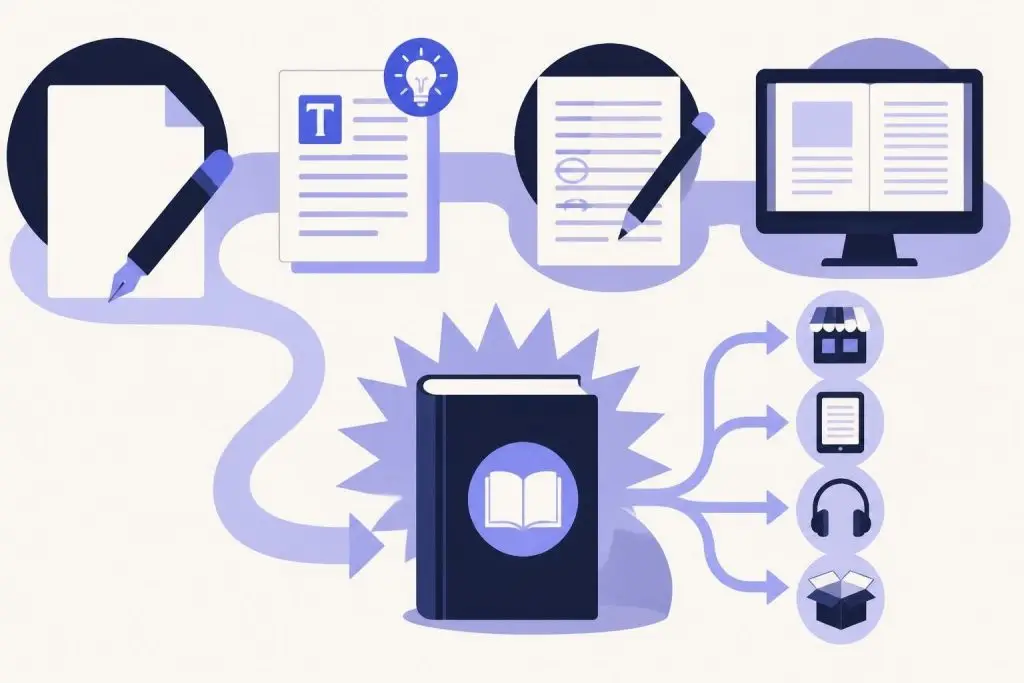
I remember sitting in my tiny apartment in 2019, staring at the completed manuscript of my first novel. The cursor blinked on the final page, and I felt simultaneously elated and terrified. What came next? The path from "The End" to actual publication felt like stepping into a dense forest without a map. If you're a writer completing your first book in 2026, you're facing similar questions, but you have advantages I didn't. Technology has democratized publishing in remarkable ways, and the barriers that once seemed insurmountable now feel more like choices.
Understanding Your Publishing Options in 2026
The publishing landscape offers more paths than ever before. Traditional publishing involves securing a literary agent who then pitches your manuscript to established publishing houses. Self-publishing puts you in complete control, from editing to distribution. Hybrid publishing splits the difference, offering professional services while you maintain rights and creative control.
Each path serves different goals and writer personalities.
Traditional Publishing: The Classic Route
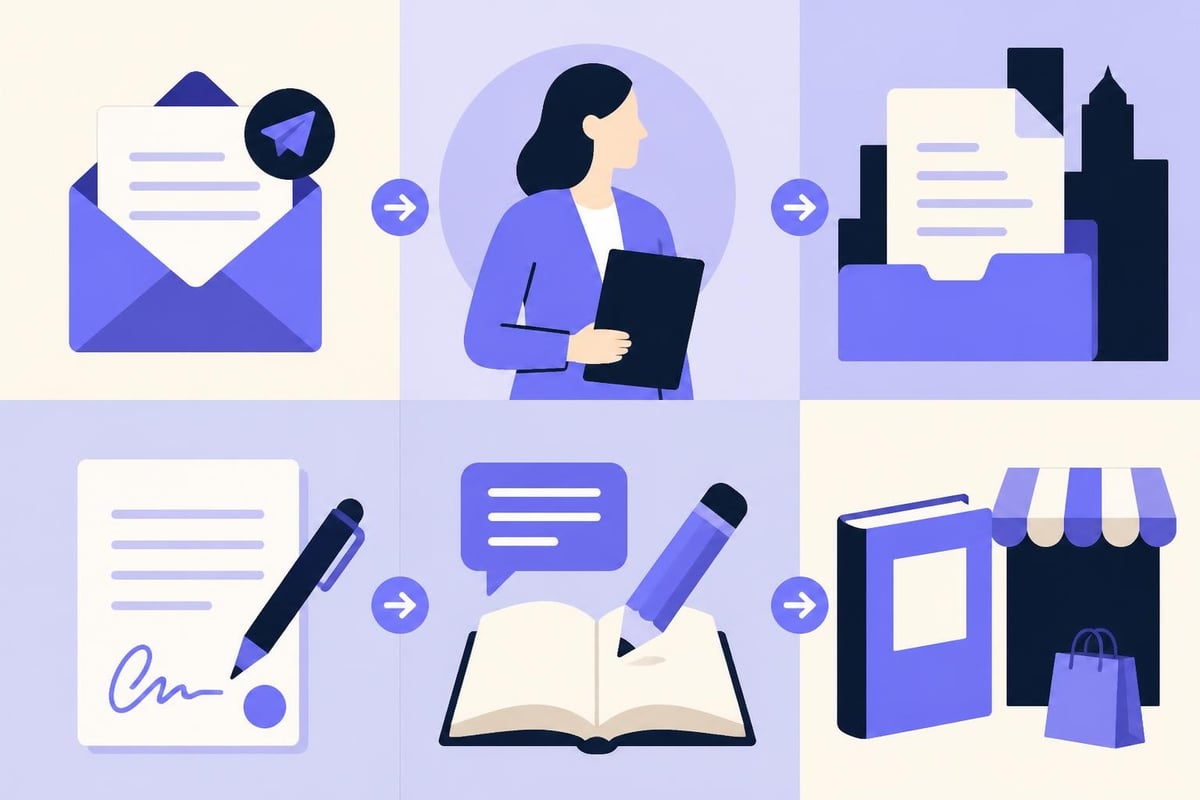
Traditional publishers handle everything: editing, design, printing, distribution, and marketing. You receive an advance against future royalties and benefit from professional editorial guidance. The catch? Getting published traditionally requires landing an agent first, which means navigating query letters, rejections, and potentially years of waiting.
Advantages of traditional publishing:
- Professional editing and production quality
- Bookstore distribution networks
- Marketing support and publicity teams
- Advance payments (though often modest for debut authors)
- Industry validation and credibility
Challenges to consider:
- Lengthy timeline (18-36 months from acceptance to publication)
- Loss of creative control over covers, titles, and pricing
- Lower royalty percentages (typically 10-15% for print, 25% for ebooks)
- Difficulty breaking in without prior credits
The traditional route works beautifully for writers who value industry gatekeeping, prefer collaborative creative processes, and can sustain patience through long submission cycles.
Self-Publishing: Taking the Reins
Self-publishing through platforms like Amazon KDP and IngramSpark has matured dramatically. First time writers publishing independently in 2026 access tools that produce genuinely professional results. You control your timeline, your cover, your pricing, and you keep 35-70% royalties depending on distribution choices.
The trade-off? You're responsible for everything.
| Publishing Task | Your Responsibility | Potential Cost |
|---|---|---|
| Editing | Hire professionals or use AI tools | $500-$3,000 |
| Cover Design | Commission designer or DIY | $100-$800 |
| Formatting | Learn software or pay service | $0-$500 |
| Marketing | Social media, ads, email list | $0-$5,000+ |
| Distribution | Upload to platforms yourself | $0 |
Many authors discover that professional formatting costs represent a significant investment, but modern writing platforms have changed this equation dramatically.
Hybrid Publishing: The Middle Ground
Hybrid publishers charge upfront fees for professional services while authors retain more rights and higher royalties than traditional deals offer. Quality varies wildly in this space. Reputable hybrid publishers are selective about manuscripts, never charge reading fees, and provide transparent pricing for editing, design, and distribution services.
Research thoroughly. Some "hybrid" publishers are vanity presses in disguise, making money from desperate authors rather than selling books to readers.
Preparing Your Manuscript for First Time Writers Publishing
Your manuscript isn't ready the moment you type "The End." Professional preparation separates published books from unpublishable drafts.
The Revision Process Nobody Warns You About
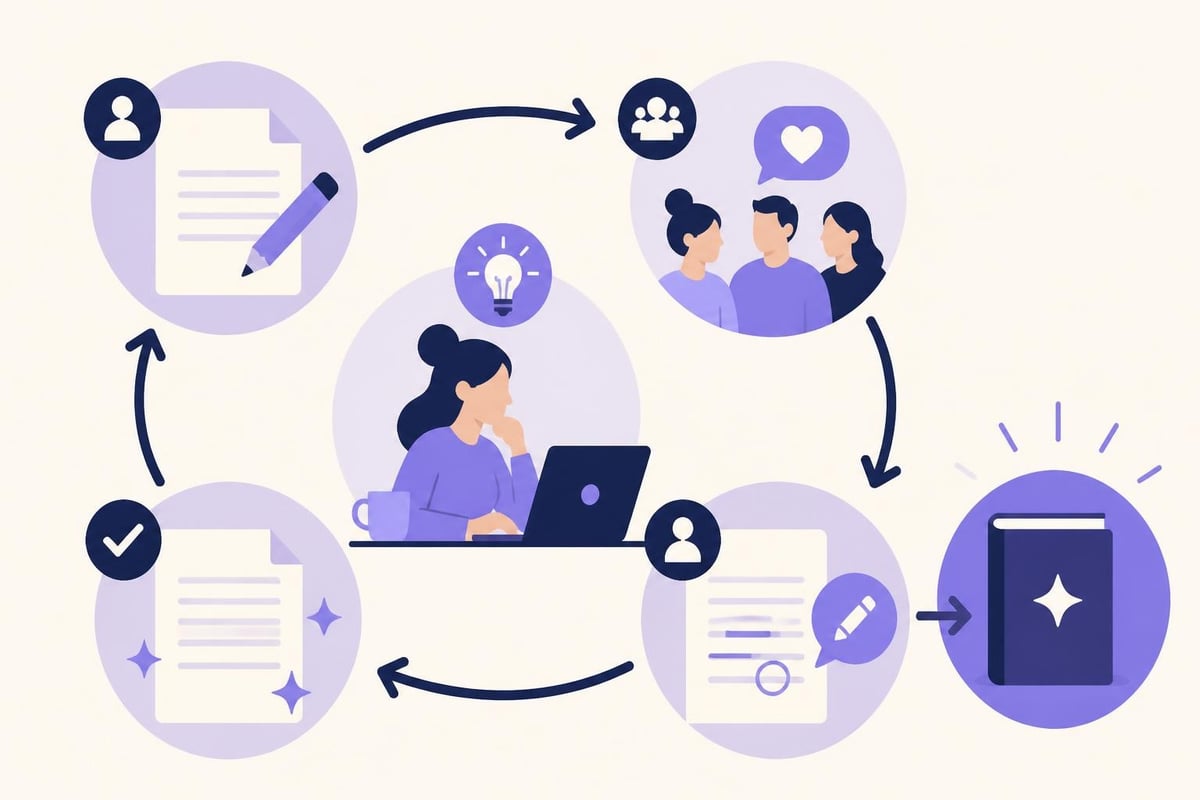
First drafts are terrible. Accept this truth early and save yourself grief. The real writing happens in revision, where you transform rambling thoughts into polished prose. Developing solid writing habits from the beginning makes this process less overwhelming.
Essential revision stages:
- Structural edit: Does the overall story or argument work? Are chapters in the right order? Do characters develop logically?
- Content edit: Line by line, paragraph by paragraph, strengthen your prose and eliminate redundancy
- Copyedit: Grammar, punctuation, spelling, consistency in style and facts
- Proofread: Final polish before publication, catching typos and formatting errors
An AI manuscript editor can accelerate this process without replacing human judgment. The technology has improved remarkably, offering feedback on pacing, structure, and consistency while preserving your authentic voice.
Beta Readers and Professional Feedback
Before you publish, fresh eyes catch problems you've become blind to. Beta readers (trusted readers who review your draft) provide invaluable perspective on whether your book actually works.
Choose beta readers carefully:
- Select people who read your genre enthusiastically
- Avoid only friends and family (they're too kind)
- Give them specific questions to answer
- Set clear deadlines and expectations
Professional editing remains worthwhile even after beta feedback. A skilled editor understands market expectations, technical craft, and how to elevate good writing into great writing.
Formatting Your Book for Publication
Many first time writers publishing don't realize that formatting differs completely between ebooks and print books. Ebook formatting uses reflowable text that adapts to different screen sizes. Print formatting requires precise control over margins, headers, page numbers, and chapter breaks.
Amateur formatting screams "self-published" louder than any other element except covers.
Ebook Formatting Essentials
Modern ebook standards use EPUB files that support:
- Responsive text sizing
- Embedded fonts (with licenses)
- Clickable table of contents
- Linked footnotes and endnotes
- Chapter breaks and section divisions
Amazon's KDP platform accepts multiple file formats but converts everything to its proprietary format. Testing your ebook on multiple devices before publishing prevents embarrassing formatting glitches that readers will mention in one-star reviews.
Print Book Formatting Complexities
Print book formatting involves technical specifications that traditional publishers handle automatically but self-publishers must master:
- Trim size: Standard sizes (6×9, 5×8, 5.5×8.5) keep printing costs reasonable
- Margins: Gutter margins account for binding, outer margins affect readability
- Headers and footers: Running heads with chapter titles or book titles
- Front matter: Title page, copyright page, dedication, table of contents
- Back matter: Acknowledgments, author bio, also-by pages
Getting these elements right separates professional books from amateur productions. When I published my first book, I spent weeks wrestling with Microsoft Word's stubborn section breaks and margin settings. Modern authors have better options.
Storyloft gives authors everything needed to write, edit, format, and publish a professional book in one place. Use Eddy, an AI editor built for authors, to get feedback on pacing, structure, prose, and consistency while preserving your unique voice. Format beautiful print books and ebooks for KDP and IngramSpark, generate illustrations, organize notes, and manage your manuscript without juggling multiple writing apps or formatting tools.

Choosing Your Distribution Platforms
Where you publish determines who can buy your book and how much you earn per sale.
Amazon KDP: The 800-Pound Gorilla
Amazon's Kindle Direct Publishing dominates ebook and print-on-demand markets. Benefits include enormous reach, simple upload processes, and competitive royalty structures. The 70% ebook royalty option (for books priced $2.99-$9.99) beats traditional publishing handily.
KDP's exclusivity program (KDP Select) offers promotional tools and Kindle Unlimited enrollment in exchange for 90-day Amazon exclusivity. First time writers publishing often start here, then expand to wider distribution after building momentum.
IngramSpark: Wider Distribution
IngramSpark distributes to bookstores, libraries, and online retailers globally. Setup requires more technical knowledge than KDP, but the trade-off is professional credibility. Many bookstores won't stock KDP-only titles, making IngramSpark essential for authors seeking bookstore placement.
Understanding KDP vs IngramSpark helps you make strategic distribution decisions aligned with your goals.
| Feature | Amazon KDP | IngramSpark |
|---|---|---|
| Ebook royalty | Up to 70% | 40-45% |
| Print royalty | 60% | 55% |
| Setup cost | Free | $49 per format |
| Bookstore distribution | Limited | Excellent |
| Global reach | Strong | Stronger |
| Changes/updates | Free | $25 per change |
Going Wide vs. Amazon Exclusive
"Wide" distribution means publishing on multiple platforms: Amazon, Apple Books, Kobo, Barnes & Noble, Google Play. This strategy diversifies income and prevents platform dependence. The counter-argument? Amazon represents roughly 75% of the English-language ebook market, making exclusivity strategically sound for building initial visibility.
Most successful self-publishers experiment with both approaches across different titles or time periods.
Cover Design and Visual Branding
Readers absolutely judge books by covers. Your cover is your primary marketing tool, your shelf presence, your first impression.
Professional covers communicate:
- Genre immediately and unmistakably
- Professionalism through clean design and appropriate typography
- Your book's tone (serious, lighthearted, dark, inspirational)
- Value worth the purchase price
DIY covers rarely work unless you're a trained designer who understands genre conventions. Study bestseller covers in your category obsessively. Notice fonts, color palettes, image styles, and layout patterns. Genre readers have specific visual expectations, and violating them confuses potential buyers.
Budget $300-$800 for professional cover design. It's the smartest money you'll spend.
Metadata and Discoverability
Even brilliantly written, beautifully formatted books with stunning covers fail without proper metadata. Metadata includes your title, subtitle, description, keywords, categories, and author bio-all the information that helps readers discover your book.
Crafting Effective Book Descriptions
Your description isn't a summary. It's a sales pitch that creates curiosity while signaling genre and tone. Study descriptions of bestselling books similar to yours. Notice how they:
- Hook readers in the opening sentence
- Hint at conflict without spoiling plot
- Use formatting (short paragraphs, bold text) for scannability
- End with compelling questions or stakes
Keywords and Categories
Amazon allows seven keyword phrases and two categories at upload. Choose strategically. Research what successful books in your genre use. Tools like Publisher Rocket help identify high-traffic, low-competition keywords.
Many first time writers publishing waste keywords on obvious terms ("mystery novel") instead of specific phrases readers actually search ("cozy mystery with cats").
Building Your Author Platform Before Launch
Publishing without an audience means launching into silence. Start building connections with readers months before publication.
Platform-building strategies:
- Email list: Own your audience rather than renting from social media platforms
- Social media presence: Focus on one or two platforms where your readers gather
- Author website: Simple, professional, with book information and contact methods
- Advance reader team: Cultivate readers who'll review your book at launch
- Networking: Connect with other authors in your genre for cross-promotion
I launched my first book with 47 email subscribers and minimal social media presence. Sales reflected that lack of preparation. Don't repeat my mistake.
Marketing Your Published Book
Publication day isn't the finish line. It's the starting gun.
Launch Week Strategy
Concentrate your marketing energy into a focused launch period:
- Pre-orders: Build anticipation and secure reviews before release
- Launch day: Coordinate emails, social posts, and promotions for maximum impact
- Week one: Maintain momentum with continued promotion and engagement
- Review gathering: Request reviews from advance readers and early buyers
Amazon's algorithm rewards velocity-concentrated sales in a short period-more than scattered sales over months.
Long-Term Book Marketing
Most books earn the majority of their revenue months or years after publication through sustained discovery.
Effective long-term strategies include:
- Regular price promotions to trigger algorithm boosts
- Series publishing to multiply discoverability
- Email marketing to your growing list
- Promoting your books through strategic advertising on Amazon, Facebook, or BookBub
- Content marketing through blogs, podcasts, or YouTube
The authors earning full-time income from first time writers publishing rarely succeed with a single title. They build catalogs, refine craft, and compound their audience growth book after book.

Legal and Financial Considerations
Publishing involves business decisions with legal and financial implications.
Copyright and ISBN Numbers
Your copyright exists automatically when you create original work, but registration with the U.S. Copyright Office (or equivalent in other countries) strengthens legal protection. Registration costs $65 and takes months to process, but it's worthwhile for works you plan to monetize.
ISBN numbers identify your book uniquely in the retail system. Amazon provides free ISBNs, but you don't own them-Amazon does. Purchasing your own ISBNs ($125 for one, $295 for ten from Bowker in the U.S.) gives you complete control and lets you list yourself as the publisher.
Understanding Publishing Income
Set realistic financial expectations. The average self-published author earns roughly $1,000 per year from their writing. Success stories exist, but they're outliers achieved through combinations of talent, timing, genre selection, prolific output, and marketing skill.
Track expenses carefully:
- Editing and proofreading
- Cover design
- Formatting (or software)
- ISBN purchases
- Marketing and advertising
- Website hosting
- Professional memberships
This becomes your cost basis for tax purposes. In the United States, publishing income is self-employment income subject to both income tax and self-employment tax.
Contracts and Rights
If you work with editors, designers, or other professionals, use contracts that specify:
- Scope of work and deadlines
- Payment terms and amounts
- Rights transfer (you retain all rights to your manuscript)
- Confidentiality agreements
- Revision policies and limits
Never transfer exclusive rights to your manuscript to a service provider. You're hiring them for specific tasks, not selling them your intellectual property.
Common Mistakes First Time Writers Publishing Should Avoid
Learn from others' expensive mistakes:
Publishing too early: Rushing to publication with an under-edited manuscript creates lasting damage. Bad reviews are permanent, and first impressions rarely get second chances.
Ignoring genre conventions: Your experimental literary thriller that defies categorization will struggle to find readers. Understanding and respecting genre expectations doesn't mean formulaic writing-it means strategic positioning.
Skipping professional editing: AI tools and beta readers help, but they don't replace skilled human editors who understand craft and market.
Weak covers: Your cousin's boyfriend who's "good with Photoshop" will not create a competitive cover. This isn't the place to save money.
No marketing plan: Hope isn't a strategy. Publication without promotion guarantees obscurity.
Comparison paralysis: Yes, some debut authors land six-figure deals or sell 100,000 copies. Most don't. Measure success against your own goals and growth.
Giving up after one book: Publishers for first-time authors often prefer writers with multiple completed manuscripts, and readers discover series more readily than standalone titles.
Finding Your Publishing Community
Writing is solitary work, but publishing shouldn't be lonely. Communities provide support, knowledge-sharing, and accountability.
Where to connect:
- Genre-specific writer organizations (Mystery Writers of America, Romance Writers of America, etc.)
- Local writing groups and critique circles
- Online forums and Facebook groups for indie authors
- Writing conferences and workshops
- Author associations like the Alliance of Independent Authors
The authors who succeed long-term build relationships with other writers who understand the unique challenges of first time writers publishing. We share marketing strategies, commiserate over bad reviews, celebrate wins, and remind each other why we started writing in the first place.
The Reality Check: What Success Actually Looks Like
Let me be honest about something the motivational posts on social media won't tell you. Most first books don't become bestsellers. Many sell fewer than 100 copies. Some never earn back their production costs.
And that's okay.
Success for first time writers publishing might mean:
- Actually finishing and releasing a book (most people who start never do)
- Receiving positive feedback from even a handful of readers
- Learning the publishing process for your next book
- Building the foundation of an author platform
- Proving to yourself that you can do this
My first book sold 312 copies in its first year. I considered it a failure at the time. Looking back, it taught me everything I needed to know to make my third book work. Those 312 readers included people who emailed to say my story moved them, helped them, or entertained them during difficult times.
That's success, even if it's not the success I imagined.
Resources for Continuing Education
The publishing industry changes constantly. Understanding different publishing paths helps you adapt as markets shift and technologies emerge.
Valuable learning resources:
- Podcasts: The Creative Penn, The Self Publishing Show, Marketing for Authors
- Blogs: Jane Friedman, David Gaughran, Joanna Penn
- Books: Books about publishing provide deep dives into specific topics
- Courses: Wide Academy, 20BooksTo50K, various Teachable courses from successful authors
- YouTube channels: Authors offering transparent income reports and strategy breakdowns
Invest in education as consistently as you invest in your writing craft. The authors who thrive treat publishing as a learnable skill rather than mysterious luck.
Building a Sustainable Writing Career
First time writers publishing often focus so intensely on book one that they neglect planning books two through ten. Sustainable careers require thinking beyond single titles.
Consider your five-year vision:
- How many books do you want to publish?
- What genres or topics will you explore?
- What does success look like financially and creatively?
- How much time can you realistically commit to writing?
- What balance between writing and marketing works for your personality?
Essential tips for new authors emphasize consistency over intensity. Writing 500 words daily beats sporadic 5,000-word binges. Publishing two books yearly builds momentum better than one book every three years.
Your first book is your training ground. It teaches you about your process, your strengths, your market, and your endurance. Everything gets easier the second time, then easier again the third time.
Taking the Leap
The publishing industry in 2026 offers unprecedented opportunities for writers willing to embrace both craft and business. You can write beautifully and still fail commercially if you ignore marketing. You can market brilliantly and still fail if your writing doesn't connect with readers.
The sweet spot exists at the intersection of quality writing, professional presentation, strategic positioning, and persistent promotion. It's work. It's often frustrating work. But it's also work that puts your stories into readers' hands-and that's why you started writing in the first place.
Your first book won't be perfect. It might not even be good by the standards you'll develop after writing your fifth book. Publish it anyway. Learn from it. Grow through it. Then write the next one better.
The authors you admire all started exactly where you are now: uncertain, inexperienced, and terrified of putting their work into the world. The only difference between them and writers who never published is that they took the leap anyway.
First time writers publishing successfully share one trait: they start. They finish. They learn. Then they do it again. The path from manuscript to published book feels less mysterious once you understand the practical steps involved-choosing your publishing route, preparing your manuscript professionally, formatting for both print and digital, selecting distribution platforms, and marketing strategically. Storyloft brings together the writing, editing, and formatting tools you need to move confidently through each stage, from your first draft to your finished book. Your story deserves to reach readers, and you have everything you need to make that happen.