
How to Become a Published Author in 2026
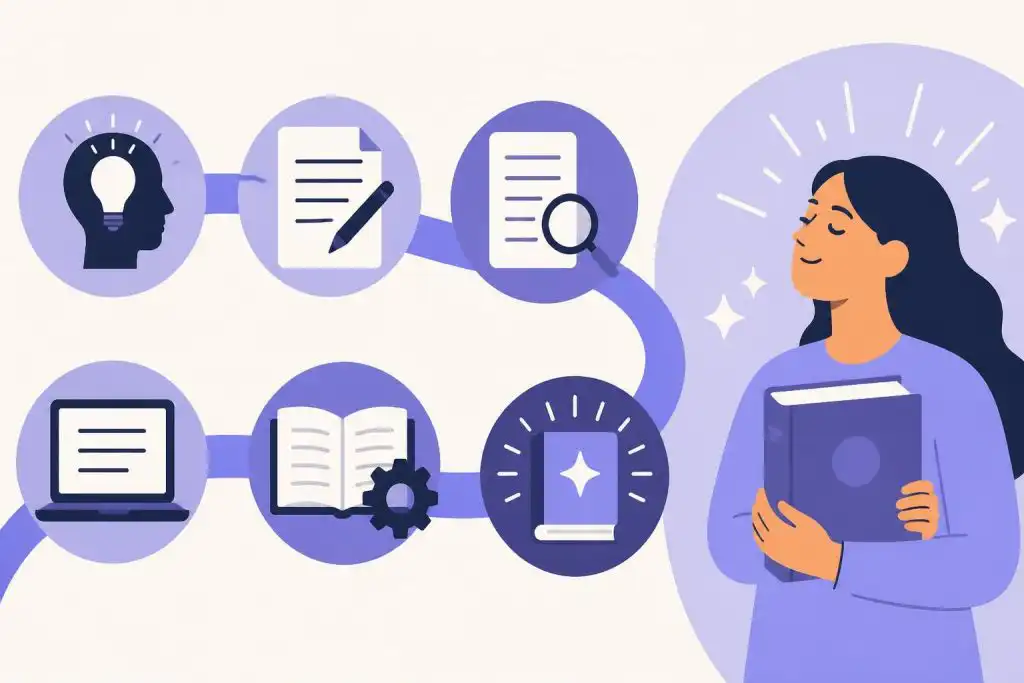
The dream of seeing your name on a book cover is one that countless writers share, yet the path to becoming a published author often feels shrouded in mystery. I remember the first time I held a book written by someone I knew personally. It wasn't the story inside that struck me most powerfully in that moment, but the simple fact that this person had transformed their ideas into something real, something that existed in the world beyond their imagination. That realization changed everything for me. Becoming a published author isn't about waiting for lightning to strike or having superhuman talent. It's about understanding the journey ahead and taking deliberate steps forward.
The Reality of Modern Publishing
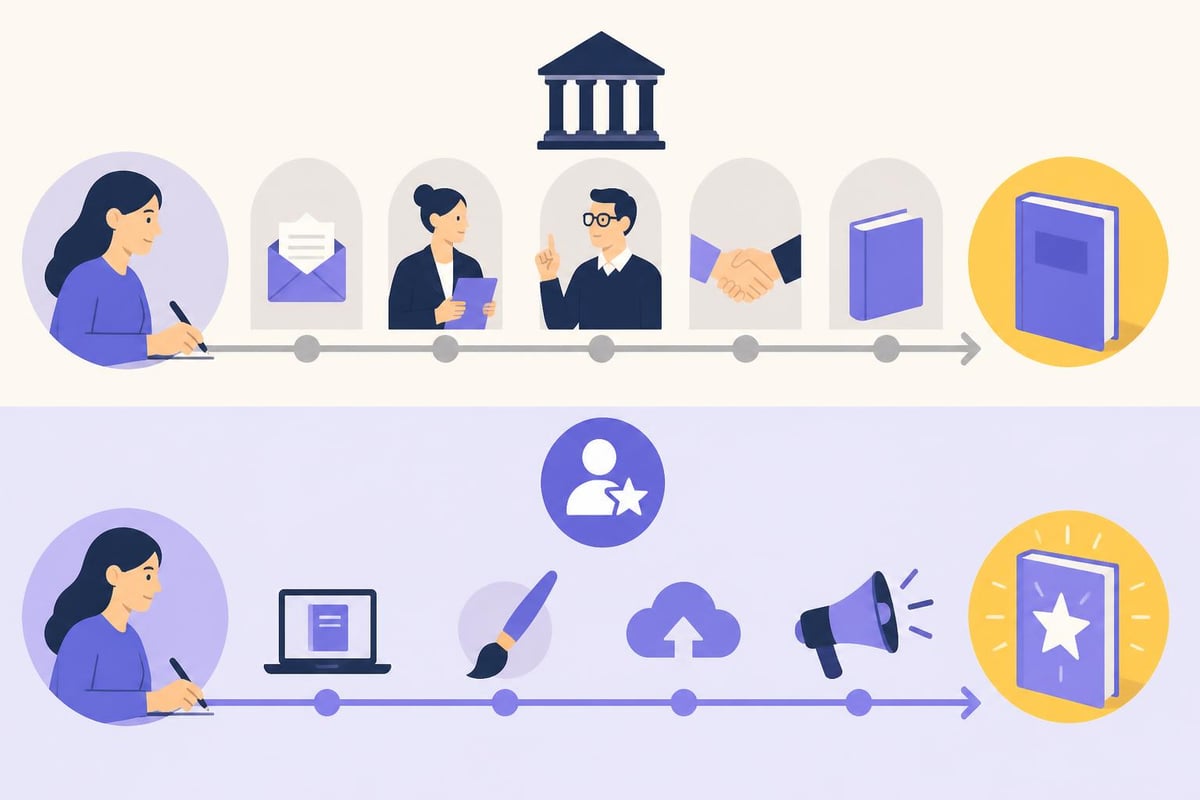
The landscape of publishing has transformed dramatically over the past decade. Where once aspiring writers faced gatekeepers at every turn, today's authors have multiple pathways to publication.
Traditional publishing still exists, of course, with its promise of editorial support, distribution networks, and the validation of industry professionals. But the traditional publishing process demands patience, often requiring years from manuscript completion to bookstore shelves.
Self-publishing has emerged as a powerful alternative. Authors who choose this route maintain creative control, keep larger royalty percentages, and move from manuscript to market on their own timeline.
Understanding Your Publishing Options
Each publishing path offers distinct advantages and challenges:
Traditional Publishing
- Agent representation required for most major publishers
- Editorial, design, and marketing support included
- Smaller royalty percentages (typically 10-15%)
- Longer timeline to publication (12-24 months after acceptance)
- Publishers cover production costs
Self-Publishing
- Direct control over every decision
- Higher royalty rates (35-70% on platforms like Amazon KDP)
- Faster publication timeline (weeks to months)
- Author covers all production costs
- Marketing responsibility falls entirely on author
Hybrid Publishing
- Combines elements of traditional and self-publishing
- Author typically pays for services
- Professional editing and design support
- Variable distribution arrangements
- Shared marketing responsibilities
The choice between these paths depends on your goals, timeline, budget, and desired level of control over your work.
Building Your Manuscript Foundation
Every published author begins with a manuscript. This seems obvious, but the quality of that manuscript determines everything that follows.
I once met a writer at a conference who'd submitted the same manuscript to agents for three years without success. When I asked if she'd revised it during that time, she looked puzzled. "Why would I change it?" she asked. "It's already written." Her confusion revealed a fundamental misunderstanding: writing a book and writing a publishable book are two different achievements.
The Writing Process
Developing strong writing skills forms the foundation of your author career. According to career development resources for authors, consistent practice and continuous learning separate aspiring writers from those who actually complete and publish manuscripts.
Your writing process should include:
- Initial drafting without self-censorship
- Developmental revision focusing on structure and pacing
- Line editing to refine prose and voice
- Proofreading to eliminate errors
- Beta reader feedback for fresh perspectives
The timeline varies dramatically. Some authors draft quickly and revise slowly. Others labor over every sentence during the initial draft. Neither approach is superior, the key is finding what works for your creative process.
Leveraging Technology
Modern writing tools have revolutionized manuscript development. While some authors still prefer traditional word processors, specialized book writing software offers features specifically designed for long-form narrative projects.
Consider what you need from your writing environment:
| Feature | Benefit | Best For |
|---|---|---|
| Scene organization | Non-linear writing and rearranging | Complex plots with multiple timelines |
| Character tracking | Consistency across chapters | Character-driven narratives |
| Version control | Safe experimentation with revisions | Writers who revise extensively |
| Formatting tools | Professional interior design | Authors planning to self-publish |
| AI editing assistance | Real-time feedback on pacing and structure | Writers seeking editorial guidance |
Many successful authors now use AI-powered writing assistants that provide feedback on manuscript elements while preserving the author's unique voice. These tools help identify pacing issues, inconsistencies, and structural weaknesses before you invest in professional editing.
Professional Development and Preparation
Becoming a published author requires more than writing talent. You need to understand the business side of publishing and develop skills that extend beyond the manuscript itself.
The publishing industry has its own language, conventions, and expectations. Genre matters. Word count matters. Market positioning matters. These aren't creative considerations, they're professional ones.

Editorial Standards
Professional editing distinguishes published books from unpublished manuscripts. Even traditionally published authors whose publishers provide editing often work with independent editors first to strengthen their manuscripts before submission.
Three types of editing serve different purposes:
- Developmental editing addresses big-picture elements like structure, pacing, character arcs, and thematic consistency
- Line editing focuses on prose quality, sentence construction, and voice
- Copy editing catches grammatical errors, spelling mistakes, and formatting inconsistencies
Budget constraints often force self-publishing authors to make difficult choices about editing services. This is where AI manuscript editors can provide value, offering developmental feedback at a fraction of professional editing costs, though they shouldn't completely replace human editors for final polish.
Design and Formatting
Book design encompasses both exterior and interior elements. Your cover needs to attract readers while signaling your book's genre and quality level. Your interior layout must meet technical specifications while providing a pleasant reading experience.
For self-publishing authors, print-ready book formatting presents a significant hurdle. Professional formatting services can cost hundreds or thousands of dollars, while DIY approaches using standard word processors often produce amateurish results.
The technical requirements vary by format:
| Format | Key Considerations |
|---|---|
| Paperback | Trim size, margins, gutter spacing, page numbers |
| Hardcover | Case binding, dust jacket design, endpapers |
| Ebook | Reflowable text, embedded fonts, linked table of contents |
Professional authors treat design as an investment in their credibility. Readers judge books by their covers, literally, and poorly formatted interiors trigger immediate skepticism about content quality.
The Publishing Process
Whether you choose traditional or self-publishing, the actual publication process involves specific steps and decisions.
Traditional Publishing Timeline
For authors pursuing traditional publication, the journey typically unfolds over years:
- Complete and revise manuscript to professional standards
- Research and query literary agents (3-12 months)
- Agent revisions and submission to publishers (6-18 months)
- Publisher acquisition and editorial process (6-12 months)
- Production, marketing, and release (12-18 months)
The query letter becomes your primary marketing tool. This one-page pitch must capture your book's essence, demonstrate your platform, and convince an agent your manuscript deserves their limited time and attention.
Rejection is standard. Most published authors collected dozens or hundreds of rejections before finding agent representation. Persistence matters more than initial acceptance.
Self-Publishing Implementation
Self-publishing moves faster but demands more from authors. You become publisher, project manager, and quality controller.
The self-publishing platforms you choose affect your book's reach, royalty rates, and production options. Amazon KDP dominates the market but shouldn't be your only distribution channel. IngramSpark provides access to bookstores and libraries. Draft2Digital simplifies multi-platform distribution.
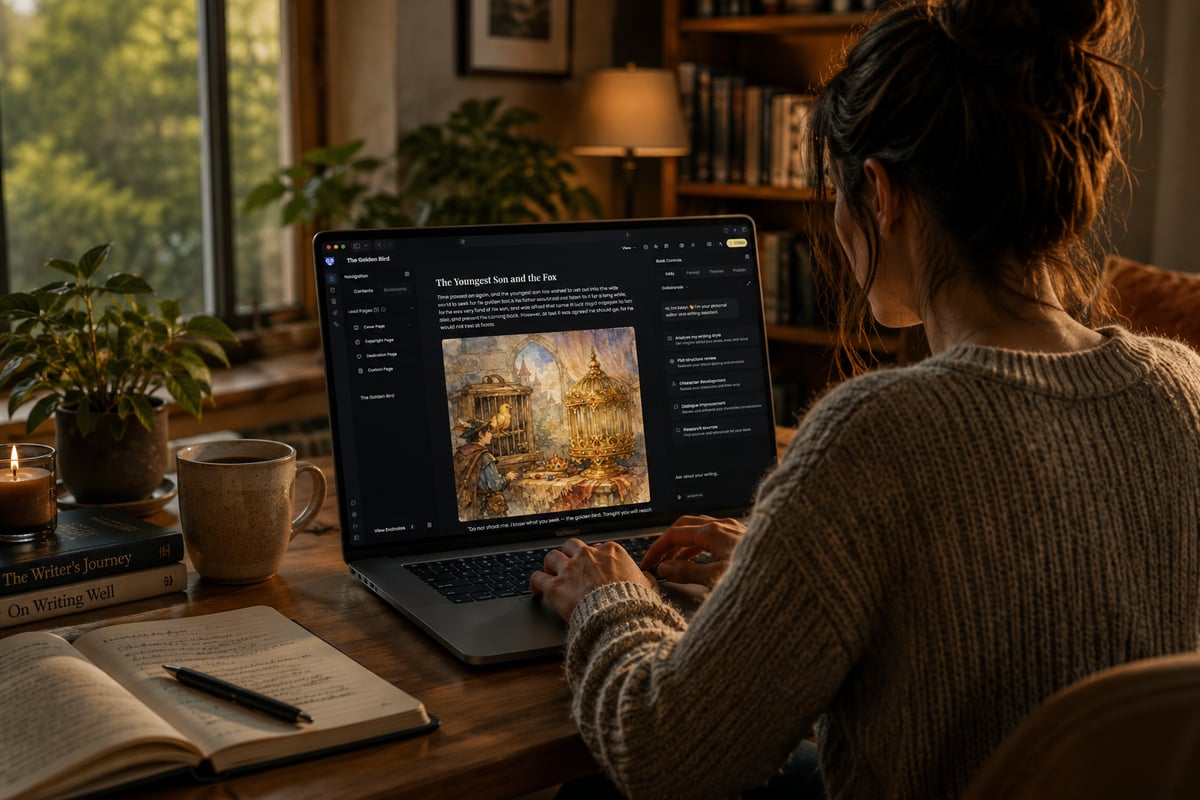
Storyloft gives authors everything needed to write, edit, format, and publish a professional book in one place. Use Eddy, an AI editor built for authors, to get feedback on pacing, structure, prose, and consistency while preserving your unique voice. Format beautiful print books and ebooks for KDP and IngramSpark, generate illustrations, organize notes, and manage your manuscript without juggling multiple writing apps or formatting tools.
Your production timeline depends on your preparation and resources:
- Manuscript completion (variable)
- Professional editing (4-8 weeks)
- Cover design (2-4 weeks)
- Interior formatting (1-2 weeks)
- Platform setup and metadata (1 week)
- Review copies and marketing preparation (4-8 weeks)
- Publication day and launch (1 week)
Many authors rush this timeline, publishing before their book is truly ready. Remember: you only get one launch. A book published too early, with inadequate editing or amateur design, starts its life with permanent negative reviews.
Building Your Author Platform
Modern publishing demands more from authors than quality manuscripts. You need an audience, a platform, and visibility in an oversaturated marketplace.

Why Platform Matters
Publishers evaluating manuscripts ask one question before all others: "Can this author sell books?" Your platform answers that question. It demonstrates you have readers who trust your voice and will buy your work.
For self-published authors, platform becomes even more critical. Without a publisher's marketing machine, you rely entirely on your ability to reach readers directly.
Platform building includes:
- Author website serving as your professional home online
- Email list of engaged readers who want your updates
- Social media presence where you connect with your audience
- Content creation that provides value beyond selling your books
- Networking with other authors, bloggers, and influencers
- Speaking or teaching opportunities that establish expertise
These activities take time, which is why successful authors start building platform before publication, not after.
Marketing Your Published Work
The harsh reality: writing and publishing your book represents only half the challenge. Getting readers to discover, purchase, and read your work requires sustained marketing effort.
According to publishing industry research, published authors who actively market their books see dramatically better sales results than those who publish and hope readers will somehow find their work organically.
Your marketing strategy should include:
- Pre-launch buzz building anticipation before publication
- Launch week coordination maximizing early visibility
- Review cultivation securing credible testimonials
- Content marketing providing free value to attract readers
- Paid advertising when budget allows and ROI justifies investment
- Long-term engagement maintaining reader relationships between books
Fiction and nonfiction authors approach marketing differently. Fiction writers often build series to increase reader investment, while nonfiction authors leverage their book to establish thought leadership and create speaking opportunities.
Navigating Rights and Royalties
Understanding the business aspects of publishing protects your interests and maximizes your earnings as a published author.
Rights Management
Your book represents multiple distinct rights that can be sold or licensed separately:
- Print rights for physical book production
- Digital rights for ebook distribution
- Audio rights for audiobook production
- Foreign rights for translation and international markets
- Film/TV rights for adaptation to other media
- Subsidiary rights including book club editions, excerpts, and more
Traditional publishers typically request all rights, though authors with leverage can negotiate to retain certain rights. Self-published authors control all rights by default but must manage each revenue stream independently.
Understanding Royalties
Payment structures vary dramatically between publishing paths:
Traditional Publishing Royalties:
- Hardcover: 10-15% of cover price
- Paperback: 7.5-10% of cover price
- Ebook: 25% of net receipts
- Advance against royalties (must earn out before additional payments)
Self-Publishing Royalties:
- Amazon KDP: 35% or 70% depending on price point
- IngramSpark: 45-55% typically
- Direct sales: 100% minus production costs
The math seems simple, 70% beats 10% every time. But traditional publishers provide advance payments, broader distribution, and marketing support that self-published authors must fund themselves.
Continuous Growth and Future Projects
Your first published book marks a beginning, not a destination. The most successful authors view publication as one milestone in a long career.
Learning from Publication
Every published book teaches lessons about craft, process, and business. Pay attention to:
- Reader feedback revealing how your work actually lands
- Sales patterns showing which marketing efforts work
- Production efficiency identifying where you can improve workflow
- Genre fit understanding where your voice resonates most strongly
Many published authors report their third or fourth book finally feels "right," the culmination of lessons learned from earlier projects.
Building a Sustainable Career
Professional authors think in terms of careers, not individual books. This mindset shift affects every decision:
- Genre consistency to build loyal readership
- Publication schedule maintaining reader engagement
- Quality standards protecting reputation
- Business systems creating sustainable workflows
- Multiple income streams reducing risk
Some authors publish one book and consider themselves done. Others build decades-long careers with dozens of titles, each building on previous success. Neither approach is wrong, but understanding your goals from the start helps you make better strategic decisions.
The path from aspiring writer to published author remains challenging in 2026, but it's more accessible than ever before. Technology has lowered barriers, self-publishing has created new opportunities, and resources like comprehensive author guides provide roadmaps for the journey. Success requires talent, yes, but also persistence, professionalism, and willingness to learn the business side of publishing alongside the creative craft.
Becoming a published author transforms from distant dream to achievable goal when you understand the journey and take consistent action. The tools, platforms, and knowledge you need are available, the missing ingredient is simply getting started and staying committed through the inevitable challenges. Storyloft combines everything you need to write, edit, format, and publish professional-quality books in one integrated platform, removing technical barriers so you can focus on what matters most: telling your story and sharing it with readers who need to hear it.