
Epic Names of Fantasy Lands: A Worldbuilder’s Guide
You’ve got the map open, a kingdom pinned between mountains and sea, and one ugly placeholder still sitting in the center: “Elf Land,” “Desert Realm,” or the dreaded “Name TBD.” That one gap can stall an entire draft because names of fantasy lands do more than label territory. They set genre, imply culture, and tell the reader what kind of story they’ve entered.
“From Concept to Kingdom: A Guide to Naming Fantasy Lands” starts with a simple truth. A powerful name, whether it feels luminous like Narnia, rugged like Westeros, or mythic like Middle-earth, makes a promise before the first chapter begins. Good names carry tone. Great names carry history. If you’re tired of random generators spitting out syllables with no soul, this is the practical framework that helps.
Use three core methods. Linguistic Blending combines sounds and roots into something that feels native to your world. Descriptive Compounding builds names from geography, function, or belief. Pure Evocation aims for mood first, then lets meaning grow around the sound. If you want a jumpstart before refining by hand, try this tool to generate fantasy world names.
The rest is a working toolkit built around archetypes. These aren’t just examples to admire. They’re patterns you can steal, twist, and make your own.
Table of Contents
- 1. Elvoria
- 2. Drakenmoor
- 3. Shadowveil
- 4. Crystallia
- 5. Aethermoor
- 6. Valorian Empire
- 7. Verdant Vale
- 8. Crimson Wastes
- 9. Aethermist Islands
- 10. Necropolis Eternal
- 10 Fantasy Lands Comparison
- Your World Awaits Turn Your Name into a Narrative
1. Elvoria
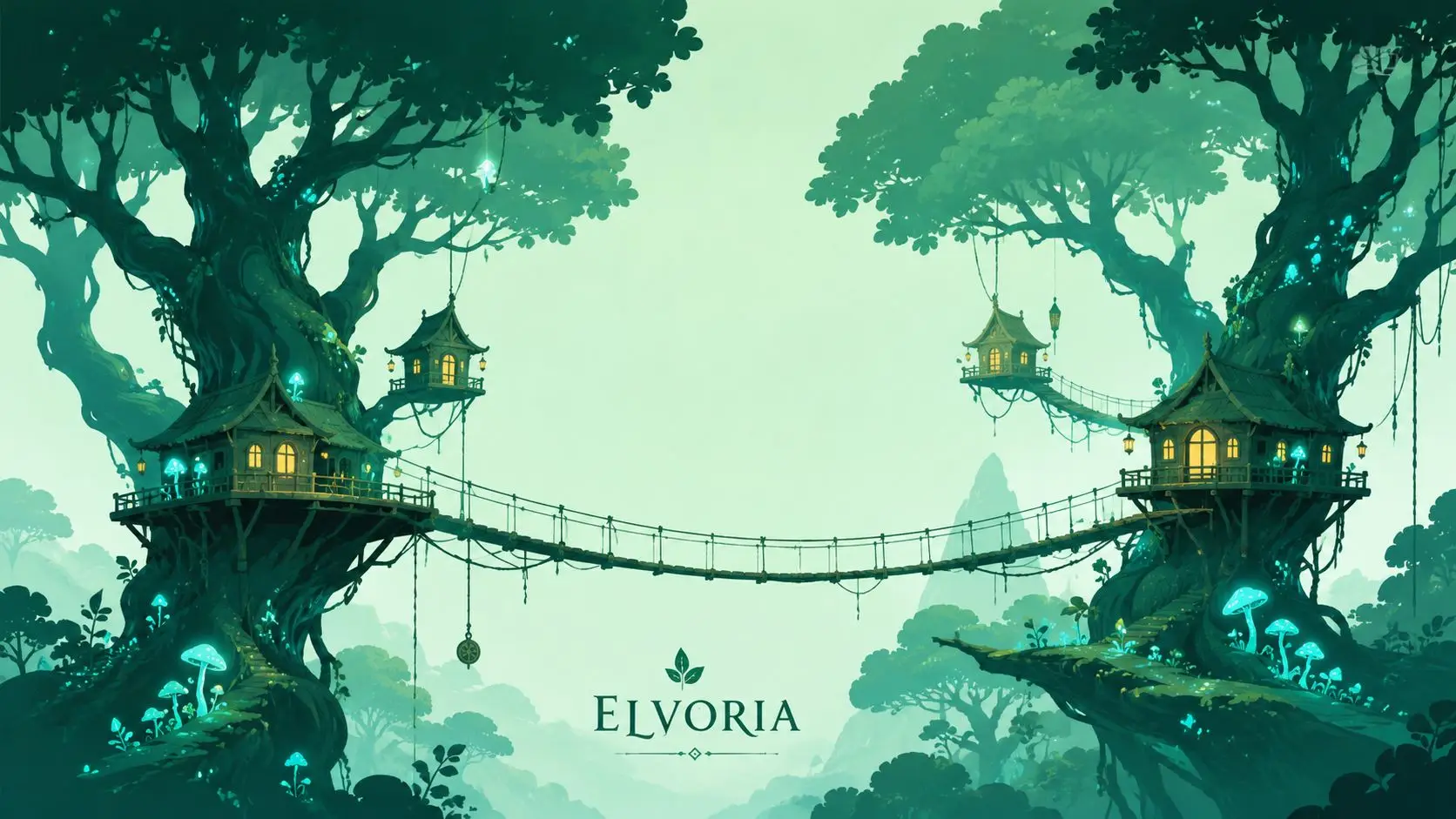
Elvoria is the classic luminous forest realm. The name works because it doesn’t only say “elves.” It says refinement, age, music, and a culture that sees itself as older than the kingdoms around it. If your land holds living cities in ancient trees, sacred groves, moonlit bridges, and a people who treat nature as kin rather than resource, this naming family fits.
Real examples show the tonal spread. Tolkien’s Lothlórien feels ceremonial and sorrowful. The Feywild in Dungeons & Dragons feels dangerous and enchanting. Teldrassil from Warcraft leans monumental and mythic. Same broad archetype, different emotional temperature.
The naming pattern
Elvoria uses linguistic blending. Take a cultural marker like elf, fae, syl, lor, or thal, then soften it with a flowing suffix such as -oria, -lien, -ara, -eth, or -wyn. The result feels old, melodic, and stately.
A few reusable templates:
- People-root plus lyrical suffix: Elvoria, Faelith, Sylvara
- Nature-root plus noble cadence: Thalewyn, Lorandor, Silmara
- Sacred-place structure: Moonbough, Starroot Hollow, The Elder Canopy
What doesn’t work is overloading the name with decorative syllables. If every elven place is Aeltharielion, readers stop hearing difference.
Practical rule: Elven land names should be easy to say aloud, even when they sound ancient.
Storyloft is useful here because this archetype usually creates lore sprawl fast. Use the character creator to lock in visual consistency for elf lineages, then tag houses, magical traditions, and forest regions so your naming stays coherent. I also like using the planning workspace to keep separate notes for spoken language, ceremonial language, and outsider nicknames. That prevents every settlement from sounding like it came from the same naming generator.
2. Drakenmoor
Drakenmoor sounds heavier before you know anything about it. That’s why it works. The hard opening in “Drak” suggests fang, scale, and old violence, while “moor” grounds the fantasy in geography. Even if your realm is mostly volcanic ridges and ash valleys rather than literal moorland, the second half gives the name a bleak, weathered finish.
This archetype suits dragon-dominated territories, mountain frontiers, scorched kingdoms, and lands marked by magical war. Think of Skyrim’s iron-cold severity, Erebor’s mountain gravitas, or dragonlands that feel ruled by ancient appetite rather than human politics.
What makes the sound work
Drakenmoor belongs to descriptive compounding with one invented half and one familiar half. That’s one of the most reliable ways to create names of fantasy lands that feel readable but still distinct. Readers can infer danger from “Draken,” and they can picture terrain from “moor.”
Try structures like these:
- Creature plus terrain: Drakenmoor, Wyvernreach, Basilisk Downs
- Element plus stronghold: Ashcrown, Emberhold, Cinderpeak
- Ancient ruler plus scarred geography: Varkul Range, Sarth Flameplain
The trap is making every dragon realm sound interchangeable. “Dragonspire,” “Dragonmount,” and “Dragonland” all say the same thing with less character. Pick one strong signal, then let the setting do the rest.
For workflow, Storyloft’s binder system helps more than a blank notes app. Separate dragon species, lair territories, dynastic histories, and battlefield legends into their own binders. Then use tags for era markers, especially if your mountains carry layers of conquest. If you generate art in the illustration suite, specify the volcanic architecture, scale texture, and smoke density in your scene notes so your visuals reinforce the name rather than contradict it.
3. Shadowveil
Some land names need to whisper instead of strike. Shadowveil is built for twilight realms, hidden courts, alleys where secrets trade hands, and borderlands where light never fully wins. It’s a strong fit for dark fantasy, intrigue, mystery, and settings where social rules matter as much as monsters.
The appeal of this archetype is balance. “Shadow” brings threat, concealment, and moral ambiguity. “Veil” softens it with elegance, secrecy, and distance. That pairing is why the name can host assassins, cloistered scholars, masked nobility, or subterranean cities without sounding one-note.
How to keep it from turning generic
This style belongs to pure evocation. The name succeeds because it feels right, not because it maps cleanly to a literal feature. Underdark works because it’s blunt and spatial. Nightside works because it feels urban and permanent. Shadowveil lands in the middle, which gives it flexibility.
Keep the naming sharp with contrast:
- Dark noun plus delicate noun: Shadowveil, Gloamlace, Nightsilk
- Mist noun plus barrier noun: Duskmantle, Murkcurtain, Hollow Veil
- Secret-society tone: The Veiled Quarter, Noctis Ward, Blackfen Court
Avoid stacking too many “dark” words together. Shadowgloom Nightmist sounds like parody. One moody word and one elegant word usually carry more weight.
The darker the realm, the cleaner the name should be.
Storyloft’s tone analysis is useful with this archetype because atmosphere can drift. If one chapter reads gothic and the next reads urban noir, the land name starts feeling detached from the book around it. Use tags to track clues, organizations, and recurring symbols. Then keep a naming note for districts, guilds, and codenames so your shadow realm sounds culturally unified, not randomly spooky.
4. Crystallia
Crystallia sits on the line between high fantasy and science fantasy. That line is hard to name well because writers often lean too technical or too ornamental. This archetype works when your civilization depends on crystal growth, resonance, memory storage, magical conductivity, or architecture shaped by mineral logic.
The name itself is transparent in the right way. Readers hear “crystal” immediately, but the ending gives it a civilizational feel rather than making it sound like a single cave. That matters if you’re building a place with crystal towers, energy lattices, gemstone guilds, or power systems that affect class, labor, and religion.
Where science fantasy names go wrong
Most weak crystal-realm names fail in one of two directions. They either sound like a child’s cartoon kingdom, or they sound like a chemistry textbook. Crystallia survives because it stays pronounceable and image-rich.
Useful naming patterns include:
- Material plus realm ending: Crystallia, Obsidara, Amberis
- Function plus splendor: Prismarch, Glassspire, Lumenvault
- Geology plus polity: Shard Dominion, Quartzmere, The Faceted Crown
If your magic system has rules, keep those rules in Storyloft’s planning workspace. This is one of those settings where the name must match infrastructure. If crystals power transport, healing, memory, and warfare, note each use in the manuscript sidebar so scenes don’t contradict one another. The notes feature is especially good for tracking what each crystal type can and can’t do, while comments help you flag dialogue that explains technology through character experience instead of exposition dumps.
5. Aethermoor
Aethermoor suggests a place where reality leaks. “Aether” points upward and outward, toward spirit, sky, and unseen layers. “Moor” drags the word back into earth and weather. That tension makes the name ideal for lands where planes overlap, gateways open in wild places, and one valley may obey different metaphysical rules than the next.
This archetype fits stories with dream realms, dimensional crossings, astral weather, fractured cosmologies, and physical realities that can’t be trusted to stay stable. The strongest version gives readers a clear emotional anchor even when the world itself is unstable.
A naming template for layered realities
Aethermoor works because one part promises wonder and the other part promises terrain. That’s a reliable formula for strange settings. Readers need at least one familiar handhold.
Try building from these combinations:
- Metaphysical term plus rugged terrain: Aethermoor, Spiritfen, Astral Heath
- Plane language plus natural feature: Veilmarsh, Riftvale, Echo Range
- Overlapping-world tone: The Betweenfields, Pale Crossing, Lantern Expanse
What doesn’t work is naming every dimensional location with abstract cosmic words. If you use realm names like Omnivera, Transcendia, and Etherion together, they blur. Give each place a physical hook.
In Storyloft, this archetype benefits from strict organization. Use separate binders for each plane and write down their rules as if they were legal codes. Then create linked character profiles for alternate versions of the same person so cross-dimensional scenes remain readable. Tags are especially handy for tracking cause and effect across layers. A war in one plane should leave traces in another, and your naming should reflect those scars.
6. Valorian Empire
Some settings need a name that already sounds stamped on coinage. Valorian Empire does that. It feels administrative, ambitious, and old enough to have official myths about itself. If your story runs on provincial tension, noble houses, conquest, bureaucracy, succession disputes, and court theater, this archetype gives you a durable frame.
The key is that imperial names don’t need to be exotic. In fact, they often work better when they sound like they could survive treaties, military orders, and legal decrees. “Valorian” suggests a founding culture or ruling line. “Empire” tells the reader the political shape outright.
How imperial names earn their weight
Imperial names often come from dynasties, capitals, ancestors, or ideals. That’s why they feel different from wilderness names. They’re designed by power, then repeated by institutions.
Strong templates include:
- Dynastic root plus political form: Valorian Empire, House Seredin Dominion, Caeloran Throne
- Capital-derived state name: Auren Empire, Karthian Imperium, Selvar Crownlands
- Idealized self-image: The Radiant Accord, The Eternal Provinces, The First Realm
The risk is flattening all provinces under one polished naming style. Real empires absorb languages. Let border regions sound rougher, older, or resistant.
Naming test: If a tax collector, a rebel, and a court poet would all use different short forms for the empire, you’ve probably built a believable one.
Storyloft helps manage that layered naming. Build family trees and noble profiles in the character creator, then tag allegiances, vassal ties, and contested titles. Collaboration features matter here too. Political stories break when subplots drift, so editors can use comments to catch a duchy that changes status or a house name that mutates halfway through the manuscript.
7. Verdant Vale
Verdant Vale is a softer construction, and that softness is the point. This archetype serves lands where nature is abundant, aware, and sometimes opinionated. It fits enchanted valleys, living ecosystems, druidic territories, beast-haunted sanctuaries, and stories where wilderness isn’t backdrop but participant.
The alliteration does quiet work here. “Verdant” is lush and cultivated in tone, while “Vale” feels sheltered and old. Together they create a realm that sounds habitable, not merely wild. That distinction matters when your characters live in relationship with the land instead of fighting through it.
The soft-sound strategy
Soft-sound land names often use v, l, s, m, and f to create a sense of growth or calm. That doesn’t mean the realm has to be safe. It means the danger can arrive through beauty, instinct, and ecological power instead of brute force.
Good patterns include:
- Adjective plus landform: Verdant Vale, Silvermere, Golden Fen
- Living-world phrasing: Bloomreach, Mosshollow, Briar Glen
- Nature with agency: The Speaking Grove, Heartroot Vale, Greenwake
What fails is over-sweetening. If every place is Blossommeadow or Fairyfern, the world loses dramatic range. Pair beauty with specificity.
Storyloft’s planning workspace is excellent for ecosystems because you can keep flora, fauna, seasons, and sacred sites in one place. If a certain beast pollinates moon-blooming trees and those trees anchor local religion, tag all three together. The character creator also helps with animal companions and familiars so their look stays stable across illustrations and cover concepts.
8. Crimson Wastes
Crimson Wastes proves that invented names aren’t always the best option. Sometimes blunt naming hits harder. This one tells the reader terrain, mood, and threat in two words. It works for deserts, badlands, blood-colored salt flats, rust dunes, and any realm where survival shapes culture more than heritage does.
The best desert names often sound earned by people who crossed the place, not by scholars who archived it. Arrakis has its own linguistic force, but “Crimson Wastes” belongs to the family of names travelers would use when they need others to understand the danger quickly.
When blunt naming beats invented naming
Desert settings benefit from clarity because the environment already does heavy imaginative work. Readers can picture heat, scarcity, and distance without needing five apostrophes and a glossary.
Use these templates when you want immediate impact:
- Color plus terrain: Crimson Wastes, White Barrens, Black Dunes
- Threat plus geography: Scorchreach, Bone Flats, The Thirsting Sea
- Ruin-forward naming: Kingsand, The Fallen Oasis, Dust of Empires
The weakness of descriptive names is sameness. If every region in your map follows the same pattern, the world reads like labels instead of history. Counter that by giving cities, tribes, and trade routes their own naming logic.
Storyloft’s tone analysis can help maintain environmental pressure in these chapters. Desert settings lose force when the prose forgets heat, thirst, abrasion, and horizon. Use binders for caravan routes, oasis law, tribal memory, and ruin sites. Then tag survival knowledge by character so your nomads don’t talk like palace scribes.
9. Aethermist Islands
Floating archipelagos need names that carry altitude and separation. Aethermist Islands does both. “Aethermist” gives the whole chain a mythic atmosphere, while “Islands” keeps the geography legible. That’s useful in stories built on exploration, air travel, sky trade, fragile alliances, and the politics of distance.
The strongest sky settings balance wonder with logistics. Readers want cloud bridges and sunlit waterfalls, but they also want to know how food moves, how storms isolate communities, and why some islands dominate others. The realm name should support that balance.
How to name archipelagos that feel distinct
Name the overall region one way and the individual islands another. That’s the trick. The chain can sound airy and unified. The islands should sound local, practical, and culturally diverse.
A useful hierarchy looks like this:
- Realm-level name: Aethermist Islands, The High Reaches, Skychain
- Island-level names: Brinehook, Halcyon Crown, Thorn Nest, Luma Isle
- Route and alliance names: The Wind Market, Sparrow Passage, Cloud Treaty
If every island uses the same celestial vocabulary, they flatten into one backdrop. Give one island a merchant dialect, another a monastic naming system, another a settler shorthand.
In Storyloft, map these relationships visually in the planning workspace. Track resources, rivalries, altitudes, and travel hazards side by side with your manuscript. The illustration suite is especially useful here because aerial perspective can lock in the identity of each island. Once you define those silhouettes, your names become easier to remember because the reader can connect sound to shape.
10. Necropolis Eternal
Necropolis Eternal is a strong choice when death is civic rather than monstrous. This realm isn’t just tombs and skeleton armies. It’s a society organized around ancestry, preservation, memory, ritual, and coexistence between the living and the dead. Used well, the name feels solemn and monumental rather than campy.
This archetype works best when undeath has rules, purpose, and status. A city of archivist spirits, embalmed judges, bone-catacomb guilds, and funeral processions can feel culturally rich if the language respects the culture instead of reducing it to horror wallpaper.
Naming death without sounding cartoonish
“Necropolis” is already a loaded word, so the second half matters. “Eternal” frames the realm around continuity and philosophy rather than gore. That’s why the name can host meditations on memory, grief, duty, and the cost of preservation.
Strong alternatives follow similar logic:
- Death term plus lofty ideal: Necropolis Eternal, Ossuary Divine, Sepulcher Prime
- Memory-forward naming: City of Last Voices, The Ever Archive, Ancestral Hollow
- Ritual-state naming: The Quiet Dominion, Mourning Crown, House of Continuance
What usually fails is leaning too hard into edge. Skullshade Doomlands might suit satire or a game zone, but it won’t support emotional complexity for long.
If the dead are part of society, name the realm the way citizens would, not the way invaders would.
Storyloft’s binders and tags are a strong match for this kind of world because ritual systems become complicated fast. Keep funeral law, afterlife mechanics, preserved ranks, and sacred architecture in separate binders. Then use tone analysis to keep the manuscript thoughtful instead of relentlessly grim. That balance is what lets a death-centered realm feel haunting, humane, and readable.
10 Fantasy Lands Comparison
| Setting | Implementation complexity 🔄 | Resource requirements ⚡ | Expected outcomes 📊 ⭐ | Ideal use cases 💡 | Key advantages ⭐ |
|---|---|---|---|---|---|
| Elvoria | 🔄🔄 | ⚡⚡ | High visual/world-building payoff; strong series potential ⭐⭐⭐⭐ | Epic fantasy; environmental stewardship; multigenerational sagas | Instantly recognizable fantasy aesthetic; rich for character development |
| Drakenmoor | 🔄🔄🔄 | ⚡⚡⚡ | Dramatic visuals and action-driven appeal; strong cover potential ⭐⭐⭐⭐ | Dragon-centric epics; treasure quests; high-stakes adventure | High drama and iconic antagonists; excellent for creature imagery |
| Shadowveil | 🔄🔄🔄 | ⚡⚡ | Tightly atmospheric tension; niche noir/mystery fit ⭐⭐⭐ | Mystery-driven fantasy; noir; psychological thrillers | Distinctive mood; supports secret societies and intrigue |
| Crystallia | 🔄🔄🔄 | ⚡⚡⚡ | Distinctive aesthetic; great for complex magic/tech systems ⭐⭐⭐⭐ | Science-fantasy hybrids; magic-system-focused narratives | Unique visual identity; appeals across fantasy and sci‑fi audiences |
| Aethermoor | 🔄🔄🔄🔄 | ⚡⚡⚡⚡ | Very flexible for plot/expansion; high payoff if consistent ⭐⭐⭐⭐ | Multiverse/planar series; interdimensional adventures | Enables parallel storylines and philosophical exploration |
| Valorian Empire | 🔄🔄🔄 | ⚡⚡⚡ | Deep political complexity and multi-POV potential ⭐⭐⭐⭐ | Political thrillers; dynastic sagas; court drama | Rich for power dynamics, alliances, and long-form plotting |
| Verdant Vale | 🔄🔄 | ⚡⚡ | Lush visuals and ecological themes; emotionally resonant ⭐⭐⭐⭐ | Environmental fantasy; creature-centered narratives; coming-of-age | Strong biodiversity and sentient-nature hooks; visual richness |
| Crimson Wastes | 🔄🔄 | ⚡⚡ | Striking, survival-driven impact; immediate tension ⭐⭐⭐ | Survival epics; desert mysteries; resource-scarcity stories | Natural conflict driver; iconic, recognizable landscapes |
| Aethermist Islands | 🔄🔄🔄 | ⚡⚡⚡ | Visually distinctive; exploration and isolation hooks ⭐⭐⭐⭐ | Exploration/discovery tales; inter-island politics; trade conflicts | Unique geography enabling isolated cultures and logistics drama |
| Necropolis Eternal | 🔄🔄🔄 | ⚡⚡⚡ | Philosophical depth and originality; strong thematic focus ⭐⭐⭐⭐ | Mortality/legacy narratives; philosophical fantasy; afterlife societies | Highly original premise; rich for memory, identity, and ritual themes |
Your World Awaits Turn Your Name into a Narrative
A good fantasy land name doesn’t finish your world. It starts it. That’s the mindset shift that helps most writers get unstuck. Instead of searching for a perfect label in isolation, build a name that can carry pressure. Ask what kind of promises it makes. Ask what sort of people would speak it with pride, fear, resentment, or longing.
The three methods in this guide are practical because they solve different problems. Linguistic Blending helps when you want a land to feel native to a culture with its own history and phonetic character. Descriptive Compounding helps when you need clarity, especially for maps, action-heavy stories, or settings where terrain matters immediately. Pure Evocation helps when atmosphere comes first and literal meaning can stay slightly out of focus. Most strong names borrow from more than one method, but one usually leads.
The archetypes matter because they reveal pattern, not because you should copy them whole. Elvoria teaches softness and age. Drakenmoor teaches weight and scarred terrain. Shadowveil teaches contrast. Crystallia teaches how to signal system and wonder at once. Valorian Empire teaches political authority. Crimson Wastes teaches when plain language is stronger than invention. Once you see the construction, naming stops feeling mystical and starts feeling craft-based.
My practical advice is simple. Name in layers. Start with the realm. Then name its capital, frontier, old name, outsider nickname, sacred title, and vulgar shorthand. A believable land rarely has one name used by everyone in every context. Farmers, invaders, nobles, priests, and smugglers don’t speak the same map. When you build those variations, the setting starts to feel inhabited.
An integrated writing platform proves its worth. In Storyloft, you can keep world lore next to live draft pages instead of scattering it across documents, tabs, and notebooks. Use binders for geography and political structure. Use tags for lineages, trade routes, magical schools, and historical eras. Use the manuscript editor and comments to catch naming drift before it turns into continuity trouble. If you’re developing a visually distinctive world, the illustration tools and character creator can also help you test whether a name matches the imagery the reader will feel on the page.
Names of fantasy lands work best when they’re supported by everything around them. History gives them depth. Conflict gives them urgency. Character gives them emotional charge. Once the name and the world start reinforcing each other, your map stops looking like a planning document and starts looking like a place readers want to enter.
Your epic story doesn’t begin with a battle, a prophecy, or a magic system. It often begins with a single name that feels inevitable the moment you hear it. Build that name well, and the rest of the world has something solid to grow from.
Storyloft gives authors one place to draft, organize lore, track timelines, generate illustrations, shape covers, and prepare a manuscript for publishing without bouncing between separate tools. If you’re building complex names of fantasy lands and the cultures behind them, Storyloft makes it easier to keep worldbuilding, writing, and visual development connected from first idea to finished book.