Beautiful Writers: The Art of Crafting Stories That Sing

I'll never forget the moment I realized what separated good writers from beautiful writers. I was sitting in a coffee shop, reading a passage from Ursula K. Le Guin's "A Wizard of Earthsea," when a simple description of wind across water stopped me cold. The words weren't fancy. The sentence structure wasn't complex. But something about the way she arranged those words made me feel the spray on my face, hear the canvas snapping overhead. That's when it hit me: beautiful writers don't just tell stories. They create experiences that live in your bones long after you close the book.
What Defines Beautiful Writers in 2026
Beautiful writers possess a quality that transcends technical skill or grammatical perfection. They understand that writing is ultimately about human connection, about reaching across the void between minds and saying, "I see you. I understand." This understanding shapes every sentence they craft.
The term "beautiful writers" has evolved significantly over the past decade. While it once might have referred simply to elegant prose or poetic language, today's beautiful writers demonstrate a more nuanced mastery. They balance clarity with creativity, accessibility with artistry.
The Core Characteristics That Set Them Apart
What makes someone a beautiful writer isn't just one thing. It's a constellation of qualities working together:
- Authenticity in voice that feels unmistakably theirs
- Emotional intelligence that brings characters to life
- Precision in word choice that makes every syllable count
- Rhythm and musicality that creates natural flow
- Deep empathy that connects with diverse readers
Beautiful writers also demonstrate remarkable restraint. They know when to use ornate language and when simplicity serves better, as explored in discussions about balancing plain and beautiful prose. This judgment comes from understanding their story's needs, not their ego's desires.

The Journey from Competent to Beautiful
Becoming one of the beautiful writers isn't about sudden revelation. It's about thousands of small decisions, daily practices, and a willingness to be vulnerable on the page.
Most writers start by imitating their heroes. There's no shame in this. We learn language by listening, and we learn writing by reading. But the transition from imitation to originality marks the beginning of something special.
Finding Your Distinctive Voice
Your voice is the fingerprint you leave on every page. It's the way you see the world filtered through your unique experiences, values, and sensibilities. Beautiful writers spend years refining this voice, but they never lose its essential character.
I remember working with a novelist who wrote technically perfect sentences that felt utterly lifeless. We spent months not improving her grammar or structure, but helping her write the way she spoke, the way she thought. When she finally broke through and let her real voice onto the page, the transformation was stunning. Her work became magnetic.
This process requires brutal honesty. You must identify your linguistic tics, your default patterns, your go-to metaphors. Then decide which ones serve your authentic voice and which ones are borrowed clothes that don't quite fit.
The Beautiful Writers Podcast features numerous authors discussing exactly this journey, offering insights into how established writers continue developing their voices even decades into their careers.
Crafting Sentences That Sing
Beautiful writers understand that sentences have music. They vary length and rhythm deliberately, creating a cadence that pulls readers forward.
Short sentences punch. They emphasize. They create tension and urgency. Longer sentences, with their clauses and careful construction, allow for complexity, nuance, and the kind of breathing room that lets readers settle into a scene or idea.
The Architecture of Beautiful Prose
Consider how you build your sentences:
| Technique | Purpose | Example Use |
|---|---|---|
| Parallel structure | Creates rhythm and emphasis | "We write to discover, to connect, to transform" |
| Varied sentence length | Controls pacing and energy | Mix 5-word and 25-word sentences |
| Strategic repetition | Builds themes and cohesion | Key phrases echoing through scenes |
| Concrete details | Grounds abstract concepts | "The coffee grew cold" vs. "time passed" |
The best prose doesn't call attention to itself unless that's the specific effect you're seeking. Most of the time, beautiful writers create sentences that disappear, allowing readers to fall completely into the story world.
This invisibility paradox defines much of what separates beautiful writers from merely competent ones. The words flow so naturally that readers forget they're reading words at all. They're just living in the story.
The Emotional Core of Beautiful Writing
Technical skill matters, but beautiful writers know that emotion is the real currency of storytelling. Every scene, every description, every piece of dialogue should carry emotional weight.
This doesn't mean everything needs to be dramatic or intense. Sometimes the most powerful emotion is quiet longing, gentle affection, or the bittersweet recognition of change. Beautiful writers feel these nuances and translate them onto the page.
Developing Emotional Resonance
Creating emotional impact requires several elements working together:
- Understanding your characters' inner lives beyond surface actions
- Showing emotion through physical detail rather than naming feelings
- Building emotional stakes that readers genuinely care about
- Trusting readers to feel without over-explaining
- Drawing from authentic human experience rather than cliché
I once read a scene where a father learned of his daughter's death. The author never wrote "he was devastated" or "his heart broke." Instead, she described how he methodically folded the blanket on the back of the couch, then refolded it, then folded it again, his hands moving in small, precise movements while his wife spoke to the police officer. That image destroyed me. That's what beautiful writers do.

Tools and Technology for Beautiful Writers
While craft remains paramount, modern beautiful writers embrace tools that enhance rather than replace their abilities. The right technology can free you from technical concerns, allowing more energy for creative decisions.
The Eddy AI editor represents this new generation of writing support. Unlike generic grammar checkers, it's trained to understand story structure, pacing, and voice preservation while offering feedback that helps writers grow their craft.
Balancing Technology with Artistry
Smart writers use technology strategically:
- Manuscript organization tools keep complex projects manageable
- AI feedback systems identify pacing issues and inconsistencies
- Formatting software ensures professional presentation
- Collaboration platforms streamline the editing process
But technology serves the writer, never the reverse. Beautiful writers maintain control of their creative vision while leveraging tools to handle mechanical tasks more efficiently. The features available in modern writing platforms demonstrate how technology can support rather than supplant creativity.
Learning from the Masters
Every beautiful writer stands on the shoulders of those who came before. Studying the masters isn't about copying their style. It's about understanding the principles behind their success.
Read widely and read analytically. When a passage moves you, stop and dissect why. What specific choices did the author make? How did they structure that revelation? Why did they choose that particular detail?
Creating Your Reading Practice
| Reading Type | Frequency | Purpose |
|---|---|---|
| In-genre | Daily | Understand market expectations and conventions |
| Cross-genre | Weekly | Discover fresh techniques and perspectives |
| Classic literature | Monthly | Study enduring storytelling principles |
| Craft books | Ongoing | Deepen technical understanding |
| Contemporary masters | Regular | Stay current with evolving styles |
The Beautiful Writers audiobook offers invaluable insights from successful authors about their writing processes and creative philosophies, providing a masterclass in what makes writing truly beautiful.
Revision: Where Good Becomes Beautiful
First drafts are rarely beautiful. They're discovery, exploration, raw material waiting to be refined. Beautiful writers distinguish themselves not in the initial creation but in the revision process.
Revision isn't about fixing mistakes. It's about seeing your work with fresh eyes and making it sing. It's cutting the words you love because they don't serve the story. It's adding layers of meaning through carefully chosen details. It's restructuring entire sections because the pacing feels wrong.
The Layers of Revision
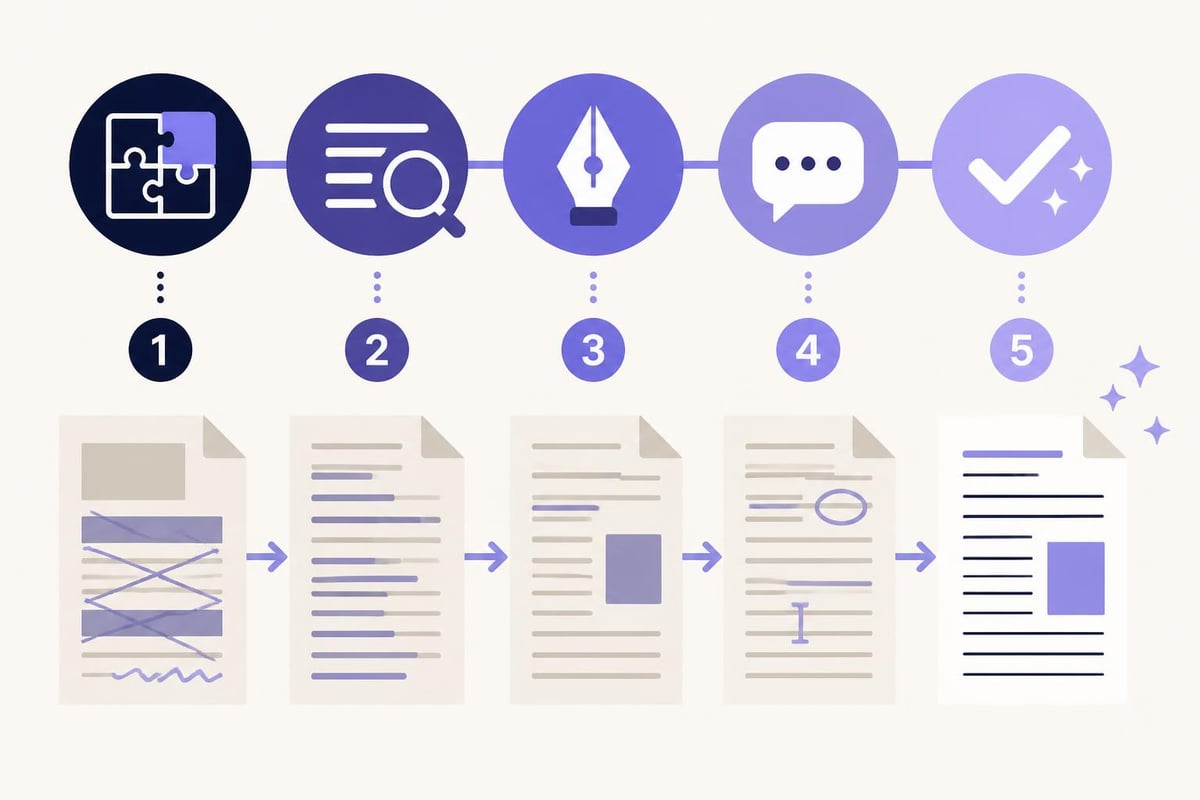
Effective revision happens in distinct passes:
- Structural revision addresses plot, pacing, and overall architecture
- Scene-level revision refines individual chapters and sequences
- Line editing polishes prose at the sentence level
- Copy editing catches grammatical and consistency issues
- Proofreading eliminates final typos and errors
Each layer requires different skills and mindsets. Beautiful writers often separate these passes by days or weeks, allowing their subconscious to process between sessions. The manuscript editing process becomes more manageable when you approach it systematically rather than trying to fix everything simultaneously.
Building a Sustainable Practice
Beautiful writers don't create masterpieces through sporadic bursts of inspiration. They build consistent practices that support long-term creativity and growth.
Your writing practice should feel sustainable, not punishing. Some writers work best with daily word counts. Others prefer time-based goals. Still others measure progress by completed scenes or chapters. The specific method matters less than consistency.
Protecting Your Creative Energy
Sustainable writing requires protecting both your time and your mental space:
- Establish clear boundaries around writing time
- Build rituals that signal your brain to enter creative mode
- Manage self-criticism during the drafting phase
- Seek feedback from trusted readers who understand your vision
- Celebrate milestones rather than only focusing on the distant finish line
Beautiful writers also recognize when to push through resistance and when to step back. Not every writing day will feel magical, and that's okay. Some days, showing up and grinding out the work matters more than inspiration.
The Business of Being a Beautiful Writer
Creating beautiful work is only half the equation. In 2026, writers must also navigate publishing, marketing, and audience building while maintaining their artistic integrity.
This business side intimidates many beautiful writers, but it doesn't have to compromise your art. Professional presentation enhances rather than diminishes your work's impact. Readers deserve both beautiful prose and beautiful books.
Professional Standards Matter
Modern publishing demands:
- Clean, error-free manuscripts that respect readers' time
- Professional formatting that enhances readability
- Compelling presentation that attracts the right audience
- Consistent output that builds reader trust and anticipation
Print book formatting and digital presentation used to require expensive professionals or steep learning curves. Today's tools democratize professional polish, allowing beautiful writers to focus on craft while still producing market-ready books.
Developing Your Unique Methodology
No single approach to writing works for everyone. Beautiful writers develop personal methodologies that align with their creative processes, life circumstances, and storytelling goals.
Some writers outline extensively, knowing every plot point before writing the first sentence. Others discover their stories through the writing itself, following characters wherever they lead. Most fall somewhere between these extremes, adjusting their approach based on specific projects.
Experimentation Leads to Discovery
Finding your methodology requires willingness to experiment:
- Try different outlining techniques from detailed snowflake method approaches to loose frameworks
- Test various drafting speeds from slow, careful composition to fast, messy exploration
- Experiment with writing times, discovering when your creative energy peaks
- Explore different revision strategies until you find what clicks
The goal isn't to follow someone else's system perfectly. It's to understand your own creative rhythms and build practices that support rather than fight them. Beautiful writers honor their unique processes instead of forcing themselves into ill-fitting molds.
The Role of Authentic Observation
Beautiful writers are professional noticers. They pay attention to details others miss: the way light changes during a conversation, how people's speech patterns shift under stress, the small gestures that reveal hidden emotions.
This observation isn't voyeuristic or invasive. It's about understanding human nature deeply enough to render it truthfully on the page. When you notice how a person's shoulders tense before they tell a difficult truth, you can use that detail to create authenticity in your fiction.
Sharpening Your Observational Skills
Make observation a daily practice:
- People-watch in public spaces, noting specific behaviors and mannerisms
- Listen to how real conversations actually flow, with their interruptions and tangents
- Document sensory details in different environments
- Question your assumptions about why people do what they do
- Research experiences outside your own to write authentically about diverse lives
These observations become the raw material beautiful writers transform into compelling scenes and characters. The more attentively you observe life, the more truth you bring to your writing.
Finding Your Writing Community
Writing is solitary work, but beautiful writers rarely work in complete isolation. Community provides feedback, support, accountability, and perspective when you're too close to your own work to see clearly.
Your community might include critique partners who read your drafts, writing groups that meet regularly, online forums where you discuss craft, or mentors who've walked the path before you. The specific form matters less than finding people who understand and support your writing journey.
Building Meaningful Connections
Seek writers who:
- Share your commitment to craft excellence
- Offer honest feedback rather than empty praise
- Understand your genre and audience expectations
- Respect your voice while helping you strengthen it
- Celebrate your successes and support you through setbacks
Research shows that maintaining clarity and authenticity in communication, whether in scientific writing or creative prose, requires feedback from trusted readers who help you see where your intentions don't match your execution.
Beautiful writers emerge through dedication to craft, authentic voice, emotional truth, and consistent practice. They balance artistic vision with technical skill, creating stories that resonate long after readers turn the final page. If you're ready to refine your craft and streamline your writing process, Storyloft combines manuscript writing, AI-powered editing, and professional formatting in one platform designed specifically for authors who want to produce beautiful work without juggling multiple tools. Start writing your most beautiful story yet with technology that supports your unique voice while handling the technical details.