Having a Book Published: A Real Guide for Authors in 2026
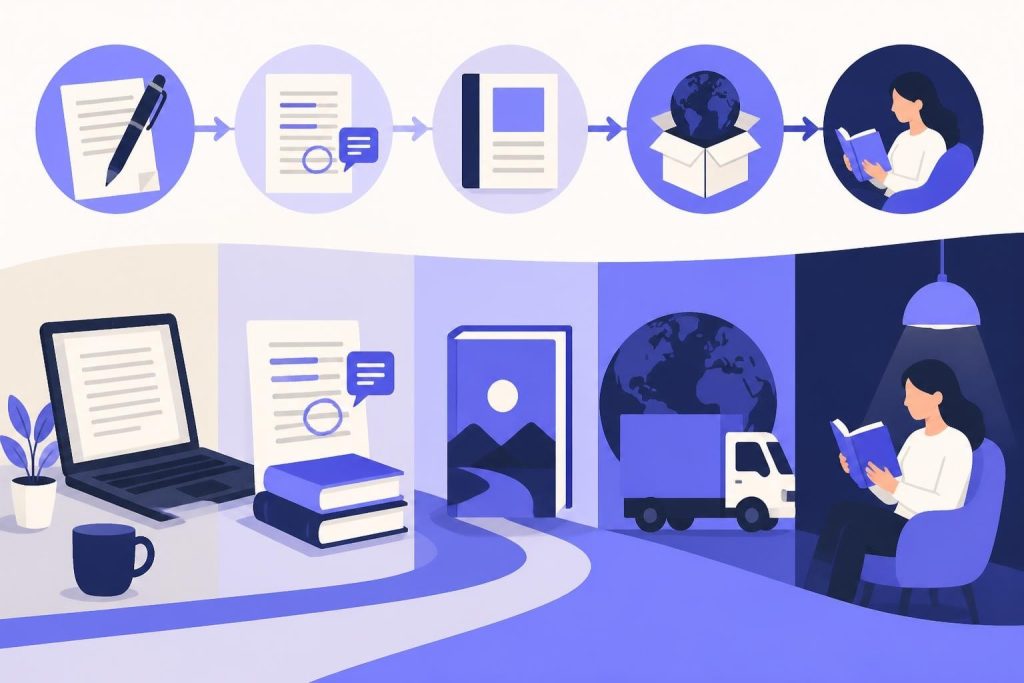
Having a book published isn't as mysterious as it used to be. You don't need to know someone in New York or wait years for a response. In 2026, authors have more control and more options than ever before. Whether you're going traditional or taking the indie route, the path from finished manuscript to published book is pretty straightforward once you know the steps. Let's break down what actually happens when you're having a book published, without the fluff or outdated advice.
Understanding Your Publishing Options
The first big decision is which publishing path makes sense for your book and your goals. Traditional publishing means working with an established publisher who handles everything from editing to distribution. They pay you an advance and royalties, but they also control pricing, cover design, and release timing.
Self-publishing puts you in the driver's seat. You make all the decisions and keep most of the profits. The tradeoff? You handle all the costs and logistics yourself.
Traditional Publishing Still Has Its Place
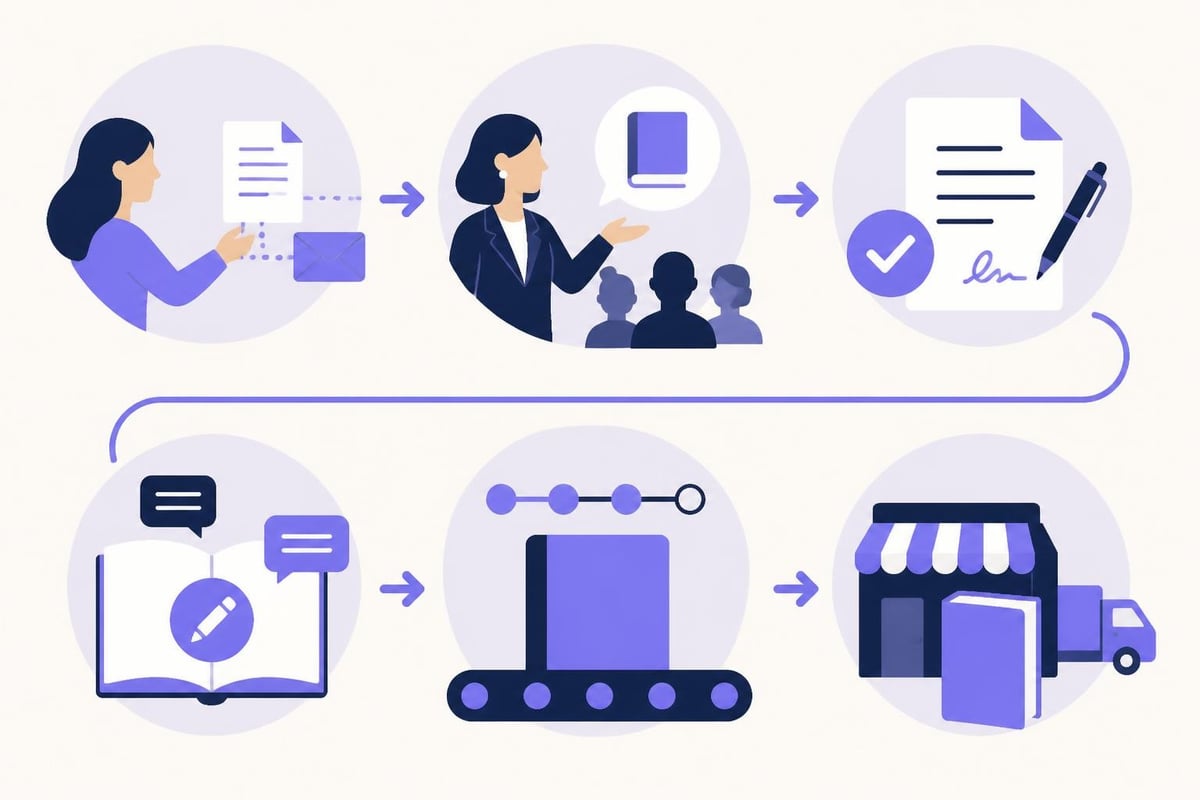
If you go traditional, you'll need a literary agent first. Agents pitch your book to publishers and negotiate contracts. The process typically looks like this:
- Write a query letter and book proposal
- Submit to agents who represent your genre
- Sign with an agent (this alone can take months or years)
- Agent pitches to publishers
- Publisher offers a contract
- Editorial process begins
- Book goes through production
- Release happens 12-18 months after signing
The timeline is long, and rejection is common. But traditional publishers bring expertise, distribution networks, and industry credibility. They also handle bookstore placement and reviews from major publications.
Self-Publishing Gives You Speed and Control
More authors are choosing to self-publish because the quality gap has closed. With professional tools and services available to everyone, self-published books can look and read just as good as traditionally published ones. According to recent publishing data, millions of titles are published each year, with self-publishing accounting for a huge portion of that growth.
The self-publishing process moves much faster:
- Finish your manuscript
- Hire an editor or use editing tools
- Format your book for print and digital
- Design or commission a cover
- Upload to publishing platforms
- Set your price and distribution
- Launch and market your book
You can go from finished draft to published book in weeks instead of years. The money you earn per book is also higher because there's no publisher taking a cut.
Getting Your Manuscript Ready
No matter which publishing route you choose, your manuscript needs to be solid before you move forward. Having a book published starts with having a book worth publishing.
Editing Matters More Than You Think
Your first draft is never your final draft. Professional editing makes the difference between a book that readers love and one they abandon after three chapters. You need at least two types of editing:
Developmental editing looks at big-picture stuff like plot holes, character arcs, pacing problems, and structural issues. This is where major rewrites happen.
Copy editing catches grammar mistakes, awkward sentences, repetition, and style inconsistencies. This polishes your prose and makes everything readable.
Many authors also use AI tools for writing to supplement their editing process. These tools can spot consistency issues, suggest pacing improvements, and help tighten your prose while you maintain your unique voice.
Formatting Separates Amateur from Professional
Readers judge books by how they look inside, not just the cover. Professional formatting includes proper margins, chapter headings, page numbers, and typography that's easy on the eyes.
For print books, you need to understand trim sizes, bleed areas, and print specifications. For ebooks, you need clean HTML that works across different devices and reading apps. Getting print book formatting right prevents costly reprints and bad reviews about readability.
| Format Type | Key Requirements | Common Mistakes |
|---|---|---|
| Proper margins, gutter space, headers | Wrong trim size, missing bleed | |
| Ebook | Responsive design, linked TOC | Fixed layouts, broken navigation |
| Both | Consistent fonts, clean chapters | Weird spacing, orphaned lines |
Choosing Your Publishing Platform
Once your book is ready, you need to decide where to publish it. Self-published authors typically use one or more of these platforms.
Amazon KDP Dominates the Market
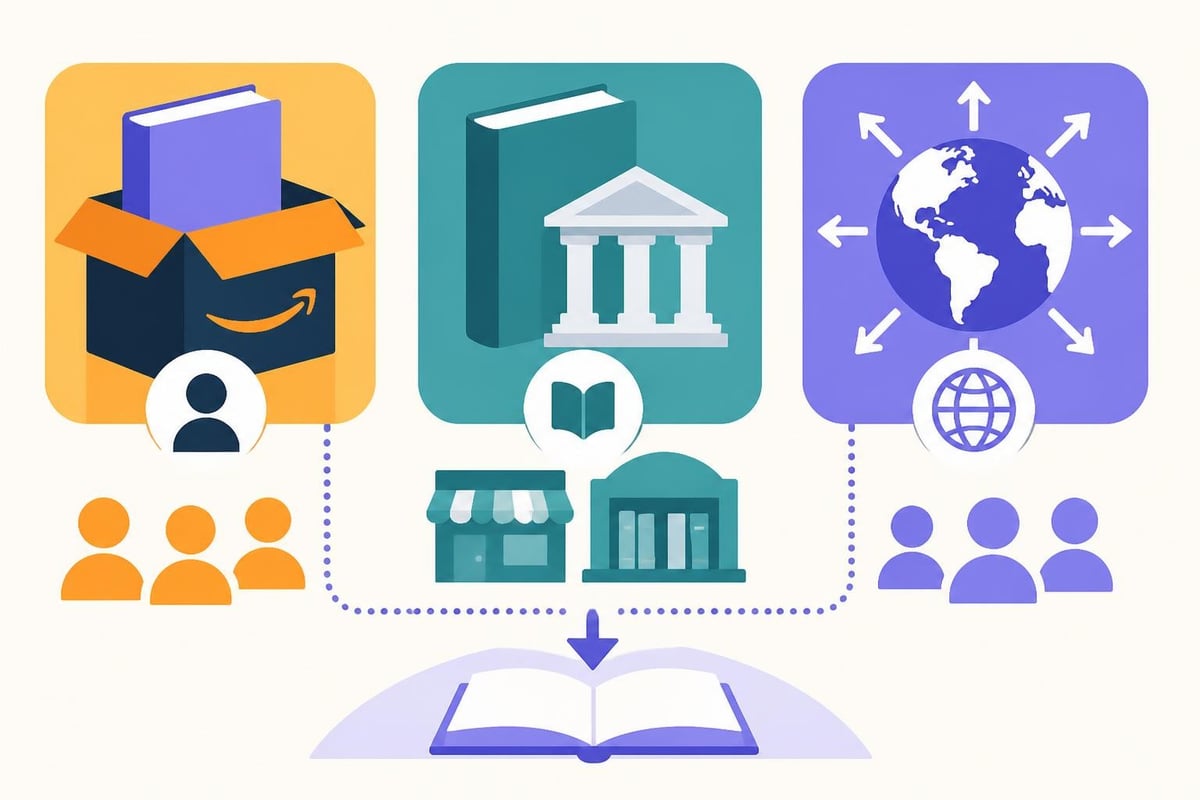
Kindle Direct Publishing is the biggest player. You can publish both ebooks and print books through KDP, and you'll reach millions of readers. The royalty structure is simple: 70% for ebooks priced between $2.99 and $9.99, or 35% for other prices. Print royalties depend on your book's size and page count.
KDP also offers KDP Select, an exclusive program where you enroll your ebook only with Amazon in exchange for promotional tools and higher royalties in certain markets. The downside is you can't sell your ebook anywhere else during the enrollment period.
IngramSpark Opens More Doors
IngramSpark handles distribution to bookstores, libraries, and other retailers that won't stock KDP books. The setup fees are higher, and the interface is less user-friendly, but the reach is wider. Many authors use both KDP and IngramSpark together. You can learn more about the differences in this KDP vs IngramSpark comparison.
Going Wide vs. Staying Exclusive
"Going wide" means distributing your book through multiple platforms instead of just Amazon. You might use Draft2Digital, PublishDrive, or direct uploads to Apple Books, Google Play, and Kobo. This strategy gives you more visibility but requires more management. The wide distribution approach works well for established authors with a following.
Staying exclusive with Amazon through KDP Select gives you promotional tools but limits your reach. There's no perfect answer. Your choice depends on your genre, audience, and marketing strategy.
The Actual Publishing Process
Let's walk through what happens when you're actually having a book published through self-publishing platforms. This is the nuts and bolts stuff.
Setting Up Your Book Details
You'll need to enter information like your book title, subtitle, author name, description, categories, and keywords. These metadata choices affect how readers find your book, so don't rush through them.
Your book description is basically your back cover copy. It needs to hook readers in the first sentence and make them want to click "buy." Categories and keywords determine where your book shows up in search results and browsing.
Uploading Your Files
For ebooks, you'll upload a Word document, EPUB file, or use the platform's built-in formatter. For print books, you'll upload a PDF that meets specific print specifications. The platforms provide templates, but you need to follow them exactly.
Cover files need to be high resolution images (usually 300 DPI) in specific dimensions. For print books, your cover includes the spine and back cover all in one file.
Pricing Your Book Strategically
Pricing affects both your royalties and your sales. Ebook prices typically range from $0.99 to $9.99, with most genre fiction landing between $2.99 and $5.99. Print books cost more because of printing expenses.
You need to price high enough to earn decent royalties but low enough to be competitive. Check what similar books in your genre are charging. You can always adjust prices later based on sales data.
What Happens After You Hit Publish
Having a book published is just the beginning. The hard part is getting people to actually read it.
Your Book Goes Live (But Nobody Knows Yet)
When you publish, your book appears on the platform within 24 to 72 hours. It gets an ISBN (either one you bought or one assigned by the platform), a product page, and it's available for purchase. But that doesn't mean anyone will find it.
Marketing Determines Your Success
Traditional publishers have marketing teams. Self-published authors have themselves. You need a launch plan that includes:
- Building an email list before launch
- Reaching out to book bloggers and reviewers
- Running launch promotions or price drops
- Using social media (without being annoying)
- Getting early reviews from advance readers
- Possibly running ads on Amazon or BookBub
The romance genre, for example, has found massive success through reader communities and BookTok, reviving entire segments of publishing through authentic recommendations.
If you're looking for a complete solution that helps you through the entire process, the Storyloft Book Writing App gives authors everything needed to write, edit, format, and publish a professional book in one place. You get AI editing that preserves your voice, professional formatting for KDP and IngramSpark, and tools to manage your entire manuscript without juggling multiple apps.

Reviews Build Credibility
Reviews matter more than almost anything else. Potential readers look at your review count and average rating before deciding to buy. Early reviews are critical, which is why many authors run advance reader copy (ARC) programs where they give free copies to readers in exchange for honest reviews.
Handling the Business Side
Having a book published means running a small business, especially if you self-publish.
Legal and Financial Basics
You'll need to decide on a publishing imprint name (even if it's just your name), set up proper accounting for royalties, and understand tax implications. In the U.S., you'll receive 1099 forms from publishing platforms if you earn over $600 per year.
Consider whether you need an LLC for liability protection. Many authors start as sole proprietors and upgrade later if their income grows.
ISBNs and Copyright
ISBNs are the unique identifiers for your book. Amazon provides free ISBNs, but they're tied to Amazon. If you want to publish the same book elsewhere, you'll need separate ISBNs. You can buy your own ISBNs from Bowker in the U.S., which gives you more flexibility.
Copyright is automatic when you create your work. You don't have to register it, but registration gives you stronger legal protection if someone plagiarizes your book.
Common Mistakes to Avoid
After helping thousands of authors, we've seen the same mistakes over and over. Here's what trips people up when having a book published.
Rushing to Publish
The biggest mistake is publishing before your book is ready. An unedited manuscript with a cheap cover will get bad reviews and hurt your author reputation. Take the time to make it good.
Ignoring Book Description and Metadata
Your metadata is how readers find you. Bad keywords, wrong categories, and a boring description mean your book stays invisible no matter how good it is.
Expecting Instant Success
Most books don't become bestsellers overnight. Building a readership takes time, multiple books, and consistent marketing. Don't get discouraged if your first book sells slowly.
Forgetting About the Next Book
The best marketing for your current book is your next book. Readers who love your work will look for more. Authors with a backlist sell more copies across all their titles.
The Publishing Landscape in 2026
The publishing industry keeps evolving. Understanding current trends helps you make smarter decisions about having a book published.
Digital Formats Continue Growing
While print books remain popular, ebook and audiobook sales keep climbing. Many readers prefer digital formats for convenience and price. Canadian publishing data shows how digital formats are reshaping revenue streams across the industry.
At the same time, mass-market paperbacks are declining as readers choose either premium print editions or digital formats instead of the cheap, small paperbacks.
AI Tools Are Changing the Process
Authors now have access to AI writing assistants, editing tools, and formatting software that used to require hiring professionals. These tools don't replace human judgment, but they make the process faster and more accessible. The key is using AI tools safely while protecting your manuscript and maintaining your creative control.
Genre Communities Drive Sales
Genres with active reader communities (like romance, fantasy, and thriller) see stronger sales because readers actively recommend books to each other. Building connections within your genre community pays off more than generic marketing.
Building Your Author Platform
Having a book published successfully means having readers who care about your work. That requires building a platform over time.
Email Lists Beat Social Media
Social media platforms change their algorithms constantly. Your email list belongs to you. Start collecting emails before your book launches. Offer a free chapter, a short story, or exclusive content in exchange for signups.
Author Websites Establish Credibility
A simple author website gives you a professional home base. Include your books, a bio, a way to contact you, and a newsletter signup. You don't need anything fancy, just something clean and functional.
Consistency Matters More Than Virality
Posting regularly, connecting with readers, and releasing books on a consistent schedule builds your career better than hoping for viral success. Treat your author career like a marathon, not a sprint.
Your Timeline for Having a Book Published
Here's a realistic timeline if you're starting from a finished first draft and self-publishing:
Weeks 1-4: Developmental editing and major revisions
Weeks 5-6: Copy editing and proofreading
Weeks 7-8: Formatting for print and ebook, cover design
Week 9: Upload to publishing platforms, set up metadata
Week 10: Pre-launch marketing, ARC readers
Week 11: Official launch
Week 12+: Ongoing marketing and planning next book
This assumes you're working efficiently and have your editing and design lined up. Traditional publishing adds 12-24 months to this timeline.
Making Your Book Successful Long-Term
The work doesn't stop once you've published. Long-term success requires ongoing effort.
Track Your Sales Data
Pay attention to which marketing efforts drive sales, which keywords perform well, and when your sales spike or drop. Use this data to refine your approach.
Keep Writing
Your second book will sell better than your first. Your fifth book will sell better than your second. Each new release brings readers back to your earlier work. The AI self-publishing workflow in 2026 makes it easier to maintain a steady publishing schedule without sacrificing quality.
Adjust Your Strategy
What works changes over time. Stay flexible and willing to try new approaches. Join author communities, read industry blogs, and learn from other authors in your genre.
Having a book published in 2026 is more accessible than ever, but success still requires quality writing, professional presentation, and smart marketing. Whether you choose traditional or self-publishing, focus on creating the best book you can and connecting with readers who'll love it. Storyloft combines everything you need in one platform: manuscript writing, AI editing that preserves your voice, and professional formatting for both print and ebook publishing. Start your publishing journey with the right tools and turn your finished manuscript into a book readers can actually discover and enjoy.