
How Authors Write: The Craft Behind Every Great Story

Every great book begins with a single decision-the moment when authors write their first sentence. But what happens between that opening line and the finished manuscript? The truth is, the way authors write has evolved dramatically over generations, shaped by changing technologies, shifting reader expectations, and a deeper understanding of what makes stories resonate. This isn't just about putting words on a page. It's about building worlds, crafting characters, and creating experiences that linger in readers' minds long after they've turned the final page.
The Daily Rituals That Shape How Authors Write
The romantic image of authors write sessions often involves candles, leather-bound journals, and inspiration striking at midnight. Reality looks quite different.
Most successful authors approach their craft with the dedication of marathon runners. They understand that consistency trumps inspiration every single time. Stephen King famously writes 2,000 words daily, whether he feels inspired or not. Nora Roberts starts at 7 AM and writes until late afternoon. These aren't random habits-they're deliberate systems that acknowledge a simple truth: writing is both art and labor.
Building Your Writing Routine
The specifics of when and where authors write matter less than the commitment to showing up. Here's what actually makes a difference:
- Protect your writing time: Treat it like a medical appointment you can't reschedule
- Create environmental triggers: Same location, same music, same beverage can signal your brain it's time to work
- Set realistic daily targets: Word count, time blocks, or scene completion-pick what keeps you moving forward
- Track your progress: Visual evidence of accumulating pages defeats the "I'm not getting anywhere" demon
When authors write with intentionality rather than waiting for the muse, they discover something powerful: momentum creates inspiration more often than inspiration creates momentum.

The Technical Craft: What Authors Write With Purpose
Understanding how authors write effectively requires examining the techniques and strategies that separate compelling prose from forgettable text.
Voice development stands as perhaps the most critical element. Your voice is the fingerprint that makes your work unmistakably yours. It emerges from word choice, sentence rhythm, the balance between description and dialogue, and the observations you choose to include. Margaret Atwood's voice differs entirely from Neil Gaiman's, yet both captivate millions. Neither developed their distinctive voices overnight-they emerged through thousands of pages and countless revisions.
Mastering Story Structure
Authors write within structures, even when they claim to "pants" their way through drafts. These frameworks provide scaffolding, not cages:
| Structure Type | Best For | Core Elements |
|---|---|---|
| Three-Act | Most genres | Setup, confrontation, resolution |
| Hero's Journey | Fantasy, adventure | Call, trials, transformation, return |
| Kishōtenketsu | Literary, non-Western | Introduction, development, twist, reconciliation |
| Seven-Point Plot | Thrillers, mysteries | Hook, plot turns, pinch points, resolution |
Understanding the writing process stages helps authors write more efficiently. Prewriting generates ideas and explores possibilities. Drafting transforms those ideas into scenes and chapters. Revising shapes the raw material into something readable. Editing polishes until it shines.
The mistake many beginning authors make? They try to do all these stages simultaneously. They edit while drafting, draft while planning, and wonder why progress feels impossible.
Character Development: How Authors Write People Who Feel Real
Flat characters kill otherwise good stories. Authors write memorable characters by understanding them as deeply as they understand their closest friends.
This means knowing more than what appears on the page. What does your protagonist fear most? What lie do they believe about themselves? What would they never forgive? When authors write characters with complete psychological profiles, even minor moments carry weight because readers sense the iceberg beneath the surface.
The Character-Building Process
- Start with contradiction: Real people contain multitudes-your characters should too
- Build detailed backstories: Even if 90% never appears in the book, you'll know how they'd react
- Test them under pressure: Character emerges most clearly through difficult choices
- Give them distinctive speech patterns: How someone speaks reveals class, education, region, and personality
- Allow growth arcs: Static characters bore readers; transformation captivates them
When authors write dialogue, they're not just conveying information. They're revealing character through word choice, rhythm, what's said versus what's avoided, and the subtext beneath surface conversations. Narrative techniques like unreliable narrators, frame stories, and non-linear timelines all serve character revelation.
The Revision Phase: Where Authors Write Their Real Books
Anne Lamott famously advises writers to embrace "shitty first drafts." This isn't pessimism-it's liberation.
The first draft's job is simply to exist. Authors write freely during this phase, following tangents, discovering plot holes, and letting characters surprise them. Perfectionism here is creative death. Save it for revision.
When authors write their second, third, and often tenth drafts, that's when the real craft emerges. This is where you:
- Tighten pacing: Cut scenes that don't advance plot or deepen character
- Strengthen imagery: Replace generic descriptions with specific, sensory details
- Enhance consistency: Catch timeline errors, character contradictions, and factual mistakes
- Refine voice: Ensure the narrative voice remains consistent throughout
Many authors find that working with an AI editor designed for authors helps identify patterns they've become blind to in their own work-repeated words, inconsistent character descriptions, or pacing issues that need attention.

Modern Tools: How Authors Write in 2026
The tools authors write with have transformed dramatically. While some writers still prefer notebooks and typewriters, most have embraced digital platforms that streamline the creative process.
Integrated writing environments have replaced the juggling act of separate apps for drafting, outlining, research, and formatting. Authors write more efficiently when everything exists in one ecosystem-manuscript files alongside character notes, plot timelines, and research documents.
The evolution of AI writing assistants represents perhaps the most significant shift. Unlike early autocomplete tools that suggested generic phrases, modern AI editors like Eddy understand narrative structure, character arcs, and genre conventions. They don't write for you-they help you write better.
Essential Features Authors Need
When evaluating writing platforms, authors write most effectively when their tools offer:
- Distraction-free writing modes for deep focus
- Organizational systems for complex projects with multiple characters, locations, and timelines
- Version control that preserves earlier drafts without cluttering your workspace
- Export options for various publishing formats
For authors ready to move from manuscript to published book, Storyloft for Authors combines all these elements-from the initial outline through AI-powered editing to print-ready formatting-in a single platform designed specifically for fiction and nonfiction writers.

Genre-Specific Considerations: Different Stories, Different Approaches
How authors write varies significantly across genres. A thriller demands different techniques than a romance, which differs from literary fiction.
Mystery authors plant clues carefully, managing what readers know and when they know it. They write with misdirection in mind, crafting red herrings that feel organic rather than forced. Romance authors focus on emotional beats and relationship tension, understanding that readers expect certain satisfying arcs. Fantasy authors balance world-building exposition with forward plot momentum, creating immersive settings without drowning readers in explanation.
Understanding authorial techniques specific to your genre helps authors write books that satisfy reader expectations while still offering something fresh.
The Publishing Mindset: Authors Write With Readers in Mind
Writing in isolation versus writing for an audience requires a mindset shift many authors struggle with.
During drafting, write for yourself. Chase the story that excites you, explore themes that matter to you, and don't worry about marketability. But during revision and beyond, successful authors write with readers in perspective. This doesn't mean compromising your vision-it means communicating it clearly.
Preparing Your Manuscript for Publication
| Stage | Focus | Common Mistakes |
|---|---|---|
| Developmental Editing | Structure, pacing, character arcs | Skipping this stage entirely |
| Line Editing | Prose quality, clarity, flow | Focusing only on typos |
| Copy Editing | Grammar, consistency, facts | Relying solely on spell-check |
| Proofreading | Final typo catch | Doing this too early |
| Formatting | Professional presentation | Using unprofessional templates |
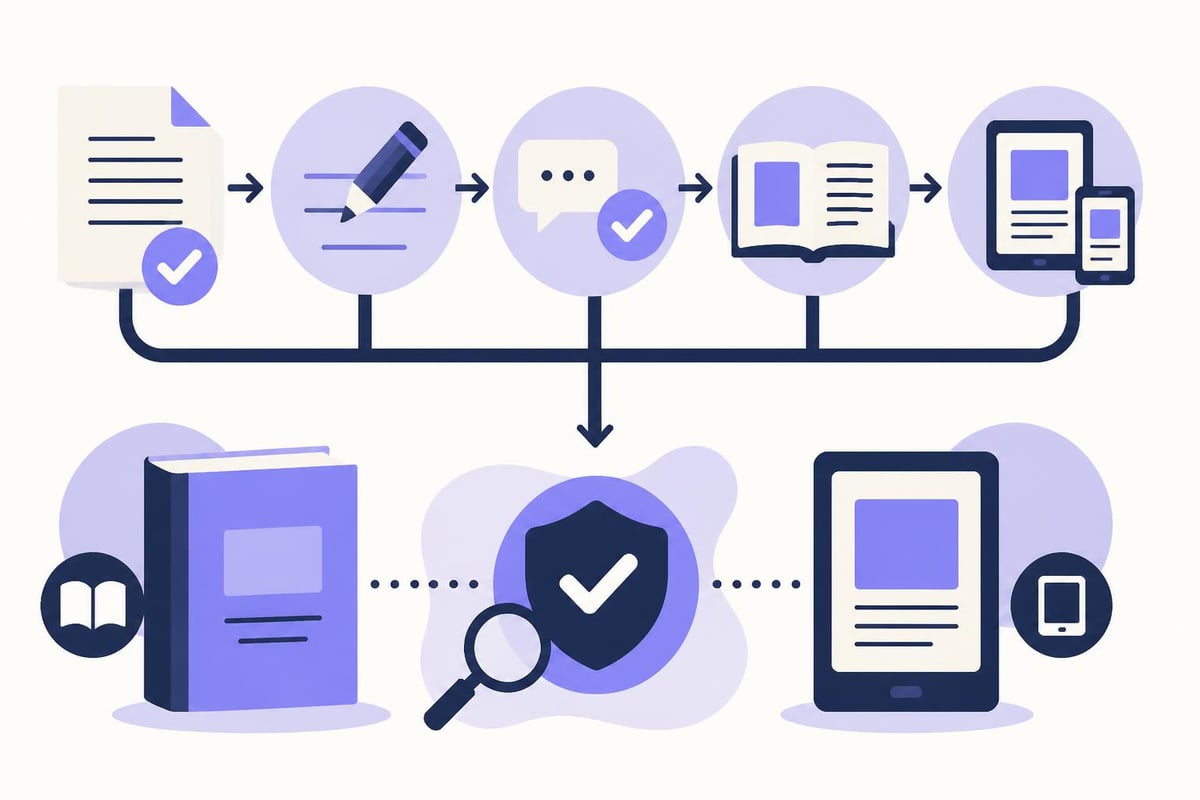
When authors write books intended for publication, professional formatting isn't optional-it's essential. Readers judge books by their presentation. Amateur formatting screams "amateur book," regardless of content quality.
Overcoming Creative Blocks: When Authors Write Through Resistance
Every author faces periods when words won't come. Understanding why helps you push through.
Fear of imperfection paralyzes many writers. They imagine the gap between their vision and their current skill level and freeze. The solution? Accept that your first draft won't match your vision. Authors write their way to competence-they don't wait for competence before writing.
Lack of clarity about what happens next stops forward momentum. If you're stuck, you probably haven't thought through the scene enough. Step away from the manuscript and ask: What does this character want in this moment? What's preventing them from getting it? What happens as a result?
Strategies That Actually Work
- Change your medium: Stuck on your laptop? Try handwriting. The different physicality can unlock new thoughts.
- Write the fun stuff: Skip the scene that's blocking you and write something exciting. You can fill gaps later.
- Lower your standards temporarily: Give yourself permission to write badly, just to maintain momentum.
- Seek external input: Sometimes beta readers or writing communities provide the perspective you're missing.
When authors write consistently despite resistance, they build resilience that serves them throughout their careers. Every professional author has written through blocks, doubts, and days when quitting seemed attractive.
The Business Side: How Professional Authors Write Strategically
Authors who treat writing as a career approach their work differently than hobbyists. They understand that how authors write connects directly to how readers discover and buy books.
This means considering series potential during the planning phase. Standalone books work, but series build loyal readerships. It means understanding your target audience deeply enough to deliver what they want while adding your unique twist. It means building an author platform before you need it, so readers already exist when your book launches.
Professional authors also master the complete workflow from writing to publishing, understanding formatting requirements for different platforms, pricing strategies, and marketing fundamentals. These aren't distractions from the creative work-they're essential elements of a sustainable writing career.
Learning From the Masters: How Famous Authors Write
Examining the practices of successful authors reveals patterns worth emulating. Hemingway's economy of language created powerful prose through strategic omission. Toni Morrison's deliberate sentence construction built rhythms that demanded to be read aloud. Haruki Murakami's dedication to routine-writing four hours each morning, running in the afternoon-sustained productivity across decades.
The lesson isn't to copy their specific techniques. It's to understand that successful authors write with intention. They make deliberate choices about voice, structure, and process rather than hoping inspiration strikes.
How authors write has evolved with technology and changing reader expectations, but the core craft remains constant: show up consistently, revise ruthlessly, and never stop learning. Whether you're drafting your first manuscript or your fiftieth, the right tools make the journey smoother and more enjoyable. Storyloft provides everything modern authors need-from AI-powered editing that preserves your unique voice to professional formatting for print and digital publishing-so you can focus on what matters most: telling stories that captivate readers.