Book Writing Format: The Complete Guide for Authors
I still remember the first time I submitted a manuscript to a literary agent. I'd spent eighteen months crafting every sentence, polishing every scene until it gleamed. But when the rejection came back three days later, it wasn't about my story. The agent's assistant had bounced it because my formatting looked "unprofessional." That harsh lesson taught me something crucial: no matter how brilliant your words, poor formatting can sink your manuscript before anyone reads past page one. Understanding book writing format isn't just about following arbitrary rules. It's about presenting your work in a way that respects industry professionals' time and demonstrates you're serious about your craft.
Why Book Writing Format Matters in 2026
The publishing landscape has evolved dramatically, but one thing remains constant: presentation matters. When literary agents receive hundreds of manuscripts weekly, proper book writing format serves as your first impression. It signals professionalism before anyone reads your opening line.
Think of formatting as the difference between showing up to a job interview in a tailored suit versus pajamas. Your content might be identical, but perception shapes everything. Publishers and agents use standard manuscript formatting as a filtering mechanism, a way to quickly identify writers who understand the industry.
Modern formatting serves multiple practical purposes:
- Enables accurate word count estimation
- Facilitates editorial notes and annotations
- Ensures consistency across submission review processes
- Simplifies conversion to various publication formats
- Demonstrates attention to detail and industry awareness
Beyond first impressions, proper formatting protects your intellectual property. Clear, consistent formatting makes it easier to track revisions, spot inconsistencies, and maintain version control throughout the editing process.
The Foundation: Essential Book Writing Format Elements
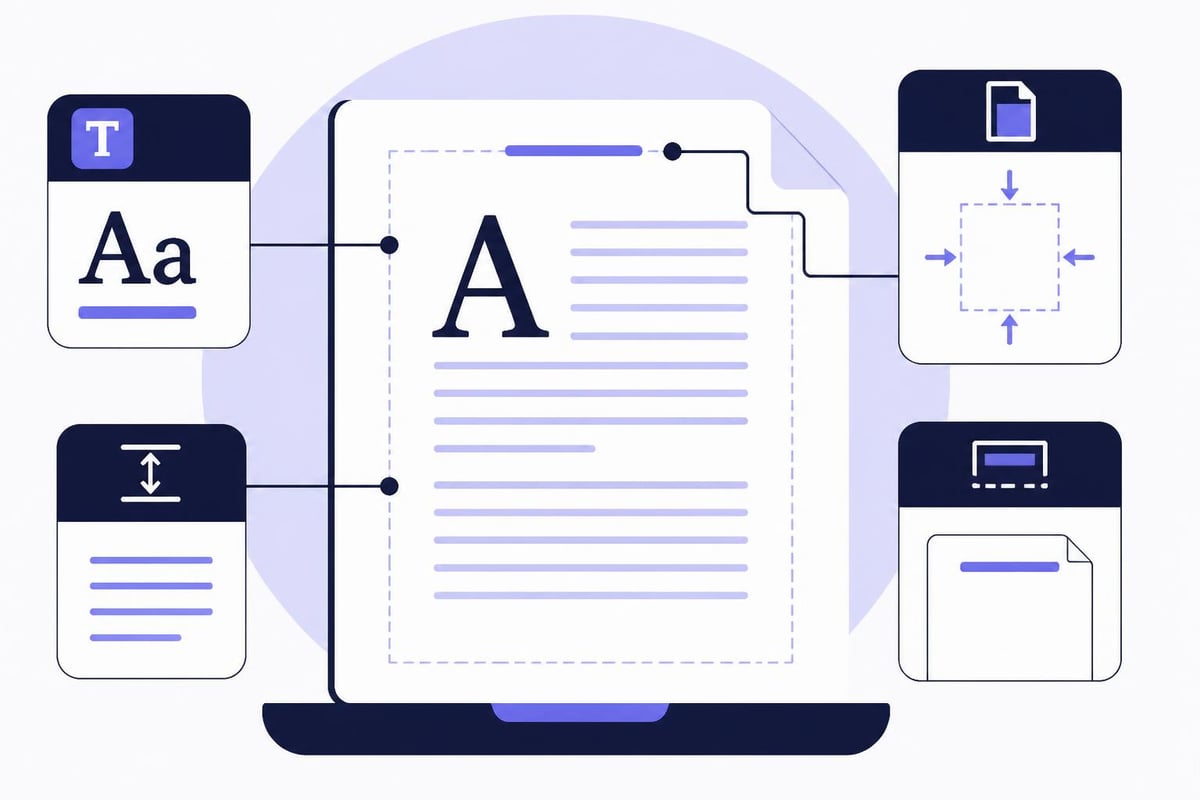
Every professional manuscript shares core formatting elements that create a consistent reading experience. These aren't suggestions or preferences but industry standards refined over decades. When you follow the proper book manuscript format, you're speaking the same language as everyone else in publishing.
Font Selection and Size
Your typeface choice might seem trivial, but it profoundly impacts readability. Standard book writing format requires 12-point fonts in either Times New Roman, Courier, or Garamond. These fonts were chosen because they're clear, professional, and universally accessible.
Resist the temptation to get creative here. That decorative font might look beautiful on your screen, but it creates eye strain for agents reading their fiftieth manuscript of the week. Courier, with its typewriter aesthetic, remains popular because its uniform character width makes word count estimation incredibly accurate.
Margins and Spacing
Proper margins create breathing room on the page and leave space for editorial comments. Industry standard calls for one-inch margins on all sides. Some writers mistakenly try to cram more text per page by shrinking margins, but this backfires by making pages appear dense and uninviting.
| Element | Standard Specification | Purpose |
|---|---|---|
| Top Margin | 1 inch | Space for headers and notes |
| Bottom Margin | 1 inch | Consistent page appearance |
| Left Margin | 1 inch | Binding allowance and notes |
| Right Margin | 1 inch | Ragged edge readability |
| Line Spacing | Double-spaced | Editorial comments and clarity |
Double-spacing between lines is non-negotiable. This spacing allows editors to write notes between lines and makes text significantly easier to read during long review sessions. Single-spacing signals amateur status faster than almost any other formatting mistake.
Indentation and Alignment
Every paragraph should begin with a 0.5-inch indent, created using the Tab key rather than multiple spaces. Left-align your entire manuscript. Center-alignment or justified text disrupts the natural reading flow that industry professionals expect.
The first paragraph after a chapter heading or section break traditionally starts flush left without an indent. This visual signal helps readers recognize structural breaks in your narrative.
Structural Components of Book Writing Format
Beyond the basic text formatting, your manuscript needs specific structural elements that organize your work and provide essential information. These components frame your story and give agents or publishers the context they need.
Title Page Design
Your title page is the handshake before the conversation. It should include your book title (centered, about one-third down the page), your name, and your contact information (bottom right corner). In the top left corner, include your word count rounded to the nearest thousand.
Skip fancy graphics or decorative elements. The guidelines for formatting a book manuscript emphasize simplicity and clarity over artistic expression. Your title should be in the same font as your manuscript text, though it can be in ALL CAPS or Title Case.
Headers and Page Numbers
Professional manuscripts include a header on every page except the title page. The header should contain your last name, the book title (or a shortened version), and the page number, all in the upper right corner.
Header format example: Smith / MIDNIGHT SHADOWS / 47
This simple header ensures that if pages get separated or shuffled, they can be easily reunited with your manuscript. Page numbers should use standard Arabic numerals, starting with page 1 on your first manuscript page (not the title page).
Chapter Formatting Standards
Each chapter begins on a new page with the chapter number and title (if applicable) centered about one-third down the page. Drop down several lines before beginning your chapter text. This white space creates visual distinction and gives readers a moment to transition between sections.
Some authors prefer numbers only ("Chapter 12"), while others use titles ("Chapter 12: The Reckoning"). Both approaches work, but consistency matters more than your specific choice. Whatever format you select, apply it identically throughout your entire manuscript.
Fiction Versus Nonfiction Format Differences
While most book writing format principles apply universally, fiction and nonfiction manuscripts have distinct requirements that reflect their different purposes and reader expectations. Understanding these differences prevents costly submission mistakes.
Fiction Manuscript Specifics
Fiction manuscripts focus primarily on the narrative flow. Your chapters should follow sequentially without interruption, and you'll end each chapter with a centered hash mark or the word "End" to signal completion. Scene breaks within chapters use centered hash marks (# # #) or asterisks (* * *) to indicate time or perspective shifts.
Character dialogue and internal thoughts follow standard punctuation rules, but formatting consistency becomes crucial. Whether you use italics for thoughts or rely on clear dialogue attribution, maintain that choice throughout your entire manuscript.
Nonfiction Format Considerations
Nonfiction manuscripts require additional structural elements that help readers navigate information. You'll typically include a detailed table of contents, and your chapters may contain subheadings that organize complex material. These subheadings should follow a clear hierarchy (H2, H3, H4) to show relationships between topics.
Many nonfiction manuscripts benefit from supplementary materials like appendices, bibliographies, or resource sections. Front matter might include a preface, acknowledgments, or introduction, each starting on its own page. Back matter could feature an index, glossary, or author biography.
Nonfiction structural additions:
- Detailed table of contents with page numbers
- Hierarchical subheadings for information organization
- Footnotes or endnotes for citations and references
- Bibliography or works cited section
- Optional appendices for supporting materials
The detailed manuscript formatting guide emphasizes that nonfiction requires more upfront organizational work but creates a better reader experience when done properly.
Submission Format Versus Print Format
A common confusion among new authors involves the distinction between submission format and print format. Your submission manuscript follows the standards we've discussed, optimized for review and editing. Print format, however, prepares your book for actual publication and reader consumption.
Submission manuscripts use double-spacing and wide margins because agents and editors need room to work. Print books use single-spacing and smaller margins to create professional, readable pages that don't waste paper or increase printing costs. The typefaces might differ, too, with print books often using more elegant or readable fonts than standard submission Courier.
When you're ready to publish, you'll work with formatting tools designed for print books that handle the technical conversion from manuscript to publication-ready files. This process involves selecting trim sizes, adjusting margins for binding, creating proper page breaks, and ensuring your front and back matter appear correctly.
Digital Publishing Considerations
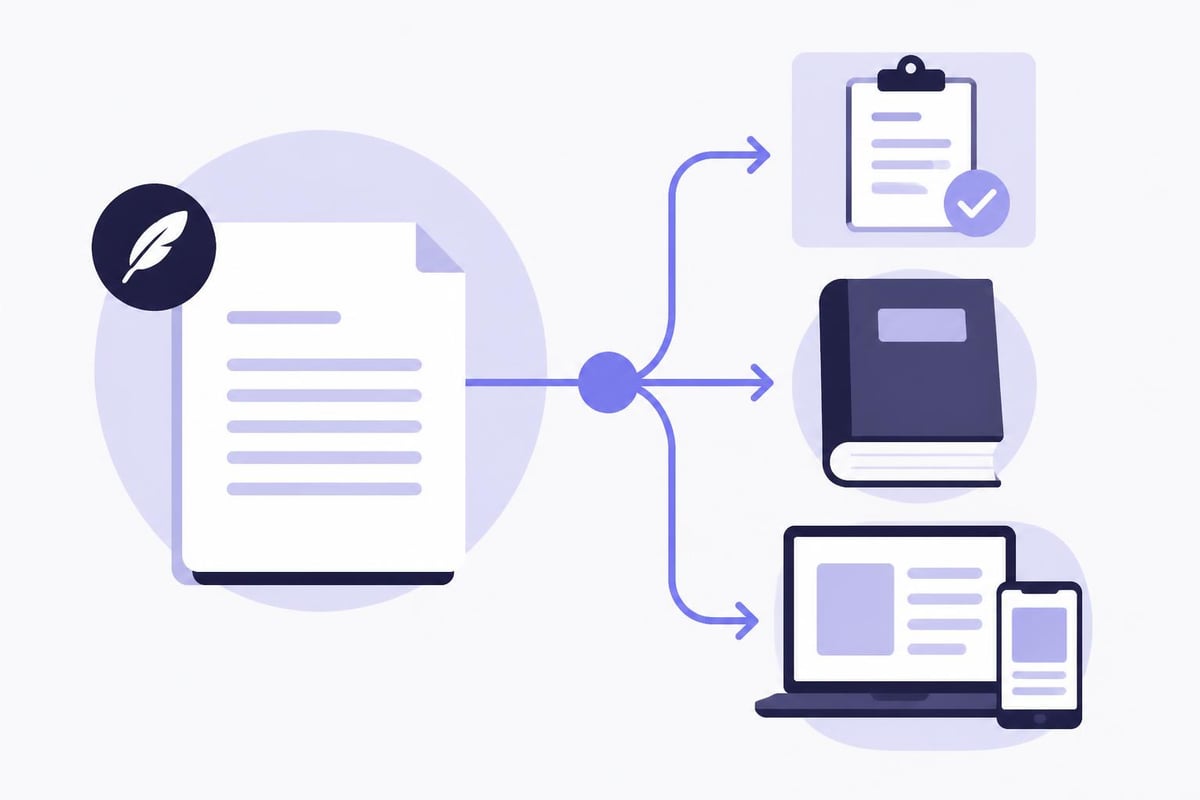
Ebooks require yet another formatting approach entirely. Digital books must adapt to different screen sizes, allow reader customization of fonts and sizes, and work across various devices and platforms. What looks perfect on a Kindle might break on an iPad or smartphone.
Many authors in 2026 handle this complexity by using comprehensive writing platforms that manage both manuscript creation and multi-format export. These tools understand the nuances of professional book formatting and can generate print-ready PDFs alongside ebook files for different platforms.
Common Formatting Mistakes That Sabotage Submissions
Even experienced writers sometimes stumble on formatting details that seem minor but signal unprofessionalism. These mistakes often happen when authors focus so intensely on their story that they neglect presentation. Learning to spot these errors before submission can mean the difference between consideration and immediate rejection.
Inconsistent Chapter Headings
Nothing screams "unpolished" quite like chapters that vary wildly in format. If Chapter 1 appears as "CHAPTER ONE," Chapter 2 shouldn't suddenly become "Chapter Two" or "2." This inconsistency suggests you haven't carefully reviewed your own work, which makes agents wonder what other details you've overlooked.
Improper Page Breaks
Forcing page breaks with multiple hard returns creates formatting chaos that becomes obvious the moment someone adjusts margins or font size. Use your word processor's actual page break function to ensure chapters always start on new pages regardless of how the document flows.
Mixing Fonts or Sizes
Your manuscript should use a single font at a single size throughout. Switching between Times New Roman and Arial, or between 12-point and 11-point text, creates a jarring reading experience. If you've copy-pasted from multiple documents, check for hidden formatting inconsistencies.
Critical formatting consistency checks:
- Uniform font throughout (no switching between typefaces)
- Consistent point size (usually 12-point everywhere)
- Identical indentation for all paragraphs
- Standard double-spacing without random single-spaced sections
- Same chapter heading format for every chapter
- Proper curly quotes rather than straight quotes
- Consistent dash usage (em-dashes or double hyphens)
Excessive Styling
Bold text, underlines, ALL CAPS, and exclamation points!!! These elements might work in blog posts or marketing copy, but they feel amateurish in manuscript submissions. Trust your words to convey emphasis without visual crutches. Italics remain acceptable for specific purposes like internal thoughts, foreign words, or titles of other works.
Advanced Formatting for Specific Genres
While standard book writing format creates your foundation, certain genres benefit from specialized formatting approaches that serve their unique storytelling needs. These adaptations maintain professional standards while accommodating genre-specific elements.
Screenplay-Style Dialogue Formatting
Some literary fiction and experimental works incorporate screenplay-style dialogue formatting to create specific effects. This approach centers character names above their dialogue and uses parentheticals for stage directions. While unconventable for most submissions, a few avant-garde publishers embrace these stylistic choices when they serve the story.
Poetry and Verse Formatting
Manuscripts containing poetry require special consideration for line breaks, stanza spacing, and alignment. Each poem typically starts on a new page with the title centered at the top. Preserve exact line breaks and spacing as these elements contribute to meaning in poetry. The comprehensive formatting guidelines note that poetry manuscripts often require additional front matter explaining any special formatting choices.
Anthology and Collection Structure
If you're submitting a collection of short stories or essays, each piece should begin on a new page with its title centered. Include a table of contents listing each work with its starting page number. Individual pieces within the collection follow standard manuscript format, but you'll need a master title page for the collection itself.
Professional Formatting Tools and Resources
The right tools transform formatting from a tedious chore into a manageable part of your writing process. Modern writing software has evolved far beyond basic word processors, offering specialized features that maintain proper book writing format automatically while you focus on your story.
Professional book writing software handles the technical details of formatting while you write. These platforms understand industry standards and apply them consistently, eliminating the manual formatting work that used to consume hours after manuscript completion.
Word Processor Setup
Whether you use Microsoft Word, Google Docs, or another processor, configure your settings before you start writing. Create a template with proper margins, spacing, and font already in place. Set up automatic headers with your name and page numbers. Configure your paragraph styles to indent automatically without requiring tab keys.
Word processor optimization:
- Create custom manuscript template
- Set default font to 12-point Times New Roman or Courier
- Configure automatic first-line indentation (0.5 inches)
- Enable line numbering for revision tracking
- Set up style presets for chapters, subheadings, and scene breaks
- Turn on automatic smart quotes
Specialized Writing Platforms
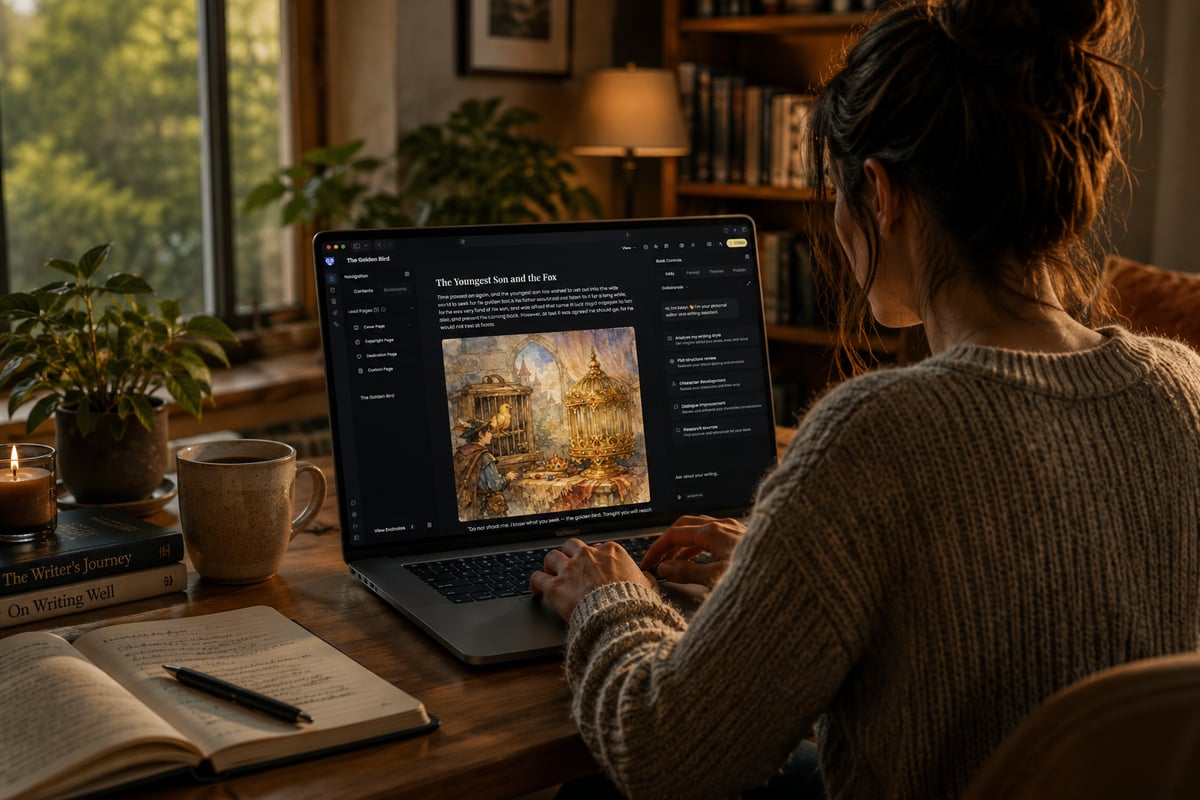
Purpose-built writing platforms designed for authors offer advantages that generic word processors can't match. These tools understand the complete writing-to-publishing workflow and handle format transitions seamlessly. You write in a comfortable environment, then export to properly formatted manuscripts or publication-ready files with a single click.
Advanced platforms integrate editing features, organization tools, and formatting capabilities in unified systems. This integration means you're not constantly switching between applications or manually reformatting as you move through different stages of your project.
Preparing for Digital and Print Publication
Once your manuscript passes submission format scrutiny and lands a publishing deal (or you choose to self-publish), you'll enter the publication formatting phase. This stage requires different specifications than submission format, tailored to how readers will actually encounter your book.
Print books need specific technical specifications regarding trim size (the physical dimensions of your book), bleed (images extending past the trim edge), and gutter margins (extra space at the binding edge). The book formatting standards for print publishing account for how pages sit when the book lies open and how binding affects readability near the spine.
Trim Size Selection
Your trim size affects everything from printing costs to genre expectations. Mass market paperbacks typically measure 4.25 x 6.87 inches, while trade paperbacks often use 5.5 x 8.5 or 6 x 9 inches. Hardcovers may go larger, up to 8.5 x 11 for certain nonfiction categories. Research what's standard in your genre before committing to dimensions.
Different trim sizes require margin adjustments. Smaller books need slightly wider margins to prevent cramped text, while larger formats can use narrower margins without sacrificing readability. Professional formatting tools calculate these relationships automatically based on your trim size selection.
Interior Layout Elements
Published books include elements absent from submission manuscripts. Running headers typically display the book title on left-hand pages and chapter titles on right-hand pages. Page numbers might move to outside corners or bottom centers. Chapter openers might feature decorative elements or drop caps.
Front matter expands to include copyright pages, dedication pages, and sometimes epigraphs or author's notes. Back matter might add discussion questions, preview chapters from your next book, or expanded author biographies. Each element needs proper placement and formatting to create a polished final product.
| Book Section | Typical Pages | Formatting Notes |
|---|---|---|
| Front Matter | 4-10 pages | Half-title, title page, copyright, dedication, table of contents |
| Main Content | Varies | Chapter text with consistent running headers |
| Back Matter | 2-8 pages | Author bio, acknowledgments, next book preview |
Export Specifications for Platforms
Amazon KDP, IngramSpark, and other publishing platforms have specific file requirements. KDP accepts PDFs and certain DOCX files, while IngramSpark requires PDF files meeting exact specifications for bleed, color profile, and resolution. Understanding these requirements prevents costly rejections and revision cycles.
The detailed formatting specifications for major publishing platforms change periodically as technology evolves. Stay current with platform requirements or use formatting tools that automatically update their export specifications to match current platform standards.
Formatting for Different Publishing Paths
Your formatting needs shift depending on whether you pursue traditional publishing, hybrid publishing, or complete self-publishing. Each path has different requirements at different stages, though all eventually converge on professional presentation standards.
Traditional Publishing Format Requirements
Traditional publishers typically want standard submission format during the query and acquisition phase. They'll handle publication formatting themselves using in-house design teams. Your job involves presenting a clean, properly formatted manuscript that editors can easily read and annotate.
Some traditional publishers provide specific formatting guidelines that deviate slightly from standard manuscript format. Always follow publisher-specific requirements when they exist, even if they contradict general industry standards. Publishers include these custom requirements for specific workflow or technical reasons.
Self-Publishing Format Control
Self-published authors control their entire formatting destiny, which offers creative freedom but demands technical knowledge. You'll handle both manuscript formatting and publication formatting, either personally or by hiring professionals. Many successful self-published authors invest in learning proper formatting techniques to maintain quality while controlling costs.
Modern self-publishing platforms offer increasingly sophisticated tools that guide you through formatting requirements. These platforms understand what different retailers and print services require, helping you avoid technical rejections while maintaining professional standards comparable to traditionally published books.
Mastering book writing format represents a significant step in your evolution as a professional author. These standards exist not to constrain your creativity but to ensure your brilliant ideas receive the professional presentation they deserve. Whether you're crafting your first manuscript or your fifteenth, proper formatting demonstrates respect for your readers, agents, and your own hard work. Storyloft combines intuitive manuscript writing with professional formatting tools, letting you focus on your story while ensuring your work meets industry standards for both submission and publication across all formats.