5 Critical Trends in Publishing Every Self-Publisher Should Watch in 2027
5 Critical Trends in Publishing Every Self-Publisher Should Watch in 2027
Key Takeaways
Self-publishing has evolved from a side hustle into a sophisticated $1.85 billion industry requiring strategic business thinking. Success in 2027 demands treating your catalog as a revenue-generating asset while adapting to rising costs and algorithmic changes.
• Paid visibility now requires strategic investment: Amazon Ads cost $0.20-$0.60 per click, while organic social reach plummeted to 1-2%. Wait until you have 10-15 reviews and 3+ books before advertising to maximize ROI.
• Data ownership separates profitable authors from struggling ones: Marketplaces keep your reader behavior insights. Track completion rates, read-through velocity, and wishlist conversions to identify high-engagement titles worth promoting.
• Print-on-demand enables premium pricing without inventory risk: Special editions with foil stamping and cloth bindings command 3x standard prices. Authors generate £30,000-£113,000 through Kickstarter campaigns for collectible formats.
• Backlist optimization generates 50-80% of sustainable author income: A 20-book catalog at $2.99 reaches $60 per reader versus $11.97 for three books. Update covers and metadata regularly while running promotional cycles every six months.
• Micro-niche targeting beats broad genre positioning: Hyper-specific categories like “political fantasy with morally ambiguous queens” reduce competition and improve algorithmic discoverability. Market using precise tropes rather than generic descriptions.
The most successful indie authors in 2027 stopped guessing and started measuring. Your existing backlist, reader data, and print-on-demand options already provide everything needed to build sustainable income—if you treat publishing as a business requiring weekly attention to metrics, not occasional creative inspiration.  The trends in publishing we’re seeing now would shock authors from just five years ago. The global self-publishing market hit $1.85 billion in 2024 and is projected to reach $6.16 billion by 2033[28]. More than 3.5 million indie titles now publish each year[28][28]. Self publishing news tells us this isn’t a side hustle anymore. It’s a full business model. The most successful indie authors today treat publishing industry trends like market intel. They study publishing info and track what publishing companies do while adapting faster than traditional houses. Publishing trends 2025 set the stage. Now we’re here to show you what’s next.
The Rising Cost of Visibility and Paid Marketing

Image Source: Facebook
The Rising Cost of Visibility and Paid Marketing
Marketing budgets for books aren’t getting simpler. Teams balance rising customer acquisition costs, evolving algorithms, and tighter ROI expectations[29]. The publishing industry trends we’re tracking show one clear pattern: visibility now costs money. Lots of it.
Understanding the 2027 Advertising Landscape
Customer acquisition in book marketing costs more than it did three years ago. Platforms compete for your budget. Each promises returns. Not all deliver.
Amazon Ads run between $0.20 and $0.60 per click[30]. That click doesn’t guarantee a sale. It gets someone to your book page. Half might bounce right away. Your actual cost per sale runs much higher.
Facebook and Instagram offer different math. One author reported spending $2.00 per day on a five-book series profitably[31]. Another noted they now spend $15.00 to $20.00 daily just to break even[31]. The advertising landscape shifted. What worked in 2022 struggles in 2027.
Geographic targeting matters more than most publishers realize. Competition drives costs up in the US market. Authors report better results in Australia, Canada, and the UK with lower bid requirements between $0.02 and $0.10[31].
The metrics you need to track: CTR (click-through rate), CPC (cost per click), ACoS (advertising cost of sale), and ROAS (return on ad spend)[30]. A CTR above 0.5% performs well for book ads. ACoS below 30% means you spent $30.00 and generated $100.00 in sales[30]. Lower beats higher.
Why Organic Reach Has Declined
Facebook’s organic reach sat at 16% back in 2012. That number dropped to between 1% and 2% in 2025[32]. Instagram’s organic reach fell 12% year-over-year, with posts now reaching roughly 3% to 4% of followers[4]. LinkedIn saw an even sharper 34% slide[32].
These numbers tell a story. Algorithms changed. Platforms prioritized paid content over organic posts[3]. Facebook shifted focus to “meaningful interactions” with posts from friends and family in 2018[3]. Business pages got pushed down.
Content volume exploded. Millions of posts publish daily. Platforms must limit what users see to avoid overwhelming them[3]. This saturation diluted organic reach across all networks.
The monetization angle can’t be ignored. Social platforms rely on advertising revenue. Free platforms encourage businesses to invest in paid promotions[3]. This created “pay-to-play” ecosystems where organic content alone struggles to drive growth over time.
AI-powered algorithms analyze behavior across entire ecosystems. Meta platforms study your activity on Facebook, Instagram, WhatsApp, Threads, and Messenger[5]. They recommend content from creators you don’t follow. Your posts must now be “recommendable” to non-followers, not just your existing audience.
One marketing strategist noted her LinkedIn content reached 35,000+ views in 2017. Similar content reached just 500 people by November 2024[32]. That’s a 98% drop.
Budget-Friendly Marketing Strategies
Most first-time authors underspend on marketing[6]. Throwing money at ads without strategy wastes more than it saves though.
Don’t advertise until your Amazon listing converts. You need at least 10 to 15 reviews with an average rating of 4.0 or higher[30]. Below this threshold, readers who click will hesitate. You’re paying for visits that go nowhere.
Your book cover matters more than you think. A cover that looks self-published will underperform whatever targeting quality you use[30]. Get the design right before spending a dollar on ads.
Wait until you have three books, preferably in a series[33]. You might lose money on the first discounted book. Readers who like your writing will pay full price for books two and three. One author explained spending $2.00 in advertising for a $4.99 book. The royalty of $2.35 leaves only $0.35 profit[1]. That reader continuing to books two and three jumps net profit to $5.05 though.
Treat your original advertising budget as a learning investment[30]. The data you gather in month one teaches you which keywords convert and which audiences respond. Many authors who saw no results in month one found success in months two and three after adjusting based on data.
Free alternatives still work. Building an email list through book giveaways via BookFunnel costs nothing[33]. Social media posting remains free, though reach suffers. YouTube offers keyword-driven search capabilities[34]. Blogs generate long-term organic traffic when done right.
Earned media budgets are predicted to double by 2027[2]. Roughly 94% of links in AI-generated answers come from non-paid sources[2]. This shifts the equation. Credible third-party content now trains AI discovery engines.
When to Invest and When to Pivot
Advertising that isn’t working should be paused, not waited out[30]. Stop if your ACoS stays above 100% with no improving trend after four to six weeks. You’re spending more than you’re making in royalties.
Stop if you get clicks with zero sales after $50.00+ in spend[30]. Stop if your CTR falls below 0.1%. That’s a creative or targeting problem, not a budget problem[30].
Don’t invest in broad, untargeted advertising on any channel[8]. Skip press release blasts. Avoid buying followers. Physical review copy mailings for POD books rarely justify their cost[8].
Track backend data beyond surface metrics. How many viewers join your email list? What’s the lifetime value of a customer acquired through social media?[5] Your landing page conversion rate improving from 20% to 40% doubles results without doubling views.
Signs you should invest: You have multiple books ready. Your listing converts well. You’ve tested small budgets successfully. You can afford to lose the test money without stress. You’re ready to track, analyze, and adjust weekly.
Amazon Ads require sustained attention. Weekly reviews of spend, clicks, and sales let you pause underperforming keywords[30]. Monthly reviews show profitability trends overall. Change one variable at a time and run tests for at least two weeks before drawing conclusions[30].
The most budget-friendly platform depends on your genre and readers. One author found Facebook delivered consistent profits while Amazon Ads frustrated them[31]. Another experienced the opposite. Test both. Let data decide where your next dollar goes.
Data-Driven Publishing and Reader Analytics
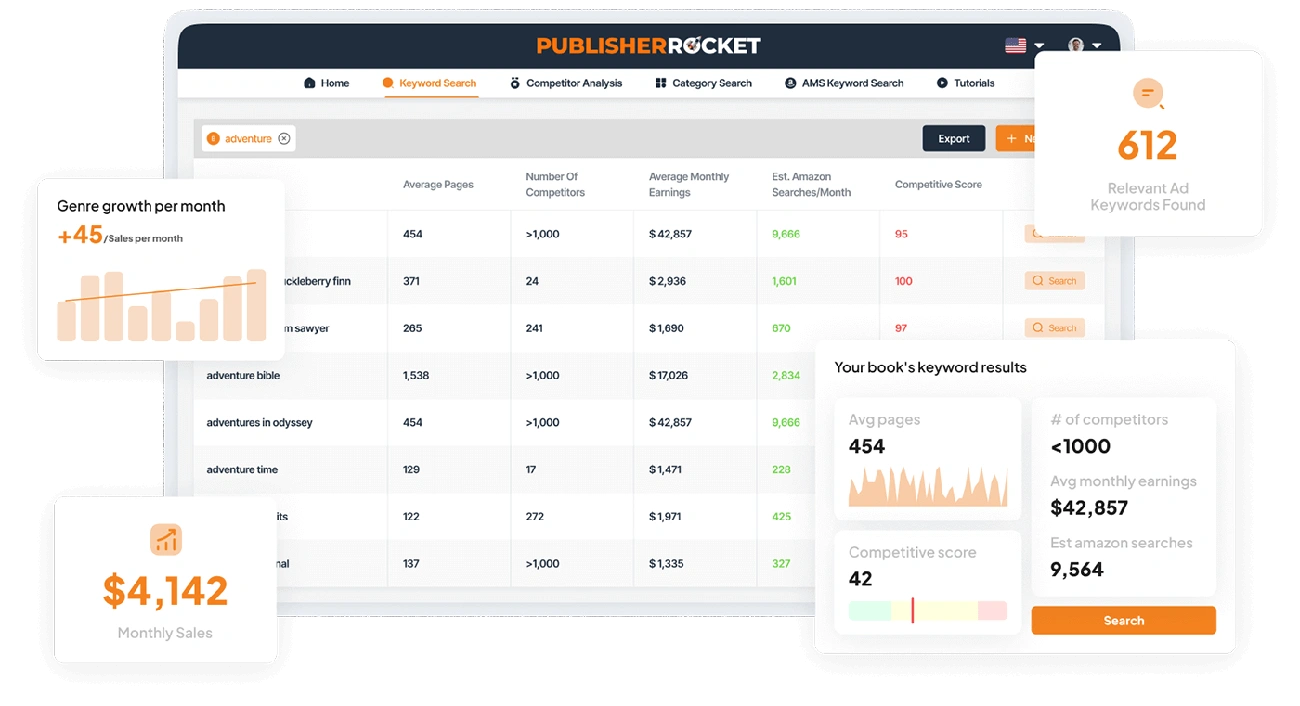
Image Source: publisherrocket.com
Publishing and Reader Analytics Based on Data
Publishers who ignore their numbers lose money to publishers who don’t. Self publishing news from 2027 shows one clear change: data wins.
What Publishing Info and Analytics Reveal
E-books changed everything back in 2012. The Wall Street Journal reported that digital books gave publishers actual data on reader behavior[35]. Which books get finished. How fast readers move through chapters. What kinds of characters they prefer[35].
This wasn’t theory anymore. Publishers could see exactly how readers involve themselves[35].
Amazon and Apple track all of this. But here’s the catch: they don’t share it with you[36]. You sell through a marketplace and get a monthly sales report. Units sold. Revenue per title. Maybe regional breakdowns if you’re lucky[36]. The marketplace keeps everything else[36].
They know which titles readers browsed before buying. Where they abandoned your book. What they searched for. Whether they finished chapter three or stopped cold[36]. That data powers their recommendation engines and editorial decisions[36]. Not yours.
Zero-party data is different. Readers generate behavioral information through natural interactions with your platform[36]. You sell direct and own it. Reading time per session. Completion rates. Read-through velocity. Highlight patterns. Search queries on your storefront. Wishlist behavior. Device priorities. Series read-through rates[36].
Completion rate matters most. A title with 78% completion performs very differently from one where 60% of readers quit halfway[36]. Clusters of highlights in the same section tell you what appeals[36]. Search data reveals what readers want that you’re not offering yet[36].
One scholarly publisher noted that accessing data across the journal workflow, from submission through publication, delivered huge benefits[37]. They tracked submission patterns, article types, and peer review durations[37]. Those insights helped them introduce article types that data showed performed well. They improved turnaround times by analyzing delays[37].
Why Data Matters More Than Instinct
Most aspiring authors publish blindly into the marketplace and hope for the best[38]. That’s gambling, not business.
Publishing based on data uses information about what has been popular to predict what will be popular[35]. Literary agent Mark Gottlieb explains that analyzing sales data, online reviews, social media mentions, and reader demographics enables publishers to make strategic decisions when acquiring new titles[35]. This increases success by lining up content with reader need[35].
The difference shows up in your bank account. One author measured absolutely everything regarding sales[39]. Before a campaign. During. After. Spent money with intention. Measured results[39]. That author now makes enough to live on by selling books[39]. But only after spending time and money creating and fine-tuning every piece of the sales and marketing process[39].
You need more than intuition to navigate Amazon[38]. Successful authors set themselves apart by paying attention to analytics and making use of actionable data[38]. You learn how the marketplace works and identify what’s selling, why it’s selling, and how to meet actual reader need[38]. This eliminates guesswork and wasted effort[38].
Segmentation used to be reserved for marketers, not writers[10]. But authors are micro-businesses now with data trails to match[10]. Your job isn’t just writing well anymore. You’re a detective interpreting clues and patterns readers leave behind[10]. Use those clues to grow deeper, not wider[10].
Join Storyloft today. Get a free account now.
Tools to Track Performance
Amazon KDP provides sales data, page reads for Kindle Unlimited, and customer reviews[11]. It’s simple but free[11].
BookBeam tracks essential metrics: sales velocity, category rankings, keyword movements, and marketing tactic effect[38]. The tool monitors changes in Amazon’s algorithms and uncovers opportunities competitors miss[38]. You track daily, weekly, and monthly not just to measure what worked[38]. You spot what’s lagging, understand why, and make informed pivots without wasted time or budget[38].
Publisher Champ brings royalty and ad spend data into one view so you see campaign performance without jumping between dashboards[12]. The platform tracks sell-through and read-through across a series[12]. You understand progression from one book to the next[12]. Authors can add external royalties, expenses, subscriptions, and direct sales so Publisher Champ stays the single source of truth[12].
JellyBooks researches consumer reading behavior[40]. They gather willing readers and secure permission to collect anonymized reading data[40]. The company can answer questions like: Does the book have high word-of-mouth potential? What are the optimal cover, title, and description? Is the audience a narrow, loyal niche or a broad, less-committed mass-market audience?[40]
JellyBooks measures what cover, title, description, and positioning work best through reader analytics and A/B testing[40]. One key finding: word-of-mouth potential for a book is influenced heavily by the cover[40]. People are judged by what they recommend, so they care what the cover says about them[40].
Google Analytics tracks website traffic and identifies which marketing channels drive the most visitors[11]. Your email platform provides open rates, click-through rates, and subscriber behavior if you maintain a mailing list[11].
Turning Numbers Into Actionable Strategy
Completion rate combined with read-through velocity and annotation density creates a composite engagement score[36]. This score predicts word-of-mouth performance reliably[36]. Titles with high completion rates and fast read-through velocity have readers who finish, feel satisfied, and talk[36]. Those are your best-seller candidates[36].
Catalog curation improves when you prioritize titles for marketing investment based on engagement signals, not just sales rank[36]. High-engagement, low-visibility titles are often the biggest chance in your catalog[36].
Wishlist data reveals where price is the barrier[36]. A title sitting in 3,000 wishlists but converting at 12% is asking for a test at a different price point[36].
Behavioral segmentation makes personalization genuinely useful[36]. Readers who finished a thriller in under four days should see different recommendations than readers who took three weeks with a business book[36].
Geography matters more than most authors realize. BookBaby’s geography data can reveal why you sell more audiobooks in Canada, why hardcover sales spike every December, why eBooks do better in libraries, and why paperbacks surge in one specific location[10].
Format reveals reader intent[10]. More paperbacks sold means readers want a physical connection. More eBooks sold means they want information fast. More audiobooks sold means they’re multitaskers, commuters, or gym listeners[10].
Series read-through rates are the clearest signal for where to focus editorial resources[36]. An author with 75% series completion rate deserves a multi-book conversation[36].
Publishers who build editorial and marketing decisions on reader behavior data develop a compounding advantage over time[36]. Each title you publish generates more data. Each reader interaction refines your understanding of your audience[36].
Print-on-Demand Innovation and Physical Book Trends
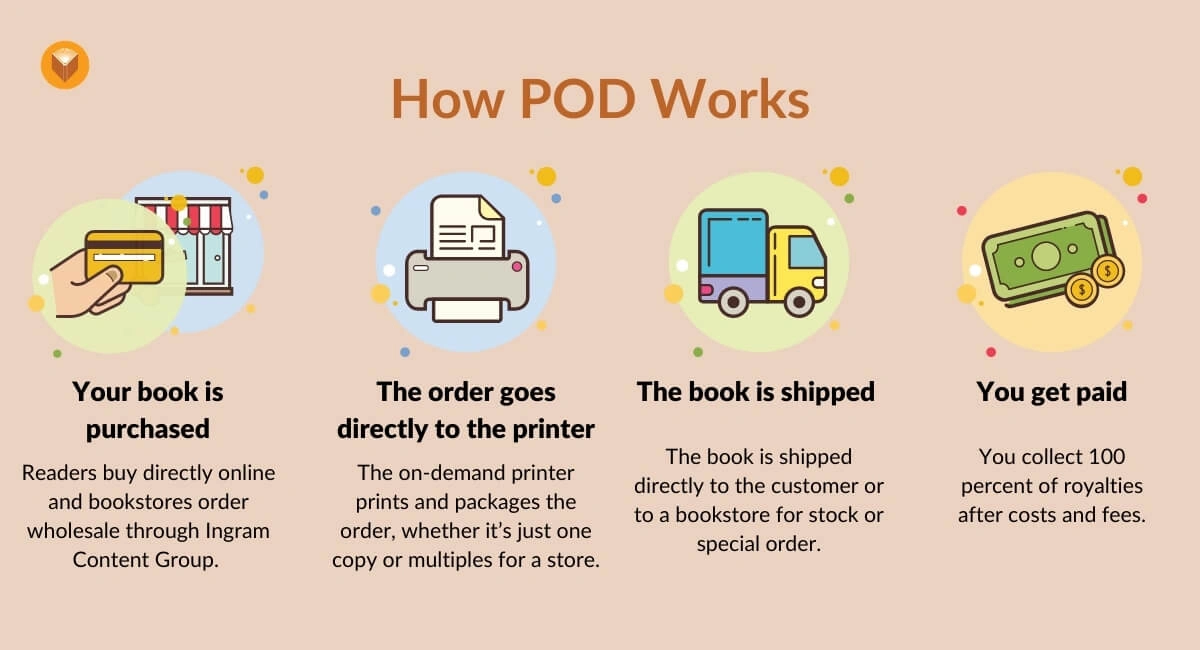
Image Source: Luminare Press
“POD publishing eliminates gatekeepers. It lets the small players get in the game. It gets books—stories, ideas, information—into the world.” — Clear Sight Books, Publisher
Print-on-demand demolished the main issue with self-publishing back in 2008. Authors paid thousands to print inventory they couldn’t sell before POD[41]. You upload files now and customers order. Books print one at a time[41]. No warehousing. No inventory accounting. No garage full of unsold copies[41].
What’s New in POD Technology
The hardware powering POD runs faster and cleaner than most authors realize. Industrial DTG machines like Kornit’s Apollo produce up to 400 t-shirts per hour with a single operator[42]. Book printing follows similar trajectories. What took days in 2015 completes in hours by 2027.
Direct-to-film printing evolved into powderless DTF and replaced messy adhesive powder with printed liquid adhesive[42]. Production becomes more efficient. Films turn biodegradable[42]. This matters for authors ordering custom merchandise among other products.
Embroidery technology leaped forward through digital thread coloring. Companies like Coloreel dye a single white thread on the fly and eliminate time-consuming thread changes[42]. Complex gradients and multicolor designs now work for one-off orders. Water usage drops by 97% compared with conventional thread dyeing[42].
UV printing and laser engraving expanded POD beyond apparel into non-apparel items[42]. Roland’s VersaUV line moved from flat panels to cylindrical fixtures and print-and-cut combos[42]. Authors can now offer gadget covers, signage and premium giftware without changing their core business model[42].
The global print-on-demand market hit $10.2 billion in 2024[43]. Forecasts suggest it could approach $100 billion by 2034 and imply a compound annual growth rate around 25% to 26%[43].
Why Physical Books Still Matter
The physical books market was valued at $156.60 billion in 2025 and projects growth to $215.90 billion by 2033 at a 4.1% CAGR[44]. Readers rediscover the tactile pleasure of physical books, especially when you have younger demographics who value the sensory experience[45]. Cultural movements emphasizing mindfulness and analog hobbies propel interest in book clubs and literary events[45].
Book sales surged in North America and were driven by participation in book clubs and literary festivals[45]. Independent bookstores thrive as community hubs in Europe and offer curated selections[45]. Japan’s deep appreciation for craftsmanship improves the appeal of print books with beautiful designs[45].
Collectors view high-spec editions as cultural artifacts and drive a renaissance in physical book production[46]. Bloomsbury’s consumer division grew revenue 49% in 2024 on premium fantasy hardbacks[46]. Demand concentrates on titles with foil stamping and cloth bindings. Publishers command double-digit price uplifts with sustainable paper[46].
Collectible and Enhanced Print Formats
Special editions transform books into collectibles. Bookvault produces special editions from a single copy with no minimum order[14]. Orders integrate with Shopify, WooCommerce and Wix[47]. The book prints and ships when someone places an order[48].
Premium hardbacks feature cloth spines, sprayed edges and archival paper[46]. Authors add foil accents, custom endpapers and ribbon bookmarks[14]. These details raise the reading experience beyond standard editions[14].
Author Sacha Black sells hardbacks around £20 but prices special editions at £60[47]. Her first Kickstarter campaign brought in £30,000[47]. Other campaigns generated £50,000 and £113,000[47]. Profit runs 45% to 55% before tax[47].
Brandon Sanderson’s 2022 Kickstarter broke records and raised over $41 million from readers supporting four secret novels in unique formats with premium finishes[47].
Balancing Quality with Affordable Solutions
POD quality now matches books printed through traditional methods[41]. Print quality improved to the point where you can’t tell it apart from offset copies[49]. Many publishers use the same POD services indie authors use[41].
A standard hardcover with paper cover, foil title and 300 pages at 500 copies starts around $10 to $13 per copy[17]. Adding cloth cover plus gilded edges adds $1 to $2 per copy[17]. A slipcase adds $3 to $4 per copy[17]. Leather cover and numbered pages add another $1 to $2 per copy[17].
IngramSpark offers the widest printing and distribution with partnerships across 30,000 bookstores, universities and retailers[41]. They allow returns that physical bookstores need but authors can lose money[41]. Bookstores take 40% to 50% discount, so factor that into pricing[41].
Blurb ships orders of up to 99 copies with volume discounts kicking in at orders of 10 or more[48]. Their books use Forest Stewardship Council-certified papers printed at facilities nearest you and reduce emissions[48].
Most authors create multiple formats now. Paperbacks, large print editions and hardback editions all print-on-demand[41]. Large print serves an underserved market and remains easy to produce via POD[41].
Backlist Catalog Optimization and Long-Term Revenue
Image Source: ScribeCount
“Backlist has become the heart of the publishing industry—finally. As it should be.” — Kristine Kathryn Rusch, Author and publisher
Backlist Catalog Optimization and Long-Term Revenue
Your older books hold more earning potential than most authors recognize. Backlist titles aren’t leftovers. They’re revenue engines that compound over time.
Treating Your Backlist as a Business Asset
The publishing industry shows a clear pattern. Backlist sales account for 50% of author income[18]. Some publishers report backlist ranging from 25% at the low end to 75% and 80% at the high end of total sales[16]. Less than 50% of revenue from backlist makes breaking even very difficult[16].
Your book launch ends. Reader discovery continues daily[19]. Research with Kantar shows that 59% of book buyers stay open-minded about which title they purchase, and 36% get swayed toward a different title than they searched for[19]. Even intentional shoppers make decisions in the moment.
Always-on advertising keeps your titles discoverable long after launch momentum fades[19]. Readers browse by genre, themes, similar authors and related titles. The Amazon store sees 79% of book shoppers find a new title or author during their experience[19]. Discovery isn’t the exception. It’s the norm.
Why Old Titles Can Generate New Income
More books create more opportunities. A reader who loves your first book but finds nothing else available can only spend once[7]. Connected books that lead from one to the next create conditions for read-through[7].
Catalog value changes your economics. A three-book catalog at $3.99 each gets $11.97 maximum value per reader. A 10-book series at $3.99 approaches $40.00. A 20-book series at $2.99 reaches nearly $60.00[7]. Catalogs with audiobooks, special editions and bundles often hit $75.00 to $150.00+[7].
Therefore, marketing becomes more sustainable. You spend money to acquire a reader and then earn from that reader over time[7]. One reader acquired through an email promotion becomes multiple purchases through read-through and format preference with a deeper catalog[7].
Join Storyloft today. Get a free account now.
Strategies for Refreshing and Relaunching
Covers age faster than manuscripts. Current visual expectations transform how readers notice your story when you update your cover[20]. Many older blurbs function as plot summaries rather than compelling invitations[21]. Rewrite them to highlight emotional stakes and genre identity.
Metadata determines who finds your book[21]. Keywords, categories and tropes need refreshing as market language evolves. Bonus content like extended epilogs, new prologs or character guides gives loyal readers reasons to return[21].
Price promotions work repeatedly. Free books drive reader discovery better than any other tactic, especially when paired with newsletter promotions[20]. One author runs free promotions roughly once every six months with success[20].
Automation Tools for Catalog Management
Publisher Champ unites royalty and ad spend data so you see campaign performance without dashboard hopping. Genius Links update URLs once and change book links across your entire catalog automatically[13].
BookFunnel distributes advance review copies and builds newsletter lists. Automated email sequences re-engage readers who showed interest but didn’t buy[15]. Set up autoresponder sequences and then update them when you release new formats or complete series[22].
Cross-Genre Publishing and Micro-Niche Targeting

Image Source: Facebook
Broad genres stopped working somewhere around 2023. Romance, thriller, fantasy became too crowded. Readers wanted specificity.
The Rise of Hyper-Specific Micro-Genres
Broad genres like ‘romance,’ ‘thriller,’ or ‘fantasy’ are saturated[23]. Successful books in 2027 position within specific micro-niches that target precise reader interests[23]. Writers now target tightly defined reader segments rather than general audiences[23].
Micro-niche storytelling reduces competition and increases relevance[23]. Readers participate more with content tailored to their interests rather than broadly generalized[23]. One author created a ‘political fantasy centered on court intrigue and morally ambiguous queens’ instead of a general fantasy novel[23]. That specificity attracted dedicated readership and improved discoverability among readers searching for similar thematic experiences[23].
Key characteristics include specific themes like ‘small-town second chance romance with healing trauma arcs,’ hybrid genre structures such as sci-fi romance, and emotionally targeted storytelling around healing or transformation[23].
Why Broad Appeal Is No Longer the Goal
Books that define their niche perform better in search and recommendation systems since they match more precise reader queries[23]. According to Dave Sanchez from Publication Printers Corp., niche publishing is thriving[24].
Microgenres help books and readers find one another in a global environment[9]. They feed algorithms that push books toward niche bestseller charts or reading communities and then springboard them into wider readerships[9].
Finding and Dominating Your Niche
You reduce risk when you find publishing opportunities before committing time to writing[25]. Profitable niche research centers on understanding what readers buy, how often books sell, and how crowded a market has become[25].
Many Kindle books underperform not because of weak content but because the niche was never assessed[25]. A profitable niche balances demand, competition, and revenue potential[25]. Strong niches show multiple books selling over time rather than relying on one top performer[25].
Marketing to Trope-Driven Readers
Trope-based marketing has been going strong for years[26]. Authors use prominent tropes and key plot points in their novels to create appealing social media posts and marketing materials that readers can consume quickly with little need to read through book summaries[26].
Trope marketing is a strategy to sell books, not a reflection on literary quality[26]. Popular tropes include enemies to lovers, forced proximity, forbidden love, fake relationship, and only one bed[27]. Readers want to know what tropes are included pretty early[27].
Comparison Table
|
Trend |
Biggest Problem |
Key Statistics |
Main Chance |
Action Required |
Tools/Platforms |
|
The Rising Cost of Visibility and Paid Marketing |
Visibility costs money. Lots of it. Customer acquisition costs rise while organic reach dies. |
Amazon Ads: $0.20-$0.60 per click. Facebook organic reach dropped from 16% (2012) to 1-2% (2025). Instagram organic reach fell 12% year-over-year. |
Geographic targeting in Australia, Canada, and UK shows lower bids ($0.02-$0.10). Earned media budgets are predicted to double by 2027. |
Wait for 10-15 reviews (4.0+ rating). Have 3+ books in series. Track CTR, CPC, ACoS, and ROAS weekly. Stop ads if ACoS stays above 100% after 4-6 weeks. |
Amazon Ads, Facebook, Instagram, BookFunnel, YouTube |
|
Evidence-Based Publishing and Reader Analytics |
Marketplaces own your reader data. You get simple sales reports. They keep behavior insights. |
Zero-party data shows 78% completion vs 60% quit rates. One author’s LinkedIn reach dropped 98% (35,000 to 500 views). |
Completion rate plus read-through velocity predicts word-of-mouth. High-engagement, low-visibility titles are the biggest chances. |
Track completion rates, read-through velocity, and wishlist conversions. Segment by behavior, not demographics. Test covers using data. |
BookBeam, Publisher Champ, JellyBooks, Google Analytics, Amazon KDP |
|
Print-on-Demand Breakthroughs and Physical Book Trends |
Old POD meant thousands spent on unsold inventory. Quality concerns held authors back. |
Global POD market hit $10.2 billion (2024), projected to reach $100 billion by 2034. Physical books market: $156.60 billion (2025) to $215.90 billion (2033). |
Special editions command premium prices. Author Sacha Black prices special editions at £60 vs £20 standard. Kickstarters generate £30,000-£113,000. |
Create multiple formats. Use POD for hardbacks, paperbacks, and large print. Add foil, cloth bindings, and sprayed edges for collectors. |
IngramSpark, Bookvault, Blurb, Shopify, WooCommerce |
|
Backlist Catalog Optimization and Long-Term Revenue |
Authors treat old books as leftovers instead of revenue engines. Launch ends but discovery continues daily. |
Backlist accounts for 50% of author income. Some publishers report 75-80% of total sales from backlist. 79% of Amazon shoppers find new titles during browsing. |
A 20-book series at $2.99 reaches $60 per reader vs $11.97 for 3 books. Catalogs with audiobooks hit $75-$150+ per reader. |
Update covers and blurbs every few years. Refresh metadata and keywords. Run free promotions every 6 months. Build read-through. |
Publisher Champ, Genius Links, BookFunnel, automated email sequences |
|
Cross-Genre Publishing and Micro-Niche Targeting |
Broad genres (romance, thriller, fantasy) became too crowded by 2023. General audiences don’t convert. |
Not mentioned |
Micro-niches reduce competition and increase relevance. Books defining clear niches perform better in search and recommendations. |
Target hyper-specific segments like ‘political fantasy with morally ambiguous queens.’ Market using tropes (enemies to lovers, forced proximity, only one bed). |
Not mentioned |
Conclusion
These five trends won’t wait for you to feel ready. Start with one. Track your data before spending another dollar on ads. Update your oldest book cover this week. Test one micro-niche keyword in your next release. The authors making money in 2027 stopped guessing years ago. They treat publishing like a business, not a hobby. Your backlist exists already. Your reader data sits waiting. Print-on-demand technology works right now. The tools cost less than your monthly coffee habit. You’re still writing, so you might as well profit from what you’ve published already.
FAQs
Q1. How much should self-publishers budget for book advertising in 2027? Amazon Ads typically cost between $0.20 and $0.60 per click, though clicks don’t guarantee sales. Many authors find they need to spend $15 to $20 daily just to break even. Before investing in ads, ensure you have at least 10-15 reviews with a 4.0+ rating, a professional cover, and ideally three or more books in your catalog. Start with small test budgets and track metrics like click-through rate, cost per click, and advertising cost of sale weekly.
Q2. Why has organic social media reach declined so dramatically for authors? Facebook’s organic reach dropped from 16% in 2012 to just 1-2% in 2025, while Instagram’s fell by 12% year-over-year. Platforms shifted their algorithms to prioritize paid content and posts from friends and family over business pages. The explosion of content volume and platforms’ reliance on advertising revenue created “pay-to-play” ecosystems where organic posts alone struggle to reach audiences.
Q3. What data should self-publishers track to improve book sales? Focus on completion rates, read-through velocity, and series progression metrics. A book with a 78% completion rate performs very differently from one where 60% of readers quit halfway. Track wishlist conversions, geographic sales patterns, format preferences, and which marketing channels drive actual purchases. This data reveals which titles deserve marketing investment and helps you understand true reader engagement beyond surface-level sales numbers.
Q4. Are print books still profitable for self-publishers using print-on-demand? Yes. The physical books market was valued at $156.60 billion in 2025 and is projected to reach $215.90 billion by 2033. Print-on-demand technology now matches traditionally printed book quality while eliminating inventory costs. Authors can create multiple formats including standard paperbacks, hardcovers, large print editions, and premium special editions with features like foil stamping and sprayed edges that command higher prices.
Q5. How can self-publishers generate more revenue from older books in their catalog? Backlist titles account for 50% of author income, with some publishers reporting 75-80% of total sales from older books. Refresh your backlist by updating covers to match current design trends, rewriting book descriptions to highlight emotional stakes, and optimizing metadata with current keywords and categories. Run periodic price promotions, add bonus content, and ensure all titles are available in multiple formats to maximize revenue per reader over time.
References
[1] – https://selfpublishingadvice.org/book-advertising-for-indie-authors/
[2] – https://www.akhia.com/insights/benthinking/insight-bite-your-pr-budget-will-double-in-2027
[3] – https://www.benchmarkemail.com/blog/the-decline-of-organic-reach/
[4] – https://sproutsocial.com/insights/organic-reach/
[5] – https://www.socialmediaexaminer.com/the-death-of-organic-reach-what-works-right-now/
[6] – https://www.quillforgepublishing.com/blogs/self-publishing-costs-in-the-us-2026-budget-breakdown
[7] – https://www.writtenwordmedia.com/backlist-author-sales-how-to-sell-more-books/
[8] – https://janefriedman.com/book-marketing-budget/
[9] – https://pursuit.unimelb.edu.au/articles/the-rise-of-the-microgenre
[10] – https://www.bookbaby.com/resources/using-book-sales-data-to-find-valuable-readers
[11] – https://selfpublishingwithdale.com/index.php/2023/09/06/book-data-analytics/
[12] – https://www.publisherchamp.com/
[13] – https://janefriedman.com/self-publish-backlist/
[14] – https://bookvault.app/special-edition-book-printing/
[15] – https://www.foglioprint.com/blog/how-to-revive-your-backlist-strategies-to-bring-older-titles-back-to-life
[16] – https://pubspot.ibpa-online.org/article/how-to-build-profits-with-your-backlist
[17] – https://www.qinprinting.com/special-edition-book-printing/
[18] – https://www.authorsrepublic.com/learn/blog/121/how-to-monetize-backlist-books
[19] – https://advertising.amazon.com/library/guides/backlist-books-advertising-guide
[20] – https://insights.bookbub.com/reviving-backlist-books/
[21] – https://blog.publiwrite.com/your-next-bestseller-might-already-be-written-how-to-refresh-and-relaunch-your-backlist-in-2025/
[22] – https://selfpublishingadvice.org/boost-your-backlist-how-to-make-the-most-of-every-title/
[23] – https://authortune.com/blog/5-publishing-trends-every-writer-needs-to-know-in-2026/
[24] – https://www.facebook.com/nichemediahq/posts/whats-the-state-of-niche-publishing-in-2026according-to-dave-sanchez-from-public/1530122845788223/
[25] – https://bookbeam.io/blog/how-to-find-profitable-kdp-niches/
[26] – https://www.kobo.com/kobo-writing-life/blog/marketing-tropes?srsltid=AfmBOoost4KknFhSpqK_mj3NyW3eaYKYGWuVc-Ynd_kLrdvZAKlTSYzk
[27] – https://kristinaelysebutke.com/2025/11/12/tropes-in-books-and-marketing/
[28] – https://isbndb.com/blog/self-publishing-is-changing-the-book-industry/
[29] – https://www.workshopdigital.com/resources/guides/2027-digital-marketing-budget-report/
[30] – https://www.cedarfort.com/pages/paid-advertising-for-authors?srsltid=AfmBOorGheFqMl5JeXxqEE_QUvvAgJZJgKEzdeE2JNBcsShr37PdOJ0g
[31] – https://www.reddit.com/r/selfpublish/comments/t940hm/do_you_use_paid_advertising_to_promote_your_book/
[32] – https://blog.hootsuite.com/organic-reach-declining/
[33] – https://www.missdemeanors.com/seven-affordable-author-marketing-strategies/
[34] – https://www.smithpublicity.com/110-book-marketing-ideas-to-sell-your-book/
[35] – https://theharvardpoliticalreview.com/reading-month-data-driven-publishing/
[36] – https://publica.la/en/blog/zero-party-data-publishers-reader-analytics
[37] – https://publishingresearchconsortium.com/data-driven-publishing-metrics/
[38] – https://bookbeam.io/blog/how-to-increase-book-sales-on-amazon/
[39] – https://relaxfocussucceed.com/2022/04/book-sales-strategies-let-the-data-drive-the-strategy/
[40] – https://janefriedman.com/reader-analytics-jellybooks/
[41] – https://www.thecreativepenn.com/how-to-self-publish-a-print-book/
[42] – https://printify.com/blog/future-of-print-on-demand/
[43] – https://www.printful.com/blog/evolution-of-print-on-demand
[44] – https://www.grandviewresearch.com/industry-analysis/books-market
[45] – https://www.statista.com/outlook/amo/media/books/physical-books/worldwide/?srsltid=AfmBOopJ-cexU8BeB_3p6G0miB-_rxvVFm2PpEqgIbC-zcJc_TyQ-W-R
[46] – https://www.mordorintelligence.com/industry-reports/books-market
[47] – https://selfpublishingadvice.org/special-edition/
[48] – https://www.blurb.com/self-publish?srsltid=AfmBOor1bdGP19HP1RK9oyAsJLtuX3u-7ny34XTiC28Rz2M2KZxaY5kw
[49] – https://www.selfpublishedauthor.com/node/508