
Authors deserve clear answers about AI and their work.
Clear answers about AI writing, manuscript privacy, model training, copyright, research, creative ownership, and where Storyloft draws the line.
P.S. AI is optional in Storyloft. Turn Eddy off anytime. Learn how →
Technology changes. The author stays at the center.
These are the principles Storyloft champions and the standards we design our technology around. They are not a claim that software, people, or policies will always operate perfectly. They are a statement of whose interests responsible author technology should protect.
Authors have the right to control how AI participates.
The author should decide when AI is used and what authority it receives.
AI should not automatically rewrite a manuscript or make creative decisions simply because the technology is available. Authors should be able to use AI selectively, including for research but not prose, grammar but not brainstorming, or no AI involvement at all.
Eddy does not automatically change a manuscript unless the author asks him to perform an action. Suggested rewrites can be reviewed before they become part of the manuscript. Authors may also use Storyloft without Eddy or Storyloft's AI illustration tools. You cannot use AI to generate a book from scratch in Storyloft.
Authors have the right to protect their creative voice.
AI should help develop an author's voice, not manufacture copies of someone else's.
Writers and artists spend years developing recognizable creative identities. AI systems should not deliberately imitate a living creator's distinctive voice or visual style without permission. Studying technique, genre, literary history, artistic movements, pacing, structure, and craft is different from impersonating a particular creator.
Eddy uses the author's existing manuscript as context when making editorial suggestions so edits can better preserve the author's tone, cadence, vocabulary, pacing, and style. Storyloft actively works to suppress deliberate author and artist style cloning.
Authors have the right to own their work.
Using AI should not transfer ownership of an author's book to an AI company.
Authors should retain ownership of their manuscripts, characters, ideas, research, notes, revisions, illustrations, and other original creative work. Technology may help create, edit, research, organize, illustrate, or format a book. That assistance should not make the technology company an owner of the work.
Storyloft does not claim ownership of an author's manuscript simply because Storyloft was used to create or develop it. Authors retain ownership and commercial control of their work, subject only to the limited permissions described in Storyloft's terms. We also don't use 'Big AI,' so they don't own it either.
Authors have the right to responsible technology.
AI should serve human creativity, not reduce human creativity to a resource for technology companies.
Responsible AI should respect authors, creative professionals, human expertise, accessibility, privacy, energy use, and the institutions that make publishing possible. Editors, artists, narrators, translators, researchers, librarians, booksellers, publishers, and subject matter experts continue to bring judgment and experience that technology does not replace.
Storyloft uses a blend of specialized technologies rather than relying on AI for every task. We select AI where it provides meaningful value, use conventional software and algorithms where they are more appropriate, and evaluate infrastructure partly on efficiency and responsible resource use.
Authors have the right to decide whether their work trains AI.
Copyrighted books should not become AI training data without meaningful permission from the rights holder.
Finding a copy of a book online does not automatically create permission to use that book for commercial AI training. Authors should be able to decide whether their copyrighted work is licensed for AI training. When commercial AI companies intentionally license copyrighted works for training, compensation should normally form part of that agreement unless the rights holder chooses otherwise. Public-domain and appropriately open-licensed material are different.
Storyloft does not use private manuscripts, research, notes, characters, or other author project content to train AI models.
Authors have the right to manuscript privacy.
An unpublished manuscript should be treated as private creative work.
Authors should know how their manuscripts are stored, when they are processed, who can access them, and under what circumstances access may occur. Private writing should not become general-purpose company data simply because it was created inside a writing platform.
Storyloft employees do not have routine access to browse author manuscripts. Access to private author content is restricted to exceptional circumstances such as legitimate legal, security, or abuse matters. Applicable hosted document infrastructure protects data in transit using TLS 1.2 or higher and at rest using AES-256 encryption.
Authors have the right to separation between manuscripts.
One author's private work should never become material for another author's AI session.
Authors should not have to wonder whether their characters, ideas, passages, research, arguments, or worldbuilding are being surfaced to other users. Private manuscripts should remain isolated from one another.
There is no shared collection of private Storyloft manuscripts that Eddy uses for inspiration, reference, or training. When Eddy works with one author, another author's private manuscript is not part of that context.
Authors have the right to remain the author.
AI assistance should not quietly become AI authorship.
There is a meaningful difference between using technology to improve human-created work and asking technology to create an entire book. Editing, research, grammar, continuity review, organization, formatting, brainstorming, and other forms of assistance can support human authorship. They do not automatically replace it.
Storyloft is not an automated book-generation platform. Eddy is designed as a developmental editor and research assistant. There is no feature for automatically generating an entire book, and Storyloft maintains safeguards against automated book-production workflows.
Authors have the right to verifiable research.
AI-generated confidence should never be treated as evidence.
Authors should be able to inspect the source behind factual claims. Research tools should help authors locate, evaluate, compare, and understand real evidence rather than create citations to support an answer the AI has already decided to give.
Storyloft Research Mode is designed around a source-first research process. Eddy can retrieve information from established research sources, archives, datasets, libraries, and institutions, then help the author evaluate what those sources support.
Authors have the right to human judgment.
AI can advise. Humans should decide.
AI can identify problems, recommend changes, analyze information, and help execute an author's instructions. It should not automatically become the final authority on creative choices, factual interpretation, cultural questions, or the meaning of a book.
Eddy is an advisor. Authors remain responsible for the edits, arguments, facts, citations, creative choices, and conclusions that appear in their finished work.
Authors have the right to fair treatment when AI use is questioned.
An AI detector score should not be treated as proof of authorship or misconduct.
AI detectors estimate statistical patterns. They do not independently establish who wrote a manuscript. Publishers, schools, contests, agents, and other organizations should consider the broader evidence of authorship, including drafts, notes, research, revision history, timestamps, and the author's writing process.
Storyloft believes AI detection may provide a signal worth reviewing. It should not serve as a final verdict.
Authors have the right to clear AI rules.
AI-assisted writing and AI-generated authorship should not automatically be treated as the same thing.
Using technology for editing, research, grammar, continuity, organization, or other assistance is materially different from delegating substantive authorship to a generator. Publishers and platforms should make those distinctions clear enough that authors can understand what is permitted and what must be disclosed.
Storyloft considers ordinary editorial use of Eddy to be AI-assisted rather than automated authorship. Authors should always follow the current AI rules of the publisher, retailer, agent, contest, school, or other platform where their work is submitted, published, or distributed.
AI deserves harder questions than “What can it do?”
Training. Copyright. AI-written books. Fake citations. Voice cloning. AI detectors. Human editors. Illustration. Energy use. And whether an author can simply turn the whole thing off. Here is where Storyloft stands.
Manuscript privacy & data
Training, privacy, retention, deletion, cross-user separation, and how Eddy receives manuscript context.
Does Storyloft train AI on my writing?
No. Storyloft does not use your manuscript, notes, research, characters, worldbuilding, or other private project content to train AI models.
Read the full answer
Your manuscript is your work, not our training data.
Storyloft uses a proprietary blend of specialized models chosen for different jobs, including fiction, nonfiction, research, editing, and grammar. When an AI feature needs context from your book, the relevant content is processed for that specific request so the model can respond to you.
For the inference infrastructure used in these workflows, API inputs are not used to train the underlying models. During normal processing, request content is handled transiently to generate the response rather than being added to a training dataset.
We are also not handing your novel over to "Big AI" and hoping everyone behaves. Storyloft deliberately built its core AI approach around specialized models and infrastructure selected for author privacy and fit.
Your writing may be processed by AI to help you with your book. It is not used to teach an AI how to write someone else's.
Is my manuscript private in Storyloft?
Yes. Storyloft treats unpublished manuscripts as private creative work, with restricted access and encrypted document infrastructure.
Read the full answer
Storyloft employees do not have ordinary access to browse your manuscript. There is no internal "show me Jim's space novel" button. Access to private content is restricted and would only occur in exceptional circumstances, such as a legitimate legal, security, or abuse matter.
Your manuscript is not sitting inside Storyloft for us to inspect, repurpose, or mine for ideas. It exists there so you can write your book.
We also protect manuscript data technically. Applicable hosted document infrastructure encrypts data in transit using TLS 1.2 or higher and at rest using AES-256 encryption. Sensitive information is protected by additional application-level security controls as appropriate.
Those details matter. "Secure" should not just be a word in a privacy policy.
Most importantly, you control your content. You can delete your manuscripts and project content from Storyloft when you choose.
Can I delete my work and data from Storyloft?
Yes. Delete means delete. Storyloft removes requested content from active storage and does not keep it for training, product development, resale, or future commercial use.
Read the full answer
Storyloft maintains document history while you are working so you can return to earlier versions of your manuscript. Version history is created automatically, and you can also create versions yourself. That is a recovery feature for you, not a separate claim on your writing.
The same ownership rules apply to every copy of your work. If a system backup or historical version exists, it is still your intellectual and commercial property. Making a technical copy of your manuscript does not make Storyloft a co-owner of it.
We never use those copies to train AI models.
Images follow the same principle. If you delete an image from Storyloft, it is no longer eligible for Storyloft promotional use.
A backup changes where the bytes live. It does not change who owns the book.
Does Storyloft send my entire manuscript to AI every time I use Eddy?
No. Eddy focuses on the part of your book that is relevant to what you are asking, and uses broader manuscript context only when the task actually requires it.
Read the full answer
Storyloft is manuscript-aware, which means Eddy can understand your book as a larger work. But that does not mean every question requires him to examine every word of it.
If you ask about a paragraph, scene, argument, or chapter, Eddy focuses on the material needed to answer that question. If you ask something broader, such as whether a theme remains consistent across chapters or a character behaves consistently throughout a novel, Eddy can use the wider context necessary to evaluate it.
Think of it like working with a good developmental editor. The editor knows your book. They just do not reread all 90,000 words every time you ask whether one paragraph needs work.
Storyloft also does not store your book inside an AI model. Your manuscript does not become part of permanent model memory that can later spill into another author's work.
There is no hidden residual copy of your novel rattling around inside Eddy, even if someone somehow connected him to Skynet tomorrow.
Can another Storyloft author receive ideas, characters, passages, or information from my manuscript?
No. Another Storyloft author cannot receive your characters, ideas, passages, research, or other intellectual property through Eddy.
Read the full answer
Storyloft maintains a wall of separation between users and their manuscripts.
And this ain't a Secret Garden wall. There is no hidden door behind the vines for Eddy to stumble through.
When Eddy works with another author, he has no context, awareness, or influence from your manuscript. Your book is not sitting inside a shared creative pool. It is not being used as training material. It is not available as inspiration for someone else's project.
There is no pool of manuscripts for Eddy to reference.
Think of Eddy like a developmental editor working with separate clients. Before working on your book, he retrieves the relevant client file and reviews the manuscript and context needed for your project. When he works with another author, he works from that author's material instead.
Your ideas belong in your book. They do not become ingredients in someone else's.
Do Storyloft's AI providers retain what I send them?
Storyloft deliberately uses model infrastructure and provider policies that prevent or explicitly prohibit using author requests for model training or retaining author content for that purpose.
Read the full answer
Storyloft deliberately avoids building Eddy around Big Tech or Big AI core models. We made that choice on purpose.
Storyloft was built for authors. It was not built to give large AI companies another way to profit from authors' manuscripts, change the rules later, or hide important data practices behind slippery language.
Where Storyloft uses outside infrastructure to run specialized models, those providers are providing computing power. Think fast computer, not giant manuscript warehouse.
The agreements and policies governing those services prevent or explicitly prohibit using Storyloft requests for model training or retaining author content for that purpose.
Eddy also does not have direct access to Storyloft's manuscript database. He cannot independently browse it, decide to retrieve your complete manuscript, or open another author's project. The application provides Eddy only the context required for the work the author has requested.
Eddy gets the information he needs to help with the task. He does not get a key to the manuscript library.
Does Storyloft sell author data or use manuscript activity for advertising?
No. Storyloft does not sell your manuscript data or use what you write about to build advertising profiles.
Read the full answer
We do not look at your manuscript topics, characters, research, notes, or prompts and turn them into advertising signals.
If you are writing a crime novel, researching medieval France, or working through something deeply personal in a memoir, that is information you gave Storyloft to help you make your book, not to help someone decide what advertisement to show you.
We also do not sell author manuscript content to data brokers or advertisers.
Our current business model is straightforward: authors pay Storyloft for a writing and publishing platform.
Can Storyloft change its AI privacy or ethics policies in the future?
Yes. AI law, publishing standards, and technology change quickly, so Storyloft may update policies when needed. Meaningful policy changes will be communicated to authors.
Read the full answer
Storyloft continuously reviews what responsible AI should look like for authors.
If legal requirements, industry standards, or broader societal expectations require Storyloft to change a policy, we reserve the right to do that. But we will communicate meaningful policy changes to our authors.
The details may evolve. Our commitments are more durable: use AI ethically and responsibly, champion and protect the author's work, pursue a small and increasingly renewable energy footprint, and avoid wasting absurd resources on tasks that do not need them.
For the environmental numbers, see our AI energy estimate for 10,000 active authors.
Policies may need to adapt as the world changes. Protecting authors should not.
Ownership, copyright & AI training
Who owns the work, what copyright means for AI-assisted books, and Storyloft's position on training rights.
Who owns the work I create in Storyloft?
You do. Storyloft does not take ownership of your manuscript, characters, worlds, notes, research, revisions, AI-assisted writing, illustrations, cover artwork, or other creative material.
Read the full answer
Storyloft was built for authors. Our founder is a published author, and these are not abstract concerns to us. We understand why writers are protective of their work because we share that instinct.
Storyloft does not sell your work, claim its copyright, or retain commercial rights to publish, license, adapt, or otherwise exploit your book.
There is one limited exception we state plainly: Storyloft retains permission to use an author's images, book covers, and short excerpts of up to 256 characters for Storyloft promotional and marketing purposes, subject to our Terms of Service and any available opt-out rights.
That promotional permission does not transfer ownership of the work to Storyloft.
We help you make the book. We do not become an owner of it.
Can I copyright a book if I used AI?
In the United States, using AI as an assistive tool does not by itself prevent copyright protection for the human-authored parts of a book.
Read the full answer
The U.S. Copyright Office says copyright can protect human-created expression even when AI tools are used in the creative process. Human-authored selection, arrangement, modification, and expressive material can qualify for protection, while purely AI-generated material without sufficient human authorship may not.
This is one reason Storyloft distinguishes editorial assistance from automated authorship. Eddy is designed to help a human author improve and develop a book rather than replace the human writing the book.
Copyright questions are fact-specific, and Storyloft is not a law firm. Authors with a high-stakes copyright question should consult qualified counsel.
What does Storyloft believe about AI companies training on copyrighted books without authors' permission?
Storyloft believes authors should have meaningful permission and control before copyrighted creative work is intentionally used to train commercial AI models.
Read the full answer
There are legitimate sources for training material: public-domain works, appropriately open-licensed material, and content whose creators have explicitly granted permission for that use.
A copyrighted book does not become fair game simply because somebody uploaded a ripped PDF somewhere on the internet.
Availability is not consent.
We believe authors should be able to decide whether their books, stories, characters, and other creative work become training material for commercial AI systems. That principle is also why Storyloft does not treat the manuscripts entrusted to us as training material.
Should authors be compensated when their work is used to train commercial AI?
Yes. If a commercial AI company intentionally licenses an author's copyrighted work for training, compensation should normally be part of that agreement unless the rights holder chooses otherwise.
Read the full answer
The important word is agreement.
Authors should have the right to decide whether their work can be used for AI training in the first place. If they choose to license it, the terms, including compensation, should be negotiated between the rights holder and the company using the work.
An author should also be free to grant that permission without payment if they genuinely want to. Consent means having a choice.
Public-domain works and properly open-licensed material are different.
Permission first. Terms second. Compensation where appropriate.
Writing, editing & human authorship
Where Storyloft draws the line between assistance, editing, brainstorming, and automated authorship.
Is Storyloft trying to have AI write books instead of authors?
No. There is no Generate Book option in Storyloft. Eddy is a developmental editor and research assistant, and Storyloft maintains safeguards against automated book-generation workflows.
Read the full answer
Storyloft is built for serious authors who want the benefits of modern technology without handing authorship over to a machine.
We do not consider a fully AI-generated book a substitute for a human-authored book. An AI can generate a string of words. Only a person can bring the ideas, experiences, judgment, imagination, taste, and intention that turn those words into a book.
We're authors too. That distinction matters to us.
Eddy can help strengthen structure, organize ideas, check continuity, improve grammar and prose, research questions, brainstorm possibilities, format your work, and identify places where the manuscript could be clearer or more cohesive. He can also help rewrite a small section when you specifically ask him to.
You are the writer. Eddy is the assistant.
If you ask Eddy to generate an entire book, he will tell you no.
Will Storyloft make my writing sound like AI?
No. Eddy is designed to preserve the author's existing voice rather than replace it with a generic AI voice.
Read the full answer
First, Eddy will not write your book for you. That alone removes much of the risk of ending up with a manuscript that sounds generically AI-generated.
When you ask Eddy to edit a section, Storyloft uses a proprietary process that incorporates the voice already established in your manuscript. Eddy looks at the way you actually write and uses that context when making an edit.
That matters because Eddy is an editor. Drumroll, sweaty smile.
His job is not to make every author sound like Eddy. His job is to make your writing clearer while keeping it recognizably yours.
A successful edit should sound like you wrote it, with improvements to grammar, prose, pacing, clarity, or structure. The sort of things you probably would have caught yourself with another editing pass and a little more coffee.
The goal is to help your writing sound more like you intended it to.
Does using Storyloft make my book AI-generated?
No. Storyloft considers ordinary editorial use of Eddy AI-assisted, or Informed AI, rather than automated authorship.
Read the full answer
Think about it this way: if you hired a developmental editor and that editor corrected your grammar, rewrote a few awkward sentences, suggested a better chapter order, or added a sentence to help two paragraphs flow together, would you suddenly call that editor the author of your book?
Of course not. They edited it.
That is how Storyloft thinks about Eddy.
We use the term Informed AI to describe this approach. Generative AI starts with an instruction and creates something for you. Informed AI starts with your existing work and asks how it can help make that work clearer, stronger, better organized, or more accurate.
You wrote the book. Eddy helped you edit it.
Do authors need to disclose that they used Storyloft or Eddy?
In Storyloft's view, ordinary AI-assisted editing does not automatically require reader disclosure, but authors should always follow the current rules of the platform, publisher, agent, contest, or institution involved.
Read the full answer
Would you normally disclose the name of your developmental editor, proofreader, or copy editor to every reader?
You might thank them in the acknowledgments. But their involvement does not make them a co-author.
We see Eddy the same way.
If you use Storyloft for developmental editing, grammar, research, continuity, structure, brainstorming, formatting, or small editorial rewrites, we consider that AI-assisted, or what we call Informed AI, not AI-generated authorship.
Think of it as spellcheck on steroids.
The important distinction is whether AI is helping you improve your ideas and your writing, or whether it is creating substantive ideas and book content that did not originate with you.
Our philosophy does not override anybody else's rules. Authors should always follow the current requirements of wherever they submit, publish, sell, or distribute their book.
Can I use Storyloft without letting AI take over my writing process?
Yes. You decide where AI enters your workflow and where it does not.
Read the full answer
Eddy does not make changes to your manuscript automatically unless you ask him to.
When Eddy suggests a rewrite, it first appears as a draft. You can keep it, revise it again, or ignore it completely. Nothing gets silently inserted into your book just because an AI thought it was a good idea.
If you want Eddy for research but not prose editing, that is your choice. If you want help with grammar but not brainstorming, that is your choice.
And not everything that feels clever in Storyloft is AI. A surprising amount of the magic is just math. A lot of math. Sometimes very enthusiastic math.
The author decides where AI participates.
What happens if Eddy is wrong?
Eddy is an advisor, not an authority. The author retains final judgment over every edit, fact, citation, argument, and creative decision that enters the finished book.
Read the full answer
Every suggestion Eddy makes is optional. You can accept it, change it, ask him to try again, or ignore it completely.
If you explicitly ask Eddy to perform an action, he can carry it out for you. But you remain in control and can stop him at any time.
The author is ultimately responsible for the words, facts, citations, arguments, and creative decisions that make it into the finished book.
That is not Storyloft passing responsibility back to the author. It is the natural consequence of something more important: it's your book. You're the author.
Can authors become too dependent on AI?
Yes, if AI starts owning the writing process from beginning to end. Storyloft is designed so the author remains in the driver's seat.
Read the full answer
If a system is constantly generating the ideas, drafting the prose, making the decisions, and solving every creative problem, the author can gradually stop exercising the judgment that makes the work theirs.
That is not how Storyloft is designed.
Eddy can advise, edit, research, organize, brainstorm, and help solve specific problems, but the author remains responsible for the direction of the book and the decisions that shape it.
AI should help authors think better, not encourage them to stop thinking for themselves.
Can AI make writing more generic or homogenized?
Yes. General-purpose AI can pull writing toward common patterns. Storyloft uses a proprietary process designed to adapt editorial suggestions to the author's existing style instead.
Read the full answer
If every writer is asking the same Big AI system to improve prose, pacing, tone, and structure, it is not hard to imagine books gradually becoming more alike.
Storyloft is designed differently.
Eddy uses a proprietary process that adapts edits to the writing style already present in your manuscript. The goal is not to make your writing conform to a model's default voice. The goal is to make the model conform to yours.
AI should adapt to the author. The author should never have to adapt to the AI.
What does Storyloft think about authors using AI to brainstorm ideas?
AI can be a useful brainstorming tool, but Storyloft believes it should be one source of inspiration among many.
Read the full answer
Authors have always looked outside themselves for ideas. They go to libraries, read old newspapers, travel, visit historical sites, talk to people, study other books, and follow strange little questions until those questions become chapters.
Our founder has written four books. His own process usually involves long walks, prayer, and exploring history. He also uses Eddy to find research and sources inside Storyloft Research Mode.
AI can help an author test an idea, find historical parallels, surface research, identify themes, or explore whether a concept has connected with readers in the past.
But strong ideas usually get better when they are exposed to more than one source of input.
AI can help you explore an idea. It should not be the only place your ideas come from.
Research, sources & truth
How Eddy handles evidence, citations, misinformation, experts, and difficult factual questions.
Can Eddy make up facts, sources, quotations, or citations?
Eddy is designed to find evidence first and build an answer from it, not form an answer first and invent evidence to support it.
Read the full answer
Storyloft uses a proprietary research approach that connects Eddy with established sources such as Data Commons, the Smithsonian, the Library of Congress, and a growing collection of research databases, archives, and primary-source repositories.
Eddy is designed to go looking for real sources, examine what they contain, decide whether they are useful to the question being asked, and then help the author understand the evidence.
We think about this through a simple principle:
AI is not a source. It helps you find the source.
A source is something you can independently examine: a paper, dataset, archive, government record, book, newspaper, document, interview, or other piece of evidence.
Eddy is still an AI, and AI is not perfect. He can misunderstand a source, miss important context, or make a mistake. Ultimately, the author is responsible for deciding whether a source is credible, relevant, and appropriate for the argument being made.
Is using AI for research ethical?
Yes. Storyloft believes research is one of the strongest uses of AI when it speeds access to legitimate sources and keeps the underlying evidence visible.
Read the full answer
Good research takes time. Finding credible sources, comparing evidence, tracing claims back to original material, and sorting useful information from noise can take hours.
AI can make that process dramatically faster.
Storyloft uses Eddy to help authors find legitimate sources, surface reputable material, compare information, and organize research so the author can spend more time thinking about what the evidence actually means.
The ethical distinction is important. Eddy is not there to invent authority. He is there to help you reach real sources more efficiently.
Speed up discovery. Improve access to good evidence. Keep the source visible.
What does Storyloft think about AI replacing researchers, experts, or subject matter specialists?
AI can accelerate research, but it cannot replace people who create new knowledge, conduct original research, bring lived expertise, or hold information that no model has encountered.
Read the full answer
AI can search across large amounts of information, surface patterns, organize findings, compare sources, and help someone get to useful material much more quickly.
But researchers run studies. Historians uncover records. Scientists generate new data. Journalists conduct interviews. Institutions preserve archives. Subject matter experts bring years of experience and context. People with lived experience know things that no model can simply infer.
AI can help you reach that knowledge.
It cannot substitute for the human work that created it.
What does Storyloft believe about AI-generated misinformation and fake content?
Misinformation is one of the biggest risks of generative AI. Storyloft believes AI should make reliable information easier to verify, not make believable nonsense easier to manufacture.
Read the full answer
AI systems can produce convincing language even when the underlying information is incomplete, outdated, or wrong. Companies that build AI should clearly disclose known limitations, including knowledge cutoffs, uncertainty, and areas where the system may not have reliable information.
And sometimes the right answer should simply be: "I don't know."
This concern is one reason Storyloft Research Mode uses a search, source, advise approach. Eddy first looks for relevant information from reputable sources. He then examines the underlying material before helping the author understand what it may support.
That is very different from generating a confident answer first and worrying about evidence afterward.
What does Storyloft think about AI introducing bias, stereotypes, or cultural assumptions into an author's work?
AI can raise a concern, but it should not become the cultural authority in the room.
Read the full answer
Language, culture, identity, humor, dialect, and social norms are complicated. They change over time, differ between communities, and often depend heavily on context.
If something in a manuscript appears potentially stereotypical, insensitive, or culturally questionable, AI can flag it for the author to consider. The author still decides what belongs in the book.
Consider H.P. Lovecraft and Ayn Rand. Some of Lovecraft's writing and expressed views contain overt racism. Storyloft does not permit works that promote racism, violence, or erotic content. Ayn Rand is a different kind of example. Her political and philosophical ideas remain highly controversial, and plenty of readers strongly disagree with them. But disagreement is not the same thing as prohibited content.
Authors can create unpleasant characters. Characters can hold offensive opinions. A novel can explore prejudice, violence, moral failure, political extremism, or other difficult subjects without endorsing them.
AI can help identify something worth thinking about. It should not decide what society is allowed to think about.
Voice, art & creative identity
Author voice, artist style, illustrations, impersonation, and synthetic voice cloning.
Can Storyloft imitate or plagiarize another author?
Storyloft is designed to help preserve your voice, not copy someone else's. Eddy is designed to refuse direct style imitation of known authors when he recognizes the request.
Read the full answer
If you ask Eddy to "write like" a known author, Eddy is designed to refuse that request when he recognizes the author. Storyloft also maintains safeguards intended to prevent direct voice cloning and deliberate imitation of identifiable writers.
We will not pretend those safeguards are perfect. No system can guarantee that it will recognize every author, every influence, or every accidental similarity.
Eddy can discuss literary techniques, genres, motifs, pacing, structure, historical movements, and the ground other authors have broken. There is an important difference between learning from literature and asking a machine to impersonate its author.
Ultimately, the author is responsible for ensuring their work is original, factual claims are supported, and sources are cited appropriately.
AI is good. Human judgment is better.
Can Storyloft be used to impersonate another author or create fake books under someone else's name?
No. Storyloft considers deliberate author impersonation, fraudulent attribution, and fake authorship unethical and an abuse of the service.
Read the full answer
AI has made it easier to imitate recognizable writers, manufacture fake author identities, and create books designed to look as though they came from someone else.
We want no part of that.
Storyloft considers an author's voice part of their creative identity and intellectual property. Eddy is designed to help preserve your voice, not appropriate someone else's.
Storyloft should not be used to deliberately imitate a real author's distinctive voice, manufacture a book intended to pass as another author's work, publish work falsely attributed to another person, create deceptive author identities, or exploit an author's name or reputation with AI-generated material.
Technology should help authors develop identities of their own, not manufacture counterfeit versions of someone else's.
What is Storyloft's position on AI-generated book illustrations?
Storyloft believes human artists remain uniquely valuable, while AI illustration can also make visual storytelling accessible to authors who cannot afford thousands of dollars in commissioned artwork.
Read the full answer
We think human artists will become more valuable, not less.
As AI-generated imagery becomes more common, original human illustration may become easier to recognize as something special. There may come a point where saying, "This book was illustrated by a real artist," carries the same kind of meaning as saying, "Made with real butter."
At the same time, custom illustration can cost thousands of dollars. For many independent authors, that puts illustrated books completely out of reach.
Sometimes an author has an idea they deeply believe needs to exist, but they simply do not have the budget to commission every character, scene, chapter image, or cover element from a professional illustrator.
Human art should remain valuable. AI art can still make creation more accessible. Both things can be true at the same time.
What is Storyloft's position on copying an illustrator's style?
Storyloft believes deliberately copying the recognizable style of a living artist is wrong, and Storyloft actively works to suppress those requests.
Read the full answer
We also think it is lazy.
There is only one Eric Carle.
Artists spend years developing a recognizable visual language. Their choices around shape, color, texture, composition, line, and technique are part of what makes their work distinctive.
That does not mean authors cannot explore artistic traditions or techniques. Watercolor, ink wash, vintage engraving, painterly fantasy, collage, woodcut, modern storybook, and countless other visual approaches belong to a much broader history of art.
Inspiration is part of art. Impersonation is not.
Who owns AI-generated illustrations made in Storyloft?
Authors control the commercial use of images they create in Storyloft. Copyright protection is a separate legal question governed by applicable U.S. copyright law.
Read the full answer
You can use Storyloft-created illustrations in your book, print them, publish them, modify them, download them, include them in marketing, and use them commercially.
Storyloft does not become the commercial owner of an illustration simply because you created it with our tools.
Copyright is a separate question. Whether a particular AI-assisted or AI-generated image qualifies for copyright protection depends on applicable law and the amount and nature of human creative authorship involved.
The same limited promotional permission described elsewhere on this page may apply to images and covers under Storyloft's Terms of Service. That permission does not transfer commercial ownership of the artwork to Storyloft.
Should authors disclose that book illustrations were created with AI?
Storyloft believes that decision should generally be left to the author, unless a publisher, retailer, contest, or other platform requires disclosure.
Read the full answer
Simply labeling an illustration as "AI-generated" does not necessarily tell the reader anything meaningful about the creative work behind it.
If a reader connects with a character, a scene, or the visual world of a book, that begins with the author's imagination. The author decided what the character looks like, what belongs in the scene, how the moment should feel, and whether the final image actually represents the book they had in mind.
AI is the tool used to help create the image.
Platform rules still matter. Amazon KDP, for example, currently requires disclosure of AI-generated images, including cover and interior artwork.
What does Storyloft think about AI voice cloning?
Cloning a real person's voice without permission is unethical. Storyloft treats unauthorized voice cloning as fundamentally different from a person knowingly licensing their voice for synthetic use.
Read the full answer
We see unauthorized voice cloning much the same way we would see using a celebrity's photograph or likeness to advertise something they never knowingly endorsed.
A voice is personal. It carries identity, personality, history, and often commercial value. Technology being capable of reproducing it does not mean someone automatically has permission to do so.
Permission changes the situation. If an actor, narrator, or other performer knowingly licenses their voice for synthetic use, that is fundamentally different from copying it without their knowledge.
Storyloft applies the same principle to an author's writing voice. Eddy analyzes the manuscript you are writing so that edits can better reflect your existing tone, cadence, vocabulary, and style. But Storyloft does not turn your writing voice into a synthetic author style that other users can select.
You will not find a button that says "Make my book sound like Andy Weir." Honestly, who can copy Andy Weir anyway?
Human creativity & accessibility
Editors, narrators, translators, accessibility, collaboration, and choosing not to use AI at all.
Does Storyloft replace human editors?
No. Storyloft makes strong editorial help more accessible, but it does not make human editors obsolete.
Read the full answer
Good editors can cost thousands of dollars. For many authors, that means professional developmental editing is simply out of reach, even when the book has real promise and just is not ready for readers yet.
Eddy helps close that gap. He can provide developmental feedback, identify structural problems, improve continuity, help with grammar and prose, and give authors useful editorial support throughout the writing process.
But humans understand humans in ways machines never can.
A skilled human editor brings taste, lived experience, emotional judgment, cultural context, and intuition that AI cannot perfectly reproduce. Storyloft still believes authors should have someone with a good editorial eye read the book before it reaches the public.
The author's responsibility is to the idea. The editor's responsibility is to the reader.
What does Storyloft think about AI replacing translators and narrators?
AI can make narration and translation more accessible, but Storyloft does not believe it replaces the interpretation, cultural understanding, and performance a human can bring.
Read the full answer
Our founder was recently reminded of this in a fairly ordinary way. His kids got a Tonie narrated by Meryl Streep. After listening to it, he was pretty convinced that AI is not replacing that anytime soon.
A great narrator brings performance, timing, emotion, cultural understanding, interpretation, and personal nuance to a story. Translators bring many of those same qualities to language.
Eddy can advise an author on narration, including pacing, emphasis, character motivation, emotional beats, or how a passage might sound aloud. But there is no "Write my narration for me" button.
In many cases, the person who understands a book best is the author. You know the backstory that never made it onto the page. You understand the character's internal conflicts, emotional state, fears, motivations, relationships, and history because you conceived of the character in the first place.
At the same time, not every book needs Meryl Streep. Sometimes an author simply needs clear, direct narration or an accessible way to make a book available to more readers.
AI can help a book be heard. Humans understand why the words matter.
Does Storyloft see AI as an accessibility tool for authors?
Yes. Storyloft believes responsible AI should expand access to authorship, including for writers facing disability, dyslexia, language barriers, mobility limitations, or other forms of friction.
Read the full answer
For some authors, AI can help with dyslexia, disability, language barriers, executive-function challenges, mobility limitations, or other circumstances that make parts of the writing process harder to navigate.
That might mean getting help organizing ideas, checking grammar, simplifying research, improving readability, brainstorming structure, or turning an idea into a visual reference.
Used well, AI can reduce friction without reducing authorship.
Responsible AI should widen the door to authorship, not narrow it.
What if I do not want AI involved in my book at all?
That is completely fine. You can turn Eddy off, skip Storyloft's AI illustration tools, and continue using Storyloft as a writing, collaboration, formatting, and publishing platform.
Read the full answer
You can write your manuscript, organize your book, format it, manage your project, and prepare it for publication without asking Eddy to participate in the writing process.
You can also invite a human editor or co-author to collaborate with you in real time.
And if you want illustrations but do not want to generate them with AI, you can bring your own artwork into Storyloft.
For some writers, AI will be useful throughout the process. For others, it may be useful only for research or grammar. Some authors may prefer not to use it at all.
Publishing, disclosure & AI detection
Platform rules, KDP disclosure, AI detectors, false positives, and fair treatment of authors.
Can AI detectors reliably tell whether a book was written by AI?
No detector score should be treated as proof of authorship. Detection tools can provide signals, but false positives, mixed human-AI writing, and changing models make real-world attribution more complicated.
Read the full answer
AI detectors do not open a document and discover who wrote it. They analyze patterns in the text and estimate whether those patterns resemble writing produced by an AI model.
Stanford researchers tested seven detectors on essays written by non-native English speakers and found that the tools incorrectly classified 61.22 percent of the human-written essays as AI-generated.
In 2024, hundreds of students at Australian Catholic University were wrongly accused of submitting AI-generated work. Some spent months providing search histories, handwritten notes, and other evidence before being cleared.
Newer detectors have improved substantially, so it would be inaccurate to say every detector is useless. But even the strongest current systems can struggle with mixed human-AI writing, substantial editing, and adversarial changes.
And then there is Shakespeare. In one informal 2026 experiment, Hamlet's "To be, or not to be" soliloquy reportedly scored 90 percent AI in GPTZero. Apparently Shakespeare was a sneaky little copycat.
A dash is punctuation. A particular sentence rhythm is style. A well-organized paragraph is not evidence of machine authorship. Writers are the people who continually change language in the first place. We should be very careful about creating a world where authors deliberately make their writing worse to satisfy an AI detector.
A detector can provide a signal. It should not be treated as proof that a human did not write their own work.
What does Storyloft think about publishers, agents, schools, or contests using AI detectors?
AI detector scores should not be treated as automatic proof that someone did not write their own work. Authors should have a chance to show drafts, notes, revision history, research, timestamps, and other evidence of authorship.
Read the full answer
If a publisher, agent, school, contest, or other organization uses an AI detector, we think the result should be treated as a reason to look more closely, not as a verdict.
That matters because false accusations can do real reputational damage.
A single probability score should not outweigh the actual history of a manuscript.
A detector can raise a question. It should not decide the answer.
What does Storyloft think about AI disclosure rules from publishers and platforms?
Storyloft believes disclosure rules should distinguish AI-assisted editing from AI-generated authorship, while authors should always follow the current rules of the platform or publisher involved.
Read the full answer
We do not believe ordinary AI-assisted editing should automatically require disclosure.
You would not normally disclose that you used spellcheck. You would not normally disclose that you used Grammarly. And you certainly would not disclose that Clippy once asked whether you appeared to be writing a letter.
On second thought, maybe Clippy deserves an acknowledgment.
The broader point is that not all AI use is the same. Lumping every author under one vague "used AI" label is a little like treating an author who hired a developmental editor and an author who handed the book to a ghostwriter as though they made the same creative choice.
Authors should always follow the rules of the publisher, retailer, agent, school, contest, or platform where they are submitting or distributing their work.
Does Amazon KDP require authors to disclose AI use?
As of September 2, 2026, Amazon KDP requires disclosure of AI-generated text, images, and translations, but does not require disclosure of content it defines as AI-assisted.
Read the full answer
Amazon currently distinguishes between AI-generated and AI-assisted content.
KDP defines AI-generated content as actual text, images, or translations created by an AI-based tool, even if the author later edits that material substantially. It defines AI-assisted content as material the author created and then used AI to edit, refine, error-check, or otherwise improve. KDP also treats brainstorming that ultimately results in human-created content as AI-assisted.
Amazon's policy can change, so authors should check the current KDP guidelines at the time they publish.
Responsible AI & the future of publishing
Market signals, mass-generated books, environmental impact, Big AI, and the role technology should play.
Does Storyloft support mass-producing AI books or AI slop?
No. Storyloft is not built for mass-producing books, and users cannot use it to automatically generate dozens or hundreds of titles.
Read the full answer
We think the flood of low-effort, AI-generated books is bad for authors, bad for readers, and ultimately bad for publishing.
It makes discovery harder for serious writers. It erodes reader trust. And it treats books like interchangeable units of content instead of creative works.
Storyloft is deliberately designed around a different idea:
Better books, not more content.
There is no Generate Book button. There is no automated book factory. Eddy will not create an entire manuscript for you, and Storyloft is not designed for content-farm workflows.
Can AI tell an author whether a book will sell?
AI can provide meaningful market data, but market data is evidence, not destiny. Storyloft does not currently position Eddy as a book marketing, sales forecasting, or commercial positioning advisor.
Read the full answer
AI can analyze genres, historical sales patterns, reader sentiment, reviews, and other public signals. That information can help an author understand the environment around an idea.
Storyloft does not currently position Eddy as a book marketing, sales forecasting, or commercial positioning advisor. But we do believe AI can be useful for examining evidence about how ideas, genres, and books have been received in the past.
The Alchemist
The first Brazilian edition sold only about 900 copies, and the original publisher decided not to reprint it. Coelho found another publisher. The book eventually became an international phenomenon and has sold more than 85 million copies.
The original sales numbers were real. The conclusion you could have drawn from them was wrong.
A Confederacy of Dunces
The manuscript faced repeated rejection and remained unpublished when Toole died in 1969. LSU Press finally published it in 1980. The following year it won the Pulitzer Prize for Fiction. It went on to sell more than 2 million copies.
Experienced publishing professionals had rational reasons for saying no. They were still wrong.
The Song of Achilles
The novel was published in 2011 and won the Orange Prize in 2012. Almost a decade later, readers rediscovered it. In 2021 it was selling around 10,000 copies per week, roughly nine times its earlier rate. By 2022, it had sold about 2 million copies.
The book did not suddenly become a different book. The market changed around it.
Evidence can make an idea stronger. It can reveal a problem. It can challenge an assumption. But it should never tell you that an idea has no right to exist.
Market data is evidence, not destiny.
Authors shape the world. They reform, challenge, grow, advance, and entertain society. If an author believes an idea needs to exist, we respect that.
You are the one who knows if an idea should be given a life of its own.
What does Storyloft think about the environmental impact of AI?
AI uses real electricity and computing infrastructure. Storyloft believes that impact should be measured honestly and that AI should be used where it provides meaningful value.
Read the full answer
Storyloft deliberately uses specialized infrastructure rather than trying to train and operate a giant general-purpose AI model of our own.
A core part of Storyloft's technology is powered by one of our core model providers whose publicly documented Stockholm GPU environment, as of September 2, 2026, is powered entirely by renewable energy. The facility can operate without active cooling for roughly half the year and uses sustainable seawater cooling during the other half. According to the provider's infrastructure partner, that reduces the energy required for active cooling by approximately 50 percent.
We are proud to build part of Storyloft on infrastructure designed this way.
For this model, we assumed 10 normal Eddy interactions, one substantial research interaction, and one AI illustration every five days for each of 10,000 active users. A 2026 peer-reviewed study in Joule estimated a typical optimized frontier AI request at about 0.31 watt-hours, while a long reasoning request was estimated at about 3.91 watt-hours.
Using the latest U.S. Energy Information Administration industrial electricity price available as of September 2, 2026, 9.17 cents per kWh for June 2026, 27.7 MWh would represent roughly $2,540 per year in raw electricity value.
We're really proud of those numbers.
Sometimes the best solution is AI. Sometimes it is a specialized model. And sometimes it is just a heroic amount of math.
Use the right amount of technology for the job.
What does Storyloft think the ideal role of AI in publishing should be?
AI should assist, support, and speed up the parts of publishing where technology is genuinely useful. It should not replace the author.
Read the full answer
That means helping with research, editing, organization, continuity, formatting, accessibility, and production.
Those are areas where technology can remove friction and give authors more time to focus on the work itself.
But there is a line. Storyloft is not an AI book mill. We do not provide a button that generates an entire manuscript, and we maintain safeguards specifically designed to prevent Storyloft from being used as an automated book factory.
If technology can help someone research a difficult question in minutes instead of hours, great. If it can spot a continuity problem across twenty chapters, great. If it can turn a manuscript into a professionally formatted book without weeks of manual layout work, even better.
AI should make the process easier. It should not replace the person the process exists to serve.
What does Storyloft think about AI replacing the relationship between author and reader?
Books are for humans, by humans. Technology can assist the process, but the meaning of a book comes from human experience passing from one person to another.
Read the full answer
Technology can make research faster. It can catch grammatical problems. It can help organize a complicated manuscript, suggest an edit, format a book, or make certain creative tools more accessible.
But the reason books matter has very little to do with software.
An author notices something, imagines something, survives something, studies something, questions something, or believes something strongly enough to put it into words.
Then another human being reads those words and reacts. They laugh. They disagree. They learn. They recognize themselves. They change their mind. They stay up too late because they need to know what happens next.
AI can assist the process that gets a book into a reader's hands. It should not become the reason the book exists.
What does Storyloft think about AI companies becoming too powerful in publishing?
Any powerful technology needs checks and balances. Storyloft believes the AI industry should listen to the publishing industry, not assume it knows better.
Read the full answer
Publishing existed long before modern AI, and the people who understand books best are still authors, editors, publishers, booksellers, librarians, researchers, and readers.
Technology companies can build powerful tools. They can improve search, editing, research, accessibility, production, and distribution.
But they should not get to redefine authorship, ownership, creative rights, or publishing norms simply because they built the newest technology.
That is one reason Eddy is built around a blend of specialized models and infrastructure rather than treating one large general-purpose AI company as the center of the entire platform.
The AI industry should defer to the publishing industry's expertise when shaping technology for books.
What does Storyloft believe authors are owed by AI companies?
Authors deserve transparency, control, meaningful consent, respect for creative identity, and appropriate compensation when copyrighted work is intentionally licensed for commercial AI training.
Read the full answer
At a minimum, authors should be able to understand how an AI company uses their work, what happens to their data, and whether their content is being retained or used for training.
They should have meaningful choices, including the ability to opt out where appropriate, control how copyrighted work is licensed, and know when their writing, voice, or creative identity is being used by an AI system.
Policies should also be written clearly enough that a normal person can understand them.
Authors should not need a law degree or a machine learning background to figure out whether their manuscript is becoming training data.
Technology companies benefit enormously from human creativity. Respecting the people who create that work should be part of the cost of doing business.
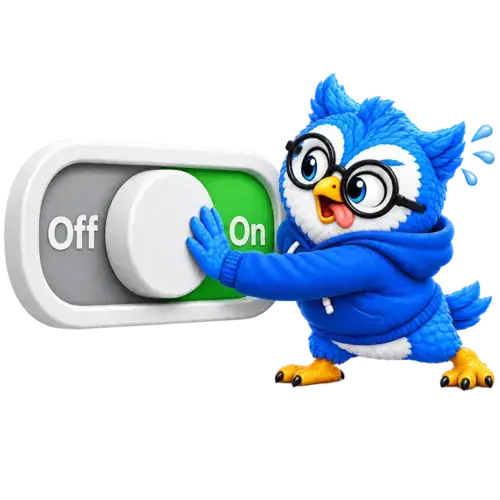
Still don't want AI?No problem.
You can turn Eddy off in your Storyloft account settings whenever you like and continue using Storyloft as a full-featured book writing, collaboration, formatting, and publishing platform.
However you write, make it a book worth finishing.
Write, organize, collaborate, research, illustrate, format, and prepare your book for publication in one connected author workspace.
Start Writing Free